
Solar Upgrades and Replacements
Add panels, add a second system, replace the panels or start again. The rules that decide it in South Australia and Queensland, from the electricians who do the work.
 4.9 Google 530+ reviews
 4.8 SolarQuotes
Your solar system is too small or getting old. Do you add to it or start again?
Your system was sized for the house you had when it went in. Since then the bill has grown, and maybe a battery or an electric car is on the list. More panels sounds like the simple fix. Whether upgrading solar panels is that simple depends on four things: what the old inverter can take, whether new panels match the old ones, what the network will approve, and what the change does to your rebate and feed-in tariff.
Deionno Electrical & Solar has been in business for more than ten years, with our own licensed electricians on every roof in Adelaide and on the Sunshine Coast, and 4.9 stars on Google from more than 530 reviews. Below are the rules that decide each route, and when to leave a good system alone.
Not sure whether to add or replace?
Book the free on-site assessment. You get the route that fits your system and the reason for it, in writing.
Who a solar upgrade or replacement suits
Three homes it fits, and one that should leave things as they are.
Swipe to see more
Can you upgrade an existing solar system?
Yes. There are four ways to do it, and a fifth option that costs nothing.
- Add panels to the inverter you have.
- Add a second system beside the first.
- Replace the panels.
- Replace the whole system.
- Leave it alone.
The last is the right answer more often than a solar company will tell you. The federal government’s solar guide gives a panel 20 to 30 years and a string inverter 10 to 15, and says it is rare to need to replace a whole system at once [1]. If yours works and the bill is under control, keep it.
Adding solar panels to an existing system
Two things decide whether extra panels can go on the inverter you own.
Room on the inverter. Every inverter has a maker’s limit on the panels it can carry and a fixed number of inputs. The common 6.6 kW system on a 5 kW inverter was built to the limit of its day, so it usually has nothing spare.
A match for the old panels. Panels wired together on one inverter input should have similar electrical ratings [2], and the model on your roof is often no longer made. At Hillbank the old panels were 260 watts each. Their replacements were 440.
The way around it is a spare input, where a string of new panels runs on its own. Without one, it’s the next route or a new inverter, a decision our solar inverter repairs and replacement page covers.
Adding a second solar system beside the first
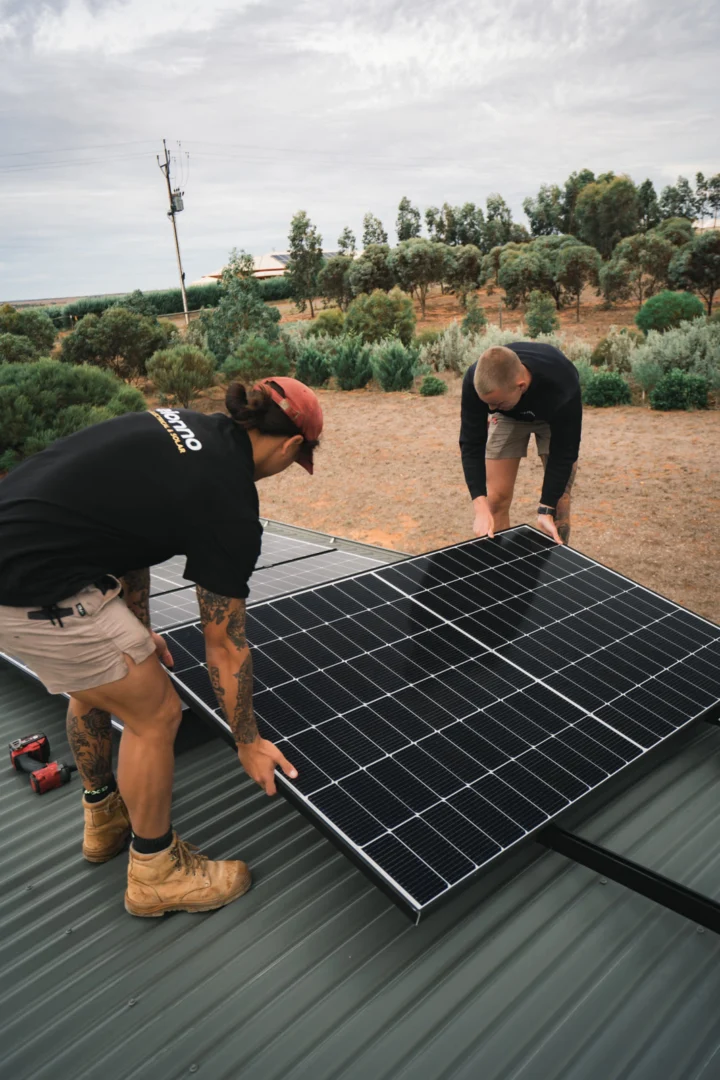
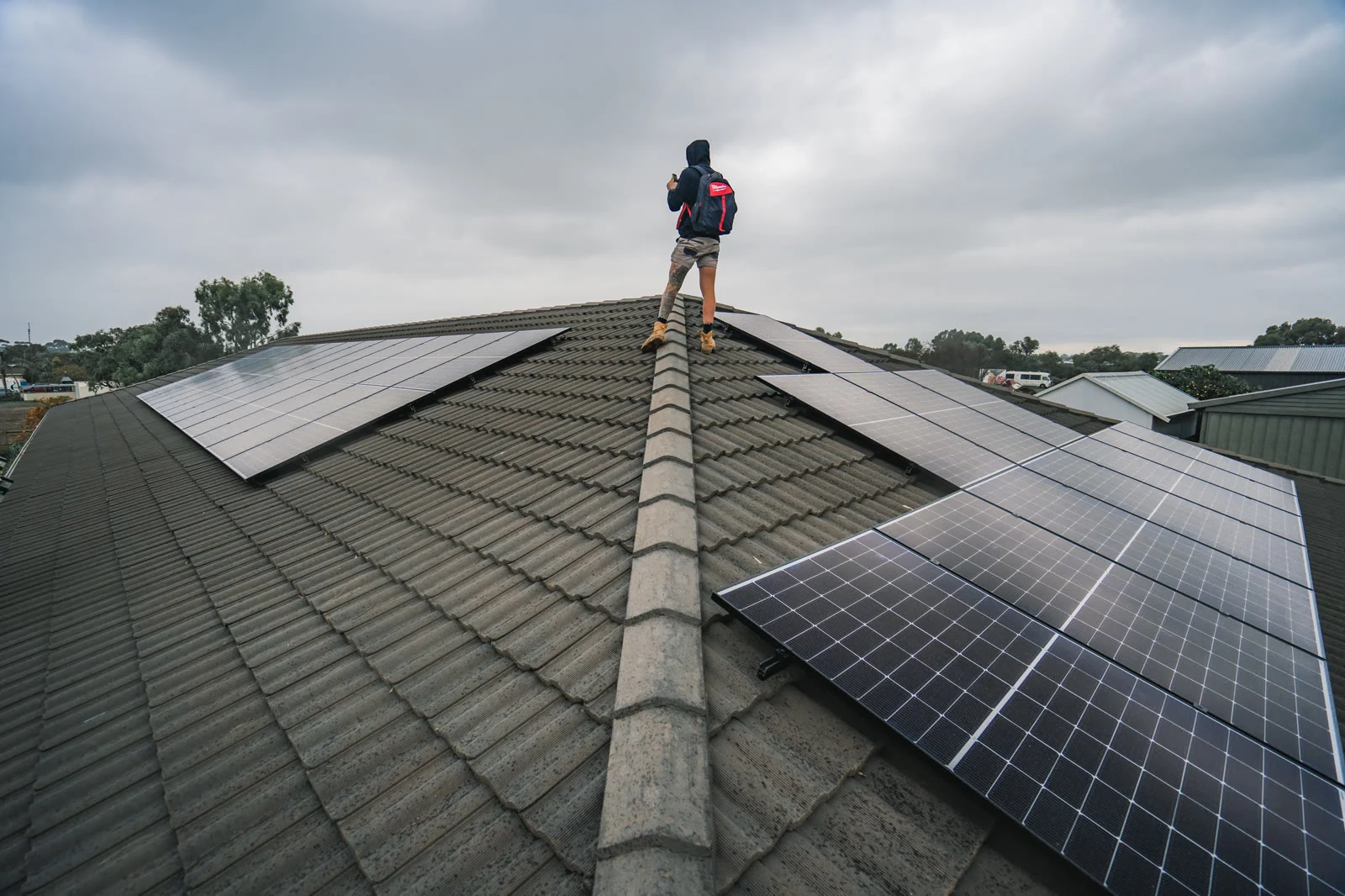
When the old system is sound but full, a second one goes beside it: new panels on their own inverter, or each on its own microinverter. The old wiring stays as it is, nothing has to match, and the new system carries its own warranties. The federal scheme treats it as an additional system, so the new panels earn the rebate [3].
It needs roof the first system isn’t using. And in South Australia the export limit covers the whole site, not each system [4]. Our reading: the second system’s value is mostly the power your house uses, not extra exports.
Replacing old solar panels, or damaged ones
One faulty panel can be replaced by itself. The guidance Australia’s electrical regulators wrote together treats that as a repair, even with a higher wattage panel, as long as its electrical ratings are similar to the one it replaces [2]. A fault is a repair visit: the phone diagnosis is free and a callout fee is credited against the work. See solar system repair or solar fault finding.
A full solar panel replacement is a bigger call. At Hillbank the existing 4.6 kW system was decommissioned and removed, and ten new panels went onto the tile roof in place of the twelve old ones, chosen to match the old system’s output.
Keep the old inverter and change only the panels, and the new panels earn no federal rebate [3].
Storm, hail, fire or lightning damage. Call your insurer first. The claim runs through them, not through us.
Replacing a whole solar system
Starting again makes sense in three cases.
- A small system from the first wave of installs. A 1.5 to 3 kW system on an inverter near the end of its life.
- A battery or an electric car is planned. Our home battery installation page covers adding a battery to existing solar.
- The old array needs too much work to meet current rules.
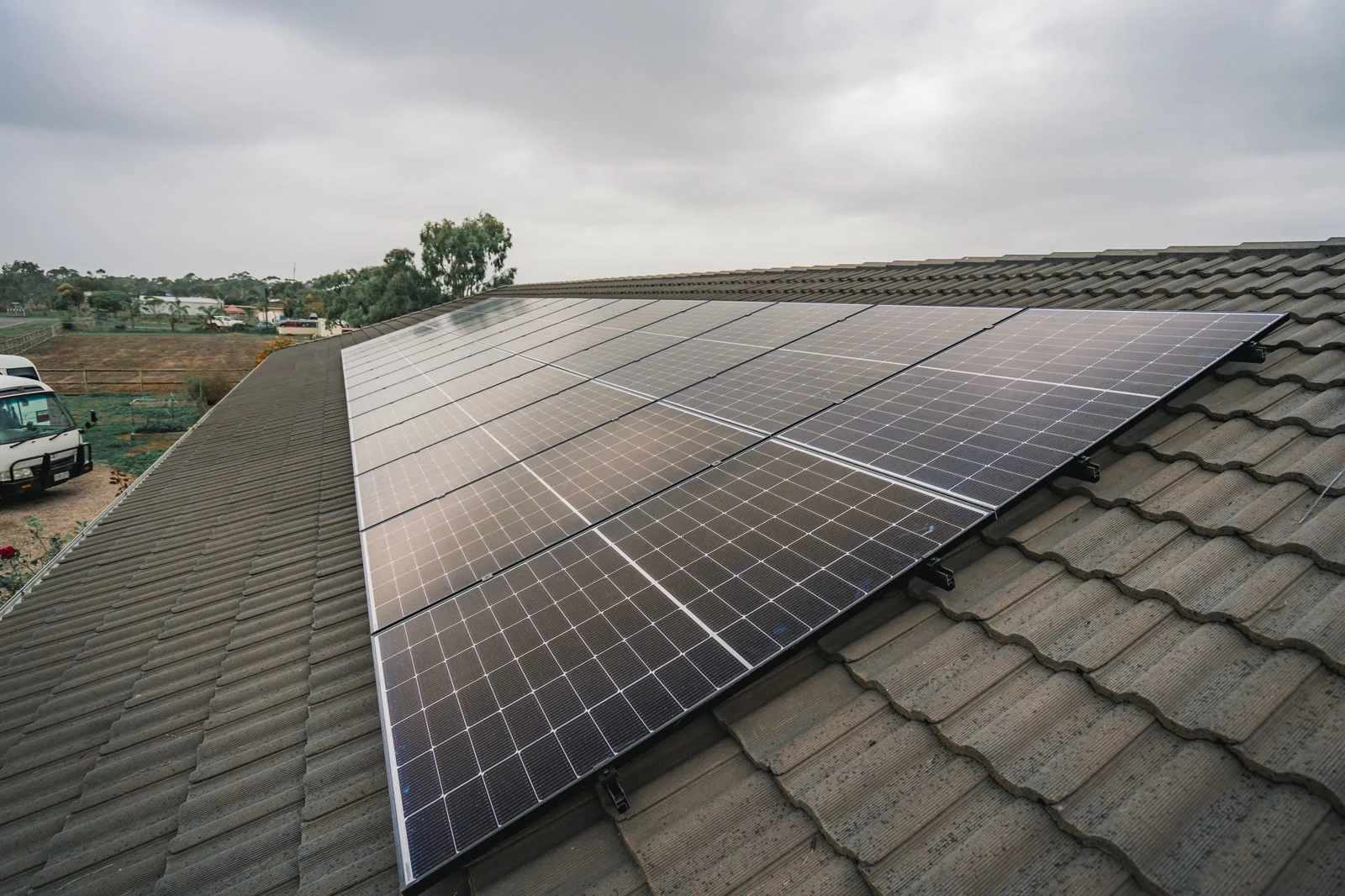
Not every old panel has to go. Sound panels can be reused on a new inverter, depending on their age. At Fulham the existing panels were restrung into a new 10 kW Sigenergy three phase inverter, with 28 new panels and three batteries added. We recommend what is best for you over the long term.
At Maroochydore the old system was removed and 21 LONGi panels on an 8 kW Sungrow inverter took its place.
Brands we install include AIKO, LONGi, TW Solar and SAJ. See brands we install, and the home solar installer page for sizing.
What upgrading an old solar system triggers
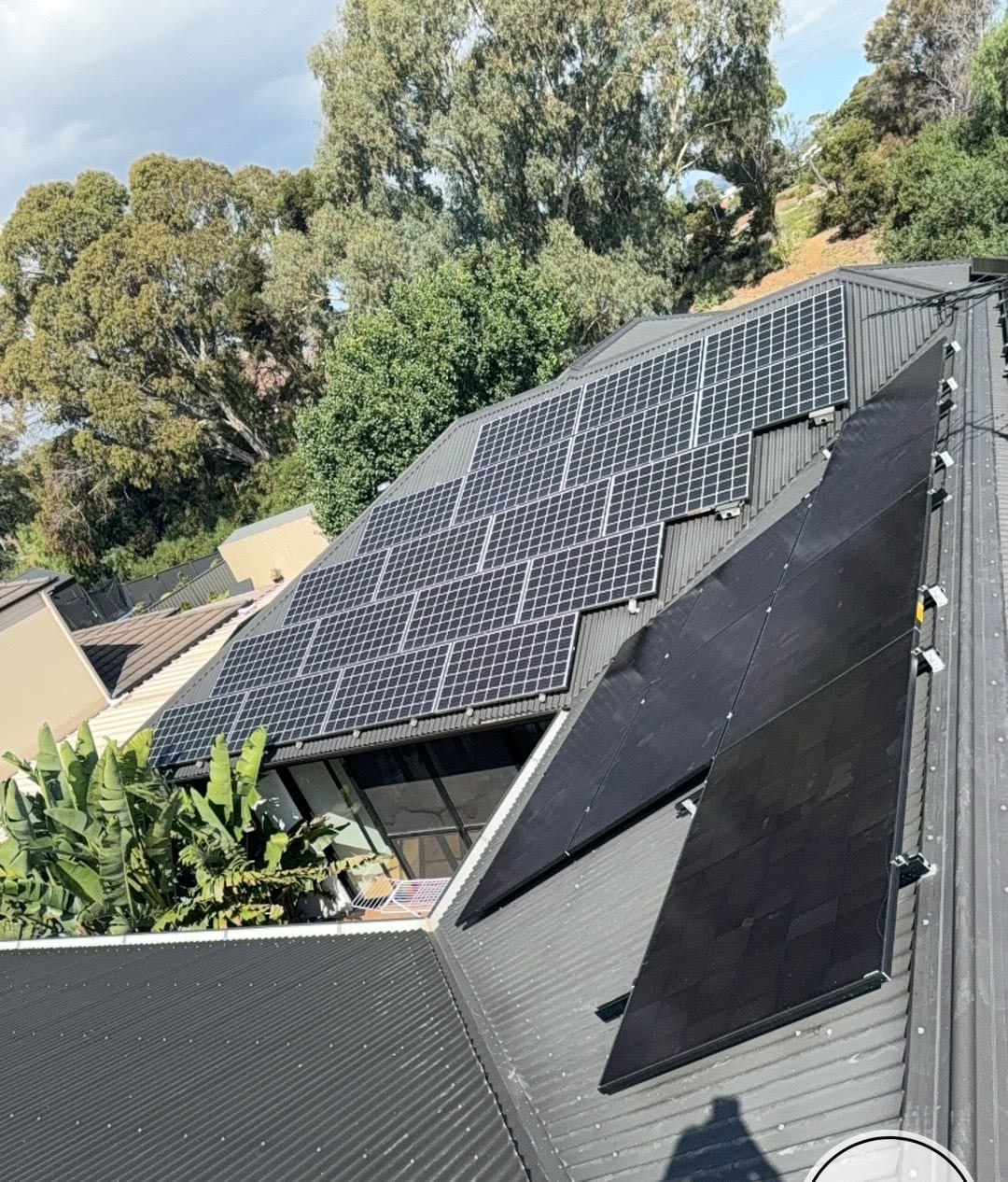
This is the part most guides skip. Under the regulators’ guidance, adding panels to an existing array is an alteration, not a repair. The electrician has to assess what is already there and certify the result [2]. On the old array that means checking, and fixing where needed:
- Earthing of every panel, old and new.
- Isolators: rated for the new voltage and current, not degraded, not on a recall list.
- DC cable: old flat sheathed cable from the array to the inverter is replaced.
- Labels: the fire emergency information updated.
Where the rebate is claimed, the Clean Energy Regulator requires the installer to re-certify the entire system and upgrade any part that no longer meets requirements [3].
The guidance predates the current solar standard, so treat the list as a guide. What your array needs is settled on the roof by a licensed solar electrician. That work is why a second system, or a fresh start, can work out cheaper than extending an old one.
The solar rebate on upgrades and replacements
The federal rebate is paid in certificates, which the installer claims and takes off your price. The Clean Energy Regulator’s rule depends on what changes [3]:
| What changes | Rebate? |
|---|---|
| Panels added to the existing inverter | Yes, on the added panels, if the inverter has the capacity and every component meets current standards |
| New inverter and new panels, with the old panels connected to it | Yes, on the new panels only |
| A separate second system | Yes |
| Whole system replaced | Yes, when the panels and inverter are new and never claimed on |
| Panels replaced, inverter kept | No |
On the last row the regulator is blunt: “This system update is not eligible for STCs.” One panel or all of them, it makes no difference.
New parts must be on the approved products list and never claimed on before, so second-hand panels earn nothing. Our solar rebate calculator works out the certificates for new panels at your postcode.
Network approval for a solar upgrade: SA Power Networks and Energex
Adding panels, adding a system or replacing one needs the network’s approval first. We lodge the application in both states.
- South Australia. SA Power Networks requires a new application whenever equipment is added or changed, extra panels included [4]. Its technical standard allows up to 10 kVA of solar inverter per phase, with exports either fixed at no more than 1.5 kW per phase, or flexible at up to 10 kW per phase where the inverter stays connected to the internet [5].
- South East Queensland. Energex requires an online application for any change to an existing system, including the size of the array. It says within 10 business days whether the request is a basic connection. If it isn’t, a negotiated offer comes within 65 business days of the application [6]. On single phase, a fixed connection allows up to 10 kVA of inverter with a 5 kW export limit, and a dynamic connection allows 10 kVA of solar plus 10 kVA of battery, exporting between 1.5 and 10 kW [7].
Upgrading a system on a 44 cent feed-in tariff
If you are still paid 44 cents a kilowatt hour for exports, check before you change anything.
- Queensland. You can add panels up to the size of your inverter and keep the tariff, provided you check with your distributor first and the system meets current standards. A bigger inverter, panels beyond the inverter’s rated capacity, or a battery that can run at the same time as the solar all end it [8][9].
- South Australia. The tariff continues if the system isn’t upgraded or altered, and any change could affect eligibility. A battery ends it. The Government says to contact SA Power Networks before changing anything [10]. Our advice: treat any addition as ending the tariff until the network confirms otherwise.
Both schemes end in mid-2028: 30 June in South Australia, 1 July in Queensland [8][10]. If the tariff is worth more to you than a bigger system would be, the honest advice may be to wait.
What happens to the old solar panels
We take them away and recycle them, at no fee.
The federal guidance is that panels are removed by a licensed electrician, never by the owner, and that most of their materials can be recycled [1]. At Beulah Park the old system came off the roof and was safely disposed of, and 15 new panels went on, each with its own microinverter.
What a solar upgrade or solar panel replacement costs
There is no honest per-panel price for this work, so we don’t publish one. The price depends on:
- which route fits
- whether the inverter stays or goes
- how much of the old array must be brought up to current rules
- the roof, the cable run and the switchboard
- whether the job earns the rebate
Every system is designed from your bills, not a package off a price list. At the free on-site assessment a solar specialist, not a salesperson, reads a year of your bills, checks the panels, inverter, roof and switchboard, and tells you which route fits. About an hour, no travel charge, and a written quote with no extras on install day. Book one, or call 1800 610 165.
Solar upgrades in Adelaide and on the Sunshine Coast
Adelaide and South Australia
Our Adelaide crews work from Salisbury Plain. See the Adelaide solar installer page.
Sunshine Coast and South East Queensland
On the Coast our electricians work from Corbould Park. See the Sunshine Coast solar installer page or the solar installation overview.
Sources
- Australian Government, Solar Consumer Guide, Replace and recycle your solar system.
- Access Canberra, Installation requirements associated with alterations, additions, repairs and upgrades to existing grid-connected PV arrays, compiled with all state and territory electrical regulators.
- Clean Energy Regulator, Small-scale renewable energy systems.
- SA Power Networks, About your small embedded generation approval.
- SA Power Networks, TS129 Small EG Connections Technical Requirements, issued 16 July 2025.
- Energex, Connection essentials.
- Energex and Ergon Energy, AS/NZS 4777.1 FAQs, 21 February 2025.
- Queensland Government, Solar Bonus Scheme (44c).
- Energex, Solar feed-in tariff changes.
- SA Government, Solar feed-in payments.
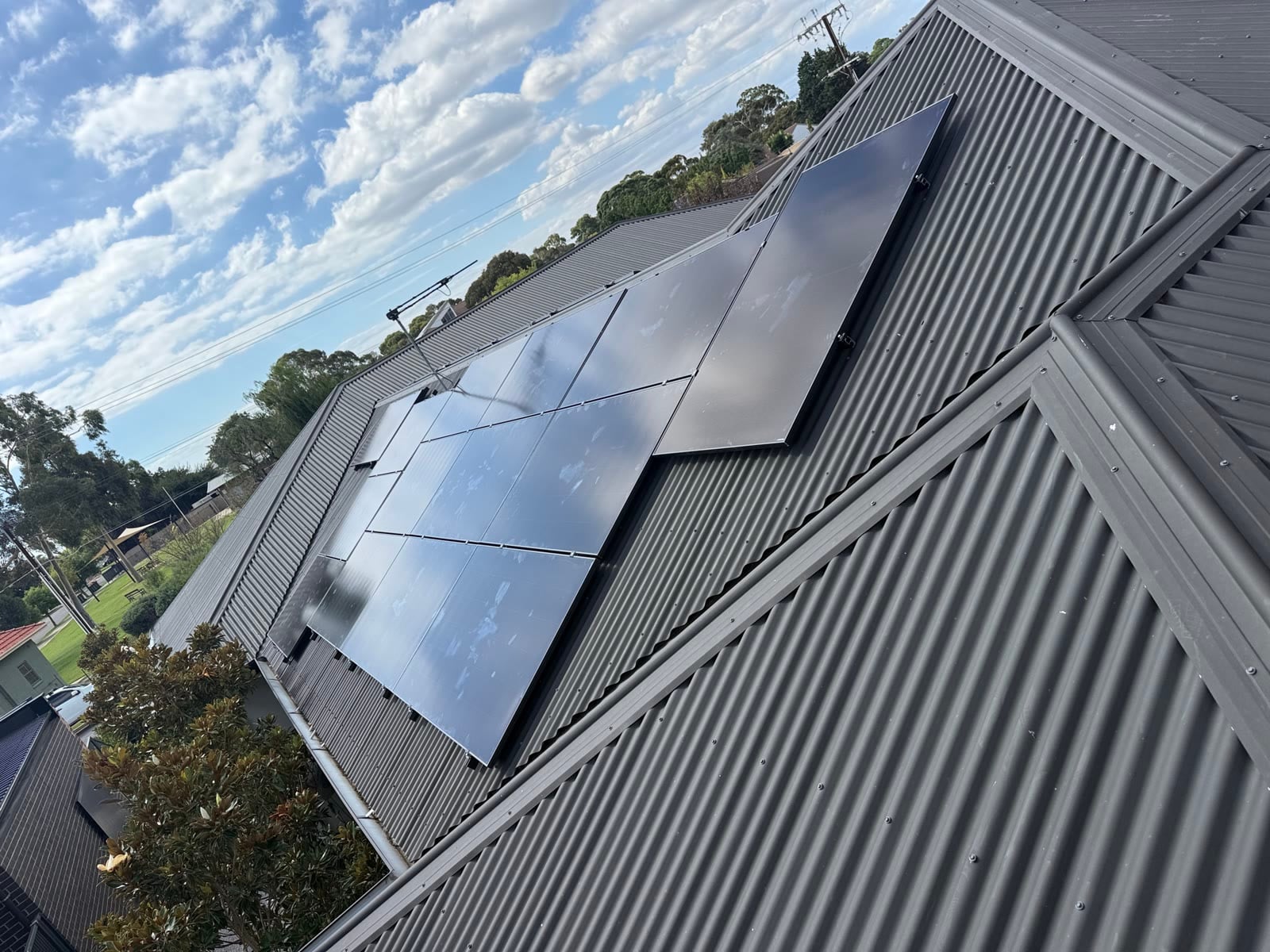
14.28 kW Solar and 23.4 kWh Battery Installation in Fulham, SA
28 new Jinko panels added to the existing ones, which were restrung into a new 10 kW Sigenergy three phase inverter with three batteries and house backup.
Outcome: The existing panels stayed in service, restrung into a new 10 kW three phase inverter alongside 28 new panels, three batteries and house backup.
Read the full projectHow a solar upgrade runs
From the on-site assessment to the certificate.
Swipe to see more
Solar upgrade and solar panel replacement questions, answered
Straight answers from our electricians. Can’t find yours? Call 1800 610 165 or book the assessment and ask on the day.
Can I upgrade my existing solar system?
Yes, four ways: add panels, add a second system, replace the panels or replace the lot. The inverter, the panel match, the network and your feed-in tariff decide which fits. Our free on-site assessment settles it.
Can you replace just one solar panel?
Yes. Replacing a faulty panel counts as a repair, as long as the new panel’s electrical ratings are similar to the old one. That is a repair visit: the phone diagnosis is free and a callout fee is credited against the work.
Is it worth adding extra solar panels?
It is when the inverter has room, your bills show you would use the power and no feed-in tariff is at risk. When the inverter is near the end of its life, or the old array needs a lot of work, a second system or a replacement is often the better spend.
Do new solar panels have to match the old ones?
Only if they share an inverter input. Panels on one input should have similar electrical ratings, and the old model is often no longer made. A spare input, with the new panels as their own string, gets around it.
Will I lose my feed-in tariff if I add panels?
On a 44 cent tariff, it depends on the state. In Queensland you keep it if the panels stay within the size of your inverter and you check with your distributor first. In South Australia any alteration is a risk, so ask SA Power Networks before anything changes. Both tariffs end in mid-2028.
Do I get the solar rebate on an upgrade?
Yes on panels added to an inverter with the capacity, on new panels with a new inverter, on a second system and on a full replacement. No on new panels that replace old ones on the same inverter.
What happens to my old solar panels?
We take them away and recycle them at no fee. Sound panels can sometimes stay in service on a new inverter, depending on their age.
Keep reading
Ready to start?
Book a free 60-minute on-site assessment with one of our licensed electricians.
Free 60-minute on-site solar and battery assessment. No obligation.

$0 power bill guarantee
Arrange your free 60 minute on-site Solar & Battery Assessment in 30 seconds!
Which state is your home in?
Do you own your home?
Unfortunately, we only work with homeowners
If you are considering solar for a new home, or on behalf of someone else, select "I own my home"
We only work with homeowners
A solar or battery system is a permanent change to the property, so it needs to be arranged by the person who owns the home.
If you tapped that by mistake, head back and we'll pick up where you left off.
What are you looking for?
Our team can talk you through all options if you're not sure.
What appeals to you most?
You'll get all of these. We'd just like to know what matters most.
How much is your quarterly electricity bill?
The average Adelaide home spends $500 - $1000 per quarter. Not sure of yours? Take your best guess, we'll go through the real numbers at your assessment.
Whatever it is today, our goal is $0. If we don't get you there, we'll pay your bill.
How soon are you looking to get a system installed?
We can work with you on a longer timeline, or get you saving as soon as possible.
What is your address?
We have hundreds of happy customers across South Australia. We need your address to check we service your area and to look at your roof before we visit.
Great news, we service your area!
Anything else to share?
Every system we design is tailored to the home, so the more info the better! (Optional)
How should we get in touch with you?
Last step. We'll call to arrange your free on-site assessment at a time that suits you. No pressure and no obligation.
Request sent, we'll be in touch!
Do you want to skip the queue?
Call to speak directly with a solar specialist during business hours, and we can get your free on-site assessment booked in straight away.
📞What happens next?
- 1We'll give you a call
If you haven't called already, we'll give you a call to say hello.
- 2Discuss your needs and goals
We'll chat about what you're looking for, how we can help, and book in a time for your on-site assessment that suits you.
- 3Your free on-site assessment
We visit your home for 45 to 60 minutes to measure up the roof, check the switchboard and review how you use power.
- 4We send your detailed quote
A tailored proposal with the system design, the savings and the pricing laid out in full.
- 5We design and install
If you're happy with the proposal, our in-house team installs it and shows you how it all works.
4.9Google · 530+ reviews
4.8SolarQuotes reviews