
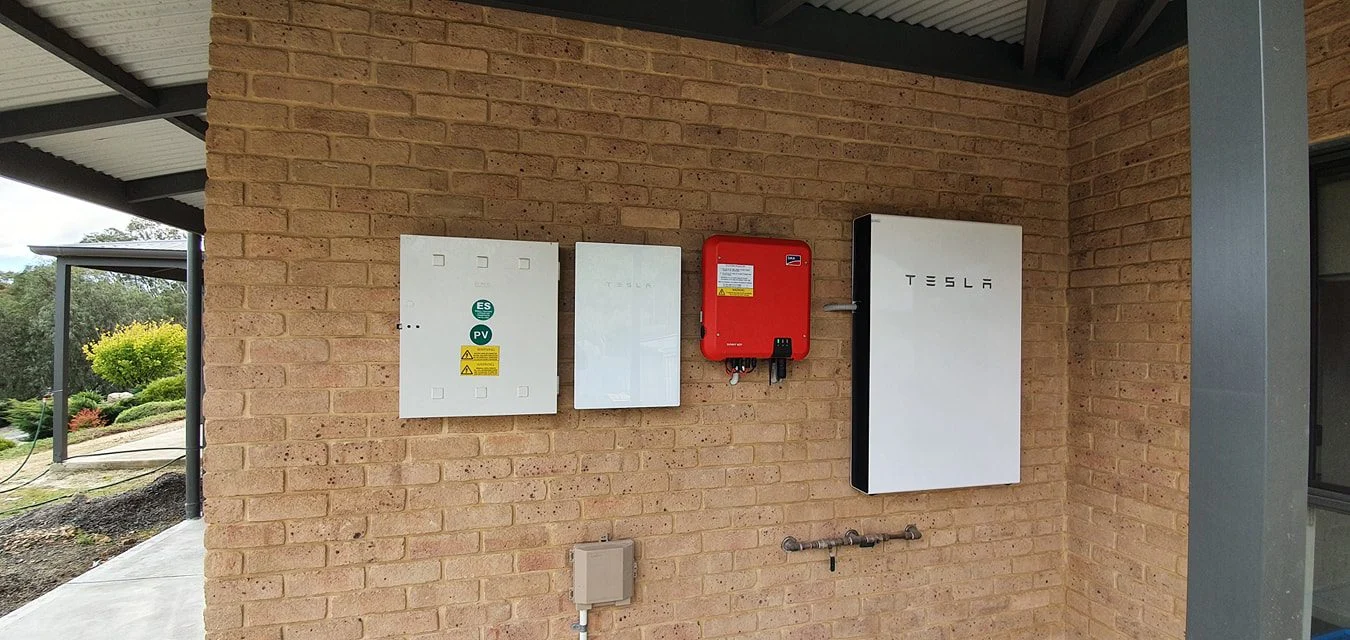
Home Battery Installation
What a home battery installation involves from your side of the front door: what the house needs first, where the battery can go, what happens on the day and what the first week looks like. Adelaide and the Sunshine Coast.
 4.9 Google 530+ reviews
 4.8 SolarQuotes
A home battery installation, from the day you say yes to a normal week afterwards
Most of what's written about home batteries is about the battery. This page is about your house. What the switchboard and the wall need before one goes in. Where it's allowed to sit, and where it isn't. What you wait for after you say yes. What happens on the day, including when the power goes off. And what the first week with a battery actually looks like on the app.
Deionno Electrical & Solar has installed solar and batteries across Adelaide for ten years and now on the Sunshine Coast, more than 4,000 systems in all. Our own licensed electricians do every home battery installation, and we are a certified installer for Sigenergy, Sungrow and Tesla Powerwall. If you’re still choosing who should do the job, the solar battery installer page covers how to check an installer before you sign.
Wondering where a battery would go at your place?
Send us a photo of your switchboard and one of the garage or side wall you have in mind. An electrician can usually tell you on the phone whether it will work.
Who a home battery installation suits
Four households we fit batteries for, and what each gets from it.
Swipe to see more
What a home battery installation involves, start to finish
There are five parts, and only one of them happens at your house with tools.
- The assessment. An electrician visits, looks at the switchboard, the solar and the walls, and reads a year of bills.
- The proposal. A written design and price: the battery, where it goes, what it backs up and any switchboard work.
- Network approval. We apply to SA Power Networks or Energex. Nothing is installed until they say yes.
- Install day. Usually one day. The battery is mounted, wired, tested and switched on.
- Handover. The app on your phone, the labels explained, and the paperwork for the rebate and the warranties.
The rest of this page takes them in the order you’ll live them.
What your home needs before a battery goes in
- Solar. Already on the roof, or going on in the same job. More on why below.
- A switchboard with room and capacity. A battery needs its own breakers and often a new main switch. Older boards with ceramic fuses or no safety switches need work first. At Magill we upgraded the main switch to 80 amps as part of the battery job. If your board needs work, it’s in the proposal with its price, so nothing new turns up on install day.
- A place to put it. A patch of wall or floor about the size of a tall fridge, close to the switchboard, that meets the rules in the next section.
- Internet at the battery. The battery reports to its app and takes its updates over wi-fi or a network cable. In South Australia, the flexible export scheme also needs the inverter to stay online. If the signal doesn’t reach the garage, we sort that out before install day.
Where a home battery can go in your home
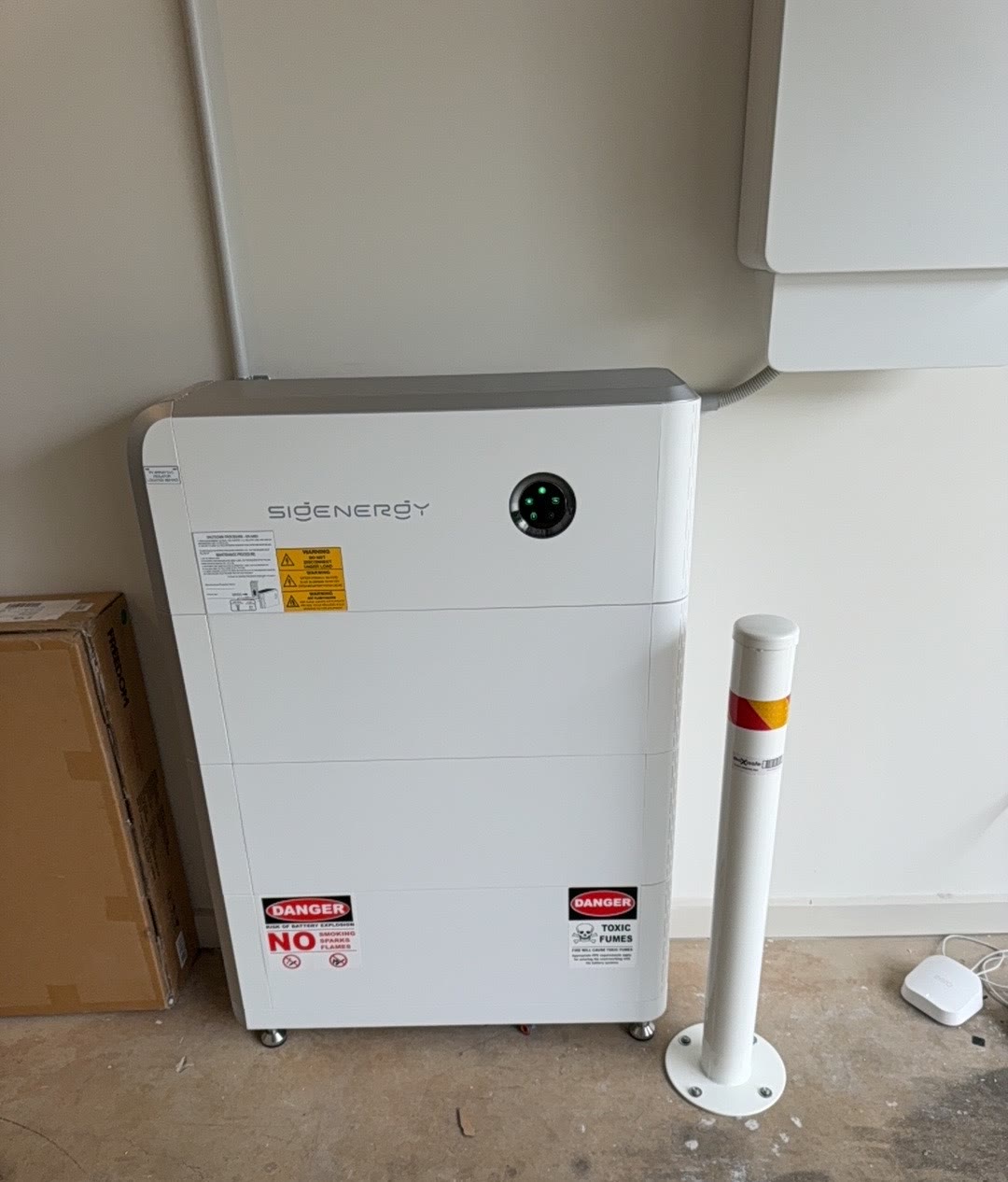
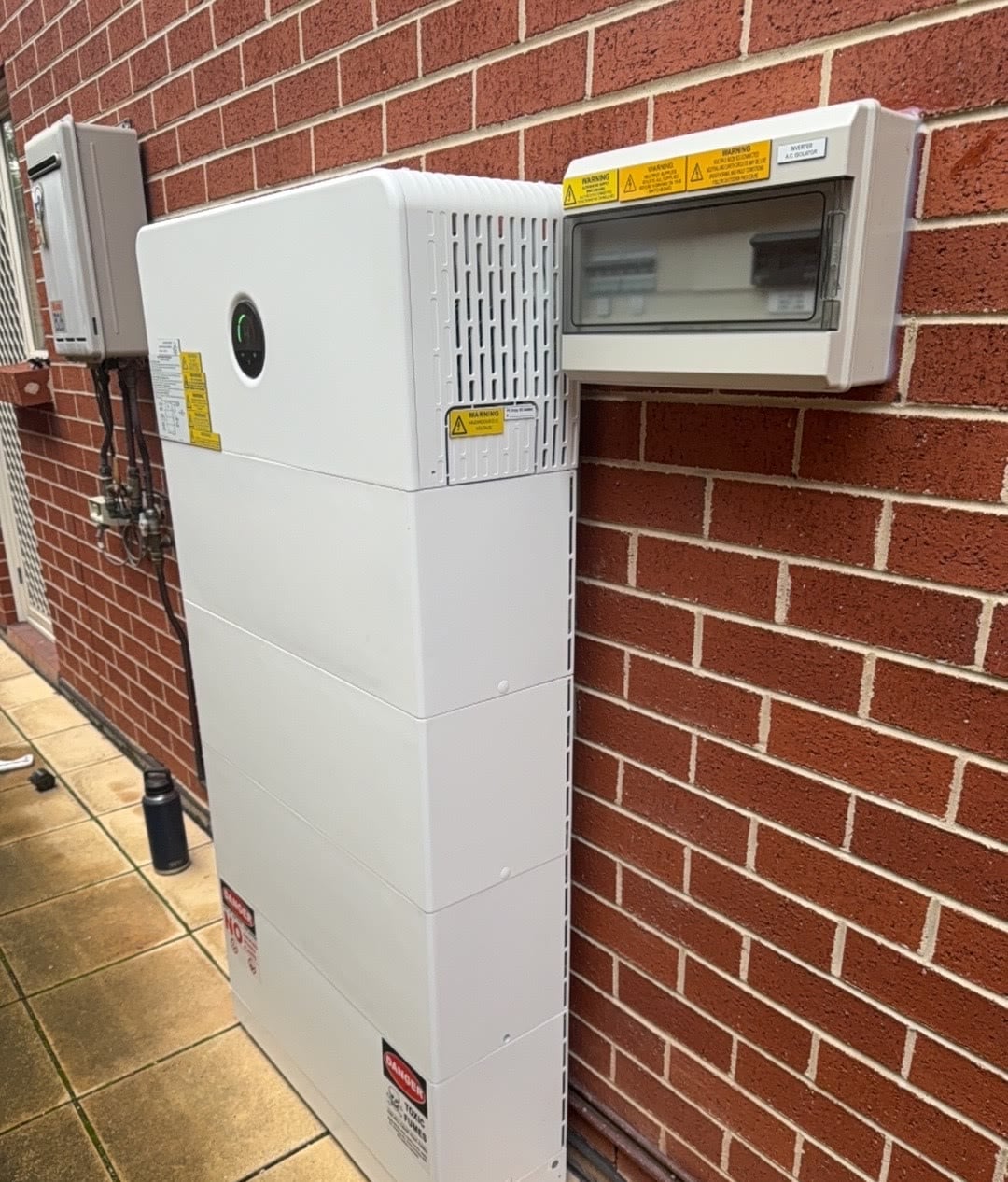
A home battery can’t go just anywhere, and the reasons are sensible ones. The Australian battery standard keeps batteries out of bedrooms and living areas, away from the paths you would use to get out of the house, and clear of windows and vents that open into living areas. On a wall shared with a living area, it needs a non-combustible barrier behind it. In a garage, it needs protecting from the car.
In practice, three spots suit most homes.
- The garage wall. Close to the switchboard, out of the weather, and the most common choice. If a car could reach it, we fit a bollard.
- An external side wall. Shaded if possible, with the battery rated for outdoors. A good answer when the garage is full or the switchboard is on the side of the house.
- A carport or under the eaves. Covered, ventilated and usually close to the meter box.
One of our customers, Malcolm, put it this way in his Google review: “I was surprised and impressed with the bollard installed to protect the battery from potential damage, I never would have thought they would go to that level.”
We measure the spot at the assessment, so the location is settled before the quote. The solar battery installer page goes through the placement rules in more detail.
Network approval: what happens while you wait
A battery is connected to the grid, so the network has a say before it goes in. We lodge the application and chase it. You don’t have to do anything.
- South Australia. The application goes through the SA Power Networks portal. Adding a battery to existing solar doesn’t change your export limit [1].
- South East Queensland. Energex has to approve the battery before it is installed, including when it is being added to solar that is already there. For a straightforward connection Energex makes its offer within 10 business days. Where the local network needs a closer look, it can take longer [2].
If the network comes back with a condition that changes the design, you’ll hear it from us before install day.
Getting the house ready for installation day
There isn’t much to do.
- Clear the wall and the floor where the battery is going, and a path to it. A battery is heavy and arrives on a trolley.
- Make sure we can get to the switchboard, the meter box and the existing inverter.
- Leave the driveway free for the van.
- Have your wi-fi name and password handy.
- Plan for the power to be off for part of the day. If someone works from home, or anyone relies on powered medical equipment, tell us when you book and we will work around it.
- Someone needs to be home at the start to confirm the location and at the end for the handover. In between, you don’t need to stand over us.
Home battery installation day
Our own electricians arrive in the morning and walk the job with you before anything is unpacked: where the battery goes, the cable route, which circuits are being backed up.
Then the work. The battery and its inverter or gateway are mounted. Cable is run to the switchboard in conduit. The board gets its new breakers and labels. For part of this the power to the house is off, and we tell you before it goes and when it’s back.
Once it is wired, the system is set up with the manufacturer, and we test it. If you have backup, we switch the grid off at the board so you can watch the house carry on without it. Then the app goes on your phone and we walk you through the switchboard labels and the shutdown procedure.
Most homes are finished in a day. A larger system, or a job with new solar or major switchboard work, can take up to three.
Do you need solar to get a home battery?
With us, yes. We install batteries on homes with solar, either already on the roof or going on at the same time. We don’t install a battery on a home with no solar.
There are two reasons. The federal battery rebate is only available where the battery is installed with a new or existing solar system; a battery on its own doesn’t qualify [3]. And a battery filled from the grid is only ever shifting bought power from one time of day to another. A battery filled from your own roof is storing power that cost you nothing to make. That second one is the battery worth paying for.
If you have no solar yet, the home solar installer page is the place to start, and the two can go in together.
Home batteries and your home insurance
Tell your insurer. A battery and the solar that feeds it are part of the building once they are installed, and the Queensland Government’s advice is to add them to your home insurance and to read the policy for any conditions before the install [4]. It’s a short phone call, and it’s better made before the day than after a storm.
Keep the paperwork we hand over: the certificate of compliance, the commissioning record and the warranty documents. They are what an insurer or a future buyer will ask for.
The first week with a home battery
The first sunny day, the app shows the solar feeding the house, then filling the battery, then exporting once it is full. That evening you watch the house run on the battery instead of the grid. For most people that is the moment it makes sense.
A few things that are normal and catch people out.
- You’ll still see some grid power. When the oven, the air conditioner and the kettle are all on, the house can ask for more than the battery delivers at once, and the grid makes up the difference. Late on a long winter night the battery may run out before sunrise.
- It won’t always hit 100 percent. A run of grey days in June won’t fill it. That’s just the season, and nothing is wrong with the battery.
- It keeps a reserve. If you have backup, the battery holds some charge back for a blackout. You can set how much in the app.
- The first bill will be mixed. It covers days before and after the install. The second one is the one to judge by.
If anything on the app doesn’t look right in the first weeks, call us on 1800 610 165. The 10-year workmanship warranty covers the installation, and we would rather hear early.
Home battery installation in Adelaide and on the Sunshine Coast
Adelaide and South Australia
Adelaide homes tend to put the battery on an external side wall or in the garage, and older suburbs often need switchboard work first. Recent jobs include Saint Peters, Magill, Albert Park and Fulham. We cover the metro area, the Hills, the Fleurieu and the Barossa from Salisbury Plain. See the Adelaide battery installation page.
Sunshine Coast and South East Queensland
On the Coast the battery goes on a shaded wall out of the salt air where it can, and backup comes up early in the conversation because summer storms take the power out. At Yandina we fitted 40 kWh of battery with a new switchboard enclosure built for it. Our electricians cover Caloundra to Noosa, the hinterland, Gympie and north Brisbane from Corbould Park. See the Sunshine Coast battery installation page.
The battery rebate and the brand
The federal rebate comes off the price when an accredited installer does the job, and we lodge the paperwork. Our battery rebate calculator gives the figure for your postcode. If you already have a brand in mind, the Tesla Powerwall installation page covers the Powerwall, and the three-phase battery installation page covers homes with three-phase power.
Sources
- SA Power Networks, Flexible exports.
- Energex, How to connect: homeowners and small businesses.
- Clean Energy Regulator, Solar batteries, updated 29 October 2026.
- Queensland Government, Battery buyers guide.
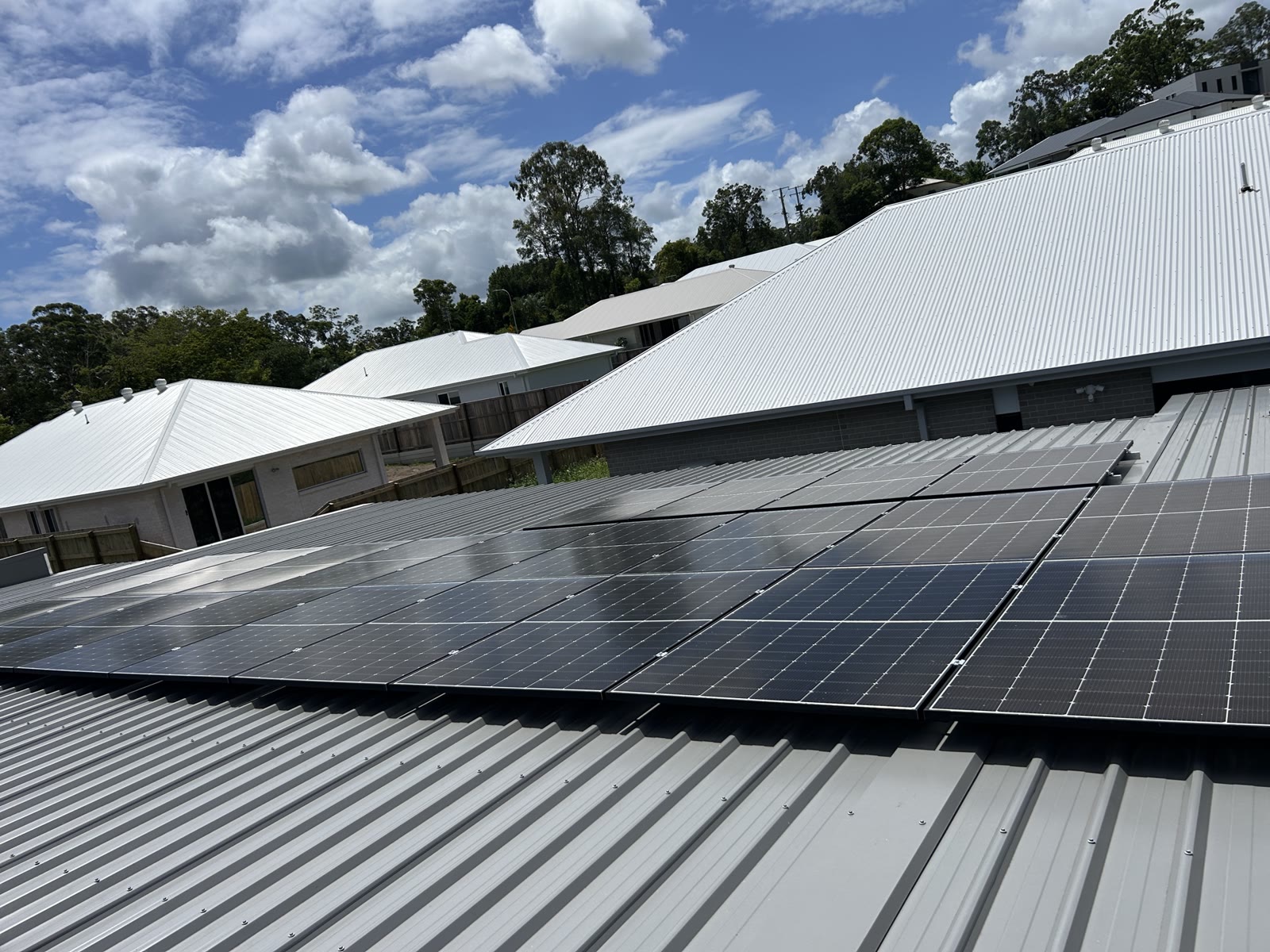
8.64 kW Solar and 40 kWh GoodWe Battery Installation in Yandina, QLD
18 AIKO panels on a Colorbond roof, a 30 kW GoodWe inverter and five GoodWe batteries, with a new switchboard enclosure.
Outcome: 40 kWh of storage on a Yandina home, with a new switchboard enclosure built for it.
Read the full projectHow a home battery installation runs
Six steps, and you only need to be home for three of them.
Swipe to see more
Home battery installation questions, answered
Straight answers from our electricians. Can’t find yours? Call 1800 610 165 or book the assessment and ask on the day.
How much does it cost to have a home battery installed?
It depends on the battery, whether backup is included, where it is mounted and whether the switchboard needs work. The federal battery rebate comes off the top. We quote in writing after a free on-site assessment, so the price fits the house and doesn’t change on the day.
Can I install a home battery myself?
No. A home battery has to be installed by a licensed electrician, and the federal rebate is only paid where an accredited battery installer does the job. It is high-voltage DC work connected to your switchboard, and the network has to approve it.
How long does a home battery installation take?
Most homes are finished in a day. Larger systems, or jobs with new solar or major switchboard work, can take up to three. Adding a battery to solar you already have is usually the quickest job of all.
Where in my house can a home battery go?
On a garage wall, an external side wall or under a carport. It can’t go in a bedroom or living area, has to stay clear of exits and of windows that open into living areas, and needs protecting from the car in a garage. We measure the spot at the assessment.
Will my power be off during the installation?
For part of the day, while the battery is connected to the switchboard. We tell you before it goes off and when it is back. If someone works from home or relies on powered medical equipment, tell us when you book.
Do I need to tell my home insurer about a battery?
Yes. The battery and the solar become part of the building. The Queensland Government’s advice is to add them to your home insurance and check the policy conditions before the install. Keep the compliance certificate and warranty documents we give you.
Can I get a home battery without solar panels?
Not from us. We install batteries on homes with solar, existing or new. The federal rebate does not apply to a battery on its own, and a battery filled from your own roof saves far more than one filled from the grid.
Does a home battery need wi-fi?
It needs an internet connection, by wi-fi or cable, for the app, for updates and in South Australia for flexible exports. If the signal doesn’t reach the battery, we fix that before install day.
What do I need to do before the installers arrive?
Clear the wall and floor where the battery is going, make sure we can reach the switchboard and meter box, leave the driveway free, and have the wi-fi password ready. Someone needs to be home at the start and at the handover.
Can a battery be added to the solar I already have?
Yes, and it’s a job we do often. If the existing inverter is sound, the battery goes in alongside it. If it’s near the end of its life, a hybrid inverter replaces it and runs the panels and the battery together.
Keep reading
Work out your numbers first
One thing to look at before anyone comes out.
See a real proposal
A sample of the written proposal you get after the assessment: gear, cost, output, savings and timeline.
View the sample proposal
Ready to start?
Book a free 60-minute on-site assessment with one of our licensed electricians.
Free 60-minute on-site solar and battery assessment. No obligation.

$0 power bill guarantee
Arrange your free 60 minute on-site Solar & Battery Assessment in 30 seconds!
Which state is your home in?
Do you own your home?
Unfortunately, we only work with homeowners
If you are considering solar for a new home, or on behalf of someone else, select "I own my home"
We only work with homeowners
A solar or battery system is a permanent change to the property, so it needs to be arranged by the person who owns the home.
If you tapped that by mistake, head back and we'll pick up where you left off.
What are you looking for?
Our team can talk you through all options if you're not sure.
What appeals to you most?
You'll get all of these. We'd just like to know what matters most.
How much is your quarterly electricity bill?
The average Adelaide home spends $500 - $1000 per quarter. Not sure of yours? Take your best guess, we'll go through the real numbers at your assessment.
Whatever it is today, our goal is $0. If we don't get you there, we'll pay your bill.
How soon are you looking to get a system installed?
We can work with you on a longer timeline, or get you saving as soon as possible.
What is your address?
We have hundreds of happy customers across South Australia. We need your address to check we service your area and to look at your roof before we visit.
Great news, we service your area!
Anything else to share?
Every system we design is tailored to the home, so the more info the better! (Optional)
How should we get in touch with you?
Last step. We'll call to arrange your free on-site assessment at a time that suits you. No pressure and no obligation.
Request sent, we'll be in touch!
Do you want to skip the queue?
Call to speak directly with a solar specialist during business hours, and we can get your free on-site assessment booked in straight away.
📞What happens next?
- 1We'll give you a call
If you haven't called already, we'll give you a call to say hello.
- 2Discuss your needs and goals
We'll chat about what you're looking for, how we can help, and book in a time for your on-site assessment that suits you.
- 3Your free on-site assessment
We visit your home for 45 to 60 minutes to measure up the roof, check the switchboard and review how you use power.
- 4We send your detailed quote
A tailored proposal with the system design, the savings and the pricing laid out in full.
- 5We design and install
If you're happy with the proposal, our in-house team installs it and shows you how it all works.
4.9Google · 530+ reviews
4.8SolarQuotes reviews