
EV Charger Installation
Home EV charger installation by our own licensed electricians in Adelaide and on the Sunshine Coast. Sigenergy, Tesla Wall Connector and GoodWe chargers, on a dedicated circuit, set up to charge from your solar.
 4.9 Google 530+ reviews
 4.8 SolarQuotes
A home EV charger is an electrical job first, and a charger second
The box on the wall is the easy part. What makes a car charging station for home work is the circuit behind it: whether your switchboard has the capacity, whether your supply is single or three-phase, how far the cable has to run, and whether the charger can see your solar and battery so the car fills on sunshine instead of grid power at night. That circuit is what our EV charger installation is built around.
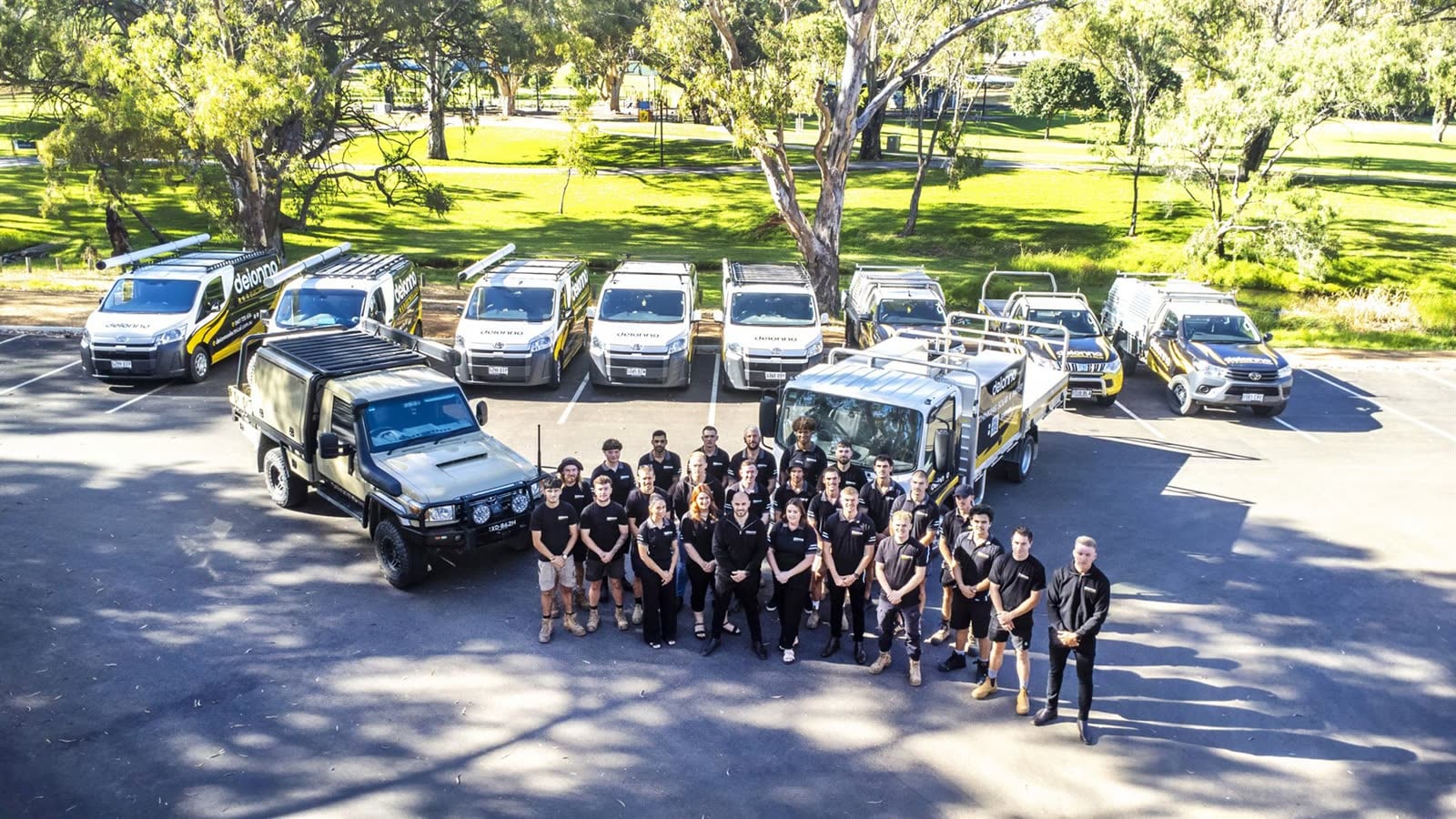
Deionno Electrical & Solar is an electrical contractor that installs solar, batteries and EV chargers with its own licensed electricians, across Adelaide for ten years and now on the Sunshine Coast. We fit Sigenergy, Tesla Wall Connector and GoodWe chargers, and we’ll install a charger you’ve already bought, as long as it meets the Australian standard. Every job gets a dedicated circuit, its own protection at the board, a compliance certificate and a 10-year workmanship warranty.
Tell us the car, the switchboard and where it parks
A photo of your switchboard and the parking spot is usually enough for an electrician to tell you single or three-phase, which charger suits, and roughly what the cable run involves.
Who a home EV charger installation suits
Four situations we see most, and what each needs from the install.
Swipe to see more
What a home EV charger installation includes
- A site check of the switchboard and supply. Main switch rating, spare ways, existing solar and battery breakers, and whether the supply is single or three-phase.
- A dedicated circuit. Cable sized for the charger’s full current and the length of the run, from the switchboard to the charger, in conduit where it is exposed.
- Protection at the board. The charger gets its own breaker and the type of safety switch an EV charger needs. If the board has no room or no safety switch, we say so before the quote, not on the day.
- The charger, mounted and commissioned. Wall or post, cable reach checked against where the car actually parks, then connected to Wi-Fi and the maker’s app, with solar charging set up where the charger supports it.
- Paperwork. An electrical certificate of compliance, and the network notification or application where the charger still needs one.
- A handover. How to start and schedule a charge, what the lights mean, and how to read the charging in the app.
What EV charger installation costs
We don’t sell fixed-price charger packages, because the price is mostly the electrical work and the electrical work depends on the house. Four things move it. The charger you choose: a 7 kW single-phase unit costs less than a 22 kW three-phase one. The distance from the switchboard to the parking spot, and what the cable has to pass through on the way. Whether the switchboard needs a new breaker, a new safety switch or a bigger upgrade. And whether you want the charger on a post rather than a wall. A charger beside a garage switchboard is a short job. A charger on a carport 40 metres away on a rural block is a cable job first. The on-site assessment is free and the quote is written.
7 kW or 22 kW: what your home and car can use
A 7 kW charger runs on a single-phase supply at 32 amps and adds roughly 35 to 40 km of range for every hour on charge, which is a full overnight charge for most cars. A 22 kW charger needs three-phase supply, and most cars can’t use all of it: the car’s own onboard charger caps AC charging, commonly at 7 kW or 11 kW. A 22 kW unit on a three-phase home still makes sense when the car can take 11 kW, when two cars will share it, or when the house has three-phase anyway. On a single-phase home, 7 kW is the practical ceiling, and it’s plenty.
Single-phase, three-phase and your switchboard
A 32 amp charger is the biggest single load most homes have ever had. On a single-phase supply with a 63 amp main, a charger running flat out alongside the oven, the air conditioner and a hot water element can push past the main fuse. The answer isn’t always a bigger supply: a charger that can drop its rate when the house is busy, or a scheduled charge after the evening peak, usually solves it. On a three-phase home the charger sits on its own phase or across all three, and the load question largely goes away. Either way we work out the maximum demand before we quote, because the network asks for it and because tripping the main switch at 2 am isn’t a good way to find out.
Charging an EV from solar and a home battery
Two different things get called solar charging. A charger that follows the roof holds the car at whatever surplus the solar is making, so a 10 kW array on a clear day puts most of its midday output into the car instead of exporting it for a few cents. A charger with a schedule just runs at full rate in a window you pick, which is fine on an off-peak tariff but will pull from the grid once the sun drops. Sigenergy, GoodWe and Sungrow chargers follow the roof through the inverter’s own app, and a Tesla Wall Connector does the same through the Tesla app when a Powerwall is on the house. A home battery is sized for the house, not the car; it will top the car up in the evening, but the real saving is daytime charging from the panels.
Sigenergy, Tesla Wall Connector and GoodWe chargers
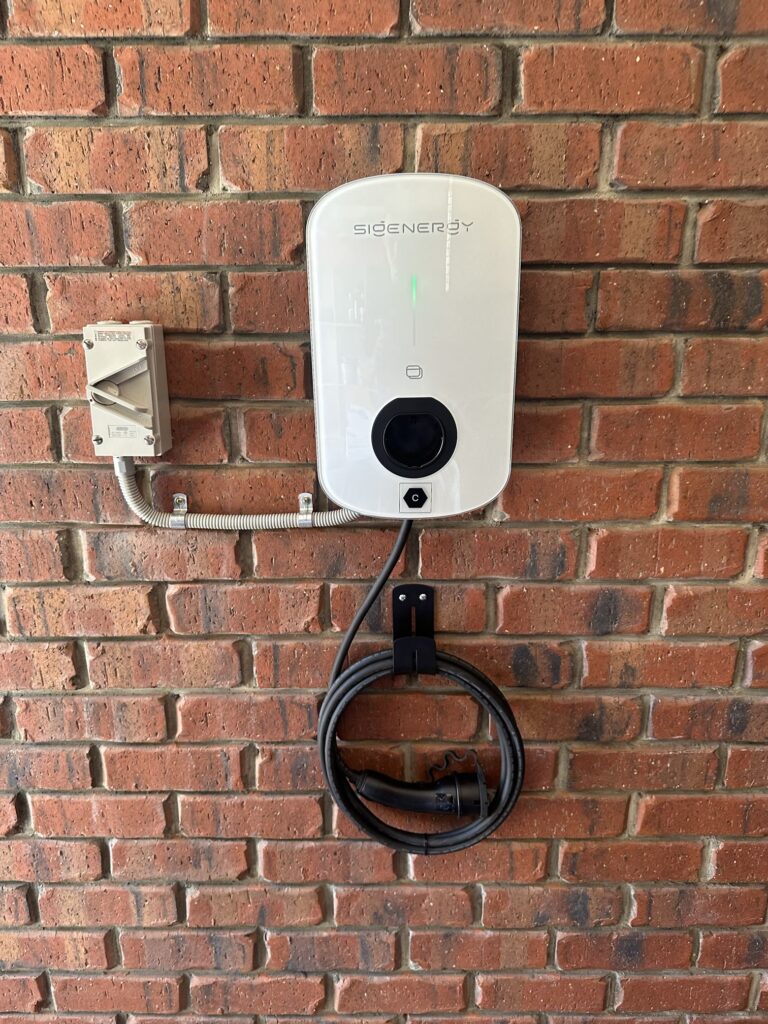
- Sigenergy. The charger we fit most, in 7 kW single-phase and 11 or 22 kW three-phase. On a home with a SigenStor battery it sits in the same app and can charge the car from solar, from the battery, or on a schedule. Sigenergy also makes a DC charger that charges straight from the battery stack at up to 12.5 kW, which we have installed on the Sunshine Coast.
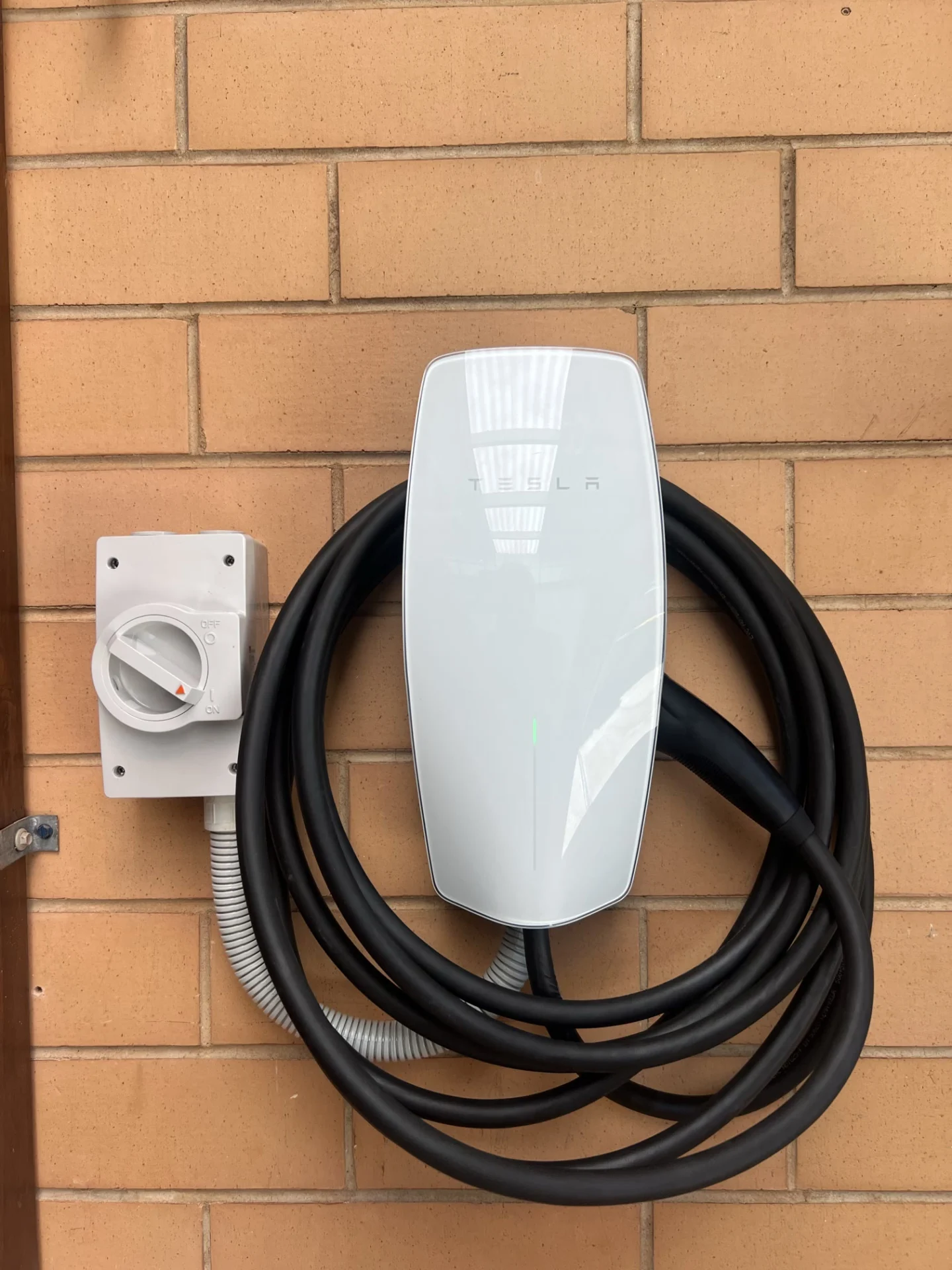
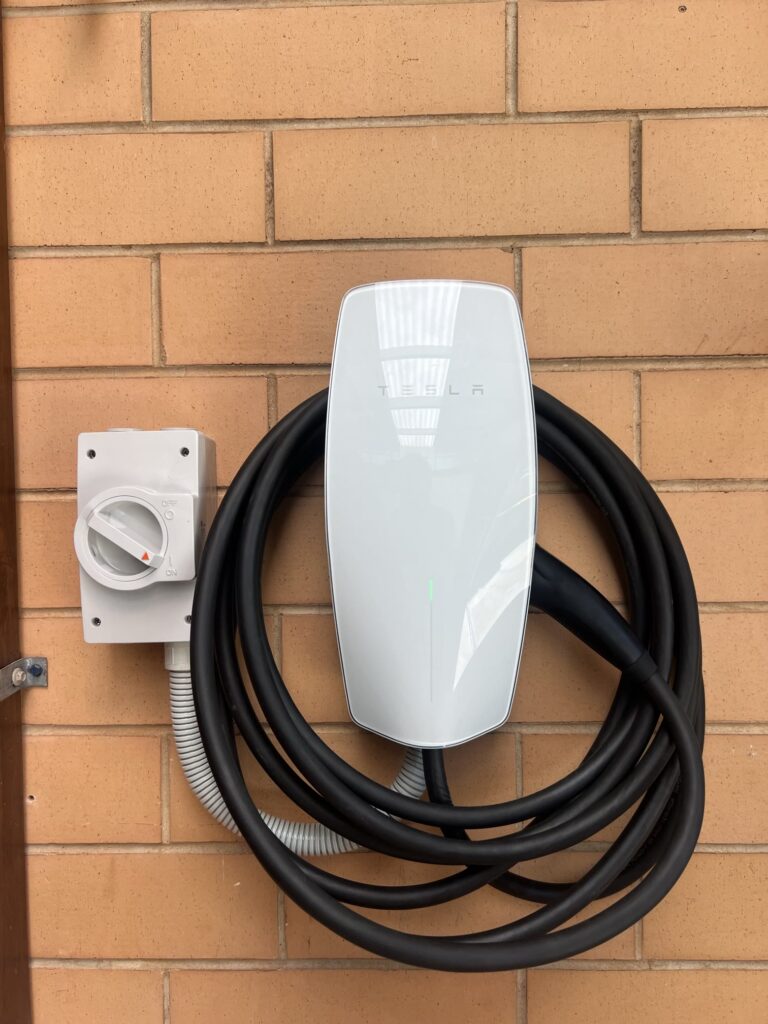
- Tesla Wall Connector. The Tesla unit charges any car with a Type 2 socket, not only Teslas, and pairs with a Powerwall for solar charging through the Tesla app. We are a Tesla Powerwall certified installer, so the two go in as one design.
- GoodWe. For homes with a GoodWe inverter and battery, the GoodWe charger keeps everything in one app, in 7 kW and 22 kW versions.
- Your own charger. If the car came with a wall unit, or you’ve bought one yourself, we fit it. The circuit, the protection at the board and the certificate are the same as for a charger we supplied.
Network rules in South Australia and South East Queensland
Both networks changed their home charger rules in the second half of 2026, and most installer websites have not caught up.
- South Australia. Since 11 September 2026, a standard home charger (a Level 2 unit that cannot feed power back to the grid) no longer needs an application through the SA Power Networks portal. The old rule asked for approval above 20 amps single-phase or 25 amps three-phase on a 100 amp supply. The installing electrician still lodges an electrical certificate of compliance for every install, and a vehicle-to-grid or bidirectional charger still needs a pre-installation application, because the network treats it as a battery system [1] [2].
- South East Queensland. From 1 October 2026, Energex withdrew the clause that made single-phase chargers above 20 amps managed connections on supplies of 100 amps per phase or less. A dedicated single-phase charger can now be installed to AS/NZS 3000 without a network management device. The electrician still has to assess the premises’ maximum demand, and where it would exceed the service fuse rating the connection may need an upgrade. A three-phase 22 kW charger is allowed at a three-phase premises, and vehicle-to-grid equipment still needs a connection application [3].
We handle the paperwork in both states as part of the job, and we tell you before the quote if your charger size or supply needs a network step first.
Where the charger goes: garages, carports, posts and long runs
Inside the garage next to the switchboard is the short answer. Outside on a brick wall under a carport is nearly as easy, with the cable in conduit. A post in the driveway means a trench and a longer run. We’ve run 50 metres of heavy cable to a shed and carport on a rural block, and mounted a charger between two garage doors so the cable reaches whichever bay the car uses. The cable on the charger itself is usually 5 to 7 metres; we check it reaches the car’s charge port from where it will be mounted, because the port is on a different corner of every car.
EV charger installation in Adelaide and on the Sunshine Coast
Adelaide and South Australia
Our Adelaide electricians have installed chargers from Reynella to Greenwith, Kidman Park to Nairne, on single-phase and three-phase homes, with the SA Power Networks paperwork done as part of the job. We cover the metro area, the Hills, the Fleurieu and the Barossa from the Salisbury Plain base. Area details on the Adelaide solar installer page.
Sunshine Coast and South East Queensland
From the Corbould Park base our Sunshine Coast electricians cover Caloundra to Noosa, the hinterland, Gympie and north Brisbane, with Energex requirements handled for you. Recent jobs include a Sigenergy DC charger in Buddina and a full solar, battery and charger install on a new home in Banya. Area details on the Sunshine Coast solar installer page.
EV chargers and the rest of the house
If you are weighing up solar at the same time, the home solar installer page covers how we size an array from your bills, and a car on the driveway is one of the loads we size for. If a battery is on the list too, the solar battery installer page explains how the three fit together on one switchboard.
Sources
- SA Power Networks, Installing Level 2 Electric Vehicle (EV) Chargers no longer requires approval from SA Power Networks, 11 September 2026.
- SA Power Networks, Electric vehicle charger installations.
- Energex, EV charging and connections, including the withdrawal of QECM clause 8.14.4(b) from 1 October 2026.
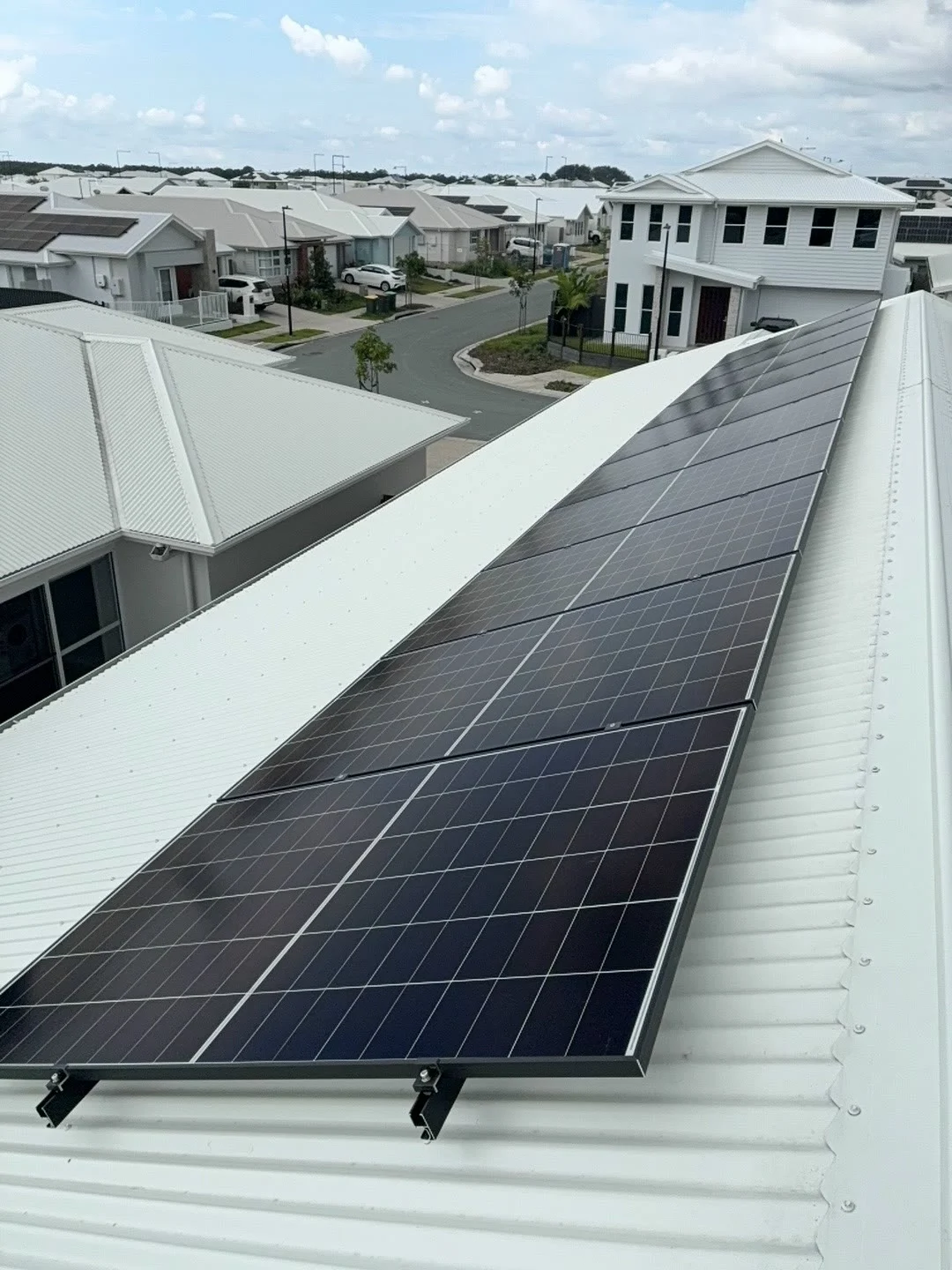
12.35 kW Solar, 27 kWh Sigenergy Battery and EV Charger in Banya, QLD
26 LONGi panels, a 15 kW three-phase SigenStor energy controller, 27 kWh of Sigenergy battery, a Sigenergy EV charger and whole-house backup for a new home in Banya.
Outcome: Solar, battery and the car charger on one switchboard, with whole-house backup, for a new home.
Read the full projectHow an EV charger installation runs
From the first call to the first charge.
Swipe to see more
EV charger installation questions, answered
Straight answers from our electricians. Can’t find yours? Call 1800 610 165 or book the assessment and ask on the day.
How much does it cost to install an EV charger at home?
It depends on the charger, the distance from the switchboard, what the cable has to pass through, and whether the board needs work. A 7 kW charger beside a garage switchboard is the simplest job; a three-phase 22 kW unit on a post down the driveway is the dearest. We quote in writing after a free on-site assessment rather than selling a package that only fits the easiest house.
Do I need three-phase power for an EV charger?
No. A 7 kW charger runs on a normal single-phase supply and charges most cars overnight. Three-phase is needed only for 11 or 22 kW chargers, and only worth it when the car can accept more than 7 kW or two cars will share the charger.
Is a 7 kW or 22 kW charger better for my home?
The car sets the ceiling. Most cars cap AC charging at 7 to 11 kW, so a 22 kW charger fills them no faster than a unit matched to the car. On a single-phase home 7 kW is the practical choice anyway. On a three-phase home, 22 kW earns its place when the car’s onboard charger takes 11 kW or more, or when two cars will share it.
Can I charge my EV from my solar panels only?
Yes, if the charger can see the roof. It holds the car at whatever the panels are making over and above what the house is using, so the midday surplus goes into the car instead of out to the grid for a few cents. Sigenergy, GoodWe and Sungrow chargers do this through the inverter’s app; a Tesla Wall Connector does it through the Tesla app when a Powerwall is on the house.
Will an EV charger overload my switchboard or main fuse?
It can, if nobody does the sums first, which is why we work out the maximum demand before we quote. A 32 amp charger is a big load to add to a single-phase home on a 63 amp main, and the oven, the air conditioner and the hot water element all want their share on a winter evening. Most of the time the fix is a charger that lowers its rate when the house is busy, or a charge window after the evening peak, with no supply upgrade needed.
Does installing a home EV charger need network approval?
For a standard home charger, no longer in either state. SA Power Networks retired its portal approval for non-vehicle-to-grid chargers on 11 September 2026, and Energex withdrew its managed-connection rule for single-phase chargers above 20 amps on 1 October 2026. The electrician still lodges a certificate of compliance, still has to check the maximum demand against your supply, and a vehicle-to-grid charger still needs an application. The sources are listed at the bottom of this page.
Can I use a Tesla Wall Connector with a non-Tesla car?
Yes. The current Wall Connector has a Type 2 connector and charges any car with a Type 2 port. Solar charging through the Tesla app needs a Powerwall on the house.
Will my home battery charge my car?
It can top the car up in the evening, but a home battery is sized for the house, not the car, and a full car battery holds several times what a home battery does. The real saving is charging from the solar during the day, with the home battery covering the house after dark.
How long does installation take, and how far can the charger be from the switchboard?
A straightforward install beside the switchboard is about half a day. Longer runs add time, and there’s no fixed limit on distance, only on cable size: the longest we’ve done is 50 metres, out to a rural shed. That’s why we measure the route at the assessment rather than guessing from the street.
Can I install a charger in a rental, a unit or a carport?
A carport is fine, with the charger on a wall or post and the cable in conduit. A rental needs the owner’s permission because the circuit is a fixed change to the house. In a unit the body corporate has to agree to the cable route and the metering, and that conversation is worth having before you order a car.
Keep reading
Ready to start?
Book a free 60-minute on-site assessment with one of our licensed electricians.
Free 60-minute on-site solar and battery assessment. No obligation.

$0 power bill guarantee
Arrange your free 60 minute on-site Solar & Battery Assessment in 30 seconds!
Which state is your home in?
Do you own your home?
Unfortunately, we only work with homeowners
If you are considering solar for a new home, or on behalf of someone else, select "I own my home"
We only work with homeowners
A solar or battery system is a permanent change to the property, so it needs to be arranged by the person who owns the home.
If you tapped that by mistake, head back and we'll pick up where you left off.
What are you looking for?
Our team can talk you through all options if you're not sure.
What appeals to you most?
You'll get all of these. We'd just like to know what matters most.
How much is your quarterly electricity bill?
The average Adelaide home spends $500 - $1000 per quarter. Not sure of yours? Take your best guess, we'll go through the real numbers at your assessment.
Whatever it is today, our goal is $0. If we don't get you there, we'll pay your bill.
How soon are you looking to get a system installed?
We can work with you on a longer timeline, or get you saving as soon as possible.
What is your address?
We have hundreds of happy customers across South Australia. We need your address to check we service your area and to look at your roof before we visit.
Great news, we service your area!
Anything else to share?
Every system we design is tailored to the home, so the more info the better! (Optional)
How should we get in touch with you?
Last step. We'll call to arrange your free on-site assessment at a time that suits you. No pressure and no obligation.
Request sent, we'll be in touch!
Do you want to skip the queue?
Call to speak directly with a solar specialist during business hours, and we can get your free on-site assessment booked in straight away.
📞What happens next?
- 1We'll give you a call
If you haven't called already, we'll give you a call to say hello.
- 2Discuss your needs and goals
We'll chat about what you're looking for, how we can help, and book in a time for your on-site assessment that suits you.
- 3Your free on-site assessment
We visit your home for 45 to 60 minutes to measure up the roof, check the switchboard and review how you use power.
- 4We send your detailed quote
A tailored proposal with the system design, the savings and the pricing laid out in full.
- 5We design and install
If you're happy with the proposal, our in-house team installs it and shows you how it all works.
4.9Google · 530+ reviews
4.8SolarQuotes reviews