
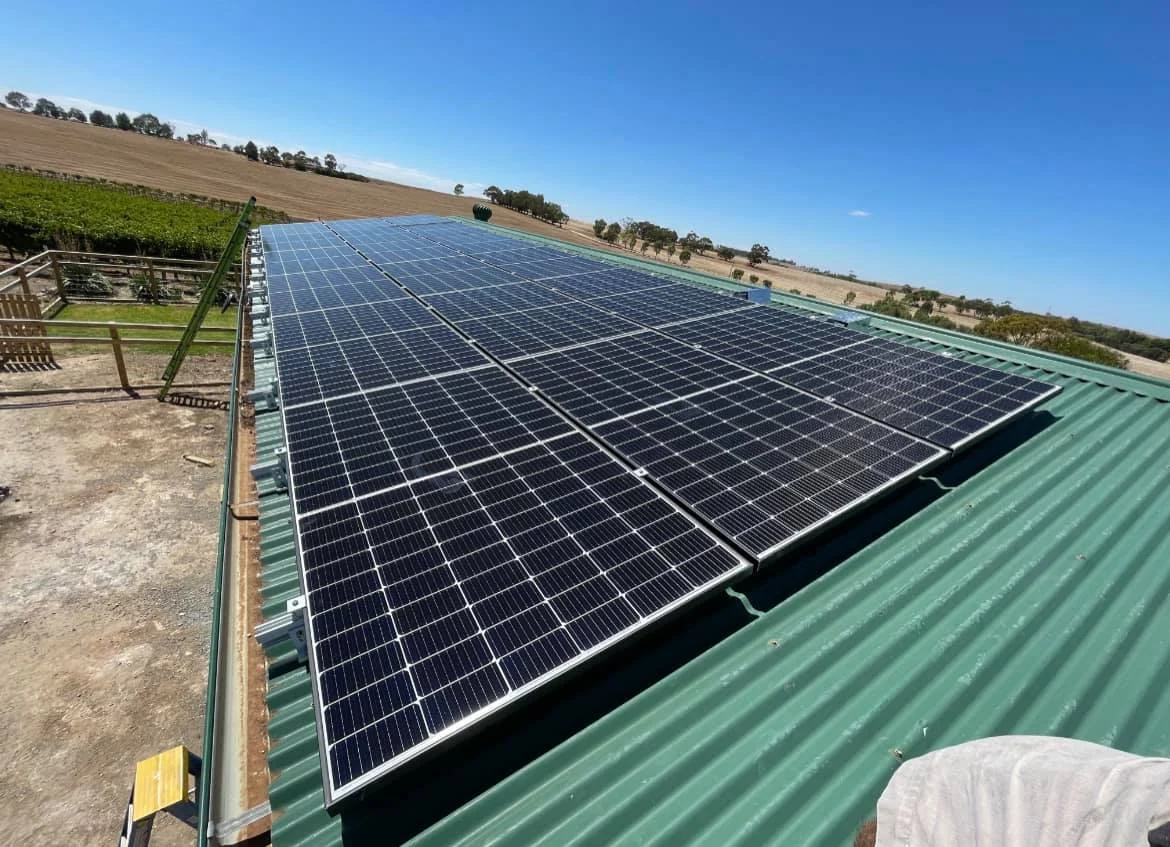
Solar Fault Finding
Solar panels not working, an inverter showing a fault, or output that has dropped? Our licensed electricians find the cause, in writing, before anyone talks about parts. Adelaide and the Sunshine Coast, any brand.
 4.9 Google 530+ reviews
 4.8 SolarQuotes
Solar fault finding means measuring until one cause is left
A solar system that has stopped, or is making less than it should, almost always has one cause. Finding it means measuring the strings, the wiring, the isolators, the inverter and the grid supply in daylight, and reading what the monitoring recorded in the days before. That is solar fault finding. Repairing the fault is a separate decision, and you make it with the findings in front of you.
Deionno Electrical & Solar has installed and serviced solar across Adelaide for ten years and now on the Sunshine Coast. Our own licensed electricians do the fault finding, on any brand of panel, inverter or battery, including systems whose installer has closed. If you have an error code on the screen, our free inverter fault code lookup reads it for you while you wait for the visit.
Have the inverter screen or the app handy
A photo of the inverter screen and a screenshot of the app's last week tell an electrician a lot before the visit. Some faults get narrowed down on the phone.
Solar panels not working? Start with what you see
Four ways a solar fault shows itself, and what each one usually points to.
Swipe to see more
What each solar fault symptom usually means
The table gives you a starting point. The verdict comes from a measurement on site, every time.
| What you see | Likely causes | What we test |
|---|---|---|
| Inverter dead, no lights, app offline | Tripped solar breaker, failed DC isolator, blown inverter supply, dead inverter | AC supply at the inverter, breaker and isolator condition, DC voltage arriving at the inverter |
| Red or orange light, error code | Grid voltage out of range, insulation or earth fault on a string, sensor fault, internal fault | Code read against the maker’s table, grid voltage at the terminals, insulation resistance on each string, event log |
| Zero production but inverter looks on | Inverter waiting on grid conditions, DC isolator open or failed, string open circuit | String open-circuit voltage, isolator contacts, inverter status screens |
| Output down 20 to 50 percent | One string down, failed panel or bypass diode, corroded connector, new shade, heavy soiling | Per-string current under load, panel-by-panel check where the strings disagree, shade survey |
| Trips mid-afternoon on sunny days | Grid overvoltage, loose neutral, inverter derating in heat | Grid voltage logged through the day, connections at the board, inverter temperature behaviour |
| App shows zero, inverter shows production | Wi-Fi dongle or monitoring gateway offline, portal account issue | Dongle status and reconnection, which is often a phone fix |
| Fault after a storm or power outage | Water in a DC isolator, surge damage, breaker tripped, settings reset | Isolator inspection, insulation test, breaker and settings check |
What you can safely check before you call
- Photograph the inverter display or write down exactly what it says, including any code.
- Open the monitoring app and look at the last seven days. Note whether the drop was sudden or gradual, and whether it happens at a set time of day.
- At the switchboard, find the solar breaker (it may be labelled PV or inverter). One reset is fine. If it trips a second time, leave it off and tell us.
- Run the shutdown and restart sequence on the label next to the inverter, in that order, and give it a few minutes before you power back up.
- From the ground, look for new shade, a dislodged panel, or anything hanging off the roof.
Don’t put a multimeter on the system, open the inverter, or touch a DC isolator or a roof junction box. Daylight keeps the DC side live, inverter on or off. Gather what you can see and leave the testing to the visit.
When to switch the solar off and call straight away
Most faults can wait for a booked visit. These can’t. Switch the solar supply off at the switchboard, leave the roof and the isolators alone, and call 1800 610 165 if you notice any of them.
- A burning smell near the inverter or the switchboard.
- Scorching, melting or discolouration on a DC isolator or the inverter.
- A crackling or buzzing sound from the inverter, an isolator or the board.
- A breaker that trips again straight after a reset.
- Water visibly inside an isolator or junction box after a storm.
- Panels lifted, cracked or dislodged after wind or hail.
What the solar fault-finding visit tests
One of our electricians comes out with test gear and works through the system in order, so nothing gets assumed.
- Inverter log and monitoring history. When the fault started, whether it comes and goes, and what the inverter recorded at the moment it stopped.
- Grid supply at the inverter. Voltage on each phase, logged, so an afternoon overvoltage trip shows up as a number on a page.
- Every string, in daylight. Open-circuit voltage and current under load, checked against what the panels should give in that light. A string that disagrees with its neighbours is pointing at the fault.
- Insulation resistance on the DC wiring. The test that finds the earth leak behind an insulation-fault code, and which string it sits on.
- Isolators and connectors. Opened and inspected for moisture, heat marks and arcing, with the connectors behind them checked for a plug that only ever went halfway in.
- Switchboard and earthing. The solar breaker, its connections, the earthing of the array and the condition of the board.
- On the roof. Cracked glass, a clamp that has lifted, cable sagging off the rails, a nest under the array, shade that wasn’t there when the system went in. Where output on a string disagrees with its neighbours, a panel-by-panel check or a thermal image finds the one that has failed.
How your monitoring data narrows it down before we arrive
The pattern in the app is often the first clue, and it is worth sending before the visit.
- Drops to zero at the same time each afternoon, then recovers. Grid voltage climbing past the inverter’s limit. Most common at the end of long rural lines and in streets where every second roof has panels.
- One step down and it stays there. A string or a panel has dropped out. The size of the step says how much of the array is missing.
- Slow slide over months. Soiling, growing shade, a connector corroding, or an older panel degrading.
- Flat zero with no data at all. Monitoring offline, the inverter unpowered, or the breaker off. Not necessarily a solar fault.
- Zero on wet mornings, fine by lunch. Water getting into an isolator or a connector; the insulation fault clears as it dries.
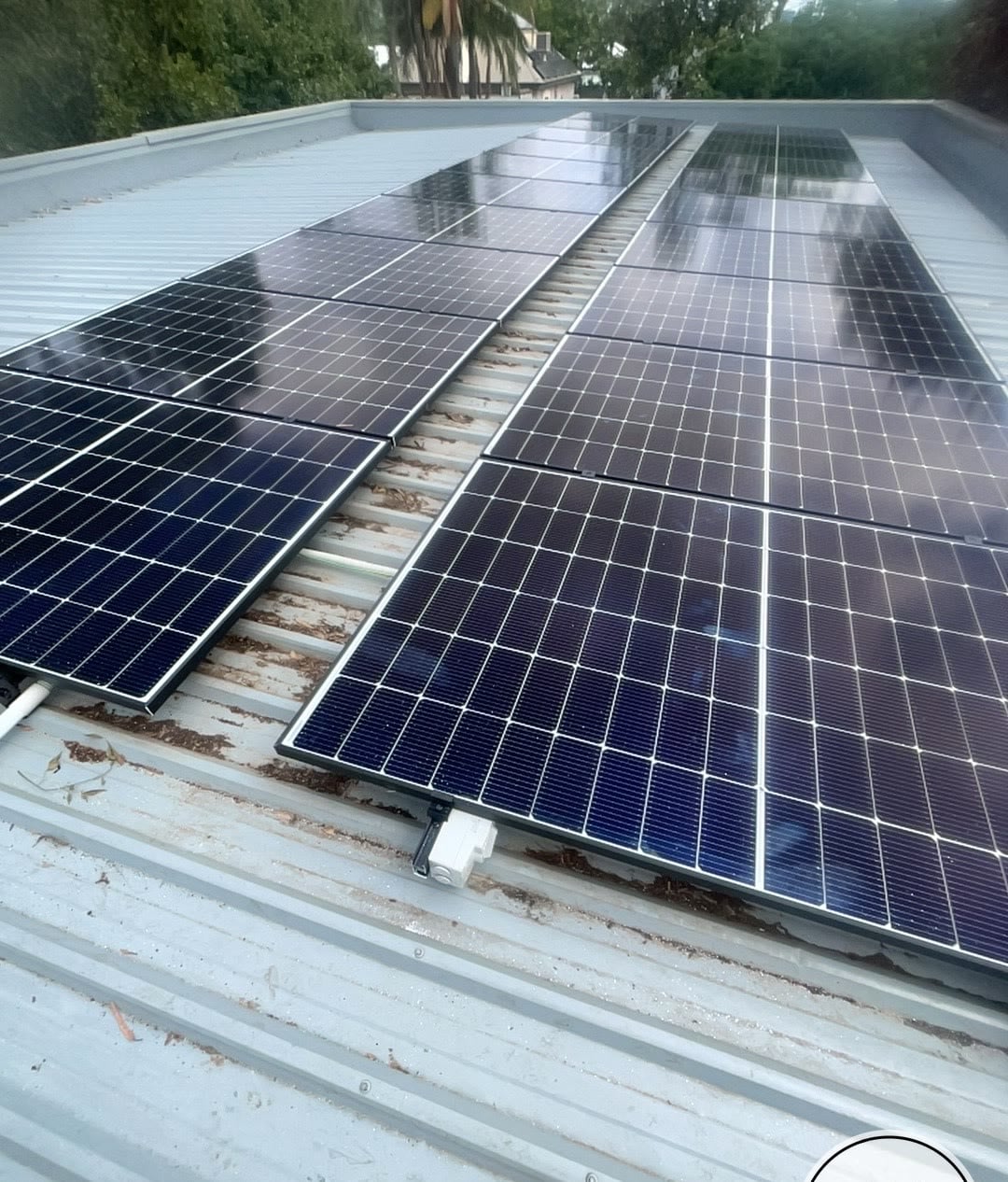
Fault finding on a system we did not install
A lot of the systems we test were installed by someone else, and some of those installers are gone. That changes nothing about the method. The measurements are the same on every brand; what differs is the inverter’s code table, and we hold the tables for 31 brands, including the ones that have left Australia. If the brand still trades here, we can also pull its service bulletins. If it does not, the findings say so plainly, because that affects your options more than the fault itself.
What you get at the end: written findings
The visit ends with a short written report, so nothing rests on what was said at the door. It records the symptom, the cause, where it is, the measurements that prove it, and your options with an indicative price for each. Sometimes the honest finding is that nothing is wrong: a system producing less in June than in January, or an export limit set by the network, is working as designed. You get that in writing too. The format varies with the job, from a short emailed summary to a fuller report with photos and readings, but it is always written down.
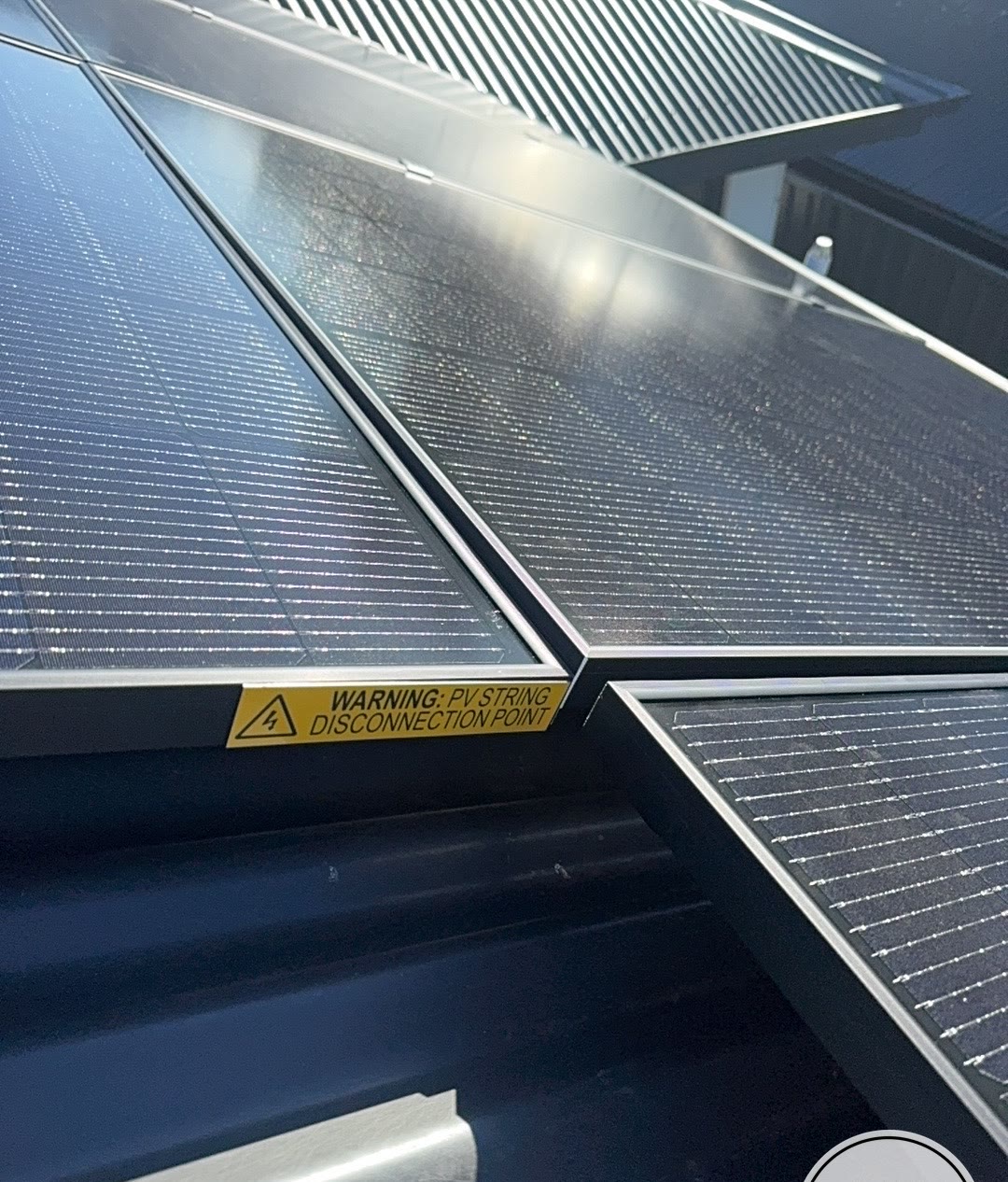
What solar fault finding costs
The visit is priced as a visit: the electrician’s time on site with the test gear, and the written findings. The fee varies with the system and what the visit involves, and you get it before we book. There is no travel charge anywhere in our service area, and the findings are yours whether or not you go ahead with a repair.
After the findings: the repair is a separate decision
Once the cause is on paper, the next step is yours. A failed isolator or connector is a short repair. A failed inverter raises the repair-or-replace question, and a failed panel raises the same one. Those decisions, along with warranty claims, insurance reports and parts for brands that have left, are covered on our solar system repair page. If the system is fine and simply due for a look, our solar maintenance guide covers what an annual check involves.
Solar fault finding in Adelaide and on the Sunshine Coast
Adelaide and South Australia
Adelaide’s long summer afternoons and the amount of solar on every street make grid overvoltage the most common cause of a system that trips after lunch, and we log the voltage over the afternoon so the finding carries a number. Older systems from the first wave of installs are now reaching the age where isolators and connectors fail. Our Adelaide electricians cover the metro area, the Hills, the Fleurieu and the Barossa from the Salisbury Plain base. See the Adelaide solar repairs page.
Sunshine Coast and South East Queensland
On the Coast the wet season fills isolators and connectors with water, salt air corrodes the beachside ones, and summer storms trip breakers and knock out monitoring. Faults that appear on wet mornings and clear by lunch are the ones we see most after a storm. Our Sunshine Coast electricians cover Caloundra to Noosa, the hinterland, Gympie and north Brisbane from the Corbould Park base. See the Sunshine Coast solar repairs page.
6.6 kW Solar Replacement with Enphase Microinverters in Beulah Park, SA
Fifteen Jinko panels, each with its own Enphase microinverter, replace a system where a whole row stopped reporting. The old system was removed.
Outcome: The data pointed at the row, the test confirmed it, and the owner chose a microinverter on every panel.
Read the full projectHow a solar fault-finding visit runs
From the first call to written findings.
Swipe to see more
Solar fault finding questions, answered
Straight answers from our electricians. Can’t find yours? Call 1800 610 165 or book the assessment and ask on the day.
My solar panels are not working. What do I check before I call anyone?
Photograph the inverter display, look at the last week in the monitoring app, check the switchboard for a tripped solar breaker and reset it once, and follow the restart steps on the inverter label. If it’s still faulty, or the breaker trips again, book a visit. Leave the multimeter in the drawer and don’t open anything on the DC side.
Is a red or flashing light on my inverter an emergency?
Usually not. A red light means the inverter has found a condition it will not run under, most often grid voltage or an insulation fault, and it has shut itself down safely. It becomes urgent if there is a burning smell, scorching, a buzzing sound, or a breaker that trips again straight after a reset. Then switch the solar off at the switchboard and call.
The app shows zero but the inverter has lights. Is the system generating?
Often, yes. A Wi-Fi dongle or monitoring gateway that has dropped off the network shows zero in the app while the inverter keeps working. Check the inverter’s own display for a production figure. Reconnecting the monitoring is frequently a phone fix.
What does a solar fault-finding visit actually test?
The grid voltage at the inverter, the open-circuit voltage and working current of every string, the insulation resistance of the DC wiring, the condition of each isolator and connector, the switchboard and earthing, the inverter’s event log, and the array itself on the roof. Where strings disagree, a panel-by-panel check or a thermal image finds the failed panel.
How long does solar fault finding take, and will I get a written report?
It varies with the system. A single-phase home with a string inverter is the quickest; a three-phase system, a battery, or a fault that needs a panel-by-panel check takes longer. You get written findings either way: the cause, where it is, the measurements and your options with an indicative price.
What does solar fault finding cost, and is the fee credited if I repair?
The fee varies with the system and what the visit involves, and you get it before we book. There is no travel charge anywhere in our service area, and the findings are yours to keep, repair or not.
Can you fault find a system you did not install, or whose installer has closed?
Yes. The tests are the same on every brand. We hold the fault code tables for 31 inverter brands, including the ones that have left Australia, and the findings say plainly whether parts and warranty support still exist for yours.
Why does my inverter trip or shut down at the same time every day?
On sunny afternoons the grid voltage in streets with a lot of solar can rise past the inverter’s limit, so it disconnects to protect itself and reconnects when the voltage falls. We log the voltage at your inverter across an afternoon so the finding is a number on a page, and your options follow from that number rather than from a guess at the inverter.
When should I switch my solar off at the switchboard?
When you smell burning, see scorching or melting on an isolator or the inverter, hear crackling or buzzing, find water inside an isolator, see panels dislodged after a storm, or a breaker trips again after one reset. Switch the solar supply off at the switchboard, leave the roof and isolators alone, and call.
Does a high power bill mean my solar panels are faulty?
Not on its own. A bill rises when the feed-in tariff drops, when usage moves into the evening, or when a retailer changes rates. Compare the solar credit line and the daily generation in the app with the same period last year. A real drop in generation points to the system; a bill with the same generation points to the tariff or the usage.
Keep reading

Ready to start?
Book a free 60-minute on-site assessment with one of our licensed electricians.
Free 60-minute on-site solar and battery assessment. No obligation.

$0 power bill guarantee
Arrange your free 60 minute on-site Solar & Battery Assessment in 30 seconds!
Which state is your home in?
Do you own your home?
Unfortunately, we only work with homeowners
If you are considering solar for a new home, or on behalf of someone else, select "I own my home"
We only work with homeowners
A solar or battery system is a permanent change to the property, so it needs to be arranged by the person who owns the home.
If you tapped that by mistake, head back and we'll pick up where you left off.
What are you looking for?
Our team can talk you through all options if you're not sure.
What appeals to you most?
You'll get all of these. We'd just like to know what matters most.
How much is your quarterly electricity bill?
The average Adelaide home spends $500 - $1000 per quarter. Not sure of yours? Take your best guess, we'll go through the real numbers at your assessment.
Whatever it is today, our goal is $0. If we don't get you there, we'll pay your bill.
How soon are you looking to get a system installed?
We can work with you on a longer timeline, or get you saving as soon as possible.
What is your address?
We have hundreds of happy customers across South Australia. We need your address to check we service your area and to look at your roof before we visit.
Great news, we service your area!
Anything else to share?
Every system we design is tailored to the home, so the more info the better! (Optional)
How should we get in touch with you?
Last step. We'll call to arrange your free on-site assessment at a time that suits you. No pressure and no obligation.
Request sent, we'll be in touch!
Do you want to skip the queue?
Call to speak directly with a solar specialist during business hours, and we can get your free on-site assessment booked in straight away.
📞What happens next?
- 1We'll give you a call
If you haven't called already, we'll give you a call to say hello.
- 2Discuss your needs and goals
We'll chat about what you're looking for, how we can help, and book in a time for your on-site assessment that suits you.
- 3Your free on-site assessment
We visit your home for 45 to 60 minutes to measure up the roof, check the switchboard and review how you use power.
- 4We send your detailed quote
A tailored proposal with the system design, the savings and the pricing laid out in full.
- 5We design and install
If you're happy with the proposal, our in-house team installs it and shows you how it all works.
4.9Google · 530+ reviews
4.8SolarQuotes reviews