
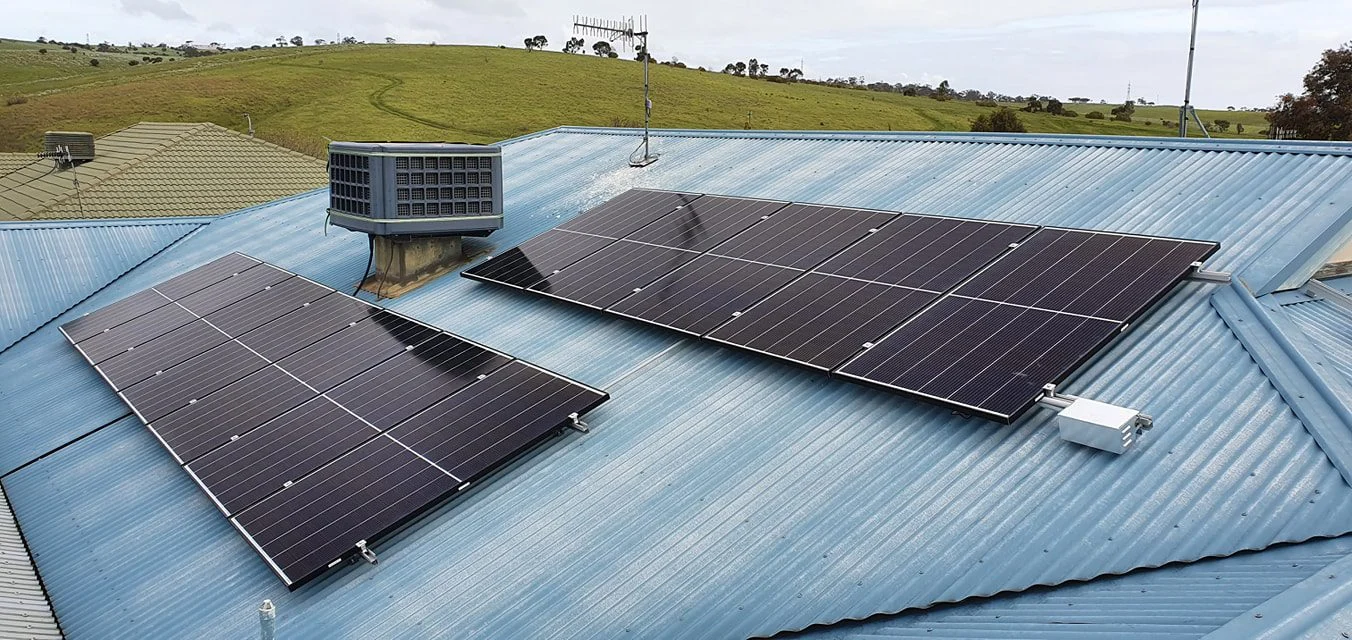
Solar Maintenance and Servicing
Solar panel servicing by our own licensed electricians in Adelaide and on the Sunshine Coast. An electrical check of the whole system, a deep clean of the panels, the battery serviced in the same visit, and the findings in writing.
 4.9 Google 530+ reviews
 4.8 SolarQuotes
Solar panel maintenance is a check on a system that is still working
Most solar systems never get looked at again after the day they are switched on. They sit on the roof through ten summers of heat, storms, dust and birds, and the first anyone hears of a problem is a higher bill. A solar service is the opposite of that. An electrician tests the system while it is still running, cleans the panels properly, and writes down what they measured so there is something to compare against next time.
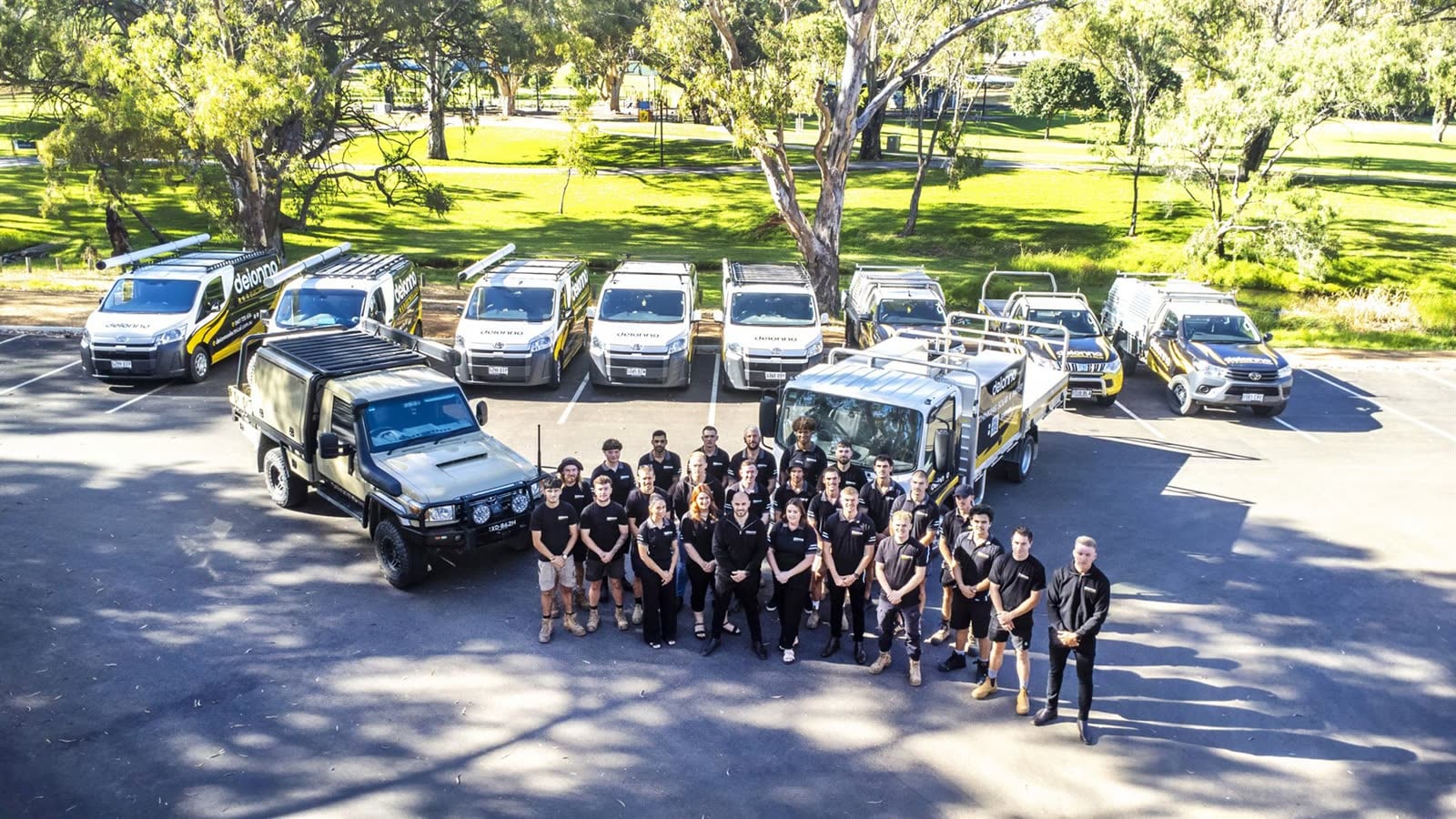
For ten years Deionno Electrical & Solar has been installing and looking after solar across Adelaide, and we now do the same on the Sunshine Coast. Every service is done by one of our own licensed electricians, on any brand of panel, inverter or battery, whether we installed it or not. If your system has already stopped or is throwing a fault, that’s a different job: start with solar fault finding.
Not sure when it was last looked at?
If the answer is never, or nobody knows, that's the system we see most. Tell us the inverter brand and roughly when it went in, and an electrician will tell you what a service would cover.
When a solar service is worth booking
Four situations where a check now is cheaper than a repair later.
Swipe to see more
Does a solar system need servicing?
Solar needs very little maintenance, but it does need some. A system has no moving parts. What it has are DC isolators sitting in the weather, plugs under every panel, cable clipped to rails, and an inverter working hard on the hottest days of the year. Those are the parts that age.
The federal government’s own advice is that a system should be looked over by an accredited installer or a licensed electrician, and that the visit should cover cleaning, clearing around and under the panels, testing the electrical components, inspecting cables and isolators, and reading the inverter’s fault history [1]. The Queensland Government says the same and adds that the work up close has to be done by a licensed electrician or an accredited installer, not the homeowner [2].
A service is for a system that looks fine from the ground. Once something has gone wrong, the job becomes fault finding, to find the cause, and then a repair.
How often solar panels should be serviced
We work to a simple schedule.
- A full service every two years. The electrical check, the inspection on the roof and at the switchboard, and a deep clean of the panels. Two years is also the interval the federal guidance suggests [1].
- A panel wash every six to twelve months. Six months where the panels get dirty quickly, twelve where they do not.
What moves a home toward the shorter end: living near the beach, where salt settles on the glass and works on isolators and fixings; trees overhead; birds; a roof pitch too flat for rain to rinse the panels; and a system old enough that its isolators and connectors are into the second half of their life.
What a solar service checks
One of our electricians works through the system in the same order every time.
- The panels and their mounts. Cracked glass, hot spots, lifted clamps, corrosion on the rails, and anything living underneath.
- DC isolators and connectors. Opened and checked for water, heat marks and brittle seals. Water getting into rooftop isolators is one of the faults the Clean Energy Regulator’s inspectors keep finding.
- Cabling. Cable that has slipped off the rails and is rubbing on the roof, conduit that has gone brittle in the sun, and penetrations that have lost their seal.
- The inverter. Fault history, fan and vents, error codes that came and went without anyone noticing, and whether the monitoring is still reporting.
- The switchboard. The solar breaker, its connections, the earthing and the labels.
- The shutdown procedure. That it is displayed beside the inverter and still readable, as the Queensland checklist asks [2].
- The area around the system. New shade from a tree or a neighbour’s extension, and anything stored against the inverter or battery.
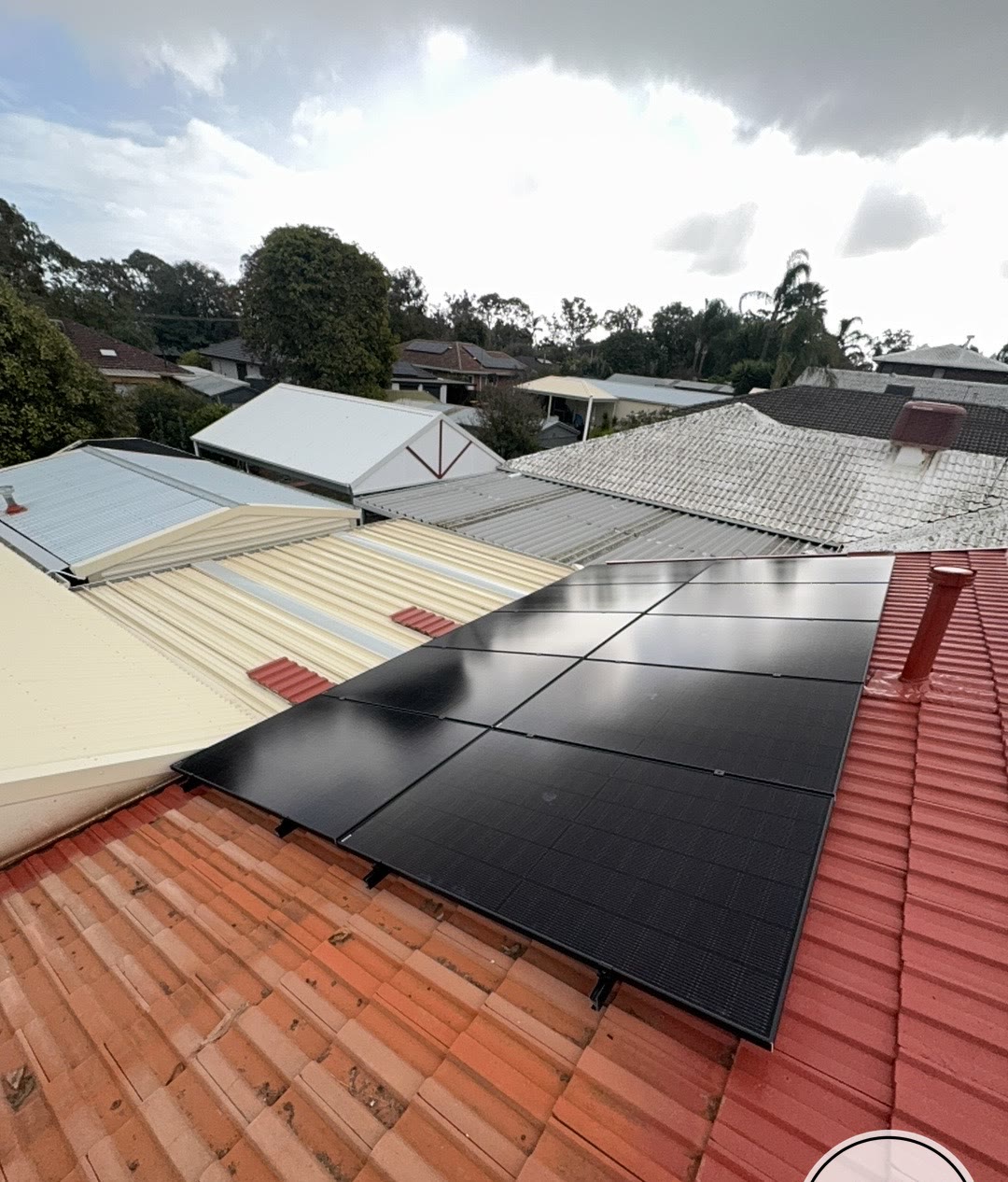
What we measure, and what you get in writing
Looking is half of a service. The other half is measuring, because most of what goes wrong with solar cannot be seen.
We test each string of panels for the voltage and current it should be giving in that light, test the insulation of the DC wiring for leaks to earth, and read the grid voltage at the inverter. A string that disagrees with its neighbours, or an insulation reading that has dropped, is a fault on its way.
You get the findings in writing: what was checked, what was measured, anything to keep an eye on, and anything that needs doing. Keep it. The readings are a baseline, and at the next service the first thing we do is compare. A slow drift shows up on paper long before it shows up on a bill.
Solar panel cleaning: how often, and who should do it
We clean panels, and we’ll tell you how often yours need it.
Rain does part of the job on a roof with a decent pitch. What it leaves behind is the film that bakes on: salt, traffic grime, pollen, lichen along the bottom edge of the frame, and bird droppings, which shade a cell completely and can cook it. That is what the deep clean at the two-year service is for. Between services, a wash every six to twelve months keeps a dirty site producing.
The government’s advice is that only a qualified person should clean panels [1], and it’s good advice. The real risks are the roof itself and the temptation to reach for a pressure washer or a harsh cleaner, both of which can damage a panel and neither of which a panel warranty will thank you for.
Inverter, monitoring and grid settings
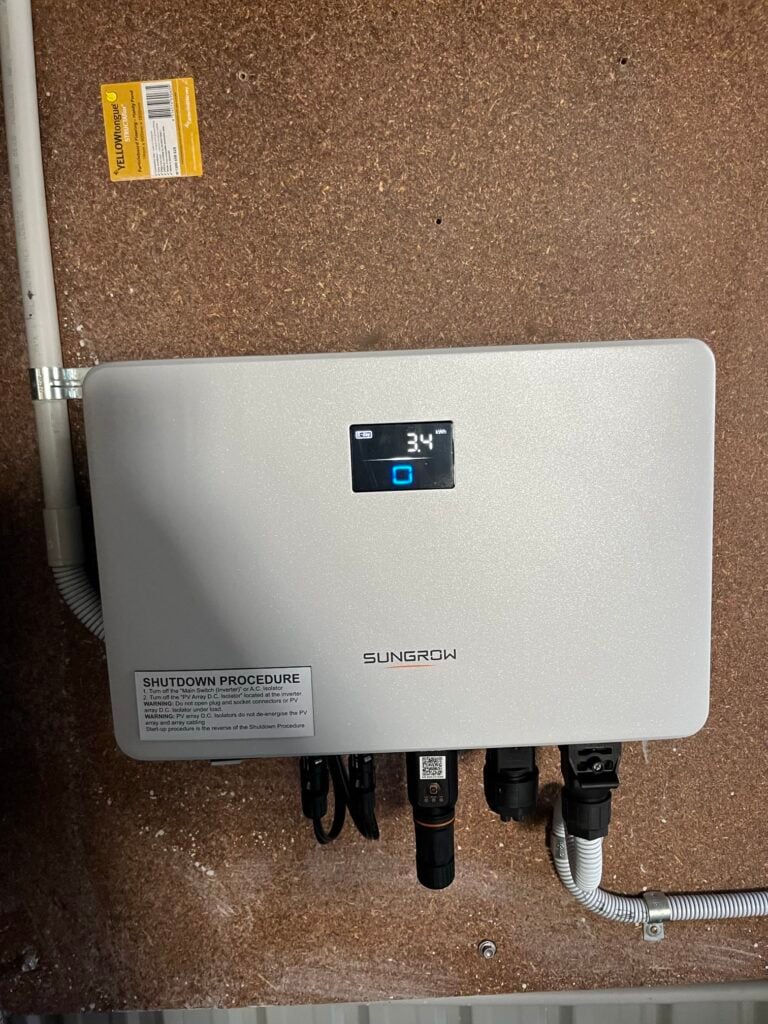
The inverter is the part most likely to be replaced before the panels are, so it gets its own attention: the event log, the temperature it has been running at, the firmware, and whether the app is still showing true production or just the last number it received before the Wi-Fi changed.
There’s also a compliance side. In South Australia the network’s technical standard makes the owner responsible for keeping the system safe and in good working order, and requires the inverter’s two voltage response modes to stay switched on [3]. Energex sets the same two modes as a condition of connection in South East Queensland [4]. Settings can change when an inverter is replaced or reset, so we check them at every service.
Solar battery maintenance
Yes, we service batteries, and we do it in the same visit.
A home battery needs less looking after than people expect. We check that its vents are clear and nothing has been stored on top of it or against it, that the enclosure and cable entries are sealed, that insects have not moved in, that the firmware is current, and that the app’s record of charge and discharge looks like a healthy battery. Where the battery runs a backup circuit, we test the changeover, because the worst time to find out it does not work is during a blackout.
The Queensland Government’s battery guidance is to ask your installer at handover what maintenance the battery needs, when, and who should do it [5]. If nobody told you, we can.
Servicing a solar system we did not install
Plenty of the systems we service were put in by someone else, and some of those installers have since closed. The service doesn’t change. Every brand gets the same tests. The one thing that differs is the inverter’s fault code table, and we keep those tables for 31 brands, the ones that have left Australia among them. Our free inverter fault code lookup uses the same tables.
If the brand no longer trades here, the report says so plainly, because that changes your options if a part ever fails.
Solar servicing and your warranties
Panel and inverter warranties are written around a system that has been installed and looked after to the maker’s instructions. A dated service report from a licensed electrician is the simplest proof that yours has been. It is also the first thing we reach for if we are helping you with a warranty claim, on a system of ours or anyone else’s.
What a solar service costs
A service is a booked, paid visit, and you get the price before we book it. It depends on the number of panels, the roof (height, pitch and access), whether there is a battery, and whether it is the full two-year service or a wash.
If the service turns up a fault, you get the finding and a written quote before anything is repaired. A callout to a system that has already stopped works differently: the diagnosis over the phone costs nothing, and if we come out there is a callout fee that comes off the price of any repair, replacement or other work we do.
Solar panel maintenance in Adelaide and on the Sunshine Coast
Adelaide and South Australia
Adelaide’s mix is long dry summers, dust, and the storms that end them. Plenty of systems from the first wave of installs are now old enough for their isolators and connectors to start failing, and a service is where that gets caught. We service the metro area, the Hills, the Fleurieu and the Barossa from our Salisbury Plain base, and the Adelaide solar repairs page covers the rest of what we do there.
Sunshine Coast and South East Queensland
On the Coast the enemies are salt and water. Salt air works on fixings and isolators near the beach, the wet season finds every tired seal, and panels on low-pitch roofs grow a line of lichen along the bottom edge. Homes within a few streets of the water belong on the six-month wash. We service from Caloundra to Noosa, the hinterland, Gympie and north Brisbane out of our Corbould Park base, and the Sunshine Coast solar repairs page covers the rest of what we do there.
More on solar panel maintenance
Our solar maintenance guide covers what you can safely keep an eye on yourself between services, from the ground.
Sources
- Australian Government, energy.gov.au, Look after your solar system.
- Queensland Government, Household solar system maintenance and inspections, updated 22 August 2024.
- SA Power Networks, Technical Standard TS129, issued 16 July 2025.
- Energex, Connection essentials.
- Queensland Government, Battery safety and maintenance, updated 11 February 2024.
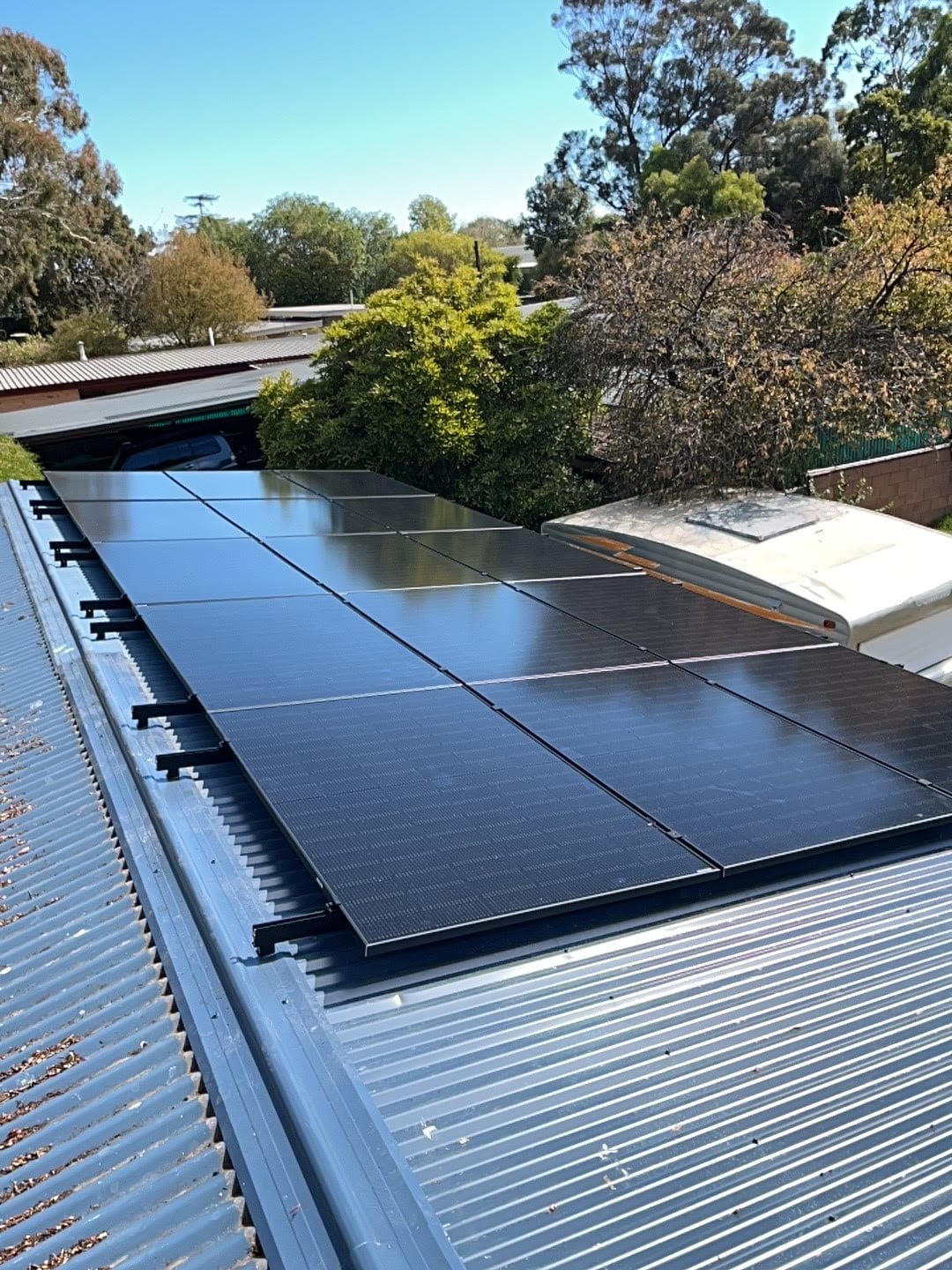
Solar Panel Replacement for Shed Roof Repairs in Hope Valley, SA
20 solar panels taken off a shed roof for roof and wall repairs, then replaced with new panels, DC cabling, isolators, racking and earthing, and the system tested.
Outcome: Twenty panels back on a repaired shed roof with new cabling, isolators and earthing, and the whole system tested before handover.
Read the full projectHow a solar service runs
From the first call to the date of the next one.
Swipe to see more
Solar maintenance and servicing questions, answered
Straight answers from our electricians. Can’t find yours? Call 1800 610 165 or send us an enquiry and we’ll call you back.
How often should solar panels be serviced?
We recommend a full service with a deep clean every two years, and a panel wash every six to twelve months in between. Two years is also the interval the federal government’s guidance suggests. Homes near the coast, under trees or on a low-pitch roof belong at the six-month end for washing.
What does a solar service include?
An electrical check of every string, the DC wiring, the isolators and connectors, the inverter, the switchboard and the earthing. An inspection of the panels and mounts on the roof. A deep clean of the panels. A check of the battery if there is one. Then the findings and the readings in writing.
How much does solar panel servicing cost?
It depends on the number of panels, the roof, whether there is a battery and whether it is a full service or a wash. You get the price on the phone before we book. If the service finds a fault, you get a written quote before any repair.
Do solar panels really need cleaning?
Rain does some of it. What it leaves is the film that bakes on: salt, grime, pollen, lichen along the bottom of the frame and bird droppings. A deep clean every two years deals with that, and dirty sites benefit from a wash every six to twelve months.
Can I clean my own solar panels?
From the ground with a hose on a cool morning, there’s little harm. Getting on the roof is where people get hurt, and pressure washers and harsh cleaners can damage panels. The federal guidance is that only a qualified person should clean them.
Do solar batteries need maintenance?
A little. Vents and clearances kept clear, the enclosure sealed, firmware current and the backup changeover tested. We service the battery in the same visit as the panels and inverter.
What is the 20% rule for solar panels?
It is not an Australian rule. The phrase comes from American websites, where it describes sizing a system about 20 percent bigger than your usage. The closest thing here is the usual panel performance warranty, which allows output to fall to about 80 percent by year 25.
Will a service affect my warranty?
It helps it. Warranties assume the system has been looked after to the maker’s instructions, and a dated report from a licensed electrician is the simplest proof. Keep it with your warranty papers.
Do you service systems you did not install?
Yes, any brand, including systems whose installer has closed and inverter brands that have left Australia. The tests are the same on every system.
What is the difference between a service, fault finding and a repair?
A service checks a system that is working. Fault finding finds the cause when one has stopped or dropped. A repair fixes it. A regular service is how you catch the small things before they need the other two.
Keep reading
Ready to start?
Book a free 60-minute on-site assessment with one of our licensed electricians.
Free 60-minute on-site solar and battery assessment. No obligation.

$0 power bill guarantee
Arrange your free 60 minute on-site Solar & Battery Assessment in 30 seconds!
Which state is your home in?
Do you own your home?
Unfortunately, we only work with homeowners
If you are considering solar for a new home, or on behalf of someone else, select "I own my home"
We only work with homeowners
A solar or battery system is a permanent change to the property, so it needs to be arranged by the person who owns the home.
If you tapped that by mistake, head back and we'll pick up where you left off.
What are you looking for?
Our team can talk you through all options if you're not sure.
What appeals to you most?
You'll get all of these. We'd just like to know what matters most.
How much is your quarterly electricity bill?
The average Adelaide home spends $500 - $1000 per quarter. Not sure of yours? Take your best guess, we'll go through the real numbers at your assessment.
Whatever it is today, our goal is $0. If we don't get you there, we'll pay your bill.
How soon are you looking to get a system installed?
We can work with you on a longer timeline, or get you saving as soon as possible.
What is your address?
We have hundreds of happy customers across South Australia. We need your address to check we service your area and to look at your roof before we visit.
Great news, we service your area!
Anything else to share?
Every system we design is tailored to the home, so the more info the better! (Optional)
How should we get in touch with you?
Last step. We'll call to arrange your free on-site assessment at a time that suits you. No pressure and no obligation.
Request sent, we'll be in touch!
Do you want to skip the queue?
Call to speak directly with a solar specialist during business hours, and we can get your free on-site assessment booked in straight away.
📞What happens next?
- 1We'll give you a call
If you haven't called already, we'll give you a call to say hello.
- 2Discuss your needs and goals
We'll chat about what you're looking for, how we can help, and book in a time for your on-site assessment that suits you.
- 3Your free on-site assessment
We visit your home for 45 to 60 minutes to measure up the roof, check the switchboard and review how you use power.
- 4We send your detailed quote
A tailored proposal with the system design, the savings and the pricing laid out in full.
- 5We design and install
If you're happy with the proposal, our in-house team installs it and shows you how it all works.
4.9Google · 530+ reviews
4.8SolarQuotes reviews