Takes 30 seconds. We will confirm a time that suits you.
Solar battery installation on the Sunshine Coast
DC-coupled hybrid battery systems - all four leading brands, CHBP rebate handled, installed by a SAA-accredited local team.
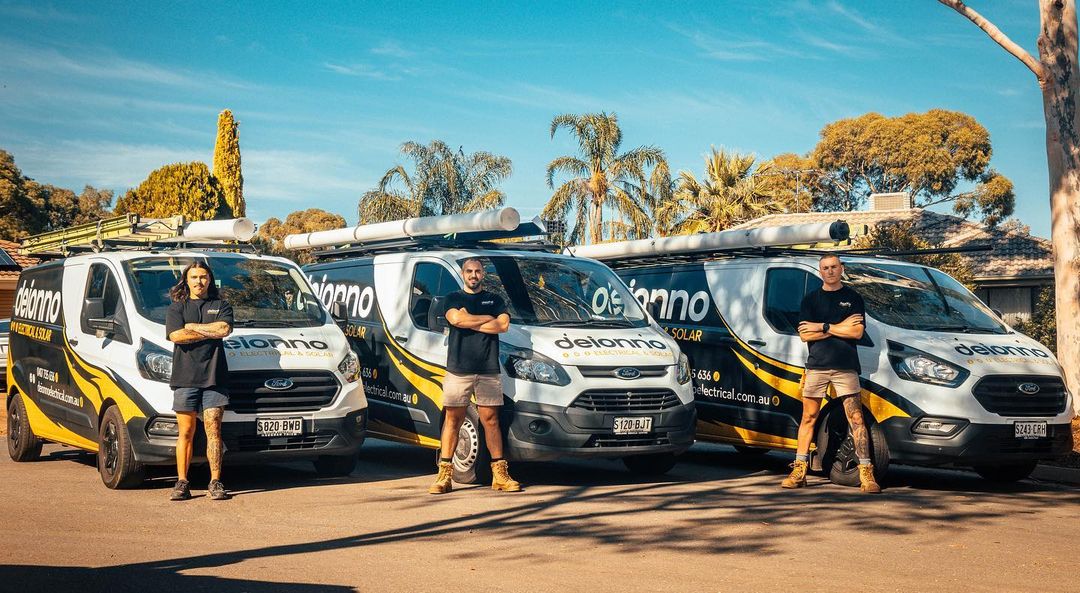
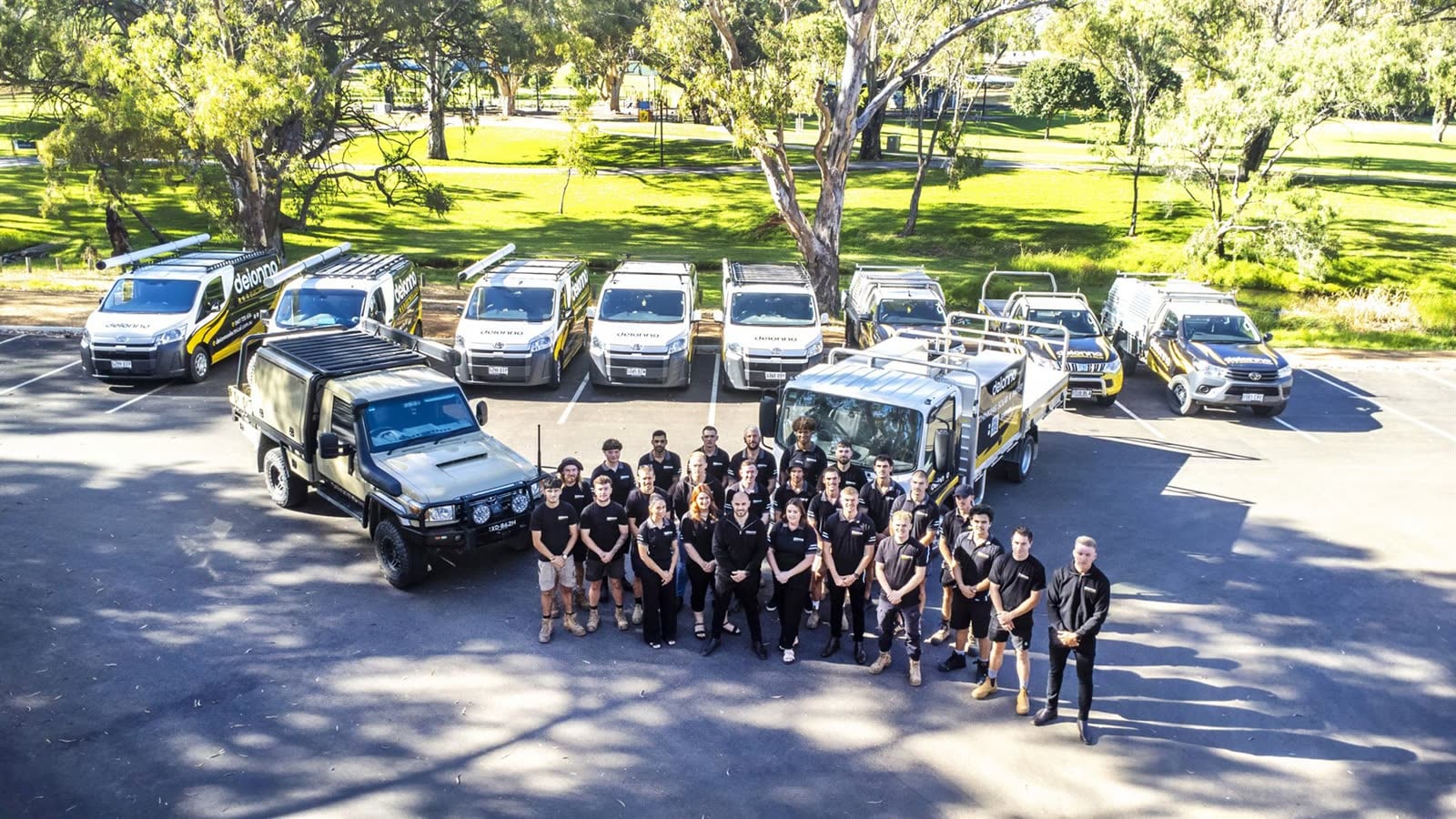
From Corbould Park, our Queensland electricians (contractor licence 1512582) fit batteries across the Sunshine Coast, the Sunshine Coast Hinterland, Caboolture, North Brisbane and Noosa. The office opened late 2025; the company behind it has installed solar and batteries since 2017, more than 4,000 jobs so far. Sungrow, Sigenergy and Tesla Powerwall have each certified us, and every job carries our 10-year workmanship warranty.
Sizing a battery starts with your bills, so that is where our free assessment starts too. An electrician spends up to an hour on site, checks the roof and the existing inverter, and designs around what you use after dark. You pay nothing for the visit or the quote, and there is no travel charge anywhere in the area. To book solar battery installation on the Sunshine Coast, call 1800 610 165.
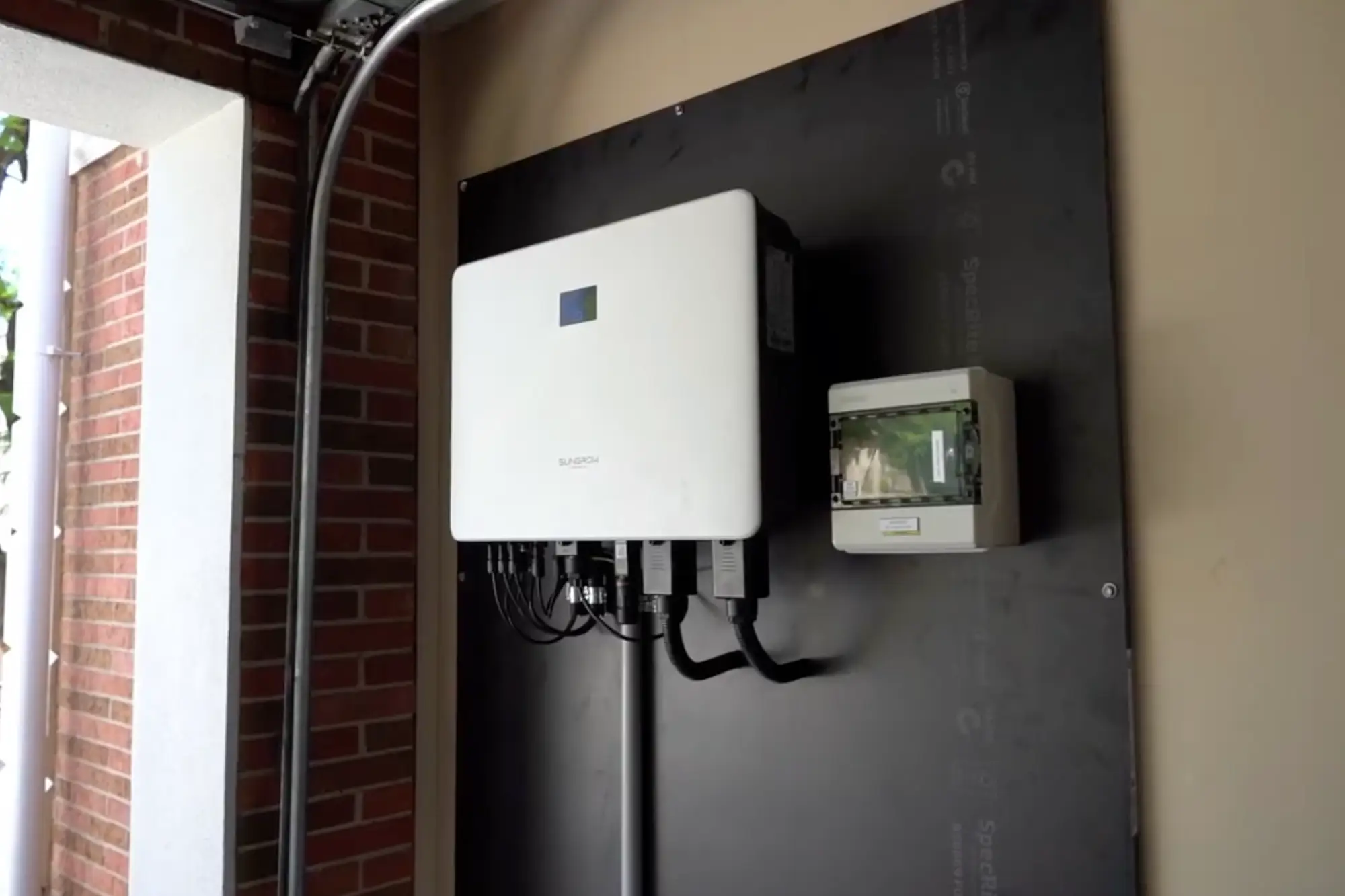
We install solar batteries across the Sunshine Coast – Sigenergy, Sungrow SBR HV, Tesla Powerwall 3 and GoodWe Lynx Home. Every install is DC-coupled hybrid architecture, sized to your actual after-dark usage, with the Cheaper Home Batteries Program rebate applied at point of sale and cyclone-rated mounting where the hinterland needs it.
Should you add a battery now?
The answer depends on whether the maths actually works for your home. Here’s where battery pays back fastest:
You pay $400+ per quarter and most of your usage is after dark
You’re on or moving to a time-of-use tariff (peak rates 30–45 c/kWh, feed-in 4–8 c/kWh)
You want blackout backup – storms, outages, voltage problems
You have or are planning an EV (battery + EV charger integration is the highest-IRR setup right now)
Your existing solar inverter is older than 5 years and due for replacement anyway – the hybrid swap is incremental
You want to lock in the Cheaper Home Batteries Program rebate before it tapers
As of May 2026 the CHBP rebate works out to roughly $260 per usable kWh for the first 14 kWh of battery capacity, with reduced support above that. It now declines every six months through to 2030 – the longer you wait, the less the rebate is worth. Eligibility detail on theFederal Government solar batteries page.
If you don’t tick most of these boxes, we’ll tell you straight – sometimes the right call is bigger solar today and battery in two years when your tariff structure changes., m
DC-coupled vs AC-coupled – the architecture choice that defines lifetime economics
If you remember one thing from this page: install DC-coupled hybrid on every new system. AC-coupled bolt-on only makes sense in one specific scenario – you have a high-quality string inverter under 3 years old that you must keep.
Here’s why DC-coupled is the right architecture in 2026:
The efficiency gap
In a DC-coupled hybrid system, solar generates DC, the battery stores DC, and the inverter converts to AC only once – when power is delivered to your house. Round-trip efficiency is around 94–96%.
In an AC-coupled bolt-on system, solar generates DC, the string inverter converts to AC for the house, then a separate battery inverter converts back to DC to store, and back to AC again when discharging. That’s three conversions instead of one. Round-trip efficiency drops to around 88–92%.
On a 13.5 kWh battery cycling daily, the difference is hundreds of kWh of usable energy per year – lost to extra conversion steps in an AC-coupled setup that a DC-coupled hybrid simply doesn’t have. Across the 10-year life of the battery, that compounds into a meaningful number.
Warranty and reliability
AC-coupled installs mean two inverters, two warranties, and two paths for failure. When something goes wrong, the manufacturers will argue about who’s liable. DC-coupled hybrid means one inverter, one warranty, one phone call.
Expansion and upgrades
DC-coupled batteries from Sigenergy, Sungrow and GoodWe are modular – you start at 8 or 9.6 kWh and add modules later as your needs grow. AC-coupled bolt-ons are typically one-and-done units; expanding means a second unit plus a second battery inverter.
DC-coupled hybrid
AC-coupled bolt-on
Round-trip efficiency
~94–96%
~88–92%
Inverter count
1 (hybrid)
2 (string + battery)
Warranty paths
1
2 (more arguments)
Best for
New systems and full upgrades
Existing string inverter under 3 yrs old you must keep
Blackout backup
Native, sub-20ms transfer
Add-on, slower transfer
Future expansion
Modular, add kWh later
Limited, often a rip-out
Typical lifetime cost
Lower
Higher (replacement at year 7–10)
ARENA’s energy storage research confirms DC-coupled hybrid is now the dominant architecture in new Australian residential battery deployments, and the gap is widening as inverter prices fall.
Sigenergy – our recommended platform for new installs
Sigenergy is a relative newcomer to the Australian market (entered 2023) but has rapidly become our default recommendation for any household installing or planning an EV. Three reasons why:
1. It’s the only true single-platform stack
Sigenergy ships solar inverter, battery storage, EV charger, gateway and AI energy management as a single integrated stack from one manufacturer. Every other brand requires at least two manufacturers if you want EV integration (Tesla + Wallbox, Sungrow + Zappi, GoodWe + Wattpilot). With Sigenergy you get one app (mySigen), one warranty, one installer, one phone number when something goes wrong.
2. The hardware is genuinely best-in-class
Modular HV battery: 8 – 48 kWh per phase, expandable past 100 kWh on three-phase – grows with your needs
Hybrid inverter: 5 – 25 kW with up to 6 MPPTs (matches commercial-grade inverters at residential scale)
Integrated bi-directional DC EV charger up to 25 kW – V2H-ready, meaning your EV becomes a 60 kWh house battery during blackouts
AI gateway with weather-aware dispatch (charges battery from grid the night before a storm if forecast suggests low solar tomorrow) and sub-10 ms backup transfer
Three-phase native architecture – most batteries are single-phase even on three-phase houses, which limits backup scope
3. The EV integration economics work
An EV household running a single-platform Sigenergy setup avoids two duplicated bits of hardware that would otherwise sit in a Tesla-plus-separate-AC-charger setup: a second inverter (the EV charger’s on-board AC-to-DC converter) and a separate communication path. Single conversion plus single platform means better solar-to-EV optimisation and fewer warranty paths.
Sigenergy isn’t always the cheapest pick – but for any home planning an EV in the next 3 years, the integrated stack is worth modelling. If you don’t want or need EV integration, Tesla Powerwall 3, Sungrow or GoodWe may suit better. We’ll recommend based on your situation, not our margin.
The four batteries we install
All DC-coupled hybrid. We don’t install AC-coupled bolt-on batteries on new systems. Here’s our shortlist and how we choose:
Sigenergy SigenStor – our #1 for EV households, modular HV, integrated bi-directional charger, V2H-ready
Sungrow SBR HV with SH-RT hybrid – proven workhorse, strong on three-phase, well-priced for non-EV homes
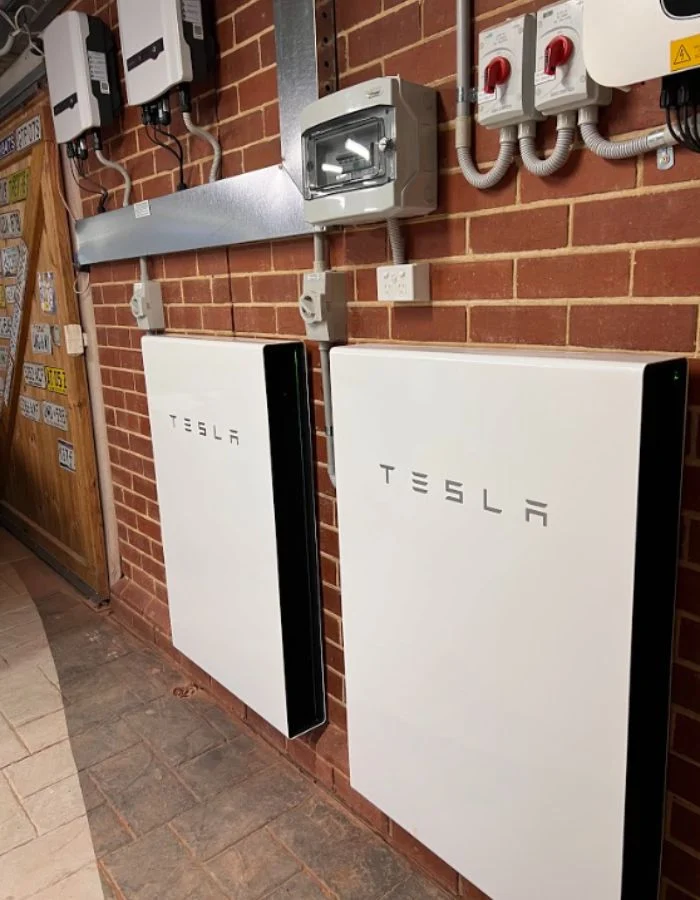
Tesla Powerwall 3 – cleanest app, 13.5 kWh integrated unit with hybrid inverter inside, fastest install (half-day)
GoodWe Lynx Home with ET hybrid – value DC-coupled option, modular, strong warranty
Warranty – what you actually get, and what voids it
All four batteries on our recommended list carry a 10-year warranty with retained-capacity guarantees. But the small print matters – here’s the side-by-side:
Battery
Term
Retained capacity
Throughput/cycles
Sigenergy SigenStor
10 years
70% at year 10
Throughput cap, ~6,000 cycles equivalent
Sungrow SBR HV
10 years
70% at year 10
Throughput cap
Tesla Powerwall 3
10 years
70% at year 10
Unlimited cycles (residential self-consumption)
GoodWe Lynx Home
10 years or 12,000 cycles
70% at year 10
Whichever comes first
Four warranty mechanisms run in parallel
Most homeowners assume “10-year warranty” means a single clock running for 10 years. It’s actually four clocks running simultaneously, and the warranty ends when the first one trips:
Time – typically 10 years from commissioning date
Throughput – total energy passed through the battery (typically 30,000–40,000 kWh)
Cycle count – number of full charge/discharge cycles (typically 6,000–12,000)
Retained capacity – the battery must still hold 60–70% of original capacity
Most homes will hit the time cap first because residential batteries cycle ~1.0–1.2 times per day. EV households can hit throughput first because they cycle harder – worth modelling.
Common warranty voiders we protect against
Missing commissioning paperwork – we submit at install (not in week three when it’s already void)
Ambient temperature outside 0–45 °C – we choose battery location specifically to avoid this. West-facing garages and metal sheds bake in summer; we cite this when we recommend an indoor location
Firmware out of date – we update at every service visit and our 12-month proactive monitoring catches firmware lapses
Under the New Energy Tech Consumer Code, we’re your point of contact for any warranty claim. You don’t deal with manufacturer hotlines – we manage the claim, the replacement supply chain, and the reinstall labour. Most warranty claim failures we see at other installers come down to paperwork. We hold yours.
Storm and cyclone considerations – specific to the Sunshine Coast
Storm season runs November to March. Cat-1 equivalent wind events hit the hinterland regularly. Lightning strikes are common across the elevated areas (Maleny, Mapleton, Conondale, Kenilworth). Battery installs need to be engineered for our conditions, not a generic Australian spec.
What we do as standard
Region B wind-loading certified mounting – we don’t use generic Region A kits and rebadge them
Reinforced rails, additional clamps and tile-reinforcement plates for Maleny, Mapleton, Conondale, Kenilworth and similar elevated sites
Battery cabinet sited away from flood overlays and above BAL-rated lines where bushfire ratings apply
Surge protection (SPDs) Type 2 on DC and AC sides as standard – never an upsell
Cabinet ventilation and clearance complying with AS/NZS 5139
Hinterland-specific upgrades we recommend
Type 1 SPD upgrade on the main switchboard (lightning strikes within 50 m can blow Type 2 SPDs)
Weather-triggered gateway disconnect for severe-storm sites (the Sigenergy gateway does this natively)
Earth bonding inspection on properties with old or fragmented earth stakes
Post-storm support
Remote monitoring (where you choose a service plan that includes it) often spots a fault before you do – if a CT clamp gets blown by a strike, the dashboard shows it immediately. We prioritise callouts to service plan customers during storm season.
What’s included with every Deionno battery install
Custom sizing against your actual after-dark usage – we don’t oversize to pad the quote
DC-coupled hybrid architecture by default – we don’t do AC-coupled bolt-on on new installs
CHBP rebate applied at point of sale – no cash refund chase later
Backup gateway scoped with you – essential circuits only or whole-of-home
Surge protection on DC and AC sides (mandatory – hinterland lightning is real)
Cyclone-rated mounting where the design needs it
Battery cabinet location complying with AS/NZS 5139 – ventilation, clearance, BAL-rated where applicable
Energex pre-approval and battery commissioning paperwork submitted to the manufacturer (warranty insurance)
App set-up on your phone, monitoring dashboard backed up on our system
Manufacturer warranties on all equipment plus our workmanship warranty
Indicative installed pricing
After CHBP rebate, including GST, standard installation:
Battery
Capacity
Installed after CHBP rebate
Tesla Powerwall 3
13.5 kWh integrated hybrid
$11,300 – $13,800
GoodWe Lynx Home + ET hybrid
12 kWh modular
$12,300 – $14,800
Sungrow SBR096 + SH5.0RT
9.6 kWh + 5 kW hybrid
$12,800 – $15,300
Sungrow SBR128 + SH8.0RT
12.8 kWh + 8 kW hybrid
$15,300 – $18,300
Sigenergy 16 kWh + 12 kW hybrid + EV charger
16 kWh + integrated bi-directional EV
$22,800 – $27,800
Switchboard upgrades (~$800–$1,800 on pre-2010 boards) and whole-home backup gateways are line-itemed separately so nothing’s hidden. Three-phase installs typically add $400–$800.
How it works – from first call to switched on
Send us your bill, switchboard photo, and existing solar details (or book a free site visit).
We model your usage, size the battery, send a fixed-price quote.
Sign-off and deposit. Energex pre-approval starts.
Equipment delivered, install booked (typically 3–6 weeks from quote).
Install – 1 day for battery-only addition with hybrid swap, 2 days if adding solar + battery + EV charger together.
Commissioning, app set-up, written handover, manufacturer paperwork submitted same day.
Why Sunshine Coast homeowners choose Deionno for battery installs
SAA-accredited installers with Grid Connected Battery Systems (GCBS) accreditation (Solar Accreditation Australia replaced CEC installer accreditation in February 2024). GCBS is a separate qualification- not all solar installers have it.
Brand-agnostic recommendations – we install all four leading batteries, we pick the right one for your home, not our margin.
Local team. Same crew installs and services your system.
Engineering-led design – we model your actual usage, not postcode averages.
Full electrical contractor – we can do switchboard upgrades, sub-mains and any associated electrical work as part of the same install.
Storm-region experience – installs across coastal and hinterland Sunshine Coast, with mounting and surge protection designed for our conditions.
Get a fixed-price quote
Send us your last power bill, switchboard photo and (if you have existing solar) inverter make/model. We’ll come back with a sized battery, payback model run against your actual usage, and a line-itemed fixed-price quote. Site visit free, no obligation.
Call the Sunshine Coast office on 1800 610 165 or fill in the contact form below.
Recent battery installations in Sunshine Coast
Real jobs across the Sunshine Coast, added as our crews finish them.
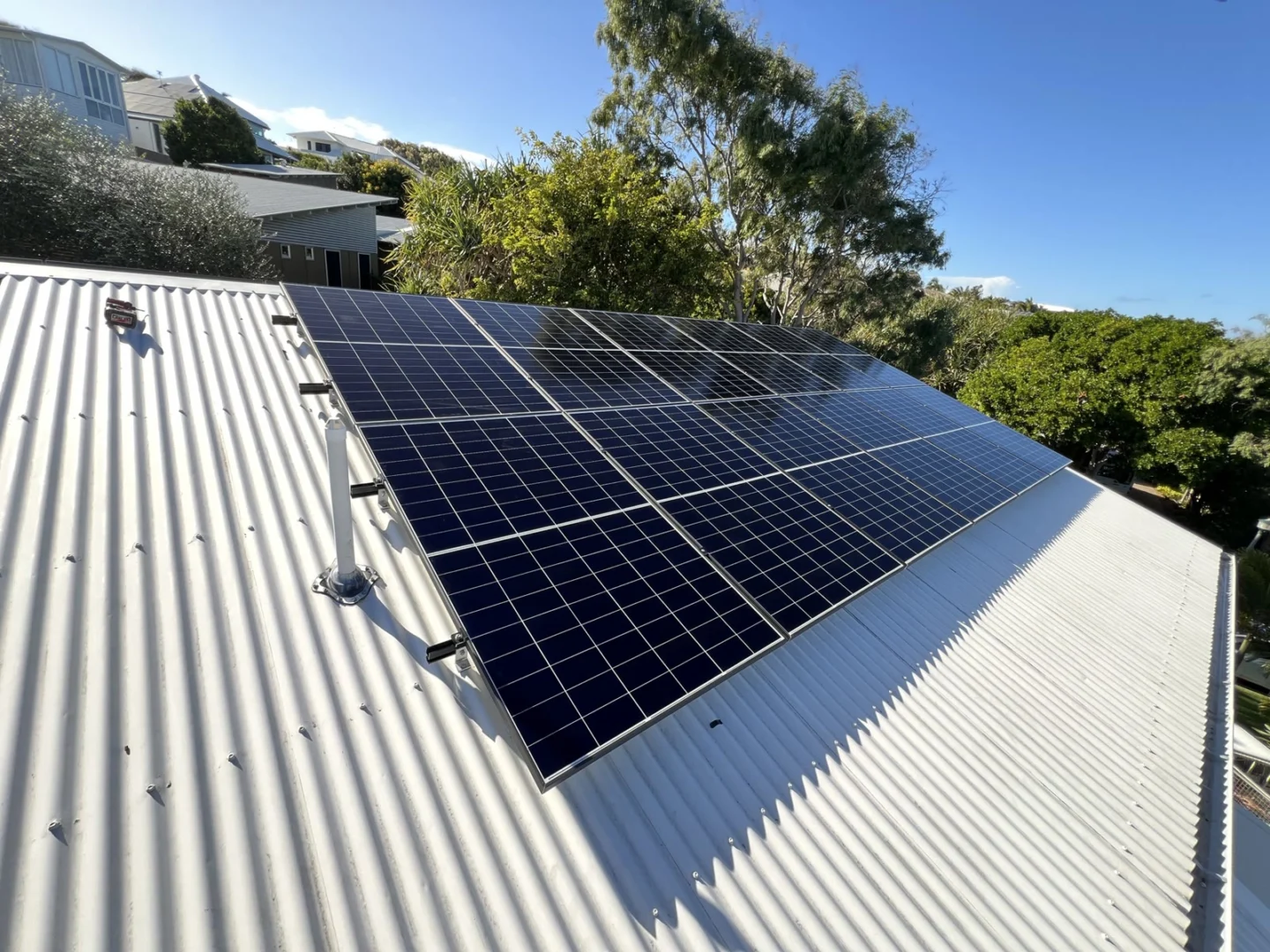
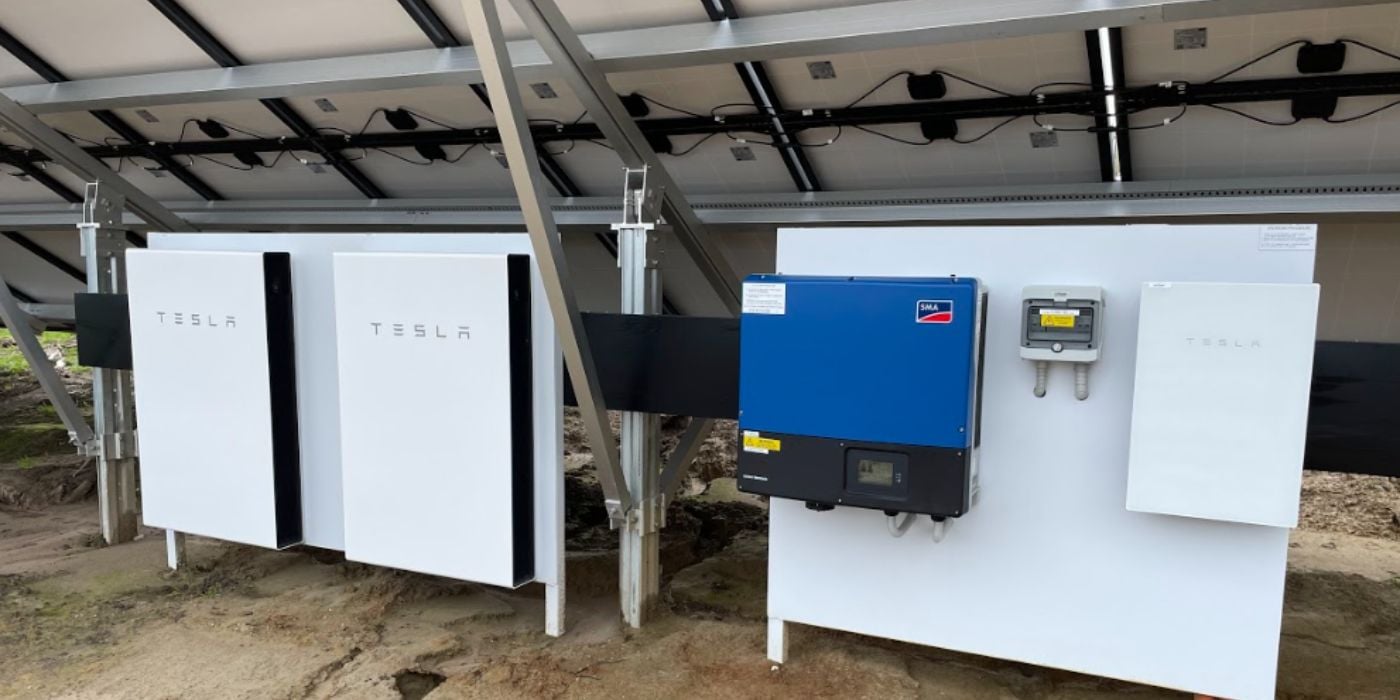
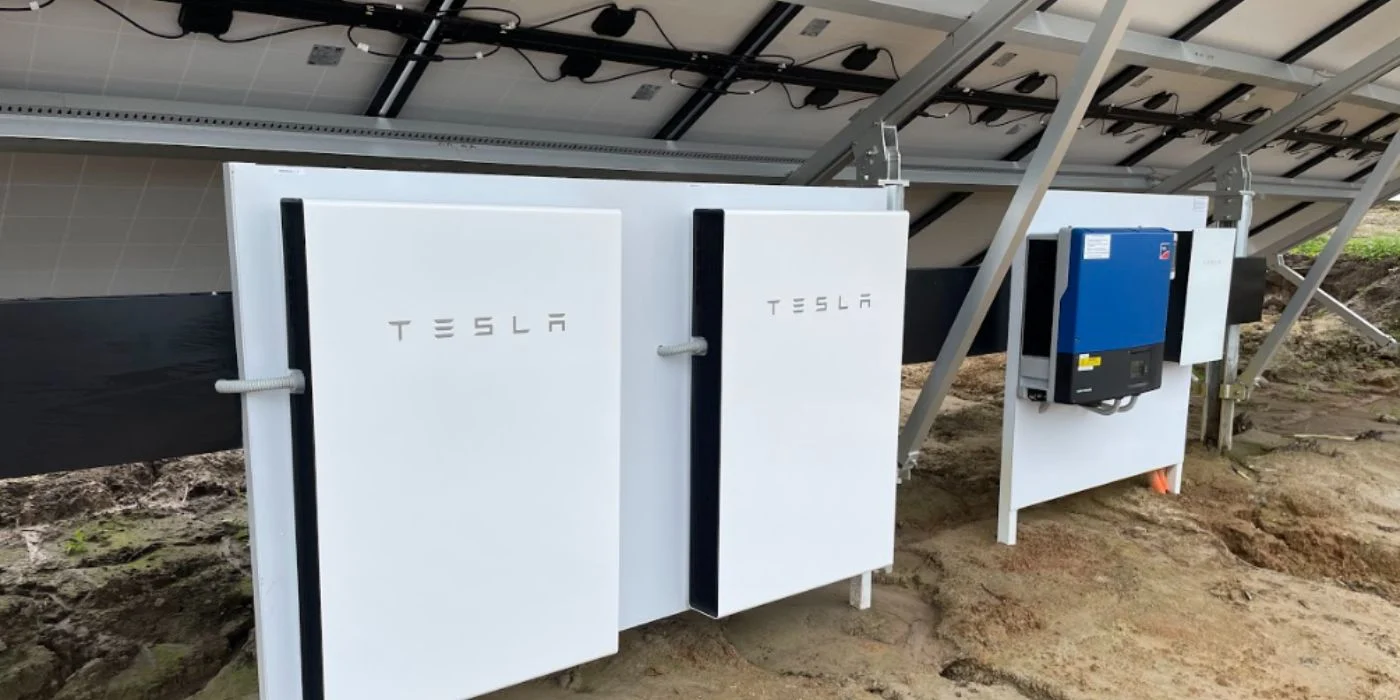
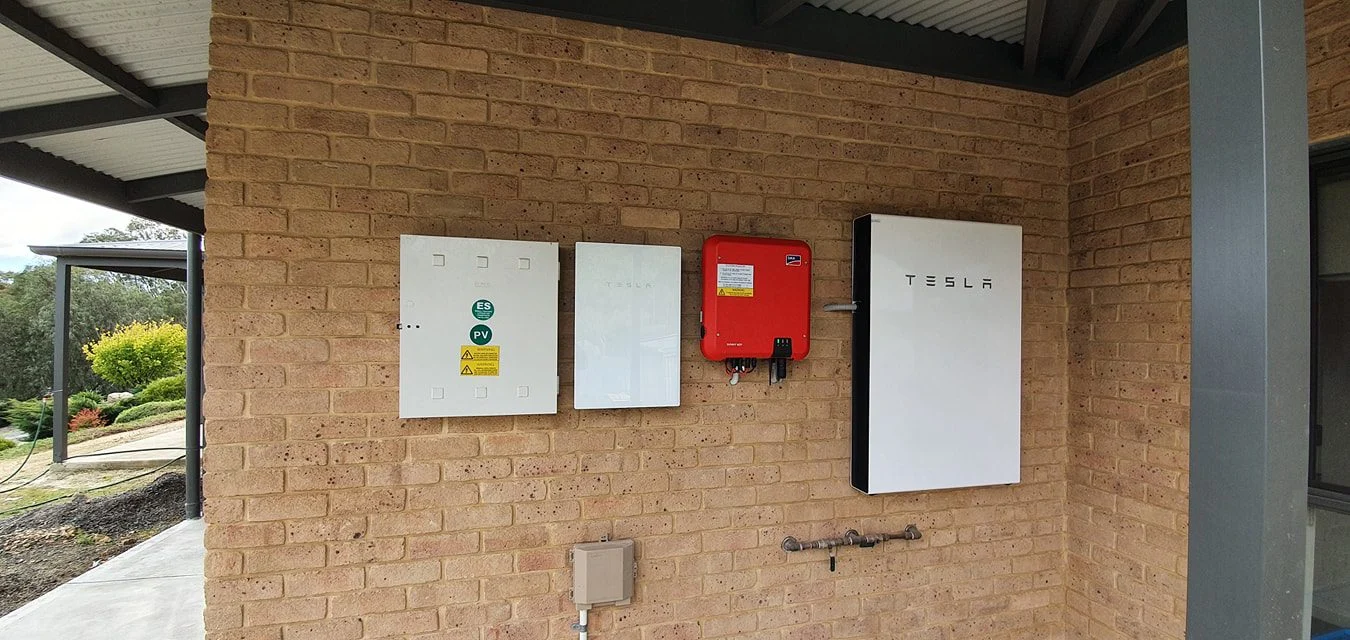
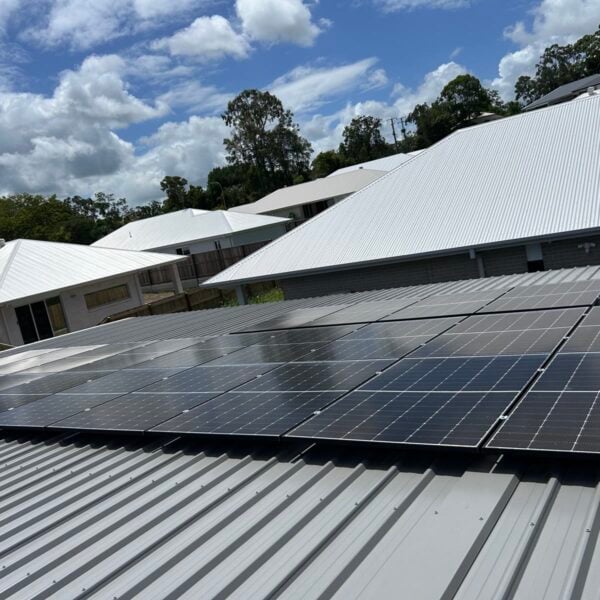
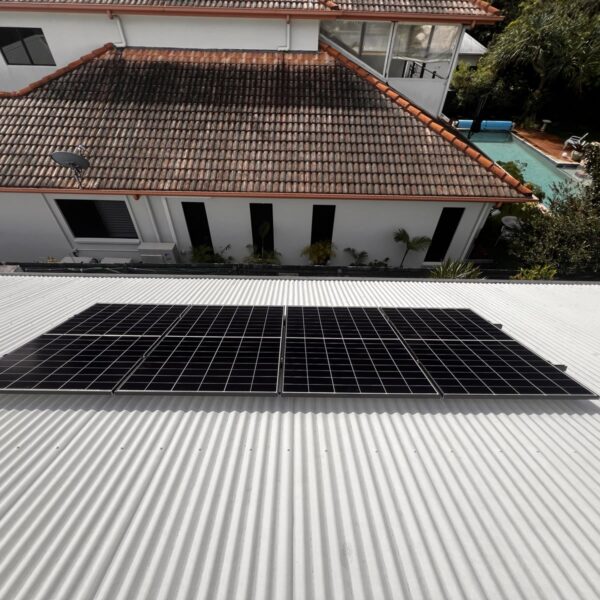
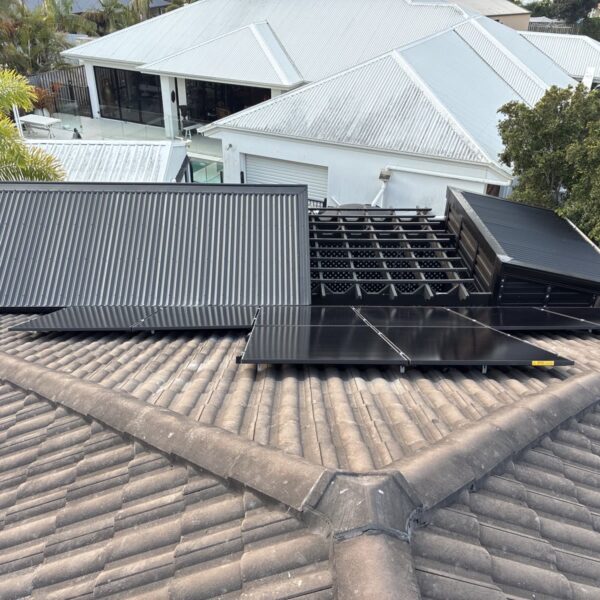
Existing solar replaced with 14 Jinko panels on a tin roof, a 5 kW GoodWe inverter, three GoodWe batteries, lights and power backup, and six ceiling fans installed.
The Sunshine Coast and surrounds, with no travel charge and no cost for the quote anywhere on the map. Check your suburb, then book the free assessment.
Straight answers from our Queensland electricians. Can’t find yours? Call 1800 610 165 or book the assessment and ask on the day.
Can I add a battery to my existing solar?
Yes. Two paths: (1) keep your existing string inverter and add an AC-coupled battery – cheaper upfront but ~10% efficiency loss and two warranty paths. Or (2) swap your string inverter for a DC-coupled hybrid and add a battery – better lifetime economics. We’ll model both for you.
How big should my battery be?
Rule of thumb: 1–1.3x your average daily after-dark usage. Most Sunshine Coast homes land at 10–16 kWh. Bigger only makes sense if you have a high-export tariff cap (where the grid won’t take all your solar) or you’re planning an EV.
Will it power my whole house in a blackout?
With a whole-home gateway, yes – except very heavy loads like ducted aircon (which we usually isolate to a backup sub-board). Most installs back up: lights, power, fridge, internet, gate motors, and one circuit of essentials. We design backup scope with you at planning.
How long is the install?
1 day for battery-only addition (with hybrid inverter swap). 2 days if you’re installing solar, battery and EV charger together. Power off only 2–4 hours scheduled with you.
What’s the lifespan of a modern battery?
Modern LFP (lithium iron phosphate) batteries are designed for 6,000–12,000 cycles – that’s 15–20 years at typical residential cycling rates. Warranties run to 10 years; real-world life beyond that depends on temperature management and firmware updates.
What if the manufacturer goes bust?
It’s a fair question – the battery market has had brand exits over the last few years. We mitigate this by sticking to large, globally-backed brands and by handling warranty claims ourselves. Even if a manufacturer exits Australia, we work to source replacement stock and support installs for the warranty term.
Is virtual power plant (VPP) participation worth it?
Sometimes – it depends on which retailer, how often they dispatch, and whether your battery is whitelisted. Returns vary significantly by retailer and dispatch frequency: some QLD VPPs return a few hundred dollars a year, while the right user profile on a high-dispatch plan (Amber paired with Tesla, for example) can earn considerably more. Some plans also accelerate battery warranty wear. We’ll tell you straight whether your specific battery + retailer combination makes sense.
Free 60-minute on-site solar and battery assessment. No obligation.
$0 power bill guarantee
Arrange your free 60 minute on-site Solar & Battery Assessment in 30 seconds!
Which state is your home in?
Do you own your home?
Unfortunately, we only work with homeowners
If you are considering solar for a new home, or on behalf of someone else, select "I own my home"
We only work with homeowners
A solar or battery system is a permanent change to the property, so it needs to be arranged by the person who owns the home.
If you tapped that by mistake, head back and we'll pick up where you left off.
What are you looking for?
Our team can talk you through all options if you're not sure.
What appeals to you most?
You'll get all of these. We'd just like to know what matters most.
How much is your quarterly electricity bill?
The average Adelaide home spends $500 - $1000 per quarter. Not sure of yours? Take your best guess, we'll go through the real numbers at your assessment.
Whatever it is today, our goal is $0. If we don't get you there, we'll pay your bill.
How soon are you looking to get a system installed?
We can work with you on a longer timeline, or get you saving as soon as possible.
What is your address?
We have hundreds of happy customers across South Australia. We need your address to check we service your area and to look at your roof before we visit.
Great news, we service your area!
Anything else to share?
Every system we design is tailored to the home, so the more info the better! (Optional)
How should we get in touch with you?
Last step. We'll call to arrange your free on-site assessment at a time that suits you. No pressure and no obligation.
Request sent, we'll be in touch!
Do you want to skip the queue?
Call to speak directly with a solar specialist during business hours, and we can get your free on-site assessment booked in straight away.