
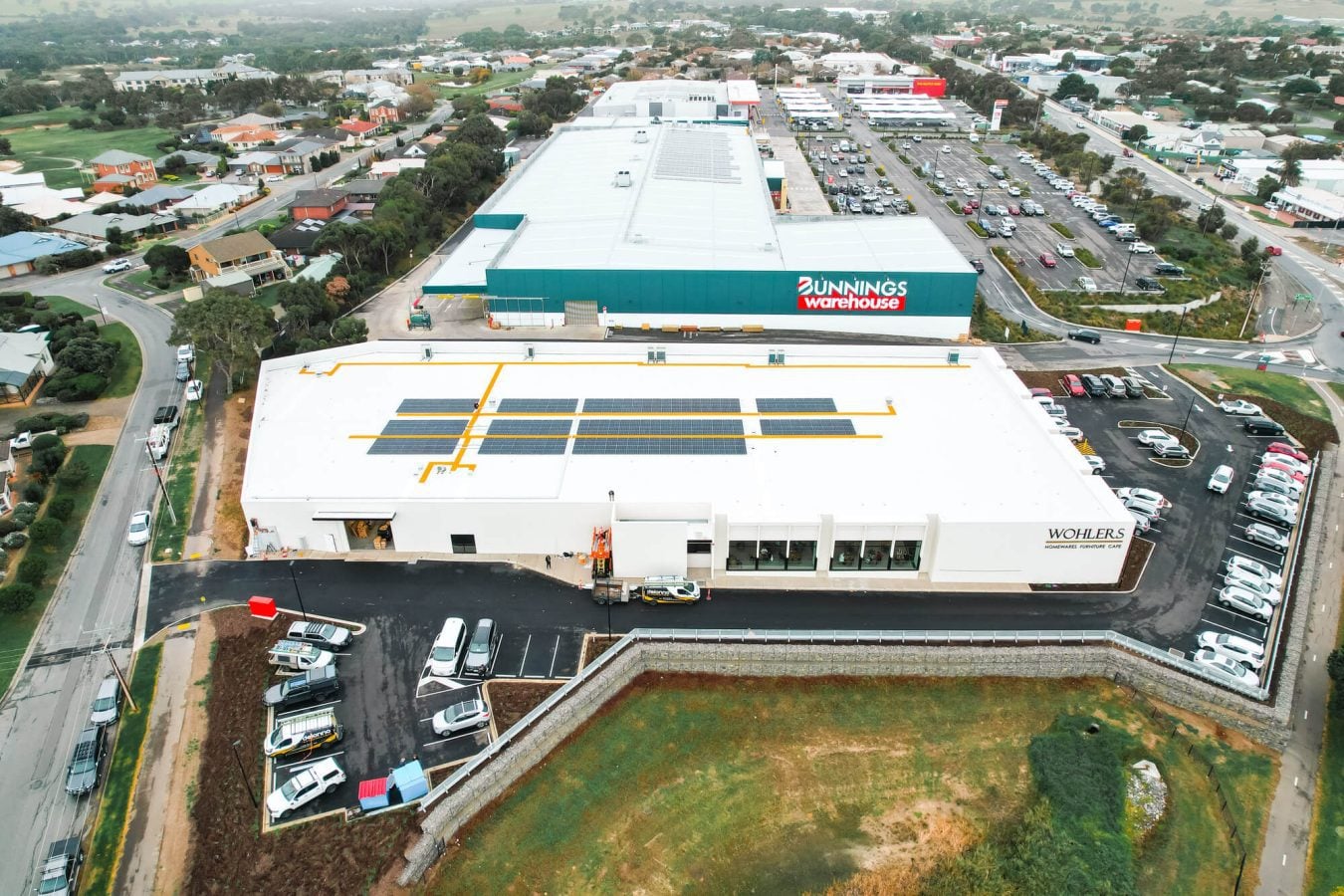
Commercial Solar Installation
 4.9 Google 530+ reviews
 4.8 SolarQuotes
South Australian businesses pay some of the highest commercial electricity rates in the country, with bundled tariffs regularly exceeding 40c/kWh, confirmed by the Australian Energy Regulator's 2025-26 pricing determination . At those rates, a well-sized commercial solar system delivers payback periods of 3 to 4 years and ongoing savings for 25 years after that.
Free 60-minute on-site assessment
A licensed electrician measures your roof and your bill. No phone quotes.
Lower your business power bills with commercial solar designed, installed and supported by local electricians.
Deionno Electrical & Solar designs and installs commercial solar systems across Adelaide and greater South Australia.
Deionno Electrical designs and installs commercial solar across the Sunshine Coast, from Caloundra and Maroochydore through to Noosa and the Hinterland. Every system is engineered for your building, your load profile and your budget, then installed by our own SAA-accredited team rather than subcontracted crews.
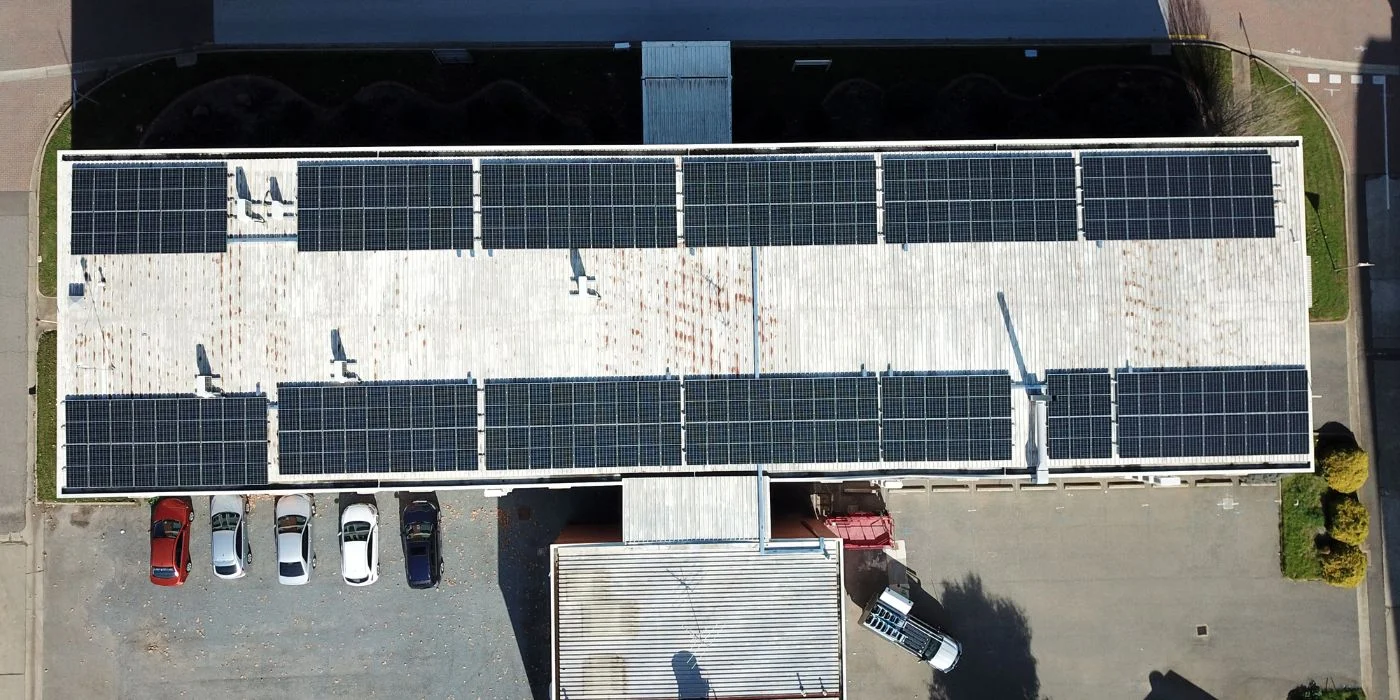
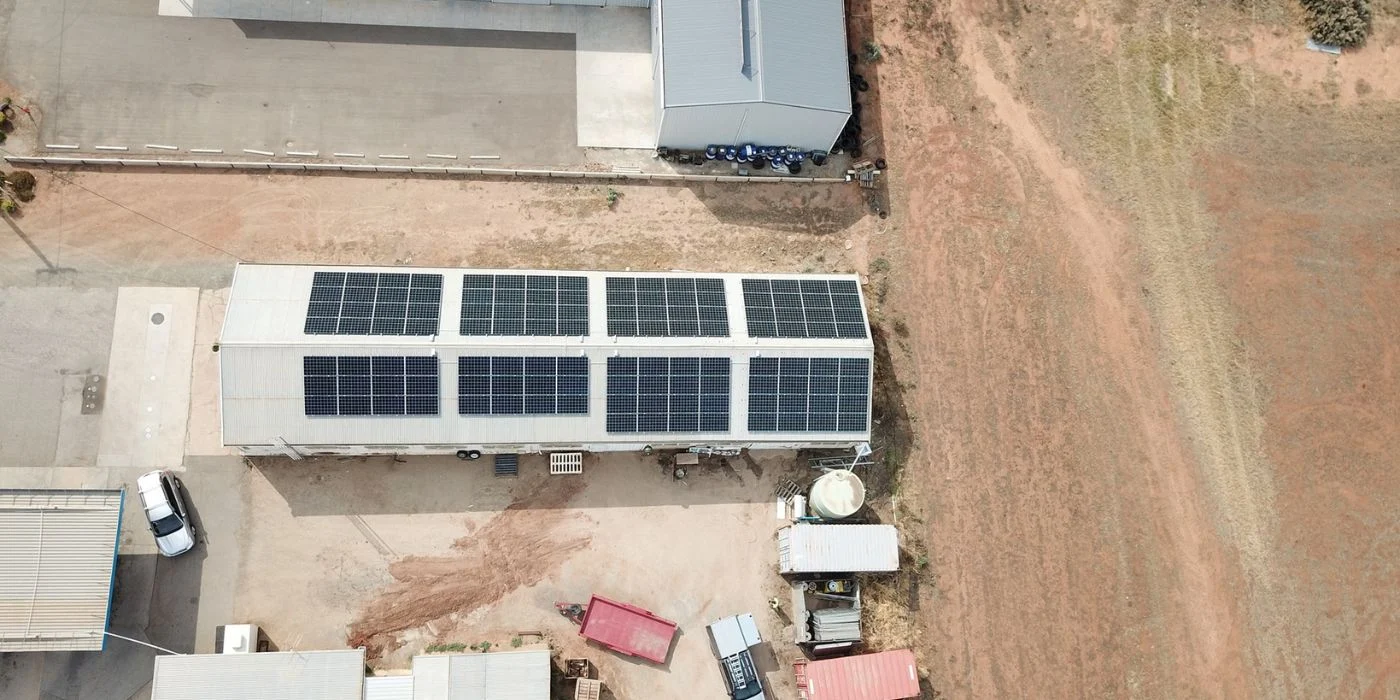
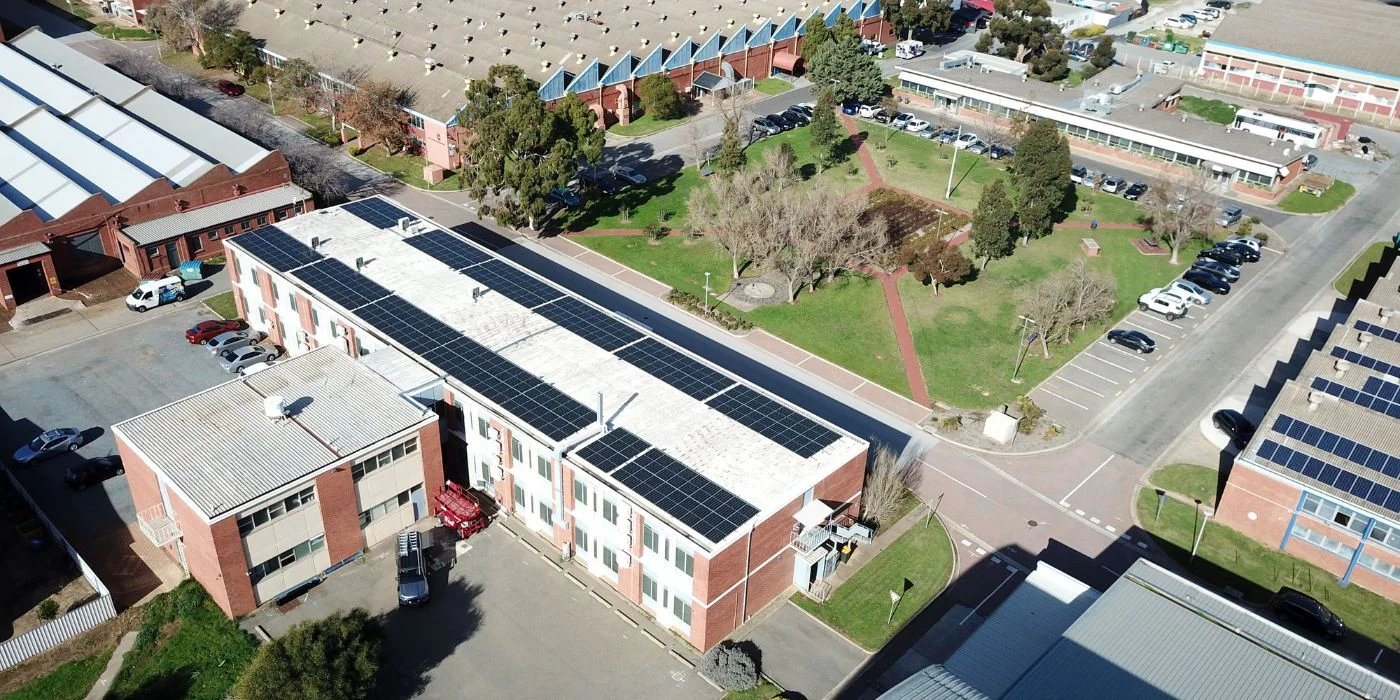
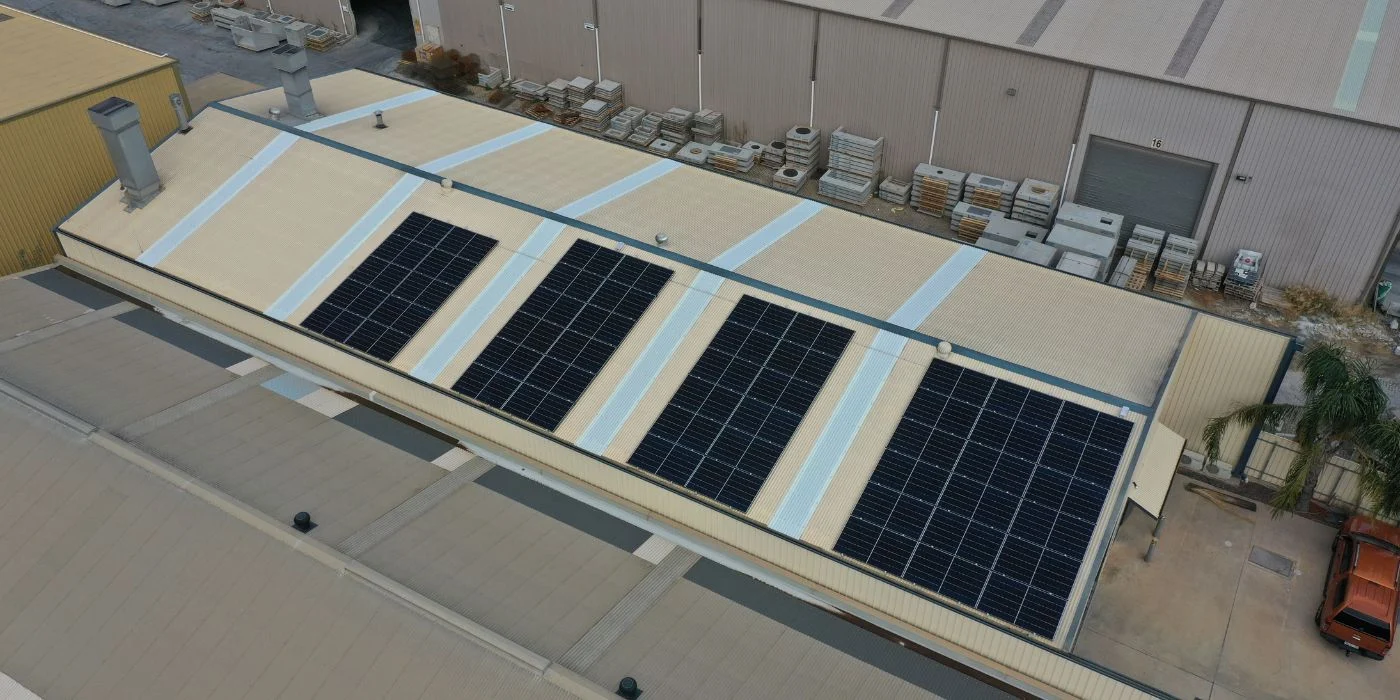
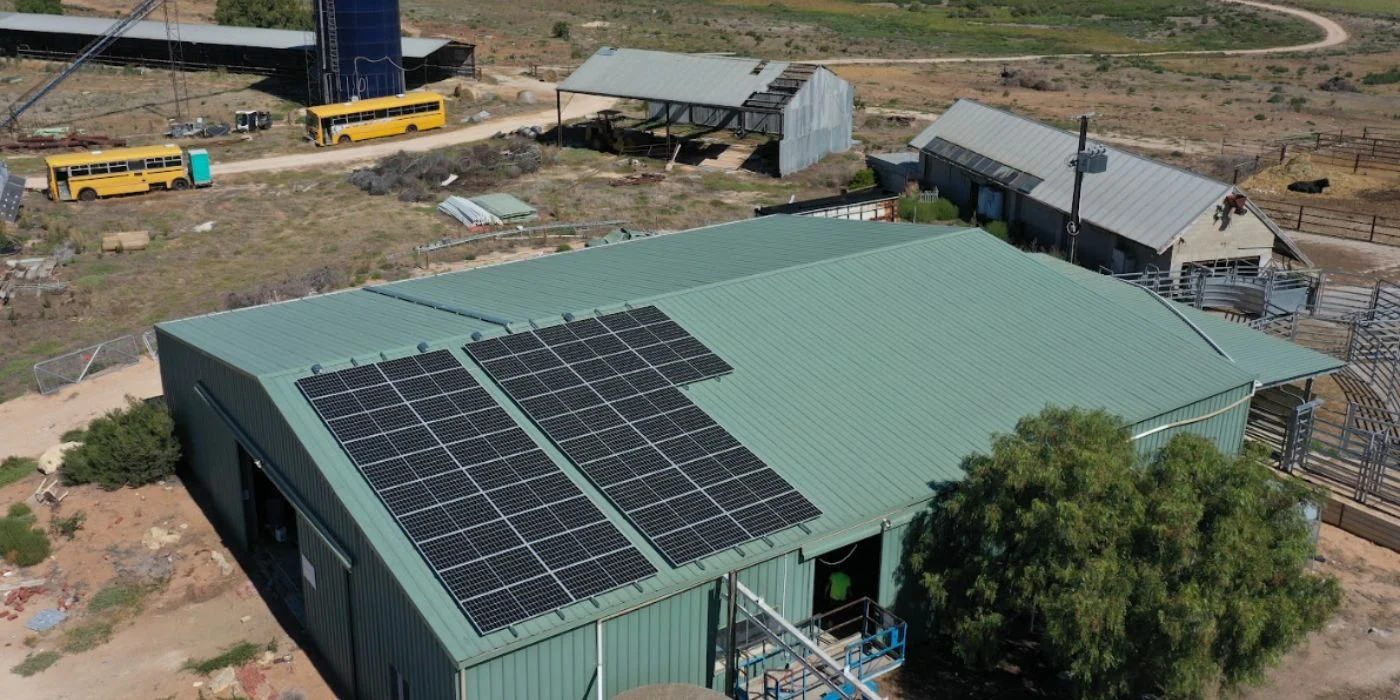
Why businesses are going solar now
Why the numbers work in Adelaide
Adelaide averages 5.3 peak sun hours per day, one of the best solar resources of any Australian capital city, per Bureau of Meteorology solar radiation data. Combined with SA’s high commercial electricity prices, the financial case for commercial solar in Adelaide is stronger than almost anywhere else in the country.
The Australian Energy Regulator approved a 3.5% electricity price increase for SA small businesses from July 2025, per AER feed-in tariff and pricing data, adding further pressure to energy budgets that are already stretched. Businesses that installed solar in 2024 are already insulated from that increase.
There is also the SA Power Networks export situation to understand. SAPN now applies a levy on solar exports between 10am and 4pm, the peak generation window, per SAPN’s current tariff schedule. For commercial buildings with large roof areas and moderate midday loads, this means the self-consumption strategy matters as much as system size. We design systems to maximise energy used on-site, not just energy generated.
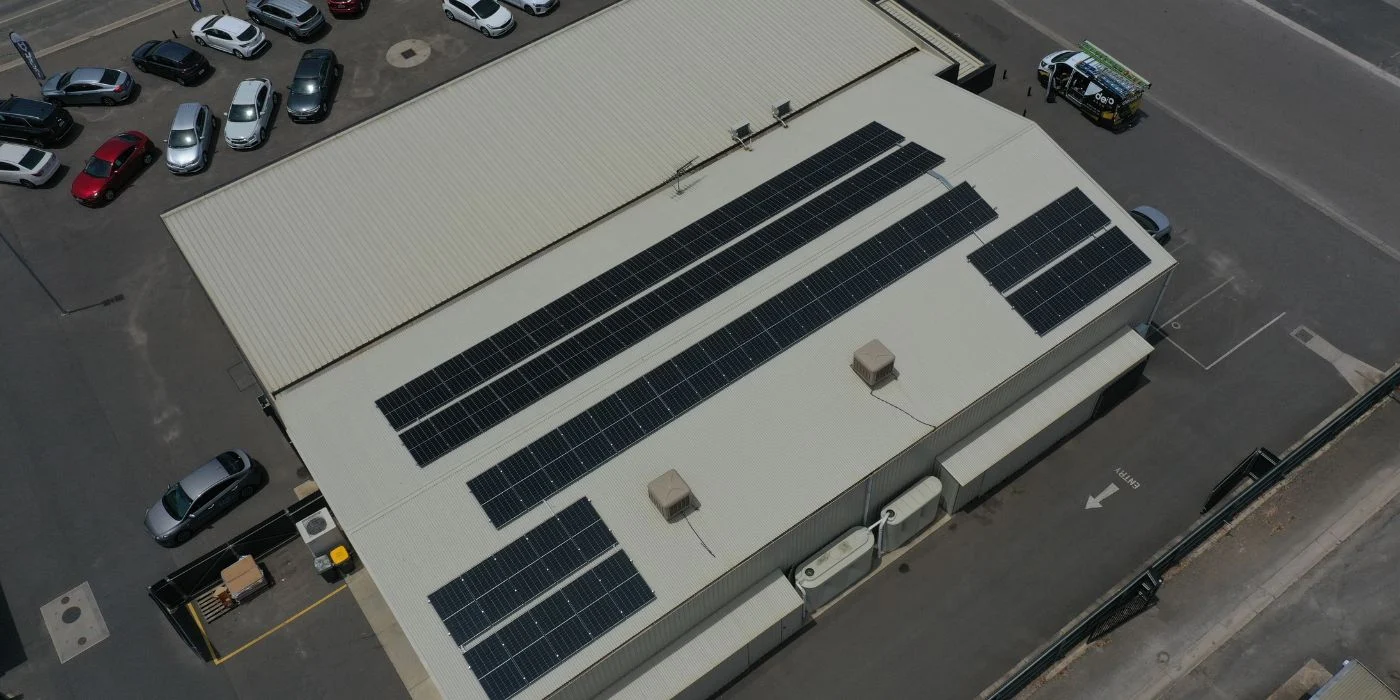
Why the numbers work on the Sunshine Coast
Rising electricity costs hit Sunshine Coast businesses harder every year, and for most operations power is now one of the largest controllable overheads. Commercial solar turns that cost into an asset. Because businesses use most of their power during daylight hours, when the sun is doing the work, a well-designed system offsets a large share of your daytime consumption and starts paying you back from the first bill.
Three things make the numbers work for commercial solar in this region. Power prices keep climbing, so every kilowatt-hour you generate and use on site is worth more than it was a year ago. The Sunshine Coast also enjoys strong, reliable sun, with some of the better solar exposure in the country according to Bureau of Meteorology solar radiation data, so a properly oriented commercial array produces well for most of the year. And federal incentives still take a meaningful slice off the upfront cost.
The commercial advantage is timing. A typical business runs its lights, equipment, refrigeration, air conditioning and machinery through the working day, which is exactly when a rooftop system generates the most. That alignment between generation and demand is why commercial solar usually delivers a stronger return than a comparable home system, and why self-consumption, not exporting to the grid, is where the real savings sit.
What size system does your business need?
For commercial solar, the right size is set by your load profile, not your roof area. A system that matches the power you actually use through the day delivers a better return than one simply scaled to fill the available space. The more electricity you use during daylight hours, the faster your payback.
| System scale | Typically suits |
|---|---|
| Small commercial (up to ~30kW) | Cafes, small retail, professional offices, clinics |
| Mid-range (~30 to 100kW) | Warehouses, larger retail, clubs, medical centres, schools |
| Large (100kW and above) | Manufacturing, cold storage, logistics, multi-tenancy and industrial sites |
Larger commercial systems often run on three-phase supply and may need export limiting to comply with network connection rules. We manage all of that as part of the design, so your system is compliant and optimised for your site from day one.
The first step is an energy audit. We pull your interval meter data, map your load curve against expected solar generation, and model the exact payback for your site before recommending a system size.
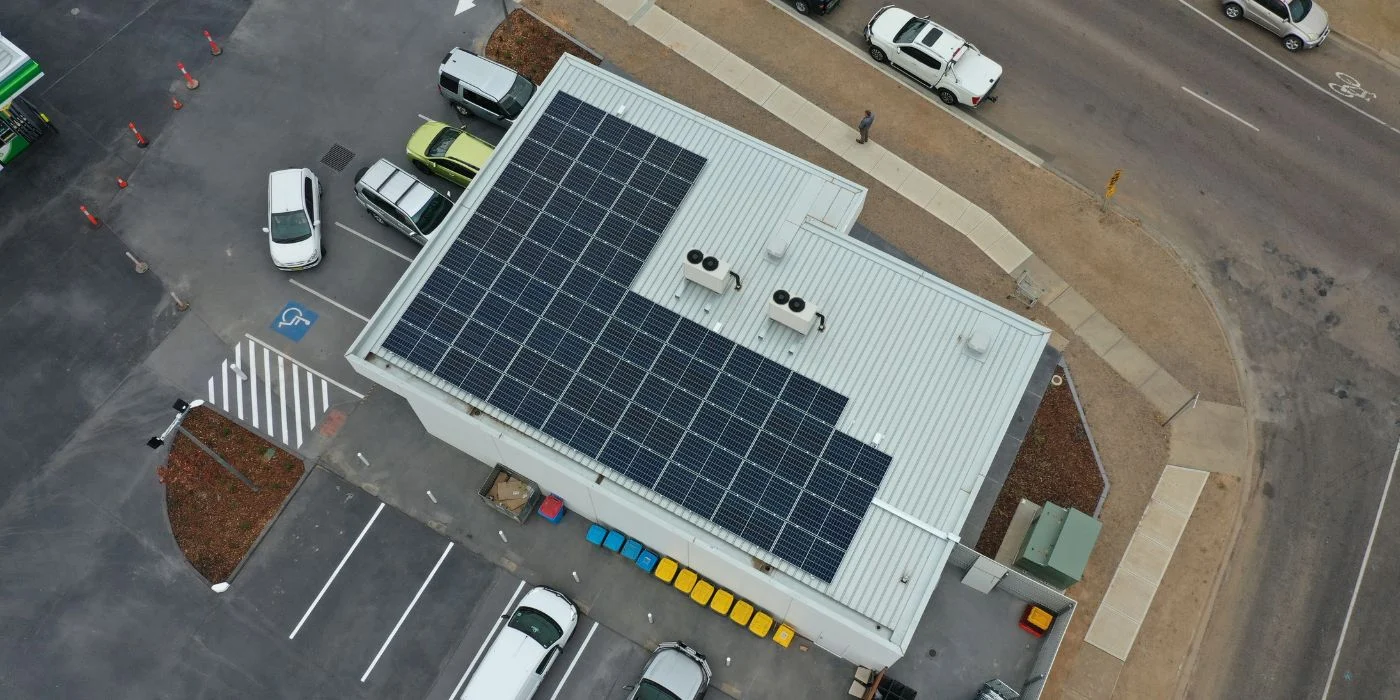
How much can your business save?
The honest answer is that it depends on your roof, your load profile and how much of your own generation you use rather than export, which is why we never quote off a price list. What we can tell you is where the savings come from, so you understand exactly what you are paying for and what to expect.
The biggest lever is self-consumption. Power you generate and use on site offsets electricity you would otherwise buy at full retail rates, while power you export earns only a small feed-in credit. A system sized to match your daytime demand, rather than simply filling the roof, is what produces the fastest payback. The second lever is your tariff, and in particular demand charges, which most businesses overlook. The third is system quality, because premium panels and well-supported inverters cost more upfront but earn their keep over a commercial system’s long life.
The fairest way to get an accurate figure is a free on-site assessment. We review your roof, your recent bills and your usage pattern, then give you an itemised proposal with realistic savings and payback modelled on your own numbers.
Typical system sizes and savings in South Australia
For South Australian businesses, these are typical system sizes and annual savings by business type.
| Business Type | Typical System Size | Approx. Annual Saving |
|---|---|---|
| Cafe / restaurant | 15-30 kW | $8,000-$18,000 |
| Office building | 20-50 kW | $12,000-$30,000 |
| Retail / showroom | 30-100 kW | $18,000-$60,000 |
| Warehouse / logistics | 100-200 kW | $55,000-$120,000 |
| Manufacturing / industrial | 200 kW+ | $100,000+ |
Savings estimates based on SA commercial tariffs at 40c/kWh and 70% self-consumption rate. Actual figures depend on your load profile and grid tariff structure.
Industries we power on the Sunshine Coast
The businesses that benefit most from commercial solar are those with strong daytime energy use, and the Sunshine Coast has plenty of them. Hospitality and tourism venues run kitchens, cooling and pools through the day. Retail and shopping centres carry constant lighting and air conditioning loads. Warehousing and logistics operations run forklifts, cold rooms and dispatch equipment. Agriculture and packing sheds draw heavily during processing. Clubs, medical and aged care facilities, and schools all carry steady daytime demand that solar offsets directly.
If your business runs during daylight hours, there is a good chance solar will work hard for you. We tailor every system to the way your specific operation uses power.
Demand charges and battery storage
Many commercial electricity bills include a demand charge, sometimes called a capacity charge, on top of the usage rate. Where usage is billed per kilowatt-hour consumed, the demand charge is based on the highest rate of power you draw, in kilowatts, during peak periods in a billing cycle. For businesses with heavy equipment, refrigeration or air conditioning, demand charges can make up a surprising share of the total bill.
For medium to large Adelaide businesses, energy bills are not just consumption charges. Demand charges, based on your peak power draw at any point in a billing period, can account for up to 40% of a commercial electricity bill, per Agile Energy’s commercial solar ROI analysis.
Solar alone reduces average consumption but does not always reduce peak demand, particularly if your largest loads switch on in the morning or evening outside solar hours.
This is where solar combined with battery storage earns its keep for a business. Solar reduces the power you pull from the grid during the day, and a battery can discharge to shave those short, sharp peaks that set your demand charge. Reducing peak demand can lower a part of your bill that adding panels alone does not touch, which is why we look at your full tariff structure, not just your usage, before recommending a system.
Pairing solar with a commercial battery system lets you shift stored energy into those peak demand windows, directly reducing your demand charge and shortening payback. We supply and install commercial battery systems from Sungrow, BYD, and Tesla, and model the combined demand management impact as part of your system proposal.
Many businesses pair solar with storage. Learn more about solar battery installation and how it supports demand-charge reduction and backup power.
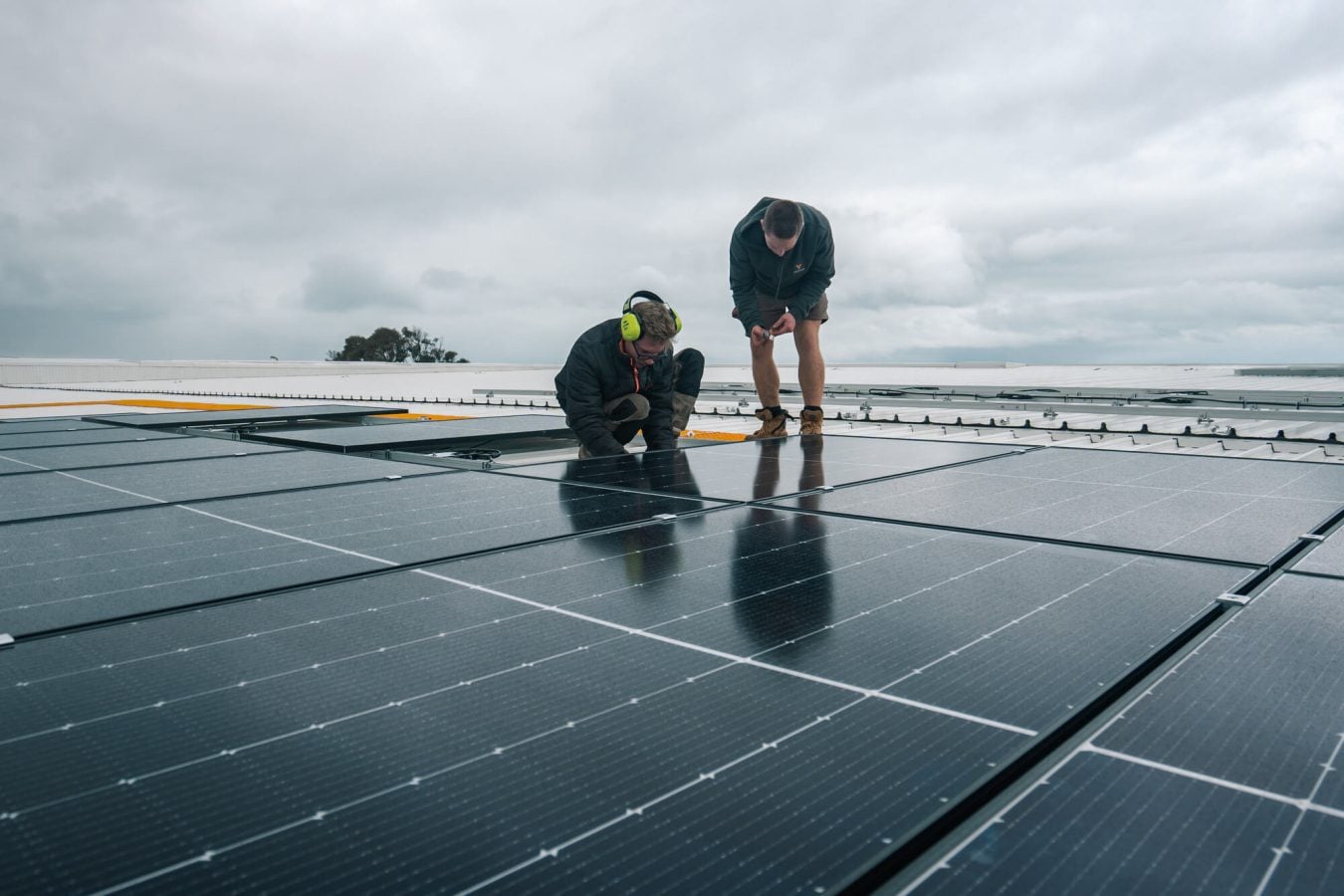
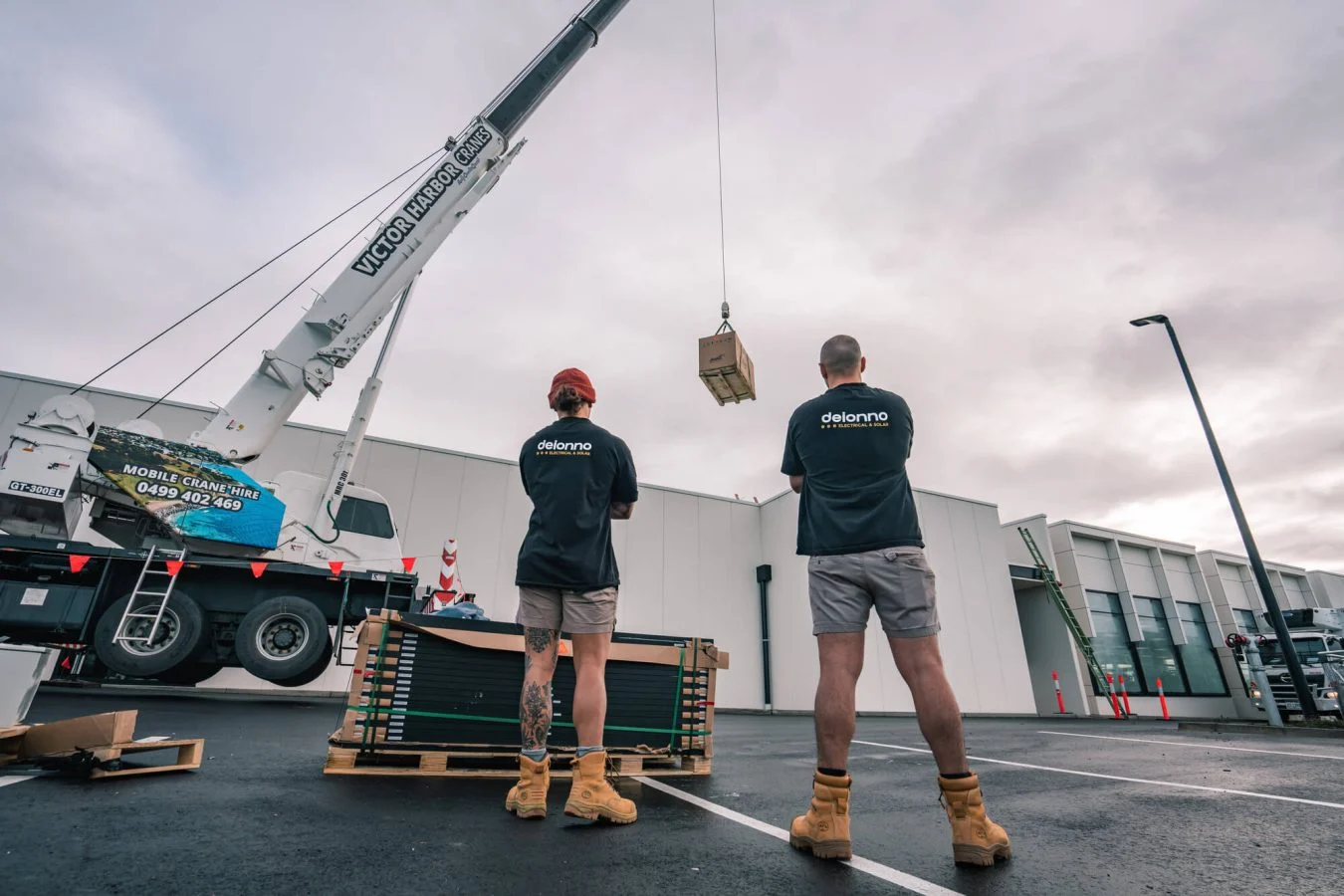
Commercial solar rebates and incentives
There is a lot of out-of-date rebate information online. Here is where things actually stand for a Sunshine Coast business.
Federal solar panel rebate (STCs)
The main incentive for panels up to 100 kilowatts is the federal Small-scale Renewable Energy Scheme (SRES), administered by the Clean Energy Regulator, which issues Small-scale Technology Certificates. In practice it works as a point-of-sale discount, so it is already built into the prices you see quoted. Queensland’s strong sunshine means systems here generate a healthy number of certificates. Worth knowing: the rebate steps down each year as the scheme is progressively phased out, so it remains generous but gets marginally smaller each January.
Understanding the 100kW STC threshold
A 100kW system in Adelaide can attract up to $40,000 in STCs, delivered as an upfront discount through your installer.
Systems over 100kW move into the Large-scale Generation Certificate (LGC) scheme, which operates differently and does not provide an immediate upfront reduction. For businesses with high energy loads, this threshold is a real system-sizing consideration, not just a rebate technicality.
For businesses that need more than 100kW, we design in stages or advise on LGC eligibility from the outset, so there are no surprises at the point of installation.
Federal battery rebate (Cheaper Home Batteries Program)
Adding storage is more affordable than it used to be thanks to the federal Cheaper Home Batteries Program, administered by DCCEEW, which takes around 30% off the cost of an eligible battery. The discount is tiered, so the full rate applies to the first portion of usable capacity and reduces for larger systems. To qualify, the battery generally needs to be on the approved product list, installed by an accredited installer alongside solar, and capable of connecting to a virtual power plant. We handle the eligibility and certificate paperwork, so the discount comes off your quote.
Feed-in tariffs in South East Queensland
In South East Queensland the feed-in tariff is set by your electricity retailer rather than mandated, and rates are generally low, as confirmed by the Queensland Competition Authority. That is the single most important reason to design a commercial system around using your own power. A kilowatt-hour you consume on site is worth far more than one you sell back, so the goal is to size and time generation around how your business actually runs.
Tax treatment for business
Solar is a business asset, which means eligible businesses may be able to claim a deduction for the cost through the relevant depreciation or instant asset write-off provisions. The rules and thresholds change, so we recommend confirming the current position with your accountant and the Australian Taxation Office. The point worth knowing now is that the after-tax cost of a commercial system is often lower than the sticker price suggests.
Finance options for commercial solar
You do not always need to fund a commercial system upfront. Many businesses use finance so the energy savings effectively cover the repayments, turning solar into a cash-flow-positive investment from early on. Options generally fall into three groups: buying outright for the strongest long-term return, financing the system over a term, or a power purchase arrangement where you pay for the energy produced rather than the hardware. We will talk through which approach suits your accounting and cash-flow position, and what each means for your return.
Choosing your panels and inverter
Whatever brand you choose, it needs to be on the Clean Energy Council approved product list. That is a requirement for the rebate, not an optional extra. For most commercial roofs, quality panels deliver reliable, efficient output and excellent value, while premium, high-efficiency panels are worth considering where roof space is tight or shading is a factor. The inverter matters just as much, because on a commercial system it is the component working hardest, so we only fit reliable, well-supported brands backed by strong warranties.
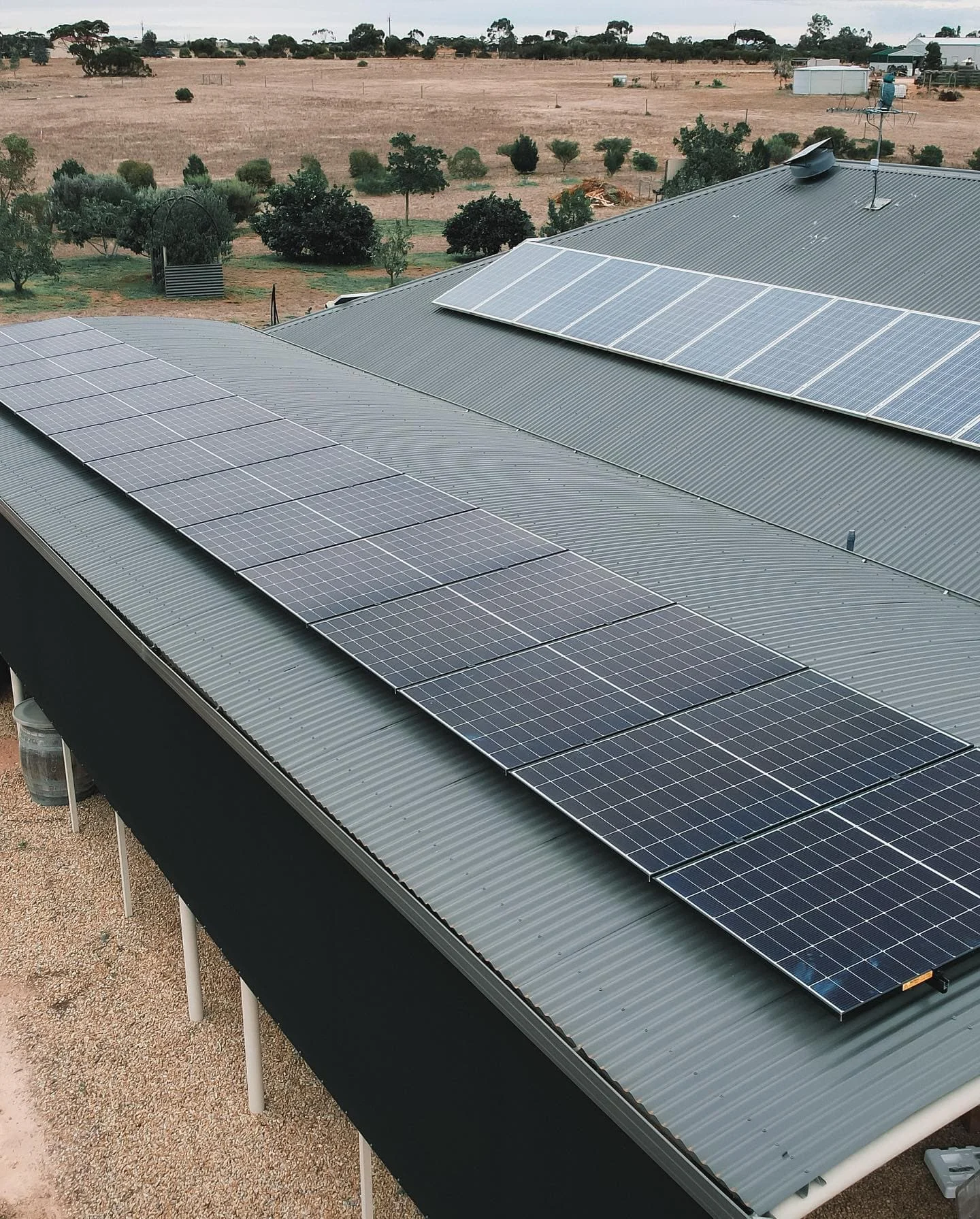
Our commercial installation process
We manage every stage in-house, so you deal with one accountable team from first call to ongoing support.
Site assessment and load analysis: We review your interval meter data and inspect the roof structure, electrical switchboard, and grid connection to establish what is feasible and what is optimal.
System design: Our engineers produce a full system design including panel layout, inverter specification, string configuration, and export management settings matched to your SAPN connection agreement.
Approvals and network connection: We manage all SA Power Networks connection applications, council approvals where required, and coordination with your retailer on export settings.
Installation: All installations are completed by SAA-accredited electricians directly employed by Deionno. We do not subcontract. Work complies with AS/NZS 5033, AS 4777, and AS/NZS 3000.
Commissioning and handover: We commission the system, verify grid export settings, and provide a full handover pack including system specs, warranty documentation, and monitoring setup.
Why choose Deionno Electrical & Solar
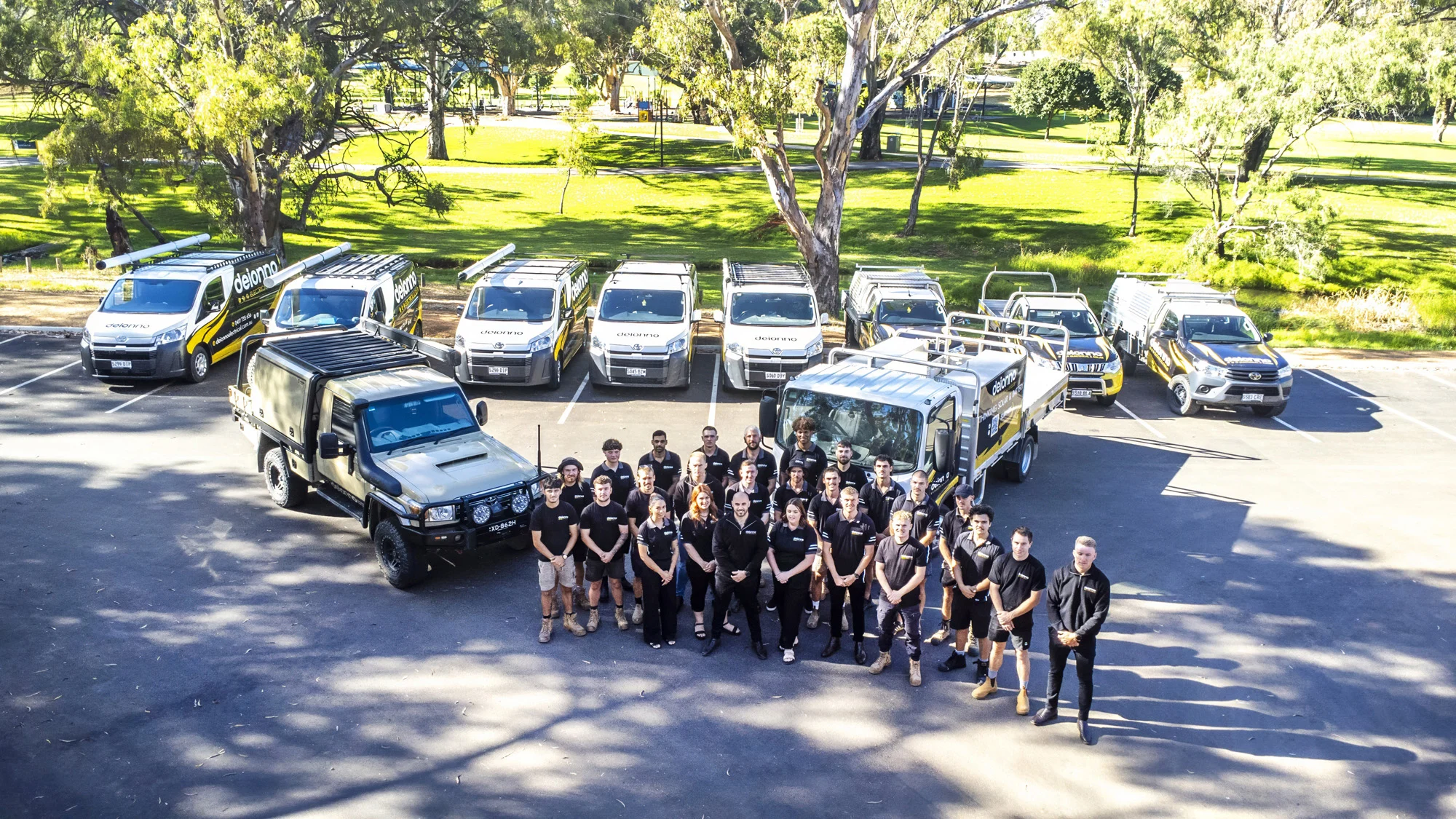
We are a South Australian electrical contractor, not a solar-only sales company. That distinction matters for commercial projects. We carry full electrical contracting licence coverage for switchboard work, three-phase upgrades, and any remediation identified during installation, without outsourcing to a second trade.
We are local electricians first, which means your commercial system is designed and installed by qualified, SAA-accredited tradespeople who understand Sunshine Coast buildings, roofs and network requirements, not handed off to subcontractors. We design around your actual load rather than selling you the biggest system that fits, our proposals are detailed and itemised with no hidden charges, and our advice is genuinely no-pressure. Every installation is backed by our own workmanship warranty on top of strong manufacturer warranties, so your investment stands up to the Queensland climate for the long haul.
Our team installs across Adelaide and maintains the systems we install. If something fails, you are calling the people who put it in.
Every system we design comes with a detailed proposal: roof layout, panel specification, inverter selection, estimated annual generation, and modelled payback, before you commit to anything.
Our other solar services
We handle every part of your energy journey in-house:
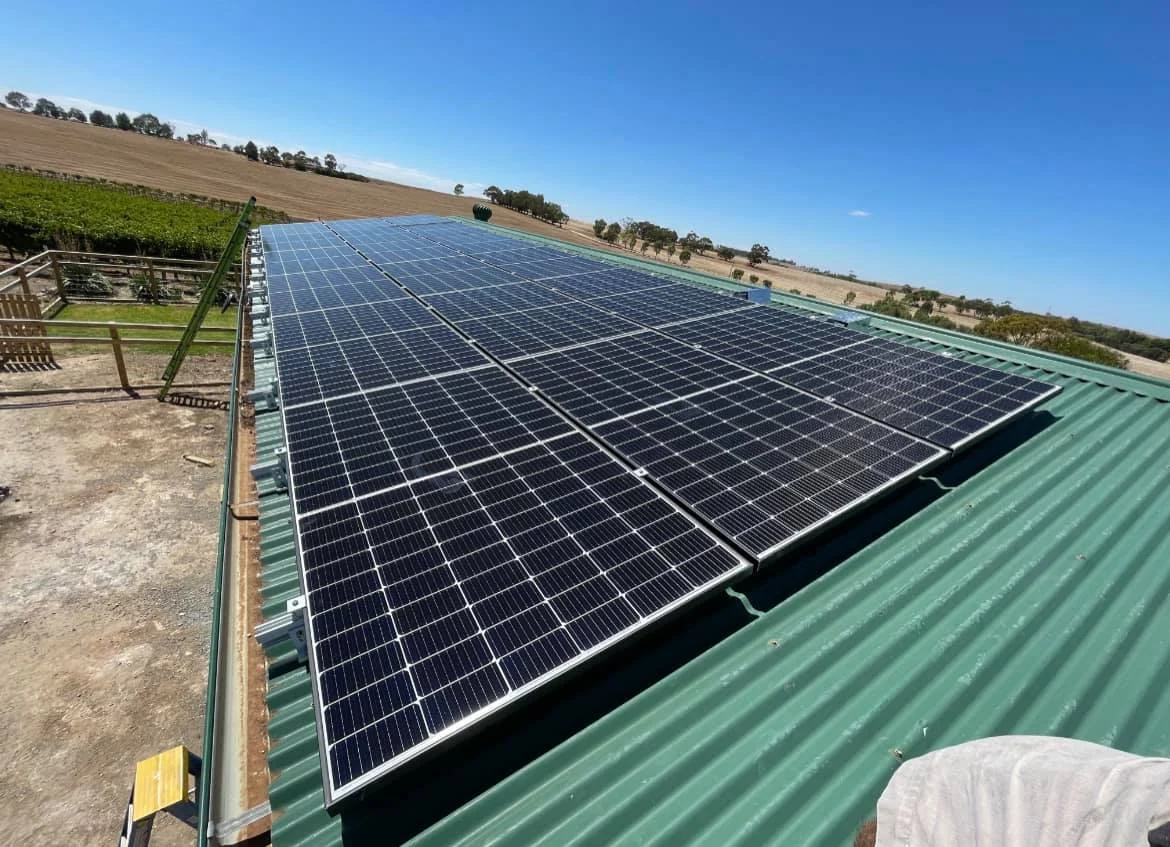
Solar repairs and maintenance
Health checks, cleaning, inverter servicing and fast repairs.
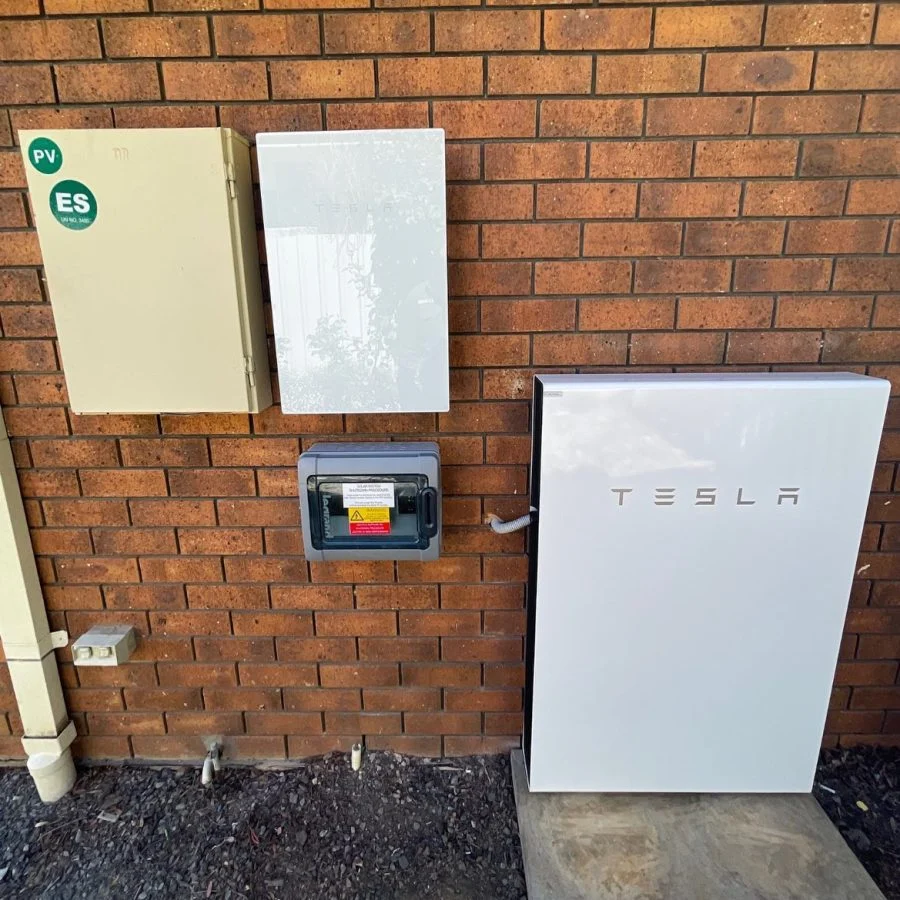
Solar battery installation
Store daytime solar for evening use, demand-charge reduction and backup power.
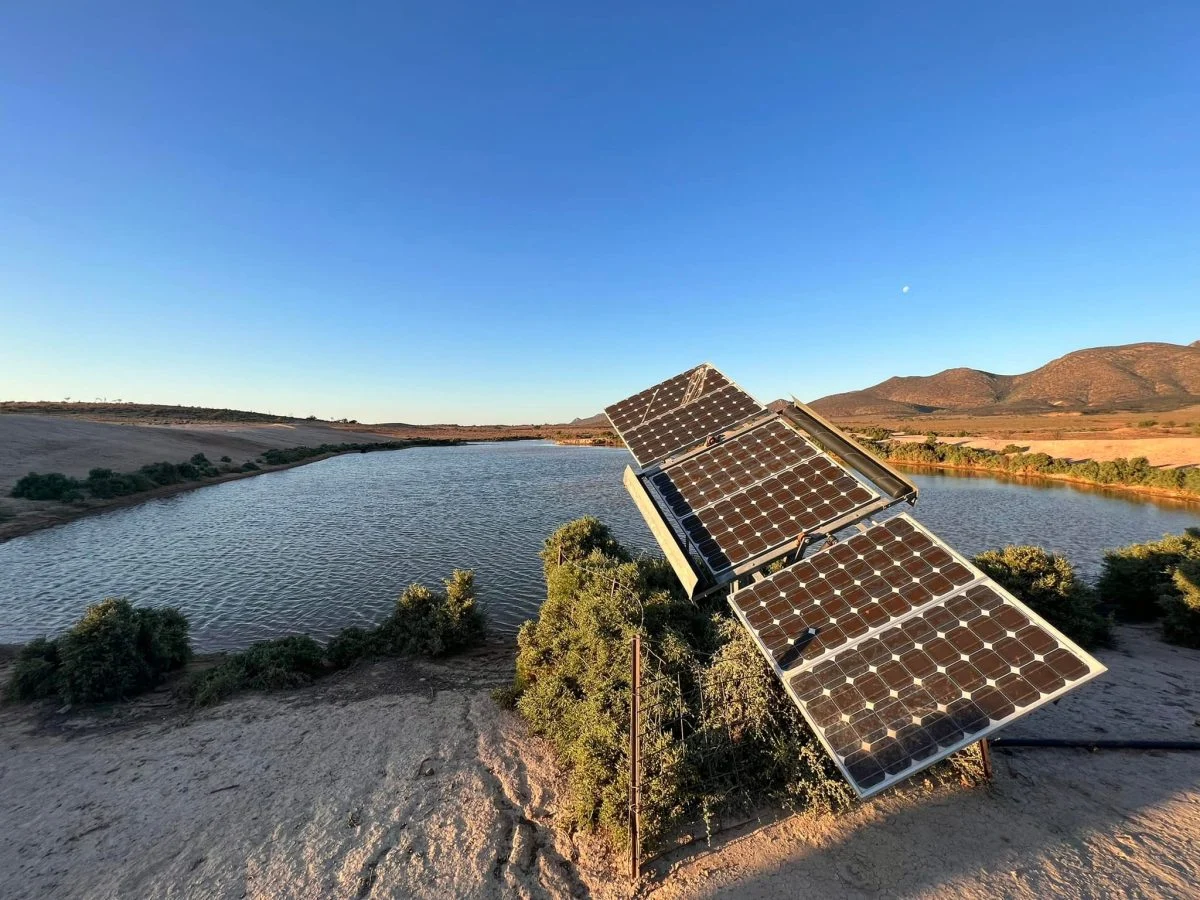
Off-grid solar
Complete energy independence for rural and remote sites.
Residential solar
Custom-designed systems for the home, from consultation to commissioning.
Areas we serve
We install commercial solar across the Sunshine Coast and Hinterland, including Maroochydore, Caloundra, Noosa, Nambour, Buderim, Mooloolaba, Coolum and the surrounding business and industrial precincts. Browse recent work on our Projects page, or see the full coverage on our Areas We Serve page.
Ready to cut your business power bills?
Join the Sunshine Coast businesses already saving with clean, reliable solar power. Our team is ready to assess your site and design the right system for your operation.
Get your free, no-pressure commercial solar assessment today. Request a quote through our website or call our team to talk it through. The number to call is 1800 610 165.
Commercial solar questions, answered
Straight answers from our electricians. Can’t find yours? Call 1800 610 165 or book the assessment and ask on the day.
What is the cost of installing a solar system?
At Deionno Electrical, we specialise in designing and installing custom tailored solar solutions for all of our clients. We have a range of products to suit anyone’s budget – give us a call to book a free consultation today!
Do I need to install a solar battery as well as panels?
No! Solar can be grid connected or it can be installed in a hybrid or off-grid scenario. However, installing a battery can dramatically increase your return on investment, reduce your grid dependance and reduce your carbon footprint! Give us a call today to discuss the best option for you!
How important is panel placement/roof orientation?
Panel placement is an important step of designing a good quality system. We use some of the best design technology to help give you the best returns possible. Using our software along with a home visit and consultation, we can determine whether placement on North, East or West roofs will be the most beneficial for your load profile!
How long does the installation take?
Generally, a domestic solar system will take a day or less. However, unpredictable weather conditions may cause some delays which may require our team to return to finalise your solar system.
Do I need to clean my panels? What maintenance is required?
These days panels stay pretty clean. On a well pitched roof, the panels will clean themselves during a slight shower of rain. However, if you’re living in an area that is quite dusty, is near a construction site or if your panels are simply installed flat on the roof, then you may be required to clean the panels more frequently. How? Just a simple light pressure hose off will do just fine, but be sure to do this in the morning or late afternoon only while the panels are cool to the touch! As for maintenance, our team will supply you with a checklist that you can follow for maintenance. This will consist of some simple checks every 1-5 years which can be performed by yourself.
Do I need to be home whilst my system is being installed?
Generally we recommend someone be at home while your solar system is being installed. Our team may need to access internal switchboards or manholes to successfully complete the installation. However, every system is different and may not require you to be home the full day!
What warranties are on your products?
Here at Deionno Electrical, we pick specifc products that must meet a certain criteria before we sell them to our clients. One criteria is warranty. All of our solar panels come with a minimum 10-year warranty, all the way up to a 25-year warranty. All of our inverters have a minimum of 5-years and up to a full 10-year warranty. At Deionno Electrical, we offer a full 10-year workmanship warranty on all of our installations, and complete ongoing support!
What government grants are there for installing solar?
As Deionno Electrical is a South Australian business, we are only able to advise on incentives available in SA. Currently, there is the STC financial incentive, which is available on all new installations, and varies in pricing based on how many panels are installed, and where in SA they are installed. This is worked into your pricing for a point of sale discount. There is also a state government incentive, namely the Home Battery Scheme. The amount of incentive will also vary depending on what battery you choose to install. Give the team a call for more information.
Where can I find more information?
Give the team at Deionno Electrical a call on 1800 610 165 to discuss any more questions you may have. We can also arrange a free in-person consultation to help design a system fit for you and your future!
I have lots of trees/shade around my house. Will solar benefit me?
Shading from neighbouring trees, a chimney or TV aerials can cause some problems that may affect the performance of your solar system. Some shading can be aided with the help of some specifically designed products to help you gain the absolute best performance from your system. If it’s something like a TV aerial, we can definitely assist in relocation. Give us a call to discuss the best products to suit your specific design!
Is commercial solar worth it for a Sunshine Coast business?
For most businesses with daytime energy use, yes. Strong local sun, high power prices and federal rebates mean a well-designed system offsets a large share of your daytime consumption and typically pays for itself within a few years, then keeps cutting costs for decades. The exact return depends on your load profile, which we model from your own bills.
How much does commercial solar cost?
It depends on system size, panel and inverter quality, roof complexity and whether you add storage, so we never quote off a price list. After a free on-site assessment we give you an itemised, fixed proposal with realistic savings and payback for your business.
What rebates can a Queensland business claim?
Systems up to 100 kilowatts attract the federal STC rebate, which is built into the price as a point-of-sale discount, and eligible batteries attract the federal Cheaper Home Batteries rebate of around 30%. Solar is also a business asset for tax purposes. We confirm exactly what applies to your situation.
What are demand charges and how does solar reduce them?
Many commercial tariffs include a demand charge based on your highest rate of power draw during peak periods. Solar lowers your daytime grid draw, and a battery can shave the short peaks that set the charge, reducing a part of the bill that panels alone do not address.
How big a system does my business need?
That is set by your load profile rather than your roof size. We read your interval data and bills to size a system to the power you actually use through the day, which delivers a better return than simply filling the roof.
Can solar power my business entirely?
With a large enough system and battery storage it is possible, but most businesses choose a system sized to cover the bulk of daytime use and draw the balance from the grid, because that usually delivers the best return. We model both options for you.
How long does a commercial installation take?
It depends on system size and site complexity, and we give you an accurate timeline in your proposal. We also manage the network application and approvals, which can affect the overall schedule.
Do you offer finance?
Yes. Many businesses finance their system so the energy savings effectively cover the repayments. We can talk through outright purchase, financing over a term, and power purchase arrangements, and what each means for your cash flow and return.
What maintenance does a commercial system need?
Maintenance is light. Periodic cleaning, performance monitoring and the occasional inverter check keep a system running at its best, and we provide ongoing maintenance and repairs for the life of your system.
Keep reading
Ready to start?
Book a free 60-minute on-site assessment with one of our licensed electricians.
Free 60-minute on-site solar and battery assessment. No obligation.
$0 power bill guarantee
Arrange your free 60 minute on-site Solar & Battery Assessment in 30 seconds!
Which state is your home in?
Do you own your home?
Unfortunately, we only work with homeowners
If you are considering solar for a new home, or on behalf of someone else, select "I own my home"
We only work with homeowners
A solar or battery system is a permanent change to the property, so it needs to be arranged by the person who owns the home.
If you tapped that by mistake, head back and we'll pick up where you left off.
What are you looking for?
Our team can talk you through all options if you're not sure.
What appeals to you most?
You'll get all of these. We'd just like to know what matters most.
How much is your quarterly electricity bill?
The average Adelaide home spends $500 - $1000 per quarter. Not sure of yours? Take your best guess, we'll go through the real numbers at your assessment.
Whatever it is today, our goal is $0. If we don't get you there, we'll pay your bill.
How soon are you looking to get a system installed?
We can work with you on a longer timeline, or get you saving as soon as possible.
What is your address?
We have hundreds of happy customers across South Australia. We need your address to check we service your area and to look at your roof before we visit.
Great news, we service your area!
Anything else to share?
Every system we design is tailored to the home, so the more info the better! (Optional)
How should we get in touch with you?
Last step. We'll call to arrange your free on-site assessment at a time that suits you. No pressure and no obligation.
Request sent, we'll be in touch!
Do you want to skip the queue?
Call to speak directly with a solar specialist during business hours, and we can get your free on-site assessment booked in straight away.
📞What happens next?
- 1We'll give you a call
If you haven't called already, we'll give you a call to say hello.
- 2Discuss your needs and goals
We'll chat about what you're looking for, how we can help, and book in a time for your on-site assessment that suits you.
- 3Your free on-site assessment
We visit your home for 45 to 60 minutes to measure up the roof, check the switchboard and review how you use power.
- 4We send your detailed quote
A tailored proposal with the system design, the savings and the pricing laid out in full.
- 5We design and install
If you're happy with the proposal, our in-house team installs it and shows you how it all works.
4.9Google · 530+ reviews
4.8SolarQuotes reviews