
6.6kW Solar Systems
What a 6.6kW solar system is, what it generates, what it will run and what it costs, from the electricians who install them in Adelaide and on the Sunshine Coast.
 4.9 Google 530+ reviews
 4.8 SolarQuotes
A 6.6kW solar system is 14 panels, a 5 kW inverter and a question
For years 6.6 kW was the system nearly every Australian home was sold, and it's still the system size people search for most. It's 14 or 15 panels on a 5 kW inverter, it makes about 25 kWh on an average day, and on the right house it's all the solar that house needs. The question is whether yours is the right house. That's the part no price list can answer.
Deionno Electrical & Solar has installed solar across Adelaide for ten years and now on the Sunshine Coast, more than 4,000 solar and battery systems in all, with our own licensed electricians on every roof. This page covers the 6.6 kW system honestly: the numbers, the rules behind them, the price, and how to tell whether it is enough.
Have a quote for 6.6kW already?
Send it to us with a recent bill. A solar specialist will tell you what's in it, what's missing, and whether 6.6 kW is the right size for the way your home uses power.
Who a 6.6kW solar system suits
Three homes it fits, and one where it usually falls short.
Swipe to see more
What a 6.6kW solar system is
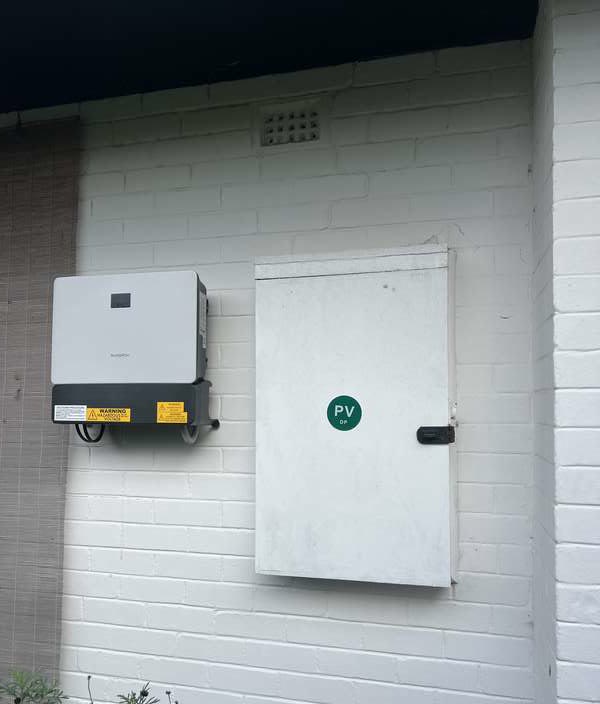
The 6.6 kW is the combined size of the panels. With the 475 watt panels we fit most often, that is 14 panels (6.65 kW). With 440 watt panels it is 15, and with the newest 510 watt panels it is 13. They feed a 5 kW inverter, which turns the panels’ DC into the 230 volt AC your house runs on.
So a “6.6 kW system” never delivers 6.6 kW to the house. The most it can deliver at any moment is the inverter’s 5 kW. That’s deliberate, and the next section explains why.
Why 6.6kW of panels goes on a 5 kW inverter
Panels rarely produce their full rated output. Heat, the angle of the sun, a thin layer of dust and the time of day all take a slice. An array a third bigger than its inverter keeps the inverter busy for more hours of the day: it fills in the mornings, the afternoons and the cloudy days, and only on a few perfect hours in spring does the inverter have more than it can use.
The industry design guidelines that the solar rebate depends on set the limit: the inverter has to be at least three quarters the size of the array. For a 5 kW inverter that works out at 6.65 kW of panels, which is where the number comes from.
And the 5 kW inverter itself came from the networks. For most of the last decade, 5 kW was what a single-phase home could connect and export without further questions. Those rules have since loosened in both states, which is one reason the 6.6 kW system is no longer the automatic answer.
How many panels, and how much roof
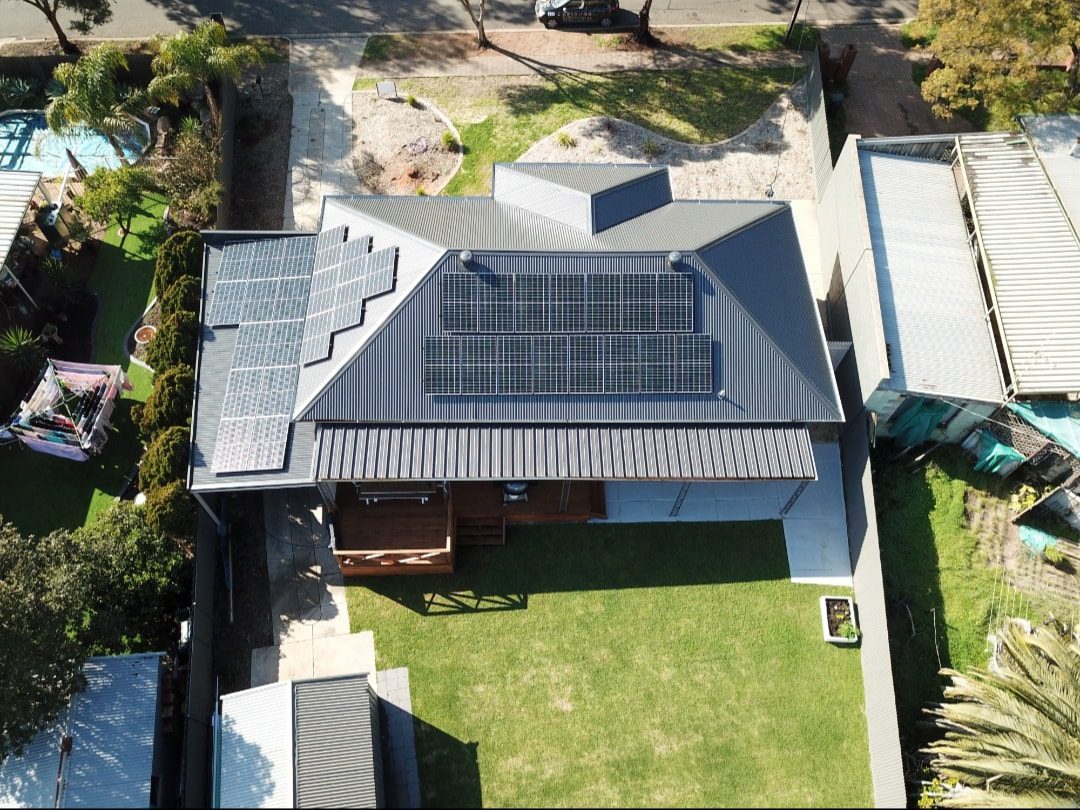
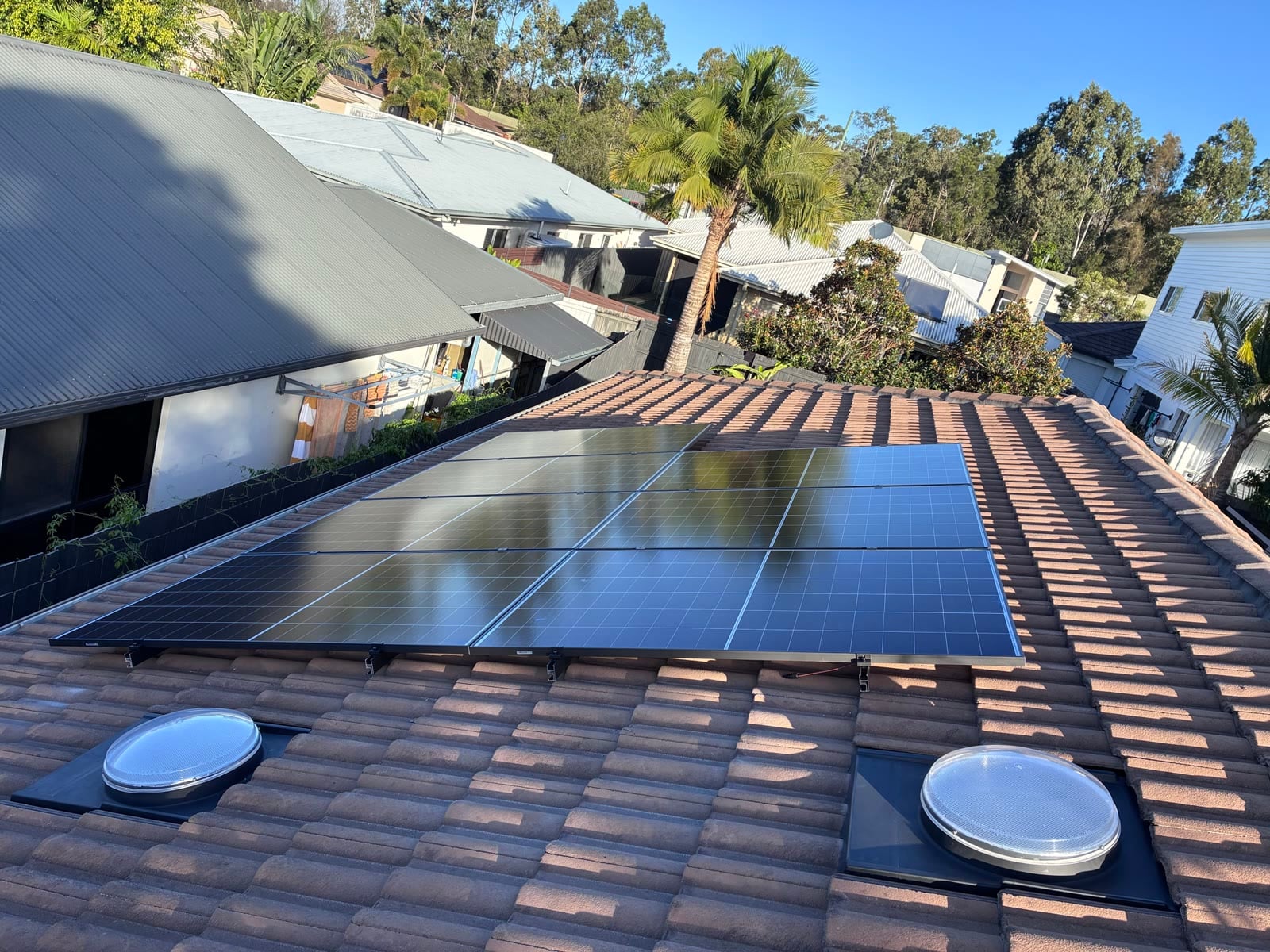
A modern panel is about 1.8 metres tall and 1.1 metres wide, so 14 of them cover roughly 28 square metres. They do not have to sit on one face. Many of the 6.6 kW systems we install are split across two faces of the roof, east and west or north and west, and the inverter manages each face separately.
What decides the layout is shade, the direction each face points, and where the vents, skylights and antenna already are. That is measured on the roof, not from a satellite photo.
How much power a 6.6kW solar system generates
Adelaide, Brisbane and the Sunshine Coast all sit in the same zone on the Clean Energy Regulator’s solar map, and its rating for that zone puts a 6.6 kW system at about 9,100 kWh a year, or 25 kWh on an average day [1].
The average hides the seasons. Modelled for a north-facing roof at a 20 degree pitch [2]:
| 6.6 kW system | December day | June day |
|---|---|---|
| Adelaide | about 36 kWh | about 17 kWh |
| Sunshine Coast | about 29 kWh | about 21 kWh |
Adelaide has the bigger summers and the leaner winters. The Sunshine Coast is steadier all year. East and west faces make a little less in total and spread it across more of the day, which suits a house that is busy at breakfast and after school.
What a 6.6kW solar system will run
Solar runs whatever is switched on while the sun is up. In the middle of a clear day a 6.6 kW system has up to 5 kW to give, which covers the fridge, the lights, the washing machine, the dishwasher, a pool pump and a split system air conditioner all at once, with some left to export.
What it won’t do is run the house at night, and it won’t keep up with the biggest loads on its own. A large ducted air conditioner can draw more than 5 kW by itself. An electric car on a 7 kW charger wants more than the whole system makes. Those homes still save with 6.6 kW. They just buy more from the grid than they need to.
The honest way to answer “what will it run” is with your own bills: how much you use, and when. A home using most of its power between 4 pm and 10 pm gets less out of the same panels than one with someone home all day.
SA Power Networks and Energex rules for a 6.6kW system
- South Australia. A new system either takes a fixed export limit of 1.5 kW per phase, or signs up to flexible exports, which lets it send out up to 10 kW per phase whenever the local network has room. Flexible exports needs an inverter that stays connected to the internet [3]. For a 6.6 kW system the flexible option is nearly always the better one.
- South East Queensland. Energex has to approve every solar system before it is installed. It offers a connection with a fixed export limit, or a dynamic connection that lets the system export up to its full rating when the network allows [4].
We lodge the application in both states and tell you which connection you are getting before you sign.
The solar rebate on a 6.6kW system
The federal solar rebate is paid in certificates, and the number depends on the size of the system, where you live and the year it is installed. A 6.6 kW system installed in Adelaide or on the Sunshine Coast in 2026 earns about 45 certificates [1]. The number steps down every January until the scheme ends in 2030, so the same system installed in 2027 earns fewer.
The installer claims the certificates and takes their value off your price. Our solar rebate calculator gives the figure for your postcode and install date.
What a 6.6kW solar system costs
From us, a 6.6 kW system starts at about $6,500 for a single-storey home with an easy roof and a short cable run to the switchboard. It runs up to about $8,000 where the job is harder: a second storey, a tile roof, panels split over several faces, a long cable run, or a switchboard that needs work before solar can go on it.
Every system is designed from your bills, not a package off a price list. Your price comes from the site visit, in writing, and it doesn’t change on install day.
A warning about the $5,000 system
You will see 6.6 kW advertised for around $5,000, and sometimes less. In the trade these are backyarder prices. Nobody can supply good panels, a good inverter, new cable and isolators, pay licensed electricians for a proper day on your roof and still be in business at that number. So something has been taken out, and it’s nearly always something you can’t see from the ground: the hours on the roof, the parts behind the panels, or the company that was supposed to answer the phone in year six.
Three questions sort a real quote from a backyarder one.
- Who is on my roof? The company’s own employees, or whichever subcontractor was cheapest that week?
- What is every part? Brand and model of the panels, the inverter, the isolators and the racking, in writing.
- How long have you traded under this name? The panels may carry a 25-year warranty, but the workmanship is only covered while the installer is still trading.
A solar system sits on your roof for twenty years or more. It’s worth paying more for a team that will still be here.
What the extra buys with us
Ten years in business. More than 4,000 solar and battery systems installed. Our own licensed electricians on every job, with no subcontracted installs. A site visit before the quote, so there are no extras on install day. A 10-year workmanship warranty, product warranties of up to 25 years, and a commitment written into the contract that if something is not right, we come back and fix it. 4.9 stars on Google from more than 530 reviews, and SunWiz’s Best Rated Overall award for 2025.
On the numbers, a well-designed system pays for itself in three to six years. That payback only arrives if the system is still running, and a cheap one that fails in year four never gets there.
A 6.6kW solar system with a battery
A 6.6 kW array and a battery can work together, and we install them. At Twin Waters we replaced an old system with 14 new panels, a 5 kW GoodWe hybrid inverter and 24 kWh of GoodWe batteries, with the lights and power circuits backed up.
The limit is winter. On a June day a 6.6 kW system makes 17 to 21 kWh, the house uses part of that as it is made, and what is left has to fill the battery. If a battery is in the plan, the roof usually wants to be bigger. Batteries are a big reason the average new system in Australia has grown past 10 kW [5].
Is a 6.6kW solar system the right size for your home?
Nobody can tell you that from a web page. That includes this one.
The average new solar system in Australia is now 10.3 kW [5]. Homes use more electricity than they did when 6.6 kW became the default: induction cooktops, heat pump hot water, air conditioning in every room, and more electric cars each year. And the export rules that made 5 kW the natural ceiling have loosened.
But on a small roof, in a small household, with the evening as the busy time and no car to charge, 6.6 kW is still the right system, and anything bigger is money spent on exports.
The only way to know which house yours is: someone who designs solar for a living sits down with a year of your bills, sees when you use power and how much, walks the roof, opens the switchboard, and asks what’s coming, whether that’s a car, a pool or a baby. That’s our free on-site assessment. It takes about an hour, it’s done by a solar specialist, not a salesperson, and you get a design and a price in writing. If 6.6 kW is enough, that’s what we’ll quote, and whatever size it lands on, you’ll see the reason in your own bills. Book one and you’ll know which house yours is before the specialist leaves.
6.6kW solar systems in Adelaide and on the Sunshine Coast
Adelaide and South Australia
Our Adelaide crews have put 6.6 kW systems on tile roofs in Blackwood and Hillcrest, on a shed at Verdun with an EV charger beside it, and at Port Julia on the Yorke Peninsula. We cover the metro area, the Hills, the Fleurieu and the Barossa from Salisbury Plain. See the Adelaide solar installer page.
Sunshine Coast and South East Queensland
On the Coast, recent 6.6 kW jobs include Mountain Creek, Yandina, Ringtail Creek and Twin Waters, on tile and tin. Our electricians cover Caloundra to Noosa, the hinterland, Gympie and north Brisbane from Corbould Park. See the Sunshine Coast solar installer page.
Sizing solar for the whole house
The home solar installer page covers how we size a system from your bills at any size, and how to compare quotes line by line.
Sources
- Clean Energy Regulator, Postcode zone ratings and zones for solar panel systems. Zone 3 rating 1.382; deeming period of five years for 2026.
- European Commission Joint Research Centre, PVGIS solar yield model, run 10 November 2026 for Adelaide and the Sunshine Coast.
- SA Power Networks, Flexible exports.
- Energex, Solar connections and other technologies.
- Clean Energy Regulator, small-scale renewable energy scheme data for the March quarter of 2026.
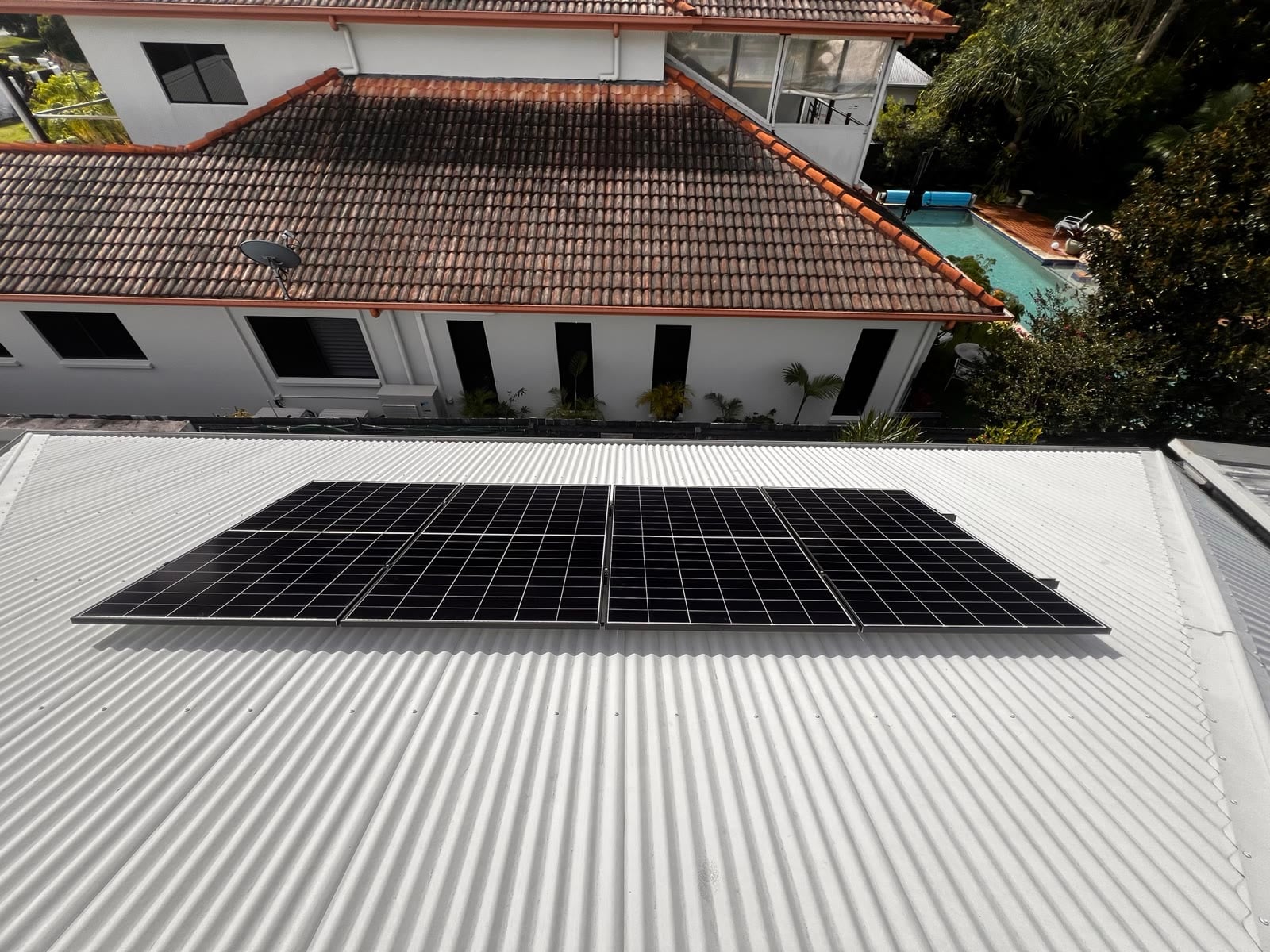
6.65 kW Solar and 24 kWh GoodWe Battery Installation in Twin Waters, QLD
Existing solar replaced with 14 Jinko panels on a tin roof, a 5 kW GoodWe inverter, three GoodWe batteries, lights and power backup, and six ceiling fans installed.
Outcome: A tired system replaced with 6.65 kW of new panels and 24 kWh of battery, with the lights and power backed up.
Read the full projectHow a 6.6kW solar installation runs
From the first visit to the first bill.
Swipe to see more
6.6kW solar system questions, answered
Straight answers from our electricians. Can’t find yours? Call 1800 610 165 or book the assessment and ask on the day.
How much does a 6.6kW solar system cost?
From us, about $6,500 for a single-storey home with an easy roof and a short cable run, up to about $8,000 for a harder job. Be careful with prices around $5,000. Those are backyarder prices, and at that number something you can’t see has been left out. Ours comes from a free site visit, in writing, and our own electricians do the install.
What will a 6.6kW solar system run?
Whatever is on while the sun is up, to a ceiling of 5 kW: the fridge, lights, washing machine, dishwasher, a pool pump and a split system at the same time. It will not run the house at night, and a large ducted air conditioner or a 7 kW car charger can use more than it makes.
How many solar panels are in a 6.6kW system?
Fourteen at 475 watts, 15 at 440 watts, or 13 at 510 watts. Fourteen panels cover about 28 square metres and can be split across two faces of the roof.
How much power does a 6.6kW system generate per day?
About 25 kWh on an average day in Adelaide or on the Sunshine Coast. In Adelaide that swings from about 36 kWh in December to about 17 in June. On the Sunshine Coast it is steadier, about 29 in December and 21 in June.
Is 6.6kW enough to run a house?
For a small or medium household with no pool, no electric car and no battery, usually yes. For a larger home it covers part of the day and the grid covers the rest. The answer is in your bills, which is why we read a year of them before recommending a size.
Why does a 6.6kW system have a 5 kW inverter?
Because panels rarely reach their rated output, an array a third bigger than the inverter keeps it working for more of the day. The design guidelines the rebate depends on allow panels up to a third larger than the inverter, and 5 kW was long the standard single-phase connection.
What rebate do I get on a 6.6kW solar system?
About 45 certificates under the federal scheme for an install in Adelaide or on the Sunshine Coast in 2026, taken off the price by the installer. The number drops each January until 2030. Our solar rebate calculator works it out for your postcode.
Is a 6.6kW solar system a good investment?
A well-designed system that matches the way the house uses power pays for itself in three to six years and keeps producing for twenty or more. The ones that disappoint are too small for the home, or cheap enough to fail early.
Can I add a battery to a 6.6kW solar system?
Yes, and a hybrid inverter makes it simple. The limit is winter, when a 6.6 kW array makes 17 to 21 kWh a day and the house uses some of it first. If a battery is likely, it is usually cheaper to fit a bigger array now.
How long does it take to install a 6.6kW system?
Most are installed in a day by our own electricians. Switchboard work, a steep or two-storey roof, or a tile roof that needs care can take it into a second day.
Keep reading
Work out your numbers first
One thing to look at before anyone comes out.
See a real proposal
A sample of the written proposal you get after the assessment: gear, cost, output, savings and timeline.
View the sample proposal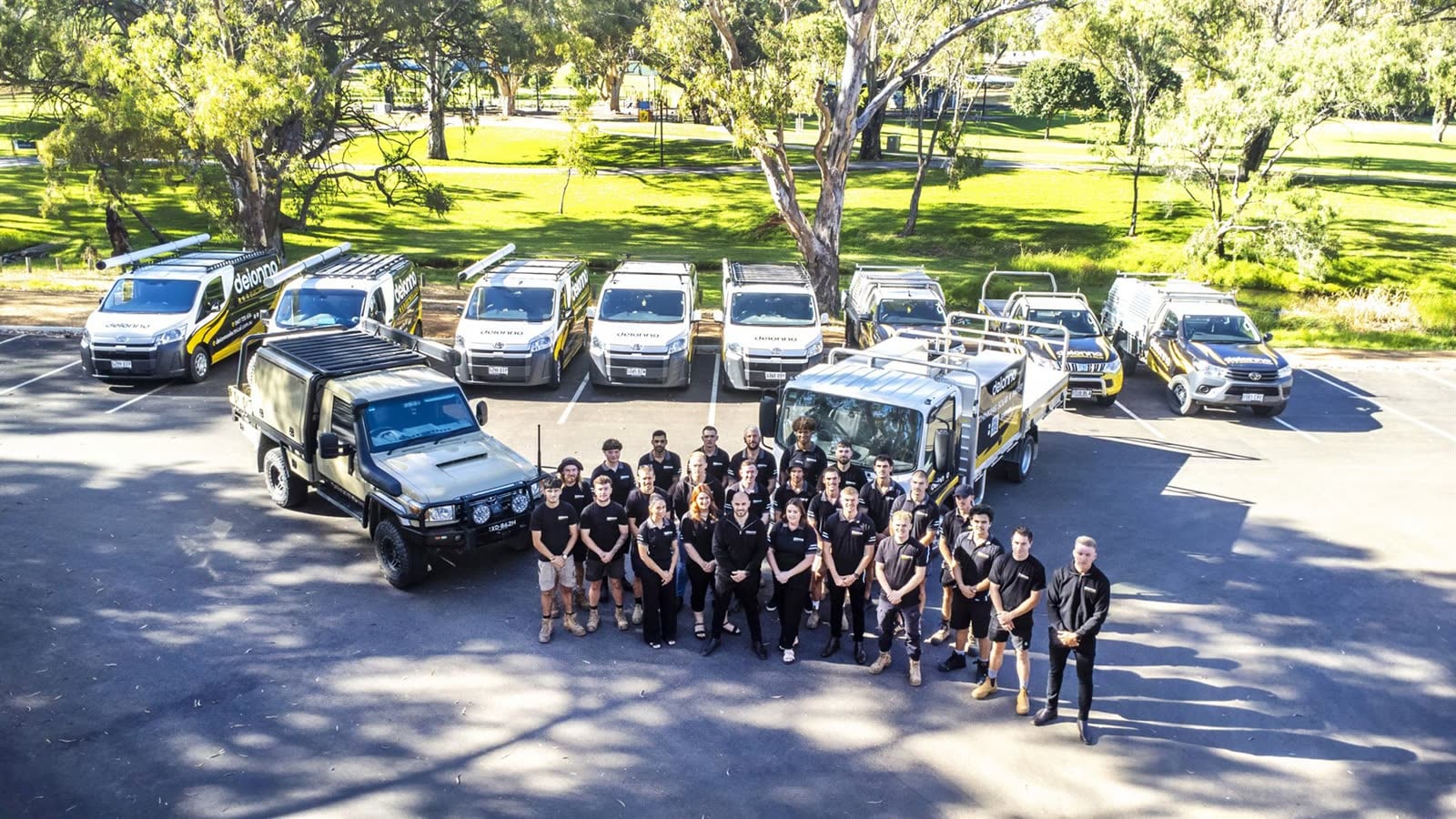
Ready to start?
Book a free 60-minute on-site assessment with one of our licensed electricians.
Free 60-minute on-site solar and battery assessment. No obligation.

$0 power bill guarantee
Arrange your free 60 minute on-site Solar & Battery Assessment in 30 seconds!
Which state is your home in?
Do you own your home?
Unfortunately, we only work with homeowners
If you are considering solar for a new home, or on behalf of someone else, select "I own my home"
We only work with homeowners
A solar or battery system is a permanent change to the property, so it needs to be arranged by the person who owns the home.
If you tapped that by mistake, head back and we'll pick up where you left off.
What are you looking for?
Our team can talk you through all options if you're not sure.
What appeals to you most?
You'll get all of these. We'd just like to know what matters most.
How much is your quarterly electricity bill?
The average Adelaide home spends $500 - $1000 per quarter. Not sure of yours? Take your best guess, we'll go through the real numbers at your assessment.
Whatever it is today, our goal is $0. If we don't get you there, we'll pay your bill.
How soon are you looking to get a system installed?
We can work with you on a longer timeline, or get you saving as soon as possible.
What is your address?
We have hundreds of happy customers across South Australia. We need your address to check we service your area and to look at your roof before we visit.
Great news, we service your area!
Anything else to share?
Every system we design is tailored to the home, so the more info the better! (Optional)
How should we get in touch with you?
Last step. We'll call to arrange your free on-site assessment at a time that suits you. No pressure and no obligation.
Request sent, we'll be in touch!
Do you want to skip the queue?
Call to speak directly with a solar specialist during business hours, and we can get your free on-site assessment booked in straight away.
📞What happens next?
- 1We'll give you a call
If you haven't called already, we'll give you a call to say hello.
- 2Discuss your needs and goals
We'll chat about what you're looking for, how we can help, and book in a time for your on-site assessment that suits you.
- 3Your free on-site assessment
We visit your home for 45 to 60 minutes to measure up the roof, check the switchboard and review how you use power.
- 4We send your detailed quote
A tailored proposal with the system design, the savings and the pricing laid out in full.
- 5We design and install
If you're happy with the proposal, our in-house team installs it and shows you how it all works.
4.9Google · 530+ reviews
4.8SolarQuotes reviews