
Solar System Repair
Fault finding on the whole system, from the panels to the switchboard, by our own licensed electricians. Any brand, whoever installed it.
 4.9 Google 530+ reviews
 4.8 SolarQuotes
Solar system repair: when the inverter light goes red, the fault is often somewhere else
A solar system is a chain: panels, DC cable, isolators, the inverter, the switchboard and the meter. A fault anywhere in that chain can show up as an error code on the inverter, a system that has stopped, or a bill that quietly went back up. Solar system repair means testing every link in that chain before anyone swaps the box on the wall.
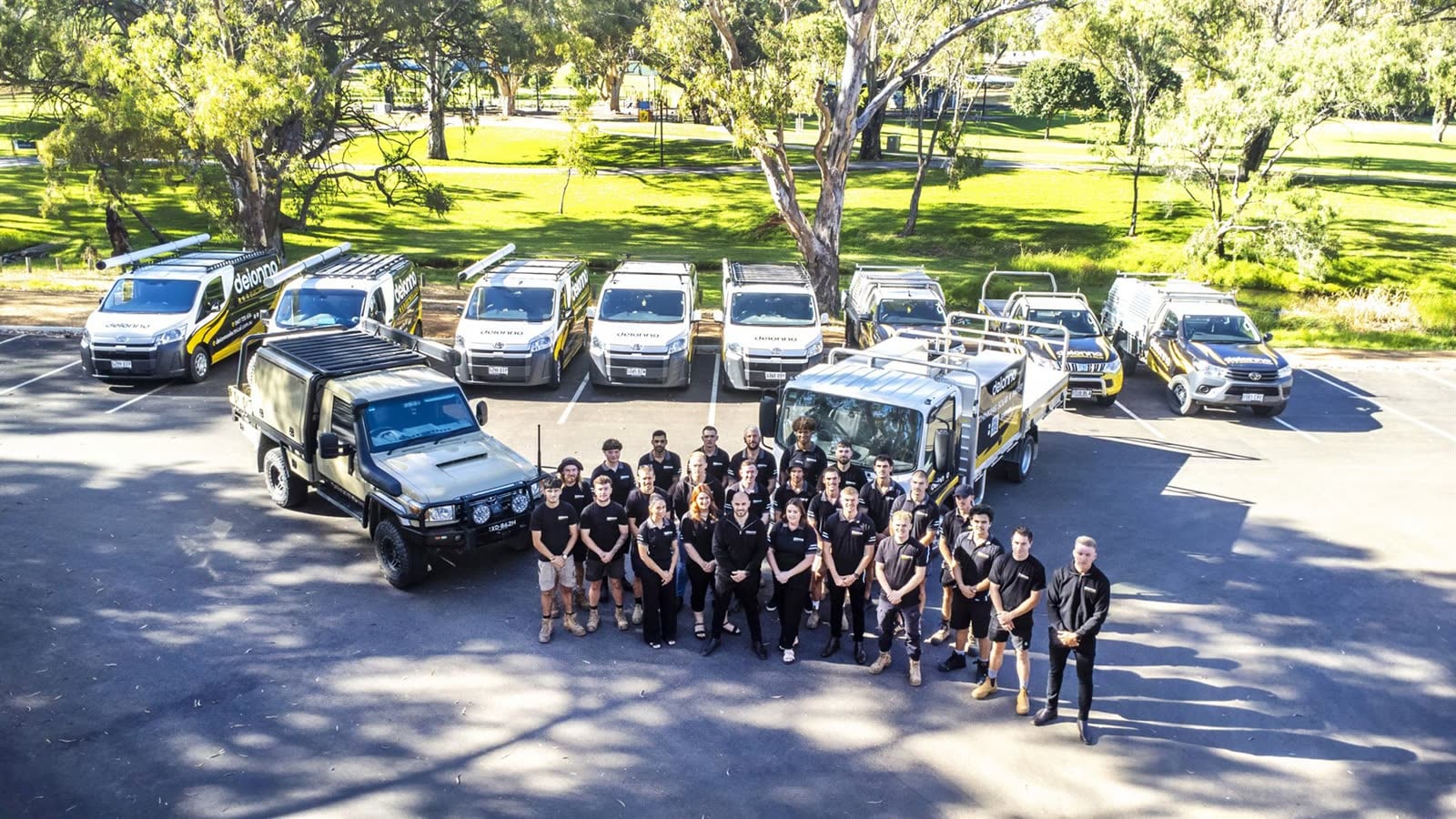
Deionno Electrical & Solar has installed and serviced solar across Adelaide for ten years and now does the same on the Sunshine Coast. Every fault-finding visit is done by one of our own licensed electricians. We don’t subcontract, and we work on any brand of panel, inverter or battery, including systems put in by companies that have since closed.
If you want a quick read on what your inverter is telling you before you call, our free inverter fault code lookup covers 1,357 codes across 31 brands.
Stopped producing? Start with a phone call
Have the inverter's display or your monitoring app in front of you. An electrician will tell you whether it's something you can safely reset, or whether it needs a visit.
When to book a solar system repair
The four situations that bring most repair calls to us.
Swipe to see more
Solar system not working? Start here
Nearly every call, from solar panels not working at all to a system that only looks fine, starts in one of three ways, and each points somewhere different.
- No lights, no display, nothing in the app. The inverter has no power. The usual causes are a tripped solar breaker at the switchboard, a DC isolator that has failed, or a dead inverter. Panels rarely cause this on their own.
- A red light or an error code. The inverter has power and has found a problem. Grid voltage out of range, an insulation fault on a string, an earth fault, a sensor fault, or an internal failure. The code narrows it; the test confirms it.
- Running, but producing less than it should. A string has dropped out, a panel has failed or is shading its neighbours, a connector is corroding, or the inverter is throttling on hot afternoons. This is the fault people live with longest, because the system still looks on.
The job of a proper solar system repair is to find which one you have, and why, before anyone talks about replacing anything.
What to check safely before you call for solar repairs
There are a few things you can look at without touching anything live.
- Open your monitoring app, or look at the inverter screen, and write down exactly what it says. A photo of the display helps.
- Look at the switchboard for a breaker labelled solar, PV or inverter supply. If it has tripped, note it. You can reset it once. If it trips again, leave it off and call.
- Follow the shutdown and restart procedure on the label beside your inverter, in the order printed. Wait a few minutes before switching back on.
- Check your last two bills for the feed-in line. A missing or shrunken credit tells you roughly when the drop started.
Do not open the inverter, a DC isolator or a junction box on the roof. The DC side of a solar system is live whenever there is daylight, even with the inverter off. If you smell burning, see scorching on an isolator, or hear a crackle, switch the solar supply off at the switchboard, leave the rest alone and call 1800 610 165.
Solar system faults, not just the inverter
A solar system repair looks at everything the inverter depends on. These are the parts that fail, roughly in the order we find them.
- DC isolators. The rooftop switch takes sun, rain and heat for years. Water gets in, the contacts corrode or arc, and the string stops. A melted isolator is the most common serious fault we see.
- Connectors and DC cable. A plug that was never clicked home, a mismatched connector, or cable chewed by birds and rodents. Resistance rises, heat follows, output drops.
- Panels. Cracked glass from hail, cell damage from hot spots, failed bypass diodes, or delamination on older modules. One bad panel can pull a whole string down.
- Earthing and insulation. A damaged cable sheath or a wet connection leaks current to earth. The inverter shuts down to protect the house, and reports an insulation or ground fault.
- Switchboard and grid side. A tired breaker, a loose neutral, or grid voltage that climbs too high in the afternoon so the inverter keeps dropping off. Common on long rural lines and in streets with a lot of solar.
- Monitoring. Sometimes nothing is wrong with the system at all. The Wi-Fi dongle has dropped off and the app shows zero. We check that first.
What our solar fault-finding visit covers
One of our electricians comes out with a ladder and a bag of test gear. The visit usually runs like this.
- Read the inverter’s event log and the monitoring history, so we know when the fault began and whether it comes and goes.
- Measure the voltage and current of every string, in daylight, and compare them with what the panels should be giving.
- Run an insulation resistance test on the DC wiring, which finds the leak the inverter is complaining about.
- Open and inspect each DC isolator and the connectors behind it. Heat marks and moisture tell the story.
- Check the earthing, the solar breaker, the connections at the switchboard and the grid voltage at the inverter terminals.
- On the roof, look over the array for cracked glass, lifted clamps, cable sag and nests.
You get the findings in plain words and a written quote for the fix. If a part needs ordering, the quote says what, and how long. Nothing is replaced until you’ve said yes to the price.
Repair or replace a solar system? How we decide
We fix first where fixing makes sense. The questions we ask are the same every time.
- How old is it? A string inverter that has given ten or more years has done its job. Panels are a longer story: a damaged panel in an otherwise sound array is usually a one-panel swap.
- Are parts available? If the brand still trades in Australia, the part is usually a phone call away. If it has left, a repair may mean a second-hand unit with no warranty behind it, and we’ll say so.
- Is it still under warranty? Inverter warranties commonly run five to ten years, panel product warranties longer. A warranty claim costs you less than a repair, so we check before we quote.
- What does the fix cost against a new unit? When a repair gets close to the price of a replacement with a fresh warranty, replacement is the honest advice.
Where replacement is the answer, we quote it as a plain job, not a package. If a battery or a bigger system would change your bill, we tell you, and you decide.
Solar systems we did not install, and brands that have left
A good share of the repair work we do is on systems other companies installed. That’s normal in solar: installers close, and several inverter brands have pulled out of Australia and left their customers with nobody to call. We service those systems the same way as our own. For the brands that have gone, our fault code lookup and the error code guides explain what each code meant on that hardware and what the realistic options are now.
Solar warranty and insurance claims
If the fault is a failed panel or inverter still inside its manufacturer warranty, we test it, document the failure the way the maker asks for, and help you lodge the claim. The maker covers the part under an accepted claim; what the diagnosis and the fitting labour cost you depends on the maker’s terms, and we tell you before we lodge it.
Storm and hail damage is usually an insurance matter. We inspect, make the system safe, and write the inspection report your insurer needs, with photos and test results. Where a roof has to be repaired under the panels, our electricians remove the array and reinstall it when the roofer is done, like this job in Hillbank.
What a solar system repair costs
Three things set the price: the time to find the fault, the part, and the time to fit it. A failed isolator or a loose connector is a short job. A replacement inverter is the part plus an hour or two of labour and the paperwork to reconnect it. A panel swap depends on whether we can match the module.
What we can promise before you book: no travel charge anywhere in our service area, the price in writing before any repair starts, and a quote that tells you whether the fix is worth doing.
Solar system repairs in Adelaide and on the Sunshine Coast
Adelaide and South Australia
Our Adelaide team has repaired solar across the metro area, the Hills, the Fleurieu and the Barossa for ten years, from the first wave of 1.5 kW systems to today’s hybrids. A replacement inverter in South Australia has to meet the state’s Smarter Homes rules, which cover remote disconnection and the connection paperwork with SA Power Networks. We handle that as part of the job. Find your area on the Adelaide solar repairs page.
Sunshine Coast and South East Queensland
The Coast is hard on solar: summer storms, hail cells, salt air on the beachside suburbs and roof temperatures that push inverters to their limits in January. Our Sunshine Coast electricians cover Caloundra to Noosa, the hinterland, Gympie and north Brisbane from the Corbould Park base, with Energex reconnection handled where a replacement needs it. Details on the Sunshine Coast solar repairs page.
Related repair services
If you already know the inverter itself has died, the solar repairs overview covers inverter repairs and replacements. If the system works and you want it checked once a year, read our solar maintenance guide. This page is for the fault nobody has found yet.
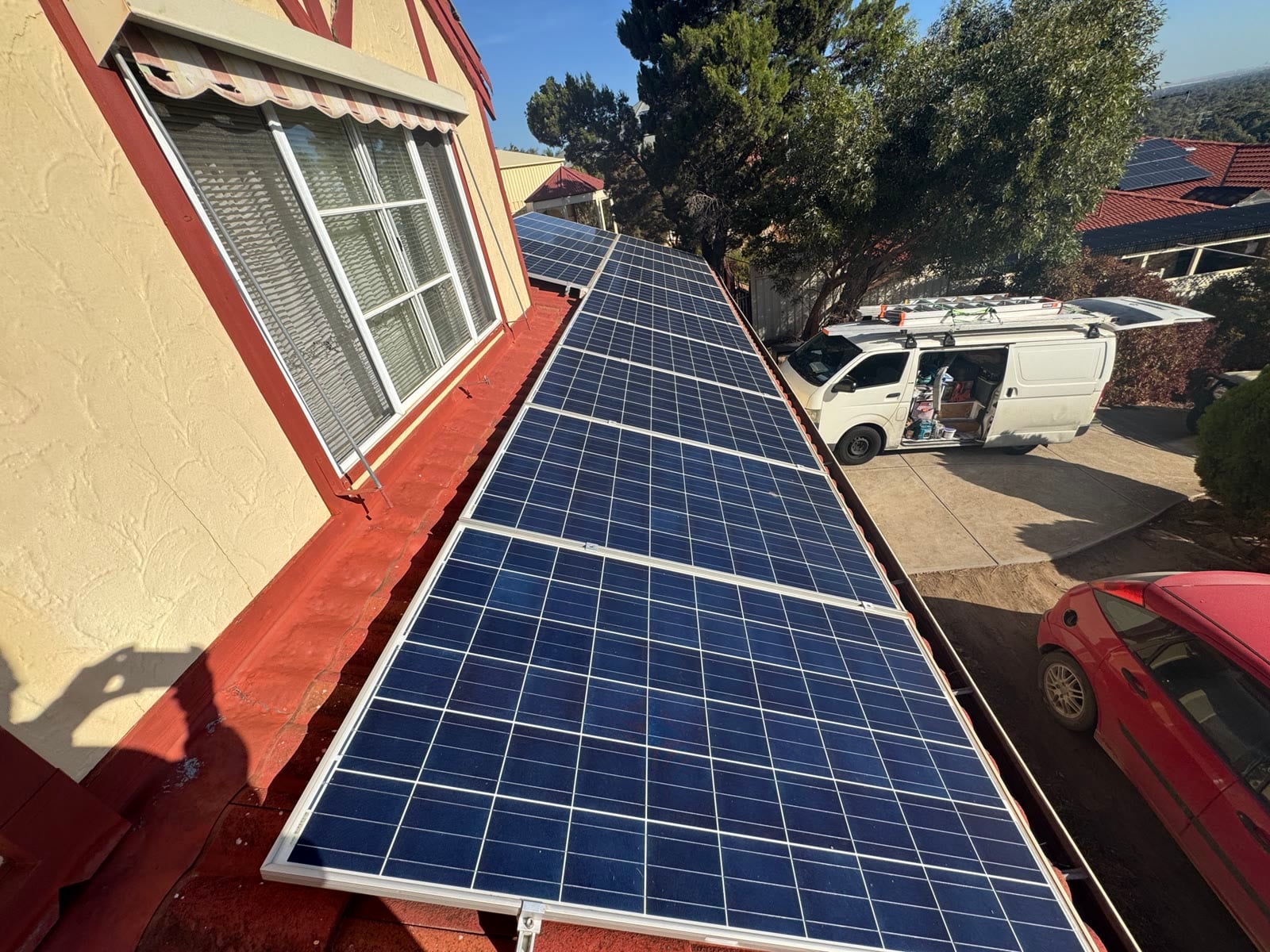
Solar Panel Removal and Reinstall for Roof Repairs in Hillbank, SA
20 solar panels disconnected, stored on site and reinstated for roof repairs, with the front veranda fascia light and sensor replaced.
Outcome: Twenty panels off, stored on site, and back on once the roofer had finished.
Read the full projectHow a solar system repair runs
From the first call to a system producing again.
Swipe to see more
Solar system repair questions, answered
Straight answers from our electricians. Can’t find yours? Call 1800 610 165 or book the assessment and ask on the day.
My solar system has stopped working. What should I check before I call?
Write down what the inverter display or app says, check the switchboard for a tripped solar breaker, and follow the shutdown and restart steps on the label beside the inverter once. If the fault comes back, or there was nothing to reset, book a visit. Do not open the inverter or any isolator.
How much does solar system repair cost?
It depends on what has failed. Isolators and connectors are quick to put right. A new inverter is mostly the cost of the unit, with labour and the reconnection paperwork on top. A panel swap turns on whether a matching module can be found. Either way, the price comes in writing before any repair starts, and there’s no travel charge inside our service area.
What happens during a fault-finding visit, and how long does it take?
An electrician reads the inverter log, measures every string, runs an insulation test on the DC wiring, inspects the isolators and connectors, checks the earthing and the switchboard, and looks over the roof. Most visits take about an hour. You get the findings in plain words and a written quote.
Can an electrician fix solar panels, or do I need the original installer?
A licensed electrician with solar accreditation can repair any part of a grid-connected system, whoever installed it. Our electricians hold SA licence 287733 and QLD electrical contractor licence 1512582 and are accredited for solar work. You don’t need the original installer, and in many cases they no longer exist.
Why is my solar producing less than it used to?
The common reasons are a string that has dropped out, a failed or shaded panel, a corroding connector raising resistance, an inverter cutting back when grid voltage climbs in the afternoon, or dirt and bird mess on the array. A string-by-string test shows which one. Monitoring that has lost its Wi-Fi can also show a drop that isn’t real.
What does the red light or error code on my inverter mean?
Each brand uses its own codes. Grid faults, insulation faults, earth faults, temperature derating and internal failures all look different on the display. Put the brand and code into our inverter fault code lookup for a plain-English reading and whether it needs an electrician.
Is it worth repairing an older system, or should I replace it?
If the inverter is past ten years, the brand has left Australia, or the repair gets close to the cost of a new unit with a fresh warranty, replacement is usually the better money. If the array is sound and the fault is one part, repair it. We put both options and their prices in the quote so you can see the gap.
Can you repair a system you did not install, or one whose installer has closed?
Yes. A good share of our repair work is on systems other companies installed. We test and repair them the same way, and where the manufacturer is still trading we help lodge the warranty claim.
Does home insurance cover storm or hail damage to solar?
Usually, as part of the building. The insurer will want an inspection report from a licensed electrician that says what failed, what caused it and what it costs to put right. We write that report, make the system safe in the meantime, and remove and reinstall the panels if the roof underneath has to be repaired.
Keep reading
Ready to start?
Book a free 60-minute on-site assessment with one of our licensed electricians.
Free 60-minute on-site solar and battery assessment. No obligation.

$0 power bill guarantee
Arrange your free 60 minute on-site Solar & Battery Assessment in 30 seconds!
Which state is your home in?
Do you own your home?
Unfortunately, we only work with homeowners
If you are considering solar for a new home, or on behalf of someone else, select "I own my home"
We only work with homeowners
A solar or battery system is a permanent change to the property, so it needs to be arranged by the person who owns the home.
If you tapped that by mistake, head back and we'll pick up where you left off.
What are you looking for?
Our team can talk you through all options if you're not sure.
What appeals to you most?
You'll get all of these. We'd just like to know what matters most.
How much is your quarterly electricity bill?
The average Adelaide home spends $500 - $1000 per quarter. Not sure of yours? Take your best guess, we'll go through the real numbers at your assessment.
Whatever it is today, our goal is $0. If we don't get you there, we'll pay your bill.
How soon are you looking to get a system installed?
We can work with you on a longer timeline, or get you saving as soon as possible.
What is your address?
We have hundreds of happy customers across South Australia. We need your address to check we service your area and to look at your roof before we visit.
Great news, we service your area!
Anything else to share?
Every system we design is tailored to the home, so the more info the better! (Optional)
How should we get in touch with you?
Last step. We'll call to arrange your free on-site assessment at a time that suits you. No pressure and no obligation.
Request sent, we'll be in touch!
Do you want to skip the queue?
Call to speak directly with a solar specialist during business hours, and we can get your free on-site assessment booked in straight away.
📞What happens next?
- 1We'll give you a call
If you haven't called already, we'll give you a call to say hello.
- 2Discuss your needs and goals
We'll chat about what you're looking for, how we can help, and book in a time for your on-site assessment that suits you.
- 3Your free on-site assessment
We visit your home for 45 to 60 minutes to measure up the roof, check the switchboard and review how you use power.
- 4We send your detailed quote
A tailored proposal with the system design, the savings and the pricing laid out in full.
- 5We design and install
If you're happy with the proposal, our in-house team installs it and shows you how it all works.
4.9Google · 530+ reviews
4.8SolarQuotes reviews