
Home Solar Installer
Residential solar designed from your bills and installed by our own licensed electricians. Ten years in business, more than 4,000 systems, and on systems we design for it, your bill gets to $0 or we cover it.
 4.9 Google 530+ reviews
 4.8 SolarQuotes
A home solar installer should start with your bill, not a price list
Two houses on the same street can need very different solar systems. One has a pool pump and air conditioning running through the afternoon; the other is empty until six. A home solar installer who quotes from a package table is guessing. We measure the house, read the bills and size the system to the way you live. And on systems we design for it, your bill gets to $0 or we cover it.
Deionno Electrical & Solar is an electrical contractor with its own installation crews; the solar and electrical work is never handed to a subcontractor. We’ve been in business ten years, and our licensed electricians have installed more than 4,000 solar and battery systems, in Adelaide first and now on the Sunshine Coast. Every home system carries a 10-year workmanship warranty, product warranties of up to 25 years, and a written fix-it commitment in the contract.
Want a number before anyone visits?
Tell us your quarterly bill and we'll talk it through on the phone first: a rough system size, what it might save, and whether the site visit is worth your time.
Who home solar installation suits
Four reasons people call us, and what we design for each.
Swipe to see more
What a home solar installer does, and who is allowed to do it
Every rooftop solar system in Australia has to be installed and signed off by a licensed electrician, and the federal rebate is only paid when an accredited installer does the job. Some companies employ those electricians. Others sell the system and hand the work to whoever is available that week. The difference shows up years later, when a connector fails and nobody knows who put it there.
We hold SA electrical licence 287733 and QLD electrical contractor licence 1512582, and our own electricians do the assessment, the design, the installation and the sign-off. The person who climbs the ladder works for us.
Home solar designed from your bills, not a package
We don’t sell fixed-price packages. A home solar design starts with three things: a year of bills, which tell us how much power you use and when; the roof, which tells us how many panels fit and which way they face; and the switchboard and supply, which set the inverter size and whether a battery or backup is straightforward. From those we size the array, choose the inverter and work out the saving, in writing.
The two questions we get asked most, what size and what price, have the same answer: it depends on how you use power. A 6.6 kW system was the standard for years because it matched a 5 kW inverter and the export rules. Today most homes we design are bigger, because feed-in tariffs are low and the saving is in the power you use yourself. A 10 kW system makes around 40 kWh a day averaged over the year in Adelaide or on the Sunshine Coast, enough to run most family homes with the air conditioning on and charge a battery or a car with what’s left.
What home solar costs
The price of a home system moves with four things: the size of the array, the inverter (string, hybrid or micro), the roof (tile, Colorbond or flat, single or two storey, how many faces) and the switchboard. The federal rebate comes off the top. Because every system is designed for the house, we publish how the price is built rather than a from-price that only applies to the easiest roof.
What we can say before the visit: the on-site assessment and the written proposal are free, there is no travel charge anywhere in our service area, the rebate is already deducted on the quote, and finance is available if you’d rather pay the system off from the saving. For a figure on the rebate itself, our solar rebate calculator works it out from your postcode and system size.
Solar rebates, feed-in tariffs and export limits in SA and Queensland
South Australia
The federal rebate, paid through the Small-scale Renewable Energy Scheme as STCs, applies to every eligible home system and steps down each January until it ends in 2030. SA Power Networks allows a 10 kW inverter on a single-phase supply with a standard 5 kW export limit, and more on three-phase, which is why we check the supply at the assessment. Feed-in tariffs in SA now sit in the single digits of cents, and some plans charge for exporting in the middle of the day, so the design aims at using your power at home. New systems also have to meet the state’s Smarter Homes requirements; we lodge that paperwork with the network as part of the job.
Queensland
The same federal rebate applies on the Sunshine Coast. Energex sets the connection rules in South East Queensland, with a 5 kW export limit the common case on single-phase and dynamic connections that allow more where the network can take it. We handle the Energex application before install day. Feed-in tariffs here are also low, so the thinking is the same as in SA: size for self-use, and plan for a battery even if it comes later.
Which roofs and homes suit solar panels
Nearly every home solar panel installation we do lands on one of three roof types; the rest comes down to shade, storeys and the switchboard.
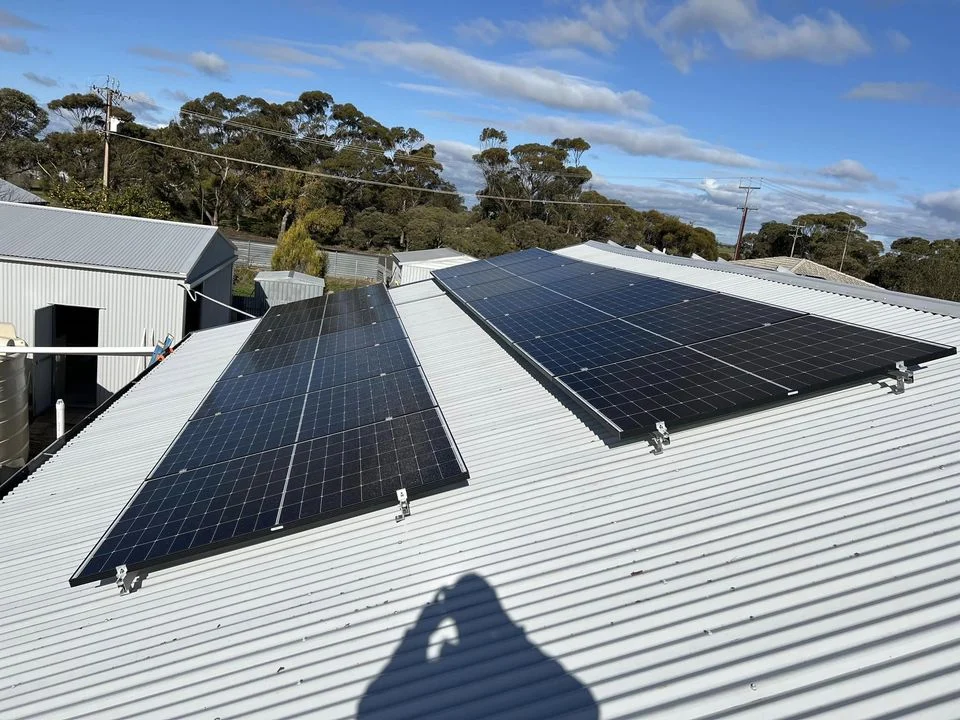
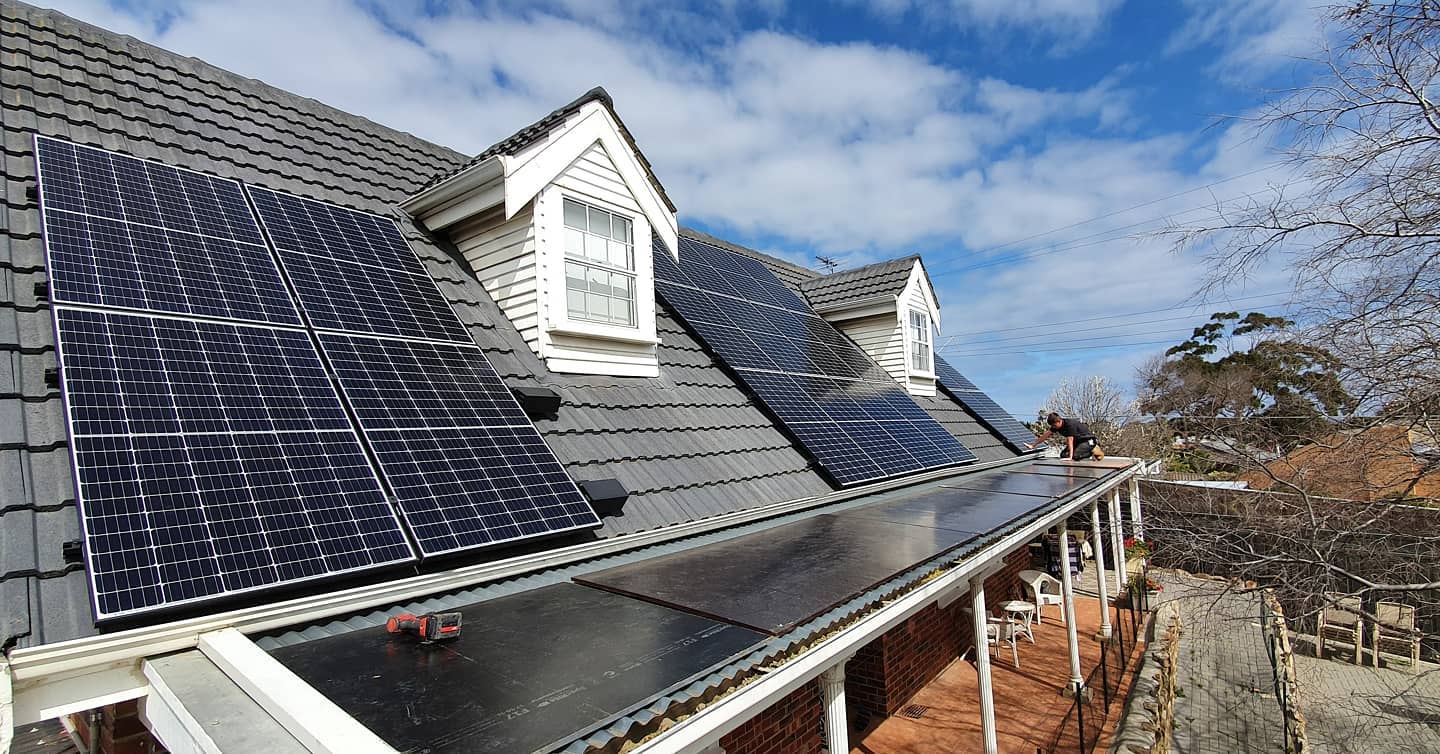
- Roof type. Tile, Colorbond and Klip-Lok all work; each needs its own mounting. Tiles get flashed so the roof doesn’t leak; Klip-Lok takes clamps with no holes at all; corrugated Colorbond takes feet screwed into the battens and sealed.
- Orientation and shade. North is best, but east and west faces work well for morning and evening use. Where a chimney or a tree shades part of the roof, optimisers or micro-inverters let the rest of the array carry on.
- Single or two storey. Two-storey homes take longer and sometimes need a scissor lift, which goes into the price. The job still gets done.
- Switchboard. Older boards may need a dedicated breaker or a safety switch before solar can be connected. We tell you at the assessment and price it in.
- No roof space? We also build ground-mounted arrays on rural and larger blocks.
The solar panels, inverters and batteries we install
We are a certified installer for Sungrow, Sigenergy and Tesla Powerwall, which means those makers have trained and checked our crews on their inverters and batteries. Panels come from the makers listed on our brands page, all with Australian warranty support. If you are thinking about a battery, now or later, we design the inverter and switchboard so adding one is a straightforward job, and we’ll tell you straight whether it pays today.
Home solar installation from quote to switch-on
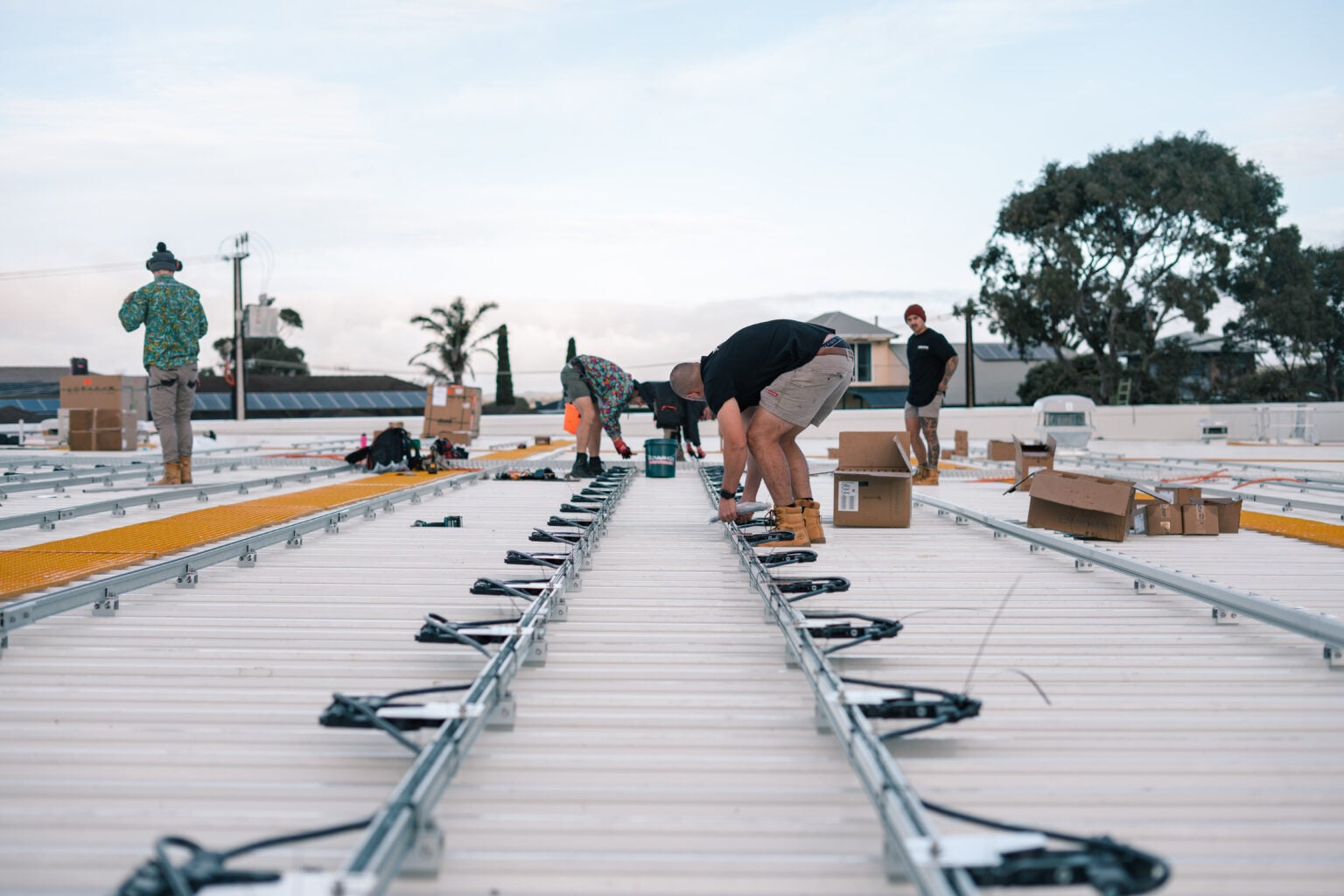
Most home systems go from the assessment to a working system in one to two months, most of it waiting on the network. Install day itself is usually one day for a straightforward home, and up to three for a larger system with a battery or switchboard work. The crew arrives in the morning, mounts the rails and panels, fits the inverter, runs the cable and does the switchboard work, tests everything, and walks you through the monitoring app before they leave. The meter change and the grid connection follow, and then the system is live.
Solar warranties and the $0 bill guarantee
Three warranties cover a home system: the panels’ product and performance warranties, up to 25 years; the inverter maker’s warranty; and our 10-year workmanship warranty on the installation, with a written commitment in the contract that we come back and fix it. And on systems we design for it, your bill gets to $0 or we cover it: if the bill doesn’t reach $0, we cover it for the following twelve months.
How to compare home solar quotes
Put the quotes side by side and check these before the price.
- Is the system size in kW, with the panel make, model and count? A cheap quote is often a smaller system.
- Which inverter, and is it a hybrid? A battery later costs more if the inverter can’t take one.
- Did anyone visit the house, or was the quote done from a satellite photo?
- Who installs it? Employees, or a subcontractor named on the day?
- Is the switchboard work included, or an extra on install day?
- What is the workmanship warranty, separate from the product warranties, and who honours it?
- Is the rebate already deducted, and who lodges the paperwork?
If two quotes are a long way apart, they’re usually not for the same system. Bring them to the assessment and we’ll read them with you.
Home solar installers in Adelaide and on the Sunshine Coast
From the Salisbury Plain base our Adelaide electricians cover the metro area, the Hills, the Fleurieu, the Barossa and the Yorke Peninsula. From Corbould Park the Sunshine Coast crews cover Caloundra to Noosa, the hinterland, Gympie and north Brisbane. There is no travel charge and no cost for a quote anywhere in those areas. Find your suburb on the Adelaide or Sunshine Coast solar installer pages.
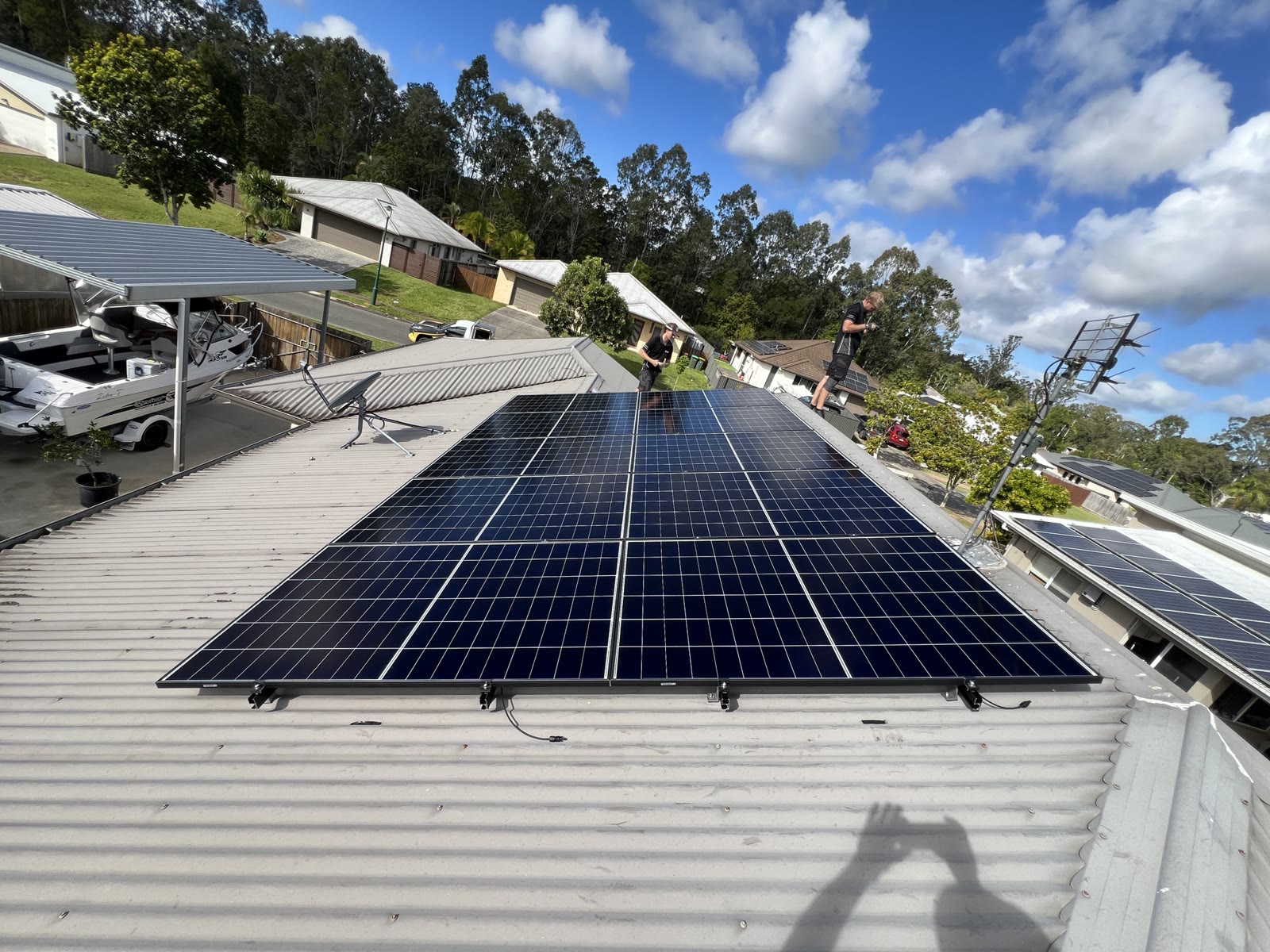
6.65 kW Solar Installation in Yandina, QLD
14 LONGi panels on a grey corrugated roof with a 5 kW GoodWe inverter, planned as one day of solar labour. No battery.
Outcome: Fourteen panels and a 5 kW inverter, planned as one day of solar labour.
Read the full projectHow a home solar installation runs
Six steps, usually one to two months from the first visit to switch-on.
Swipe to see more
Home solar installer questions, answered
Straight answers from our electricians. Can’t find yours? Call 1800 610 165 or book the assessment and ask on the day.
How much does it cost to install solar on a home in Adelaide or on the Sunshine Coast?
It depends on the system size, the inverter, the roof and the switchboard, with the federal rebate taken off the top. We design every system for the house rather than selling packages, so the honest answer comes from the free on-site assessment and the written proposal. There’s no travel charge and no cost for the quote anywhere in our service area.
What size solar system does my home need?
Whatever your bills say. We read a year of usage, look at when you use power, and size the array so most of what it makes is used at home. For many family homes today that means more than the old 6.6 kW standard, because feed-in tariffs are low and the saving comes from self-use.
Is 10 kW of solar enough to run a house?
For most homes, yes. Around 40 kWh a day averaged across the year in Adelaide or on the Sunshine Coast, more in summer and less in winter, covers a typical family’s use including air conditioning and leaves a surplus for a battery or an electric car. Homes with heavy evening use get the full benefit with a battery.
Do solar installers need to be electricians?
Yes. In Australia the electrical work and the sign-off on a residential solar installation must be done by a licensed electrician, and the federal rebate requires an accredited installer. Ask any company whether the crew are its own employees and whether a licensed electrician will be on site. Ours are, on every job.
What rebates can I claim on home solar?
The federal rebate, paid through small-scale technology certificates, comes straight off the quote and steps down each January until 2030. A separate federal discount, the Cheaper Home Batteries Program, applies to eligible home batteries. We take both off the price and lodge the paperwork. Our solar rebate calculator and battery rebate calculator show the figures for your postcode.
How long does a home solar installation take?
A day for most homes, up to three where a battery or switchboard work is part of the job. Assessment to switch-on usually runs one to two months, and most of that is waiting on the network approval and the meter change.
What happens on install day?
Rails and panels go on first, then the inverter, the cabling and the switchboard work, then the tests. Before the crew packs up they put the monitoring app on your phone and show you the labels in the meter box. The grid connection follows once the network has processed the paperwork.
Will I still have power in a blackout?
Not with solar alone: grid-connected inverters shut down when the grid does. A battery installed with backup keeps selected circuits or the whole house running. If backup matters to you, say so at the assessment and we’ll design the inverter and switchboard for it from the start.
Should I add a battery now or later?
If your evening use is high and your feed-in tariff is low, a battery often pays now, and the federal battery discount helps. If not, we fit a hybrid-ready design so a battery can be added later without replacing the inverter. We’ll tell you which applies to your bills rather than sell you one either way.
How do I spot a cheap quote that will cost more later?
Look for a smaller system than the others, an inverter that can’t take a battery, no site visit, no named crew, switchboard work left out and no workmanship warranty in writing. If one quote is a long way under the rest, what it leaves out is usually the reason. Bring it to the assessment and we’ll go through it line by line.
Keep reading
Work out your numbers first
One thing to look at before anyone comes out.
See a real proposal
A sample of the written proposal you get after the assessment: gear, cost, output, savings and timeline.
View the sample proposal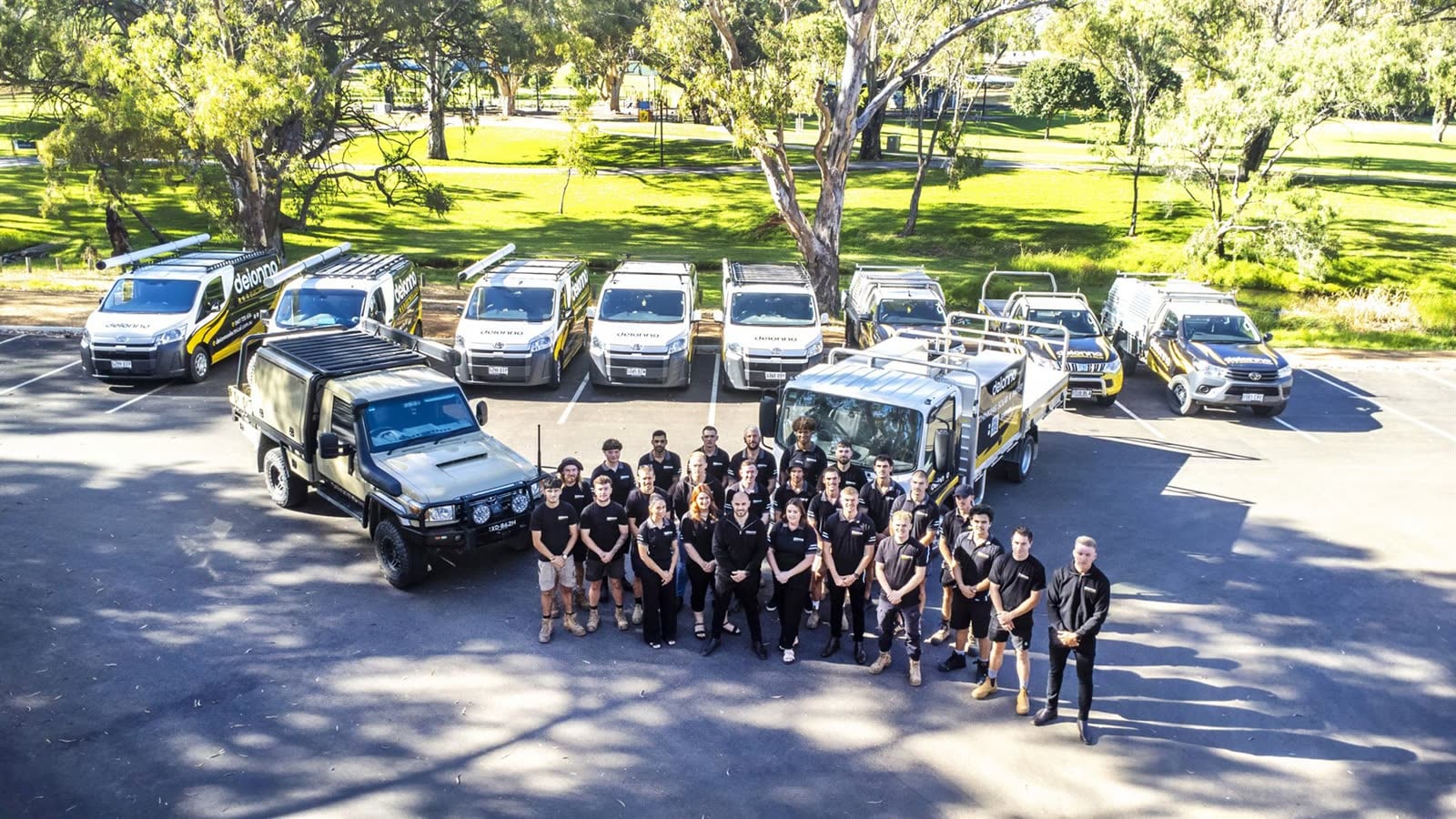
Ready to start?
Book a free 60-minute on-site assessment with one of our licensed electricians.
Free 60-minute on-site solar and battery assessment. No obligation.

$0 power bill guarantee
Arrange your free 60 minute on-site Solar & Battery Assessment in 30 seconds!
Which state is your home in?
Do you own your home?
Unfortunately, we only work with homeowners
If you are considering solar for a new home, or on behalf of someone else, select "I own my home"
We only work with homeowners
A solar or battery system is a permanent change to the property, so it needs to be arranged by the person who owns the home.
If you tapped that by mistake, head back and we'll pick up where you left off.
What are you looking for?
Our team can talk you through all options if you're not sure.
What appeals to you most?
You'll get all of these. We'd just like to know what matters most.
How much is your quarterly electricity bill?
The average Adelaide home spends $500 - $1000 per quarter. Not sure of yours? Take your best guess, we'll go through the real numbers at your assessment.
Whatever it is today, our goal is $0. If we don't get you there, we'll pay your bill.
How soon are you looking to get a system installed?
We can work with you on a longer timeline, or get you saving as soon as possible.
What is your address?
We have hundreds of happy customers across South Australia. We need your address to check we service your area and to look at your roof before we visit.
Great news, we service your area!
Anything else to share?
Every system we design is tailored to the home, so the more info the better! (Optional)
How should we get in touch with you?
Last step. We'll call to arrange your free on-site assessment at a time that suits you. No pressure and no obligation.
Request sent, we'll be in touch!
Do you want to skip the queue?
Call to speak directly with a solar specialist during business hours, and we can get your free on-site assessment booked in straight away.
📞What happens next?
- 1We'll give you a call
If you haven't called already, we'll give you a call to say hello.
- 2Discuss your needs and goals
We'll chat about what you're looking for, how we can help, and book in a time for your on-site assessment that suits you.
- 3Your free on-site assessment
We visit your home for 45 to 60 minutes to measure up the roof, check the switchboard and review how you use power.
- 4We send your detailed quote
A tailored proposal with the system design, the savings and the pricing laid out in full.
- 5We design and install
If you're happy with the proposal, our in-house team installs it and shows you how it all works.
4.9Google · 530+ reviews
4.8SolarQuotes reviews