
Off-Grid Solar Systems
 4.9 Google 530+ reviews
 4.8 SolarQuotes
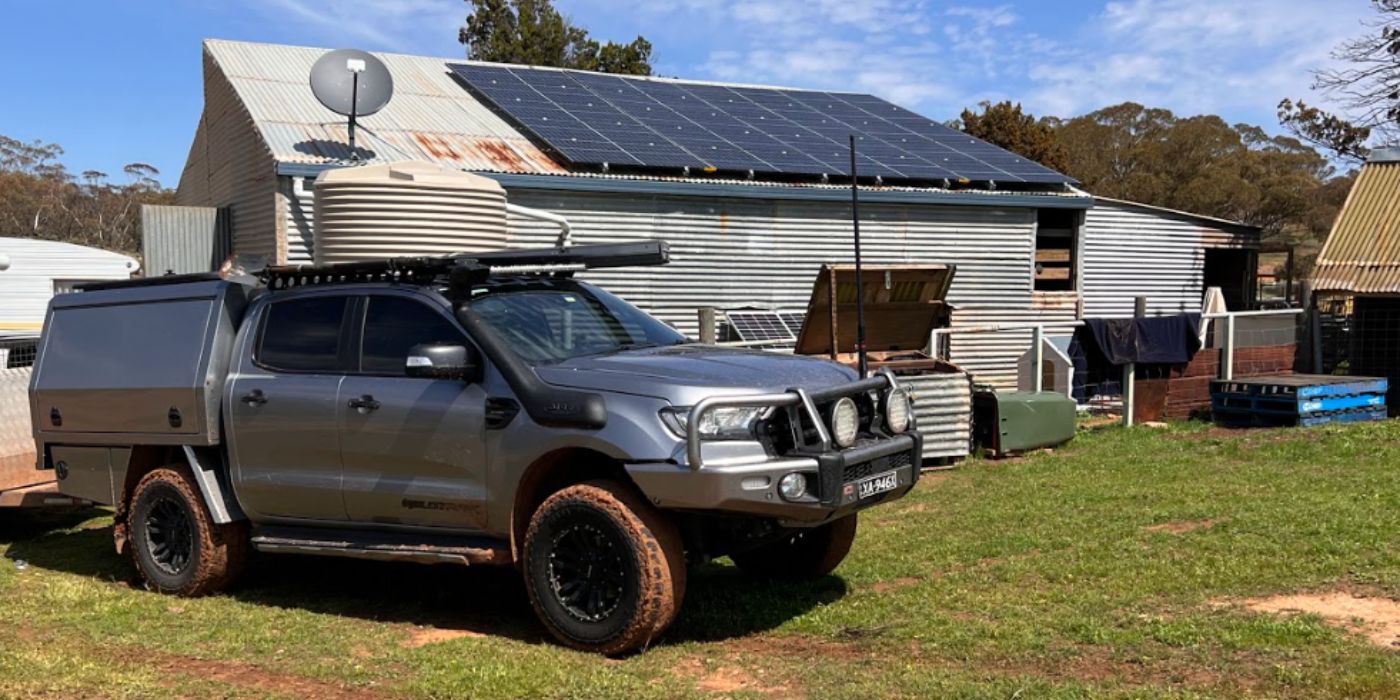
In addition to installing grid-tied domestic and commercial solar systems , Deionno Electrical also specialises in off-grid solar systems for homes and businesses with limited or no access to mains power. Our off-grid solar solutions are exclusively designed to suit the specific energy needs of our clients, providing them with an efficient source of remote electricity with complete energy independence, regardless of location.
Free 60-minute on-site assessment
A licensed electrician measures your roof and your bill. No phone quotes.
Whether you want to disconnect from the grid to combat the rising energy costs in Adelaide, or you’re looking for an off-grid solar setup to cater to the major energy requirements of your rural property, we’ve got you covered.
We design and install full off-grid solar across the Sunshine Coast hinterland: Maleny, Mapleton, Conondale, Kenilworth, Eumundi, Cooran and the wider region. Every system is engineered to your site, your loads, and your generator backup plan, with one accountable team from first site visit to year-15 service.
Is off-grid right for you?
Off-grid usually beats grid-connect on these properties:
- Hinterland blocks where the network (Energex on the Sunshine Coast, SA Power Networks in Adelaide) has quoted $30,000 or more to bring power in
- Acreage and rural properties at the end of long, fault-prone overhead feeders
- New builds on raw land where grid connection adds 6+ months to your build timeline
- Existing on-grid hinterland homes wanting energy independence from rising tariffs and frequent outages
- Commercial sites (farms, B&Bs, aquaculture, hinterland workshops) where outage cost exceeds system cost in under 5 years
When off-grid beats grid-connect on cost and reliability
Hinterland connection quotes from Energex, and their SA Power Networks equivalents in the Adelaide Hills, have crept from $25k to $40k a decade ago to $40k to $80k+ today. Once a connection quote crosses about $30k, off-grid is usually the cheaper 20-year option, and increasingly the faster option, because off-grid installs run weeks where grid extensions can run months. Sunshine Coast irradiance averages 5.0 to 5.4 peak sun hours per day across the year, according to Bureau of Meteorology climate data for Caloundra, Maroochydore and Nambour. That puts hinterland yields well within range of a properly sized off-grid system, even accounting for the orographic cloud that builds over the ranges.
Beyond the up-front comparison, off-grid removes the variable cost line entirely. No quarterly bill, no tariff exposure, no “unscheduled outage” calls during summer storms.
There’s a resilience dividend too. When a multi-day storm takes out a hinterland feeder, the kind of outage Maleny, Conondale and Kenilworth see most summers, an off-grid home just keeps running. No grid to lose, no waiting days for network crews to reach a downed line at the end of a long rural run.
Across Adelaide and the Sunshine Coast, going off-grid comes with these benefits:
- Avoid unexpected power outages
- Significant reduction in energy costs
- A reliable source of power for rural areas
- Sustainable and eco-friendly
- High return on investment
How off-grid solar power systems work
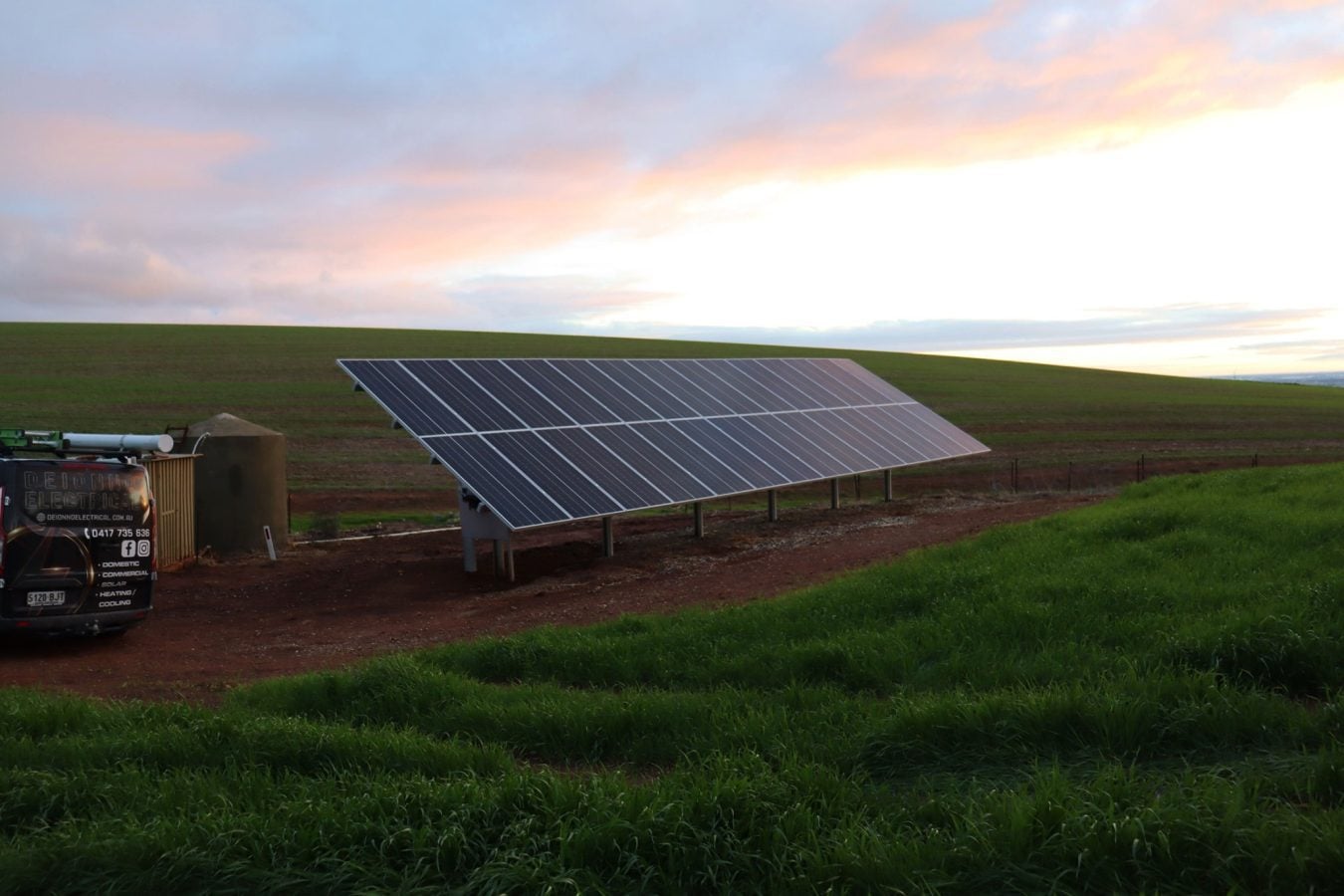
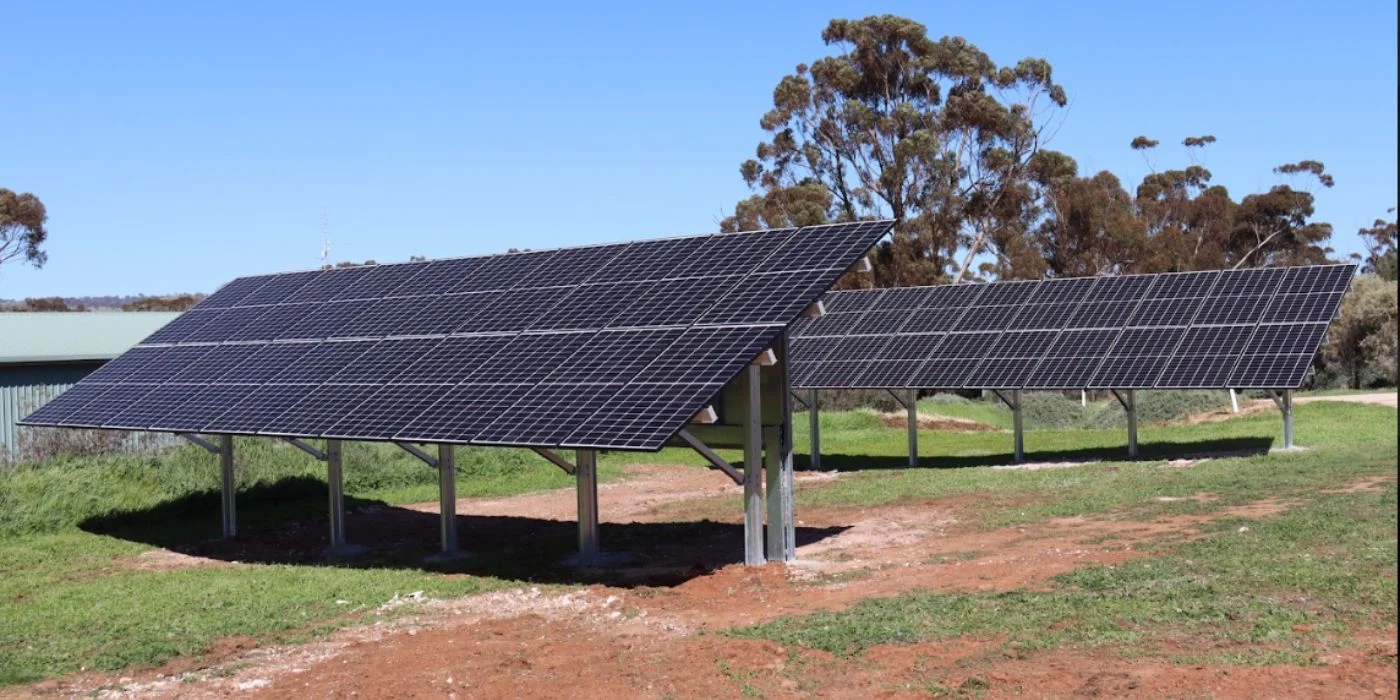
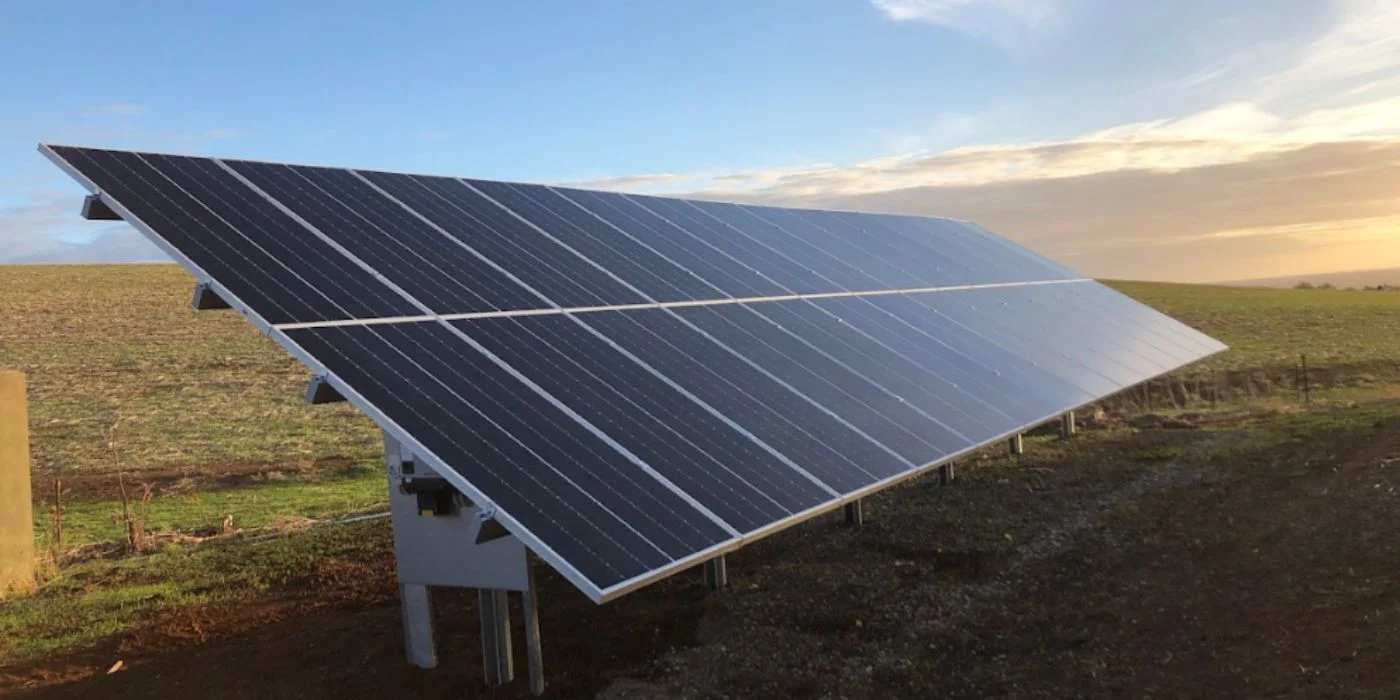
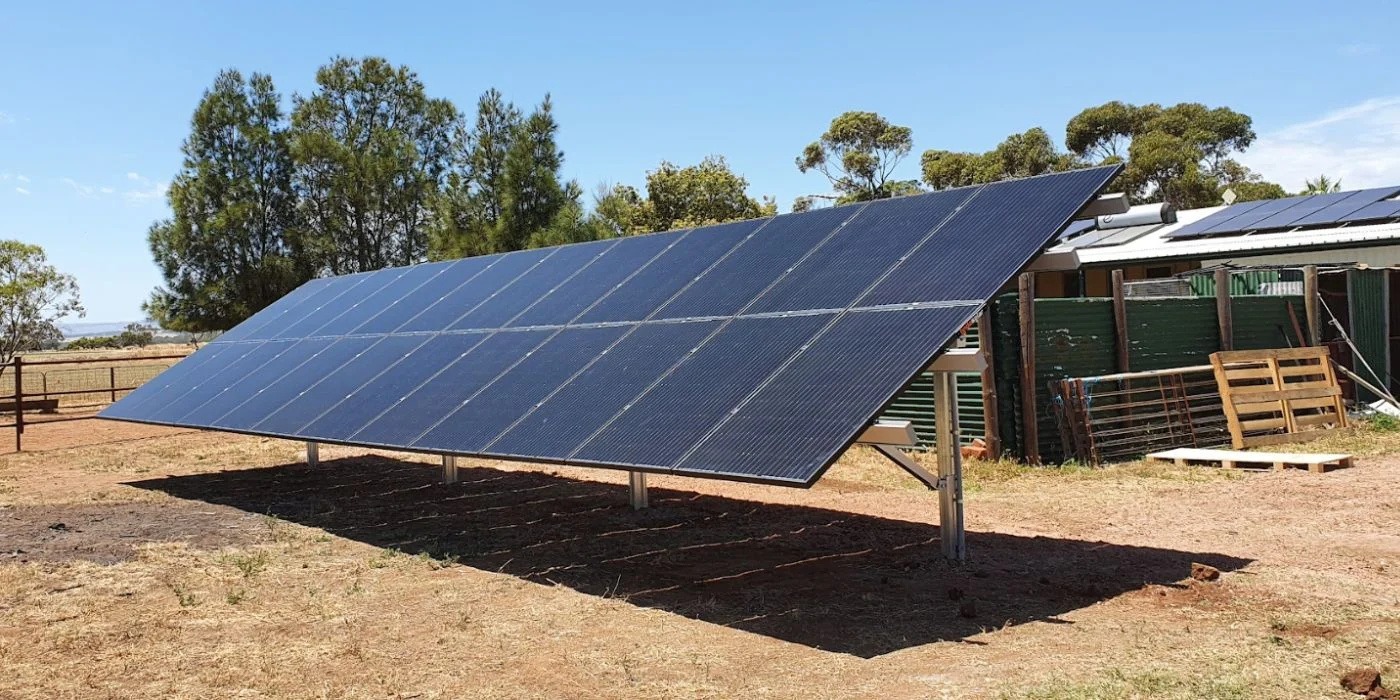
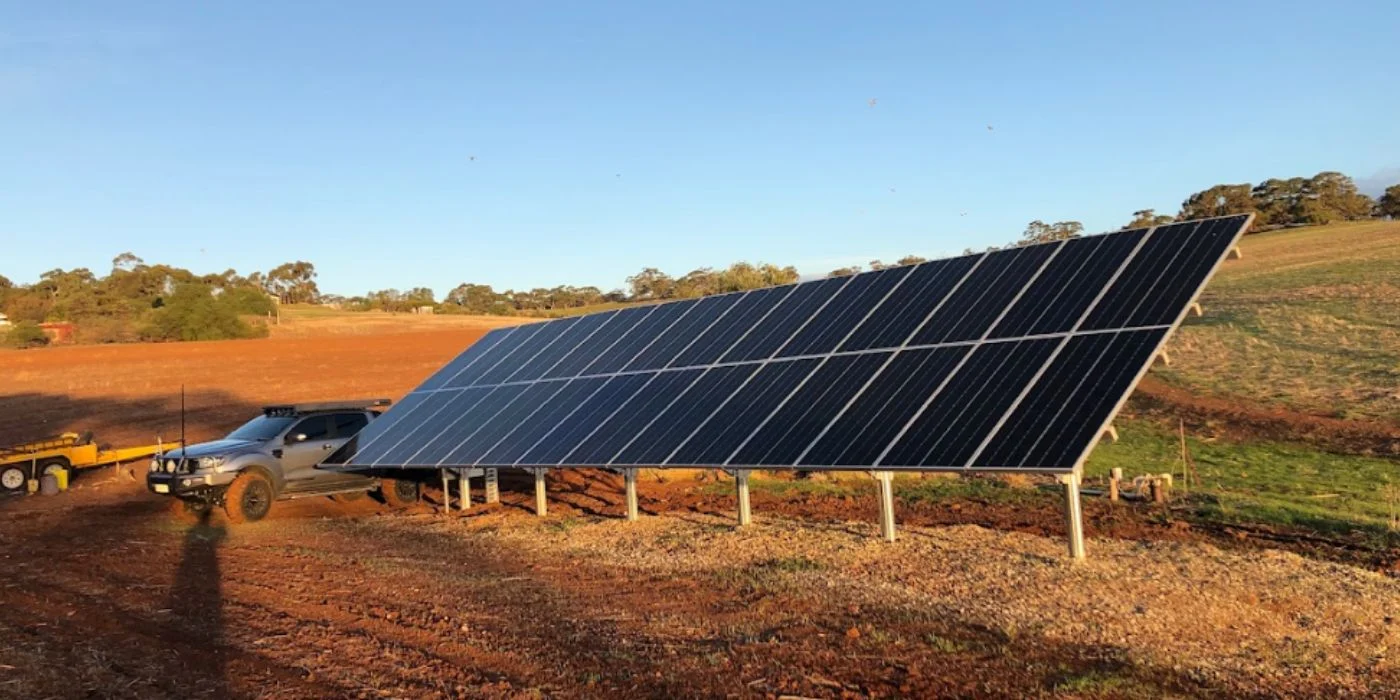
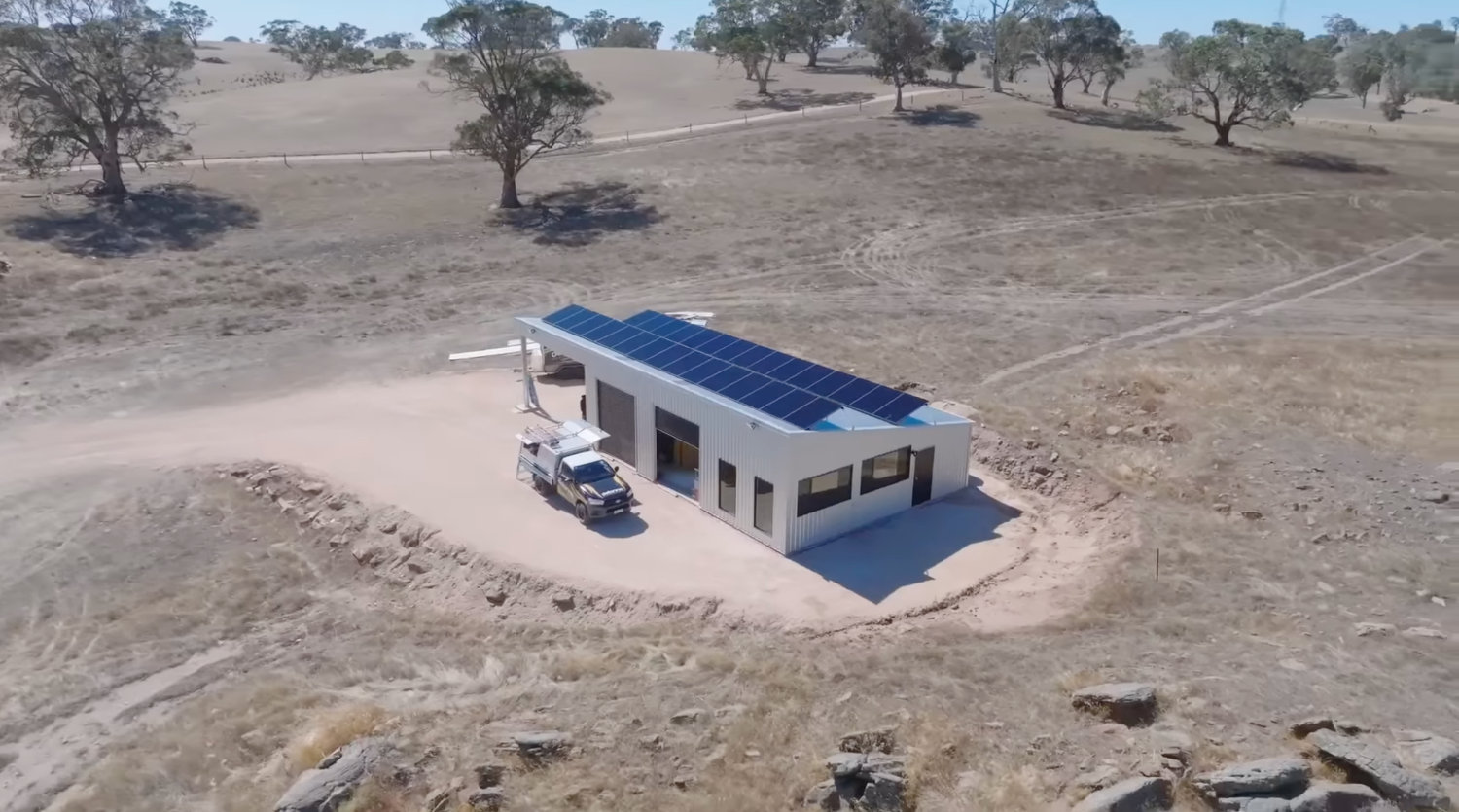
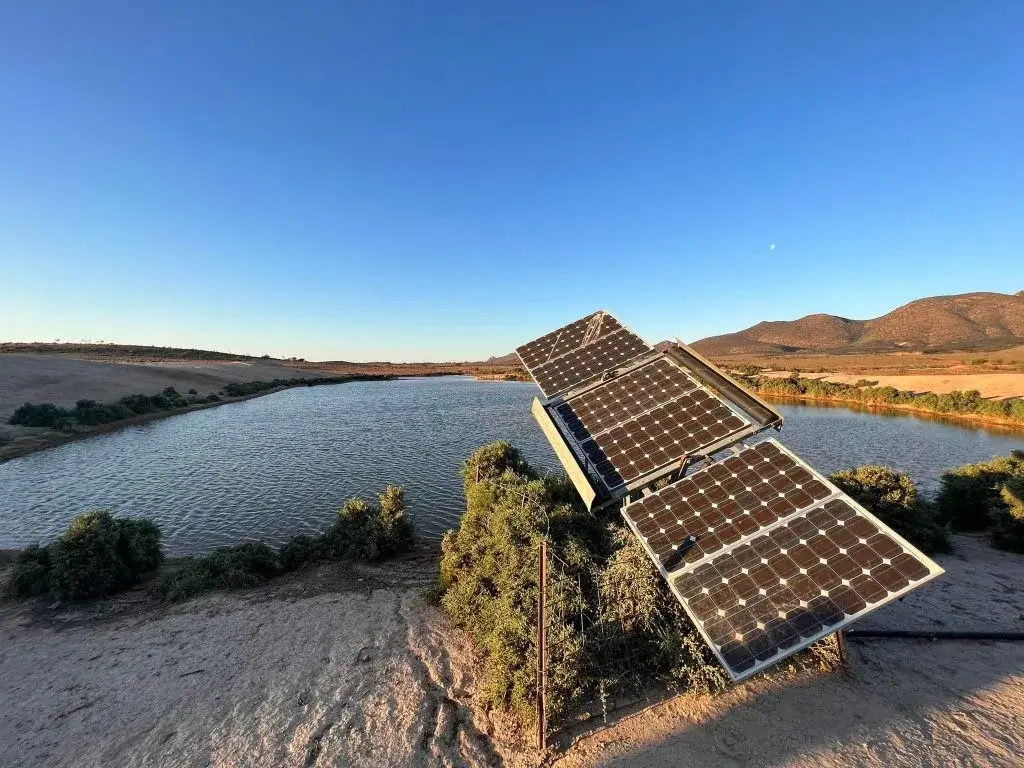
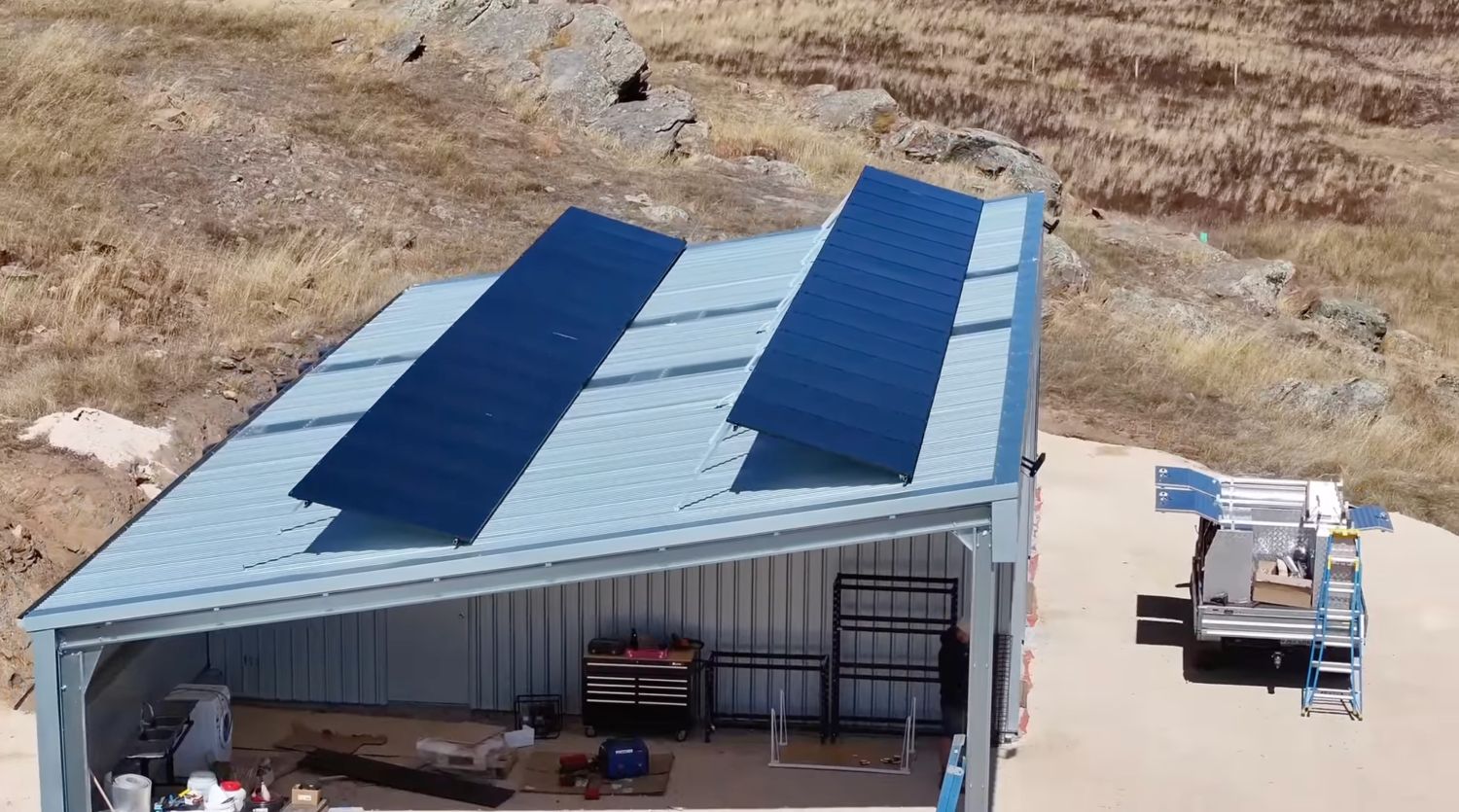
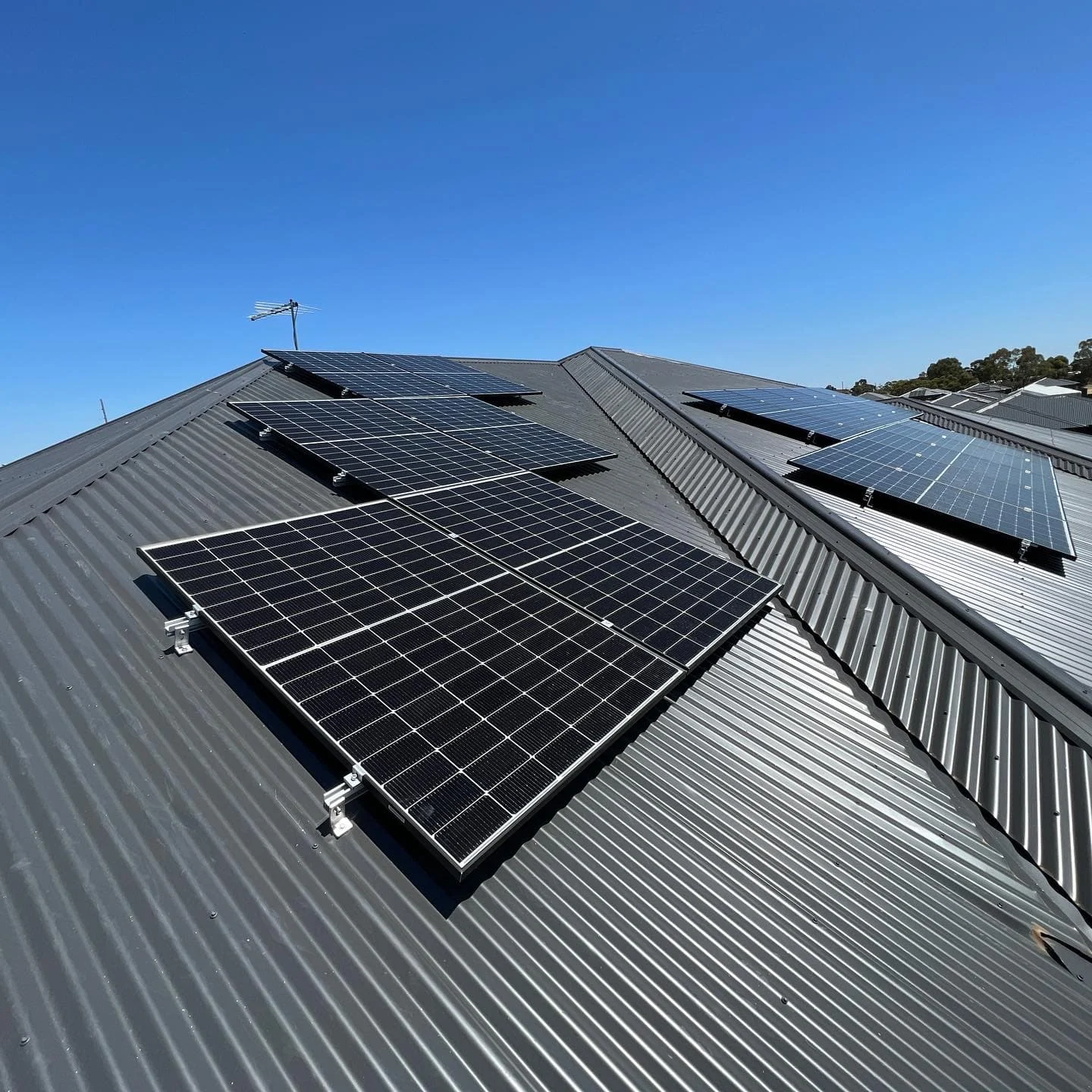
Stand-alone off-grid solar systems are typically installed in remote locations to meet the energy needs of properties with no access to the power network. These solar panels can be ground- or roof-mounted depending on the available space and the system size.
- During the day, solar panels utilise solar energy to generate electricity in the form of direct current.
- Solar inverters convert the DC electricity into alternating current which can be used to power the appliances.
- Excess power is stored in solar batteries in the form of DC electricity.
- At night or when the weather is cloudy, the power stored in the solar battery supplies power to the electronic appliances.
- Unlike a grid-tied solar system, an off-grid solar system relies solely on solar batteries for power supply during the nighttime.
- Properties with high energy demands often have a backup power source for when the stored solar power is utilised to its maximum capacity.
1. Solar array
Sized to generate your daily kWh plus enough surplus to recharge your battery from a depleted state across one and a half winter days. On the Sunshine Coast hinterland that’s 2.5-3.5× the size of a comparable grid-connect array: you’re paying for redundancy, not just energy.
2. Battery storage
Sized to carry one to two full days of household load with no solar contribution. The right chemistry is LFP (lithium iron phosphate) for safety, cycle life and thermal stability. We do not install lead-acid batteries on new off-grid builds. The maths don’t support it anymore.
3. Hybrid inverter
DC-coupled hybrid is non-negotiable on off-grid. AC-coupled architectures typically lose 5-10% more round-trip efficiency than equivalent DC-coupled hybrids, which on an off-grid system means a bigger solar array, a bigger battery, and more generator hours. We install Sigenergy, Sungrow, Tesla and GoodWe hybrid inverters, all DC-coupled.
4. Generator (with auto-start)
The generator is your insurance policy for winter cloud weeks, not your primary supply. Properly sized off-grid systems run the generator 30-60 hours per year on average. The generator auto-starts when battery state of charge hits a configurable threshold (typically 30%), charges the battery to a higher set point (typically 80%), then shuts down. You won’t notice it ran unless you check the app.
Why we only install DC-coupled hybrid on off-grid
Off-grid systems amplify every efficiency loss. A 10% round-trip efficiency penalty on a grid-connect system means slightly less feed-in. On an off-grid system it means a 10% bigger battery, 10% more solar, and noticeably more generator hours, because the gap shows up at exactly the moments when sun is scarce. ARENA’s energy storage research confirms DC-coupled hybrid is the dominant architecture in new Australian off-grid deployments for exactly this reason.
Practically: solar panels feed DC current directly into a single hybrid inverter that charges the battery on the DC side. One inversion at most, 92-96% round-trip efficiency, single warranty, native off-grid mode.
Sizing for the Sunshine Coast hinterland
A 6 kW array sized for a Caloundra rooftop will not work on a Maleny ridge: elevation, orographic cloud, dew burn-off and afternoon thunderstorms all change the yield curve. Below are two illustrative sizings for the same household at different hinterland locations.
Example A: Caloundra-edge acreage (coastal hinterland)
Family of 4, 25 kWh/day usage, slight afternoon shade from gum line, typical coastal sun/cloud mix, generator location on south side. Design: 12 kW solar, 30 kWh LFP battery, 8 kVA diesel generator with auto-start. Modelled generator run: ~35 hours/year. Indicative install: $52,000 to $58,000.
Example B: Maleny ridge (full hinterland)
Same family, same 25 kWh/day usage, but Maleny’s morning cloud, winter fog and afternoon storms reduce effective sun hours by ~20%. Design: 16 kW solar, 40 kWh LFP battery, 13 kVA diesel generator with auto-start. Modelled generator run: ~55 hours/year. Indicative install: $68,000 to $76,000.
Same family, same loads: the hinterland tax is about $15,000 of extra hardware. We model your specific site’s yield in PVsyst using BoM data before quoting.
What’s included with every Deionno off-grid system
- Engineered design pack: load profile, generation model (PVsyst-validated), single-line diagram, mounting calcs
- Site-specific sizing for hinterland conditions, not a generic kW figure
- DC-coupled hybrid architecture (Sigenergy, Sungrow, Tesla or GoodWe: brand chosen to suit the design)
- Generator: brand selection, sizing, fuel system, concrete pad, auto-start integration
- Surge and lightning protection on DC and AC sides (mandatory on hinterland sites)
- Region B wind-loading certified mounting (we calculate per site)
- Written compliance pack: AS/NZS 5033 (PV arrays), AS/NZS 4509 (stand-alone power systems), AS/NZS 3000 (Wiring Rules), AS/NZS 5139 (battery safety) certificates and electrical safety declaration
- Single point of contact for warranty, service and any future upgrade
The batteries we install
All three are DC-coupled hybrid systems. We do not install AC-coupled bolt-on batteries on off-grid builds.
Sigenergy: our default off-grid pick
Modular HV stack from 8 kWh to over 48 kWh per phase, AI-driven dispatch optimised for off-grid weather forecasting, and sub-10 ms backup transfer. Sigenergy also offers a 25 kW bi-directional DC EV charger that integrates on the same DC bus as the battery and inverter: no extra conversion losses. For any off-grid build with EV plans or expandable load growth, Sigenergy is the strongest platform on the market.
Sungrow SBR HV with SH-RT hybrid
Proven workhorse, particularly strong on three-phase off-grid for larger homes or rural businesses with workshop loads. Battery modules stack from 9.6 kWh to 25.6 kWh per stack, hybrid inverter rated up to 25 kW per unit.
Tesla Powerwall 3
Excellent product for off-grid sites that want a single-product solution in 13.5 kWh increments. Clean app, simple form factor, fast install. Not modular below 13.5 kWh, which makes it less efficient as the smallest off-grid building block.
Generator integration: the most underestimated component
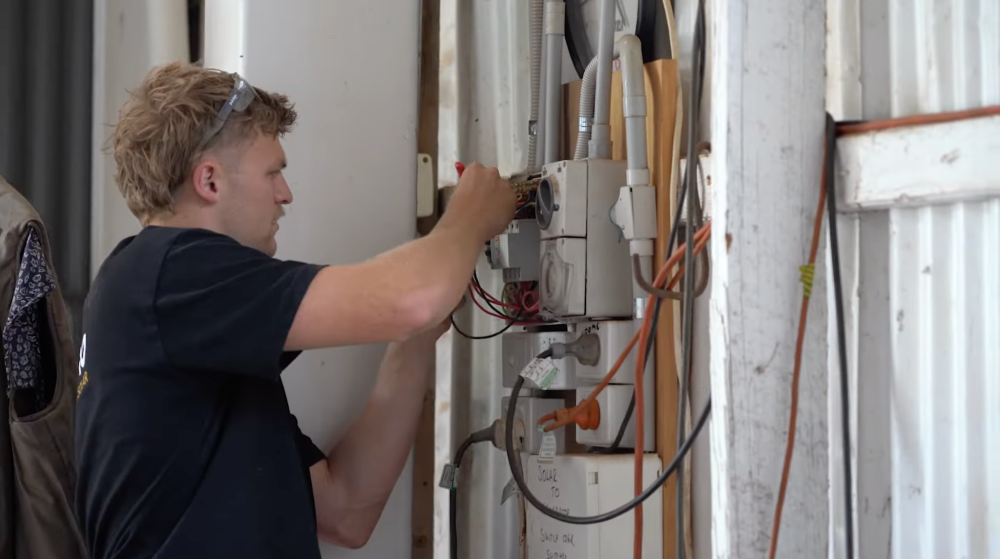
Most off-grid system failures we get called to fix are generator integration problems, not solar or battery faults. Common issues: undersized generator that won’t hold inverter charge load, fuel tank too small for winter, no auto-start, manual transfer switch that’s never been tested, generator located where the noise drives neighbours mad.
- Sizing: generator kVA = 1.5× your battery charge rate, plus household critical loads
- Fuel: diesel is standard for hinterland (longer storage life, lower fire risk); LPG for some setups
- Auto-start: configurable threshold (typically 30% SoC trigger, 80% SoC stop), full integration with hybrid inverter
- Location: south-side concrete pad, 5 m+ from habitable rooms, weather enclosure, vibration mount
- Service: annual oil change, filter replacement, fuel polish if needed, included in our service plans
Indicative system pricing
Real numbers based on Sunshine Coast hinterland installs we’ve completed. Final price depends on access, switchboard, mounting type and generator selection.
| System | Suits | Indicative install |
|---|---|---|
| 12 kW solar + 30 kWh battery + 8 kVA generator | Couple or small family, coastal-edge hinterland | $52,000 to $58,000 |
| 16 kW solar + 40 kWh battery + 13 kVA generator | Family of 4, Maleny/Mapleton, moderate winter cloud | $68,000 to $76,000 |
| 20 kW solar + 60 kWh battery + 15 kVA generator | Larger family, EV, pumps, Conondale/Kenilworth | $85,000 to $110,000 |
| Custom commercial off-grid | Farm, B&B, aquaculture, hinterland business | Quoted on site survey |
Every quote is fixed-price after site visit: no day-of-install surprises, no “discovered work” change orders.
The 20-year ownership picture
Off-grid is a long-cycle decision. Below is what you should plan for across two decades.
| Year | Typical cost | What’s happening |
|---|---|---|
| 0 | $60,000 to $90,000 | Install of solar, battery, hybrid inverter, generator |
| 1-5 | ~$300/yr | Annual service, generator oil/filter, remote monitoring check-ins |
| 6-10 | ~$500/yr + $2k | Annual service, inverter capacitors at ~yr 8, generator service |
| 11-15 | ~$15k | Inverter replacement around yr 12-15, battery still under warranty |
| 16-20 | ~$25k | Battery replacement, generator overhaul, solar still going strong |
| 20+ year totals | ~$110k to $135k | vs grid-connect: $40k to $80k connection + $80k to $150k bills = $120k to $230k over 20 yrs |
Compare those numbers to grid-connect at hinterland rates: 20 years of bills at $4,000 to $7,500/yr (with tariff inflation) lands at $80k to $150k of cash out the door, plus the up-front grid connection of $40k to $80k. Off-grid wins on lifetime cost for most hinterland properties, by a wider margin every year tariffs rise.
From first call to switched on
- Free phone consult: we ask about your block, loads, current power situation, and timeline.
- Free hinterland site visit: we walk the block, measure roofs and ground, look at switchboard or new-build plans, talk through generator location.
- Engineered proposal: sized system, brand-by-brand options, fixed-price quote, 20-year ownership model, finance options.
- Design sign-off and order: typically 2 weeks for equipment lead time on the Sunshine Coast.
- Installation: 3 to 7 days on site depending on size. We don’t leave your home without power overnight.
- Commissioning and handover: full system test, app set-up, written documentation pack, walk-through with you.
Why choose Deionno for off-grid solar in Adelaide and on the Sunshine Coast
Are you planning to invest in an off-grid home or commercial solar system in Adelaide?
Poorly-designed off-grid systems may lead to compromised efficiency, frequent breakdowns, costly repairs, and a significantly shorter equipment life span.
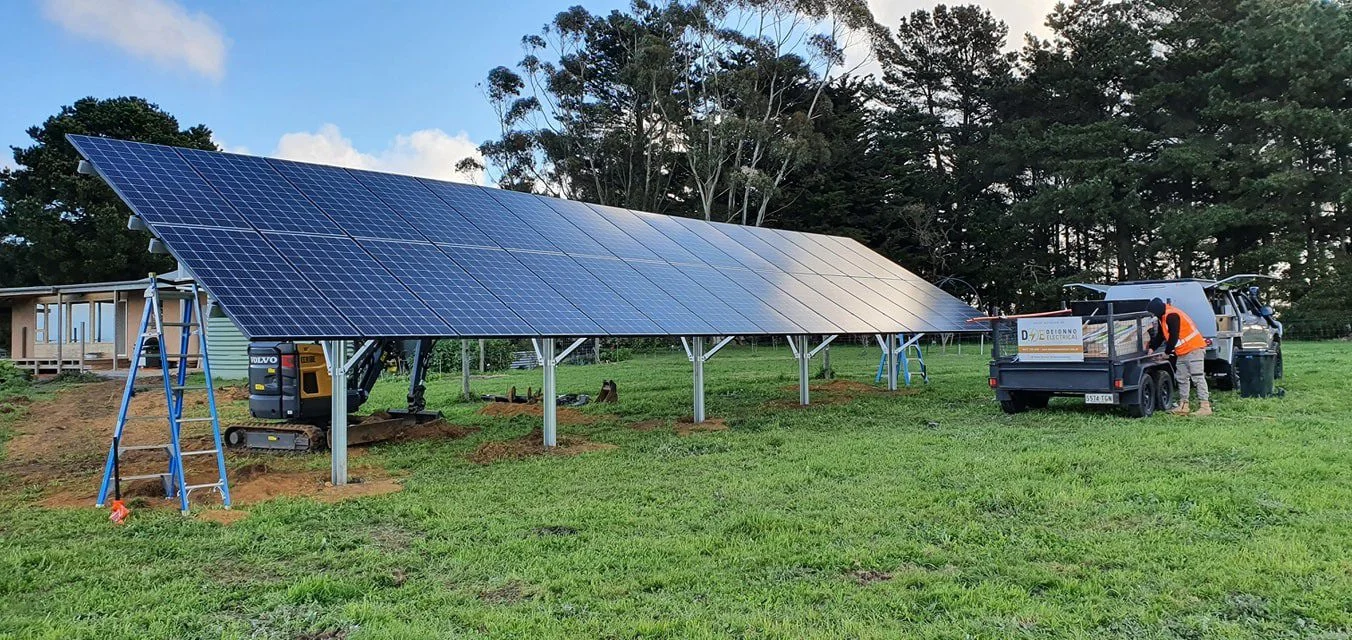
At Deionno Electrical, we have designed and installed countless off-grid battery systems for properties around the Adelaide Hills and Flinders Ranges in South Australia. Our qualified solar technicians take time to understand your property’s electricity requirements, available space, and budget before suggesting the most suitable off-grid solar system to help you achieve optimal performance and results.
We are Adelaide’s trusted solar installers with a solid customer base, known for exceeding clients’ expectations through complete after-sales support, service warranties, and regular solar maintenance for all off-grid solar systems.
With years of hands-on experience in solar technology, Deionno Electrical aims to deliver exceptional service through expert designs and quality components, making sure you get the best value for your money. Call 1800 610 165.
Engineered off-grid systems for hinterland properties: designed, installed and serviced by a SAA-accredited local team.
- SAA-accredited installers (Solar Accreditation Australia replaced CEC installer accreditation in February 2024). All our installers hold SAA Stand-alone Power Systems (SPS) accreditation, the specific endorsement required for off-grid design and install.
- Local electrical contractor: not a national one-day-install reseller. We live and work on the Sunshine Coast.
- Engineering-led design: every system modelled in PVsyst against your site’s actual irradiance and load profile, not a postcode average.
- Brand-agnostic recommendations: Sigenergy, Sungrow, Tesla, GoodWe. We tell you which one suits the install, not which one we get a kickback on.
- New Energy Tech Consumer Code signatory (NETCC), the consumer-protection framework that replaced the older Solar Retailer Code.
- We service every system we install: same local team for installs, warranty work and ongoing maintenance.
Sunshine Coast hinterland areas we serve
Maleny, Mapleton, Montville, Flaxton, Conondale, Kenilworth, Eumundi, Cooran, Pomona, Cooroy, Black Mountain, Belli Park, Verrierdale, Doonan, Eerwah Vale, Yandina Creek, Bald Knob, Witta, Reesville, Bli Bli rural, and surrounding rural blocks. Off-grid builds further afield across South-East Queensland on request.
Ready to talk?
Send us your block address and a recent power bill (or your network connection quote). We’ll come out, measure up, and quote a fixed-price engineered system. No deposit required for the site visit.
Call us on 1800 610 165 or fill in the contact form below.
Off-grid solar questions, answered
Straight answers from our electricians. Can’t find yours? Call 1800 610 165 or book the assessment and ask on the day.
Is an off-grid solar system reliable?
This can depend on several factors, such as the quality of the design and the components used. At Deionno Electrical, we only communicate with reputable brands of solar inverters, batteries, and solar panels, and all our products are made for life in Australia. As such, our off-grid services are very reliable.
What is the expected cost on an off-grid system?
It largely depends on the system size. A small off-grid solar system can range from $10,000 to $20,000, family home systems from $25,000 to $50,000, and large home and commercial systems can cost anywhere from $50,000 and up.
What are the ongoing costs I should be aware of before installing an off-grid system?
Depending on your system size and the equipment used, we will provide you with a maintenance checklist and a complete service schedule by a solar professional.
Are these systems scalable?
The scalability of your battery or solar system depends on the type of system you have. Expansion of new lithium type batteries and solar PV can be incredibly easy, however, expanding older battery chemistries can be quite difficult.
Do I need a specific number of batteries for efficient performance of my off-grid system?
The number of batteries depends on your energy requirements; the lower your energy consumption, the less batteries you require.
Are there any rebates available for off-grid solar?
There are many incentives available for off-grid solar power intake. When you install an off-grid solar system within your premises, you will be provided with a Small Scale Technology Certificate. The value of this certificate depends on the size of your system and location. At Deionno Electrical, we can assist you in calculating the rebates.
How long will my off-grid system last?
Panels: 25-year linear performance warranty. Hybrid inverter: 10–15 years. Battery: 10-year warranty, 12–18 years of useful life. Generator: 15+ years with annual servicing. Plan for one inverter replacement during the system’s life and a battery refresh around year 15–18.
What happens if the battery runs out?
Your generator auto-starts at a configurable threshold (typically 30% state of charge), charges the battery to ~80%, then shuts down. You won’t notice unless you check the app. Typical generator run time is 30–60 hours/year on properly sized systems.
Can I add an EV charger later?
Yes – best if we design for it now. Sigenergy offers an integrated bi-directional DC EV charger on the same DC bus as the battery and inverter; other batteries we pair with a smart AC charger that talks to the inverter. Adding capacity later is easy if we plan for it on day one.
What if I want to connect to the grid in the future?
All our off-grid systems are designed grid-ready. If Energex extends infrastructure to your road in five years, switching to grid-connect is a configuration change – not a hardware replacement.
Are off-grid batteries safe in a hinterland fire?
Our recommended batteries use LFP (lithium iron phosphate) chemistry, which is the safest lithium chemistry available. We design to the Bushfire Attack Level (BAL) rating of your block per AS 3959, with enclosure, clearance and ventilation specified accordingly, and install per AS/NZS 5139.
Do you handle the generator install too?
Yes – generator selection, fuel system, auto-start integration and concrete pad are all part of the package. One contract, one accountable team.
Can I run an EV on an off-grid system?
Yes – size the array and battery for it from day one. EV charging adds roughly 12–14 kWh/day to your load. Most hinterland off-grid builds with an EV come in at 18–22 kW solar, 50–60 kWh battery.
How do I get a fixed-price quote?
Book a free site visit. We come to your block, measure what needs measuring, and send a fixed-price written quote. No deposit needed at site visit, no high-pressure quoting.
Keep reading
Ready to start?
Book a free 60-minute on-site assessment with one of our licensed electricians.
Free 60-minute on-site solar and battery assessment. No obligation.

$0 power bill guarantee
Arrange your free 60 minute on-site Solar & Battery Assessment in 30 seconds!
Which state is your home in?
Do you own your home?
Unfortunately, we only work with homeowners
If you are considering solar for a new home, or on behalf of someone else, select "I own my home"
We only work with homeowners
A solar or battery system is a permanent change to the property, so it needs to be arranged by the person who owns the home.
If you tapped that by mistake, head back and we'll pick up where you left off.
What are you looking for?
Our team can talk you through all options if you're not sure.
What appeals to you most?
You'll get all of these. We'd just like to know what matters most.
How much is your quarterly electricity bill?
The average Adelaide home spends $500 - $1000 per quarter. Not sure of yours? Take your best guess, we'll go through the real numbers at your assessment.
Whatever it is today, our goal is $0. If we don't get you there, we'll pay your bill.
How soon are you looking to get a system installed?
We can work with you on a longer timeline, or get you saving as soon as possible.
What is your address?
We have hundreds of happy customers across South Australia. We need your address to check we service your area and to look at your roof before we visit.
Great news, we service your area!
Anything else to share?
Every system we design is tailored to the home, so the more info the better! (Optional)
How should we get in touch with you?
Last step. We'll call to arrange your free on-site assessment at a time that suits you. No pressure and no obligation.
Request sent, we'll be in touch!
Do you want to skip the queue?
Call to speak directly with a solar specialist during business hours, and we can get your free on-site assessment booked in straight away.
📞What happens next?
- 1We'll give you a call
If you haven't called already, we'll give you a call to say hello.
- 2Discuss your needs and goals
We'll chat about what you're looking for, how we can help, and book in a time for your on-site assessment that suits you.
- 3Your free on-site assessment
We visit your home for 45 to 60 minutes to measure up the roof, check the switchboard and review how you use power.
- 4We send your detailed quote
A tailored proposal with the system design, the savings and the pricing laid out in full.
- 5We design and install
If you're happy with the proposal, our in-house team installs it and shows you how it all works.
4.9Google · 530+ reviews
4.8SolarQuotes reviews