
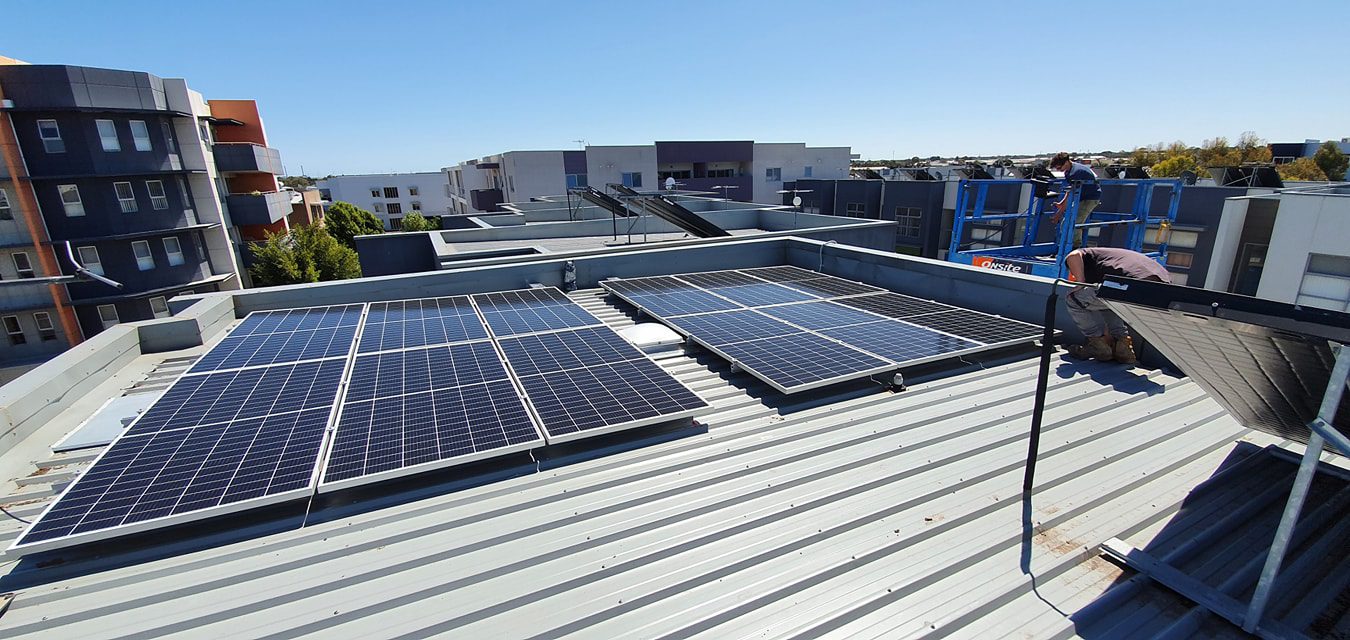
Solar for EV Charging
How much solar it takes to run an electric car as well as the house, worked out for Adelaide and the Sunshine Coast: the panels, the system size, winter, and where a battery fits.
 4.9 Google 530+ reviews
 4.8 SolarQuotes
Solar panels for EV charging: size the roof for the car
An electric car is the biggest new load most homes will ever add, and it is also the one that solar suits best, because a parked car is a battery waiting to be filled. The question is how much roof it takes. The answer is smaller than most people expect in summer and larger than most people allow for in winter. This page shows the arithmetic, line by line, for both of our states.
Deionno Electrical & Solar designs and installs solar, batteries and EV chargers with its own licensed electricians, across Adelaide for ten years and now on the Sunshine Coast. This page is about solar for EV charging itself: how big the system needs to be. For the charger itself, the circuit behind it and the network rules, see EV charger installation.
Tell us the car and the kilometres
The model, how far it goes in a week and whether it is home during the day. With a recent bill, that is enough for a solar specialist to tell you roughly what size system covers the house and the car.
Who solar for EV charging suits
Four situations, and what changes in the design for each.
Swipe to see more
How much solar one electric car adds
Three numbers answer it.
How far the car goes. The average Australian passenger car travels about 11,100 km a year, which is 30 km a day [1].
How much energy that takes. In real-world testing, popular electric cars use between 15 and 22 kWh for every 100 km, from an efficient sedan at the low end to a large SUV at the top [2]. A fair middle figure is 18.
The sum. 30 km at 18 kWh per 100 km is 5.5 kWh a day. That is what an average day of driving takes from the roof. A light day in an efficient car is about 4.5 kWh. Fifty kilometres a day in a large SUV is 11 kWh.
It is a real load, and a smaller one than most people expect.
How many solar panels to charge an EV
A kilowatt of panels in Adelaide makes about 4.3 kWh on an average day across the year. On the Sunshine Coast it is about 4.1 kWh [3]. Divide the car’s daily energy by that and you have the extra solar the car needs. In June the panels make less, so the same car needs more of them.
| Driving | Daily energy | Adelaide, yearly average | Adelaide, June | Sunshine Coast, yearly average | Sunshine Coast, June |
|---|---|---|---|---|---|
| Light: 30 km, efficient car | 4.5 kWh | 3 panels | 4 panels | 3 panels | 4 panels |
| Average: 30 km, typical car | 5.5 kWh | 3 panels | 5 panels | 3 panels | 4 panels |
| Heavy: 50 km, large SUV | 11 kWh | 6 panels | 9 panels | 6 panels | 8 panels |
The panels are counted at 475 watts each and rounded up. The table assumes the car is plugged in while the sun is out, which is the next question.
So the short answer to “how many solar panels do I need to charge an EV” is three to five for most drivers, on top of what the house needs. For a house that would have suited a 6.6 kW system, that pushes the design toward 8 to 10 kW.
Adelaide and the Sunshine Coast: summer, winter and the June drop
The two places behave differently, and it changes the design.
Adelaide has big summers and lean winters. A kilowatt of panels makes about 5.5 kWh a day in December and 2.6 in June, less than half [3]. A system that easily covers the car in January can fall well short in the middle of the year.
The Sunshine Coast is steadier. The same kilowatt makes about 4.4 kWh in December and 3.2 in June. There is less to gain in summer and much less to lose in winter.
That is why winter carries more weight in an Adelaide design, and why an Adelaide home with an EV usually ends up with more panels than the same home in Queensland.
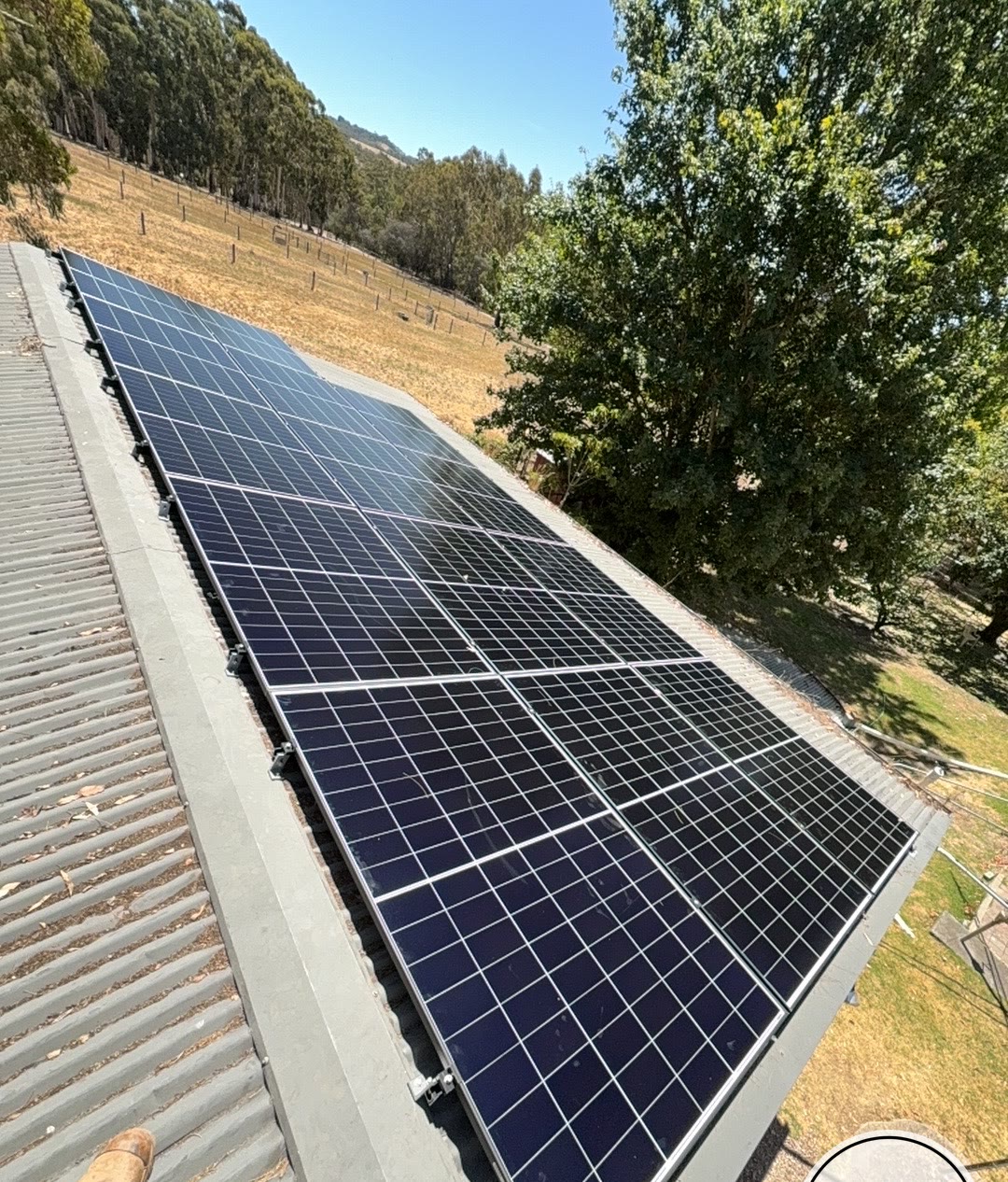
Is the car home during the day?
Solar charging only works when the car and the sun are in the same place at the same time.
- Home most days. Working from home, retired, or a second car that mostly does short trips. The car can take nearly all of its energy straight from the roof. This is the case the table above describes.
- Home on weekends. A commuter car that leaves at seven and is back at six. Two sunny weekend days can put in a good share of the week’s driving, and the rest comes after dark.
- Rarely home in daylight. Then the roof cannot feed the car directly, and the choice is between a home battery and the cheapest overnight rate your retailer offers.
We ask about this at the assessment because it changes the answer more than the make of the car does.
Why a small solar surplus will not start a charge
A charger that follows the solar cannot trickle. The slowest an electric car will charge is 6 amps, which on a single-phase home is about 1.4 kW. On a three-phase charger it is about 4.1 kW [4]. Until the roof has that much to spare, over and above what the house is using, a solar-only charge will not begin.
This is where small systems get caught. A 5 kW inverter on a winter morning, with the hot water heating and the dishwasher on, may have nothing spare until late morning, and the car sits waiting. A bigger array reaches the starting line earlier and stays above it longer. It is one of the less obvious reasons to size up for a car.
Single-phase, three-phase and export limits
How much solar you can add depends on the supply to the house and the network it connects to.
- South Australia. SA Power Networks allows up to 10 kVA of solar inverter per phase. A single-phase home can go to 10 kW of inverter, and a three-phase home to 30. Exports are either fixed at 1.5 kW per phase or flexible up to 10 kW per phase [5].
- South East Queensland. Energex approves each system before it is installed, and offers a fixed export limit or a dynamic connection that allows more export when the network has room [6].
An export limit matters less once there is a car in the driveway. Power that would have been turned away at the meter goes into the car instead.
Exporting solar or putting it in the car
Every kilowatt hour your roof makes goes one of two ways. It is used in the house or the car, and saves you buying it at the full retail rate. Or it is exported, and earns a feed-in credit of a few cents.
A car turns a lot of the second kind into the first. For a household that exports most of its solar on weekdays, that shift is where a good share of the saving comes from. It is also why panels added for a car tend to pay back faster than the same panels would on a house without one. On the systems we design, payback sits at three to six years.
Where a home battery fits
A home battery is sized for the house, not the car. A car’s own battery holds 40 to 80 kWh, several times what any home battery does, so a home battery will never fill a car from empty.
It does not need to. An average day of driving is 5.5 kWh. At Banya, the home battery holds 27 kWh, so a night’s top-up takes about a fifth of it. At Riverlea Park, with 39 kWh, it is about a seventh. For a commuter whose car is never home in daylight, that is how the roof still ends up in the car: the panels fill the home battery by day, and the car draws on it in the evening.
The solar battery installer page covers how we size a battery.
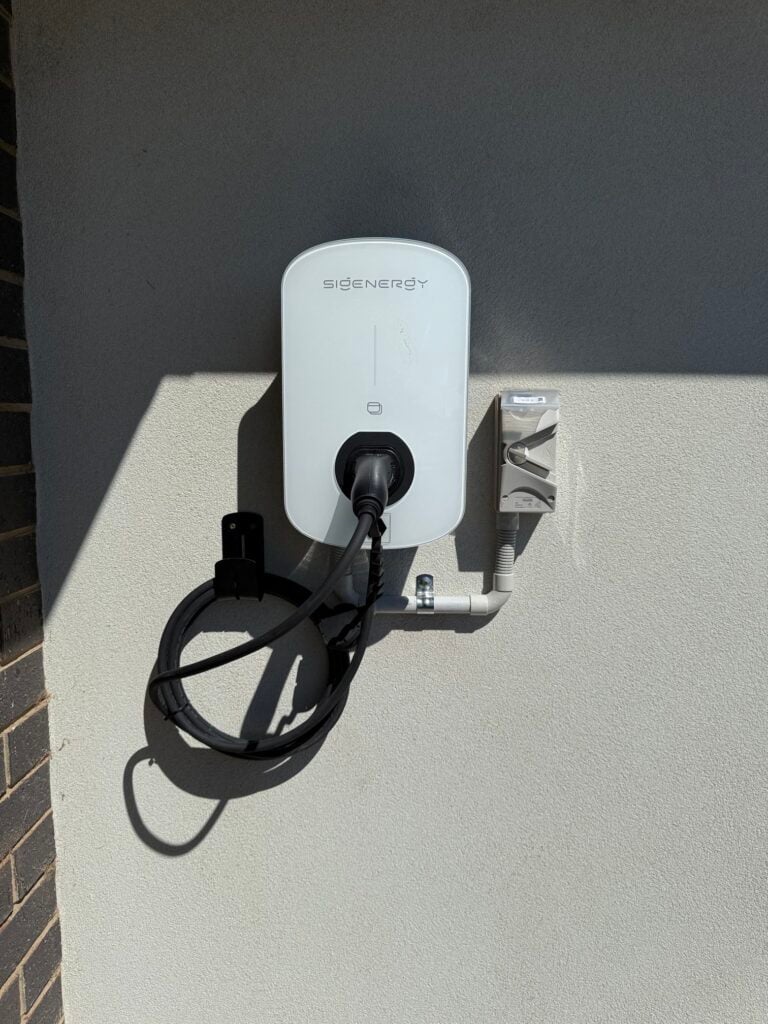
Vehicle-to-home and vehicle-to-grid today
The idea of the car powering the house is real, and it is early. Only some cars and chargers can do it, and both networks treat a charger that can send power back as a generator, not an appliance.
SA Power Networks requires an application before a bidirectional charger is installed and assesses it the way it assesses a battery [7]. Energex requires the installer to apply and the connection offer to be accepted before installation starts [8].
What that means for a solar design today: do not buy panels around a promise of vehicle-to-home. Do make sure the switchboard and the inverter leave room for it. We design that headroom in where you ask for it.
Solar for EV charging in Adelaide and on the Sunshine Coast
Adelaide and South Australia
Recent solar and charger jobs include Verdun (6.65 kW and a charger on a shed), Nairne (13.2 kW, a Powerwall 3 and a Tesla charger) and Riverlea Park (19.38 kW, 39 kWh and a Sigenergy charger). We cover the metro area, the Hills, the Fleurieu and the Barossa from Salisbury Plain. See the Adelaide solar installer page.
Sunshine Coast and South East Queensland
At Banya, a new home has 12.35 kW of solar, 27 kWh of battery and a Sigenergy charger on one three-phase system. At North Lakes, 11.04 kW with a GoodWe battery and charger. Our electricians cover Caloundra to Noosa, the hinterland, Gympie and north Brisbane from Corbould Park. See the Sunshine Coast solar installer page.
The charger, and the rest of the system
The EV charger installation page covers 7 kW against 22 kW, the switchboard and the brands we fit. If you are starting from a standard system, the 6.6kW solar systems page explains what that size does and does not cover.
Sources
- Australian Bureau of Statistics, Survey of Motor Vehicle Use, Australia, 12 months to 30 June 2020.
- RACV, Energy consumption and driving range testing in Australia, 18 June 2026.
- European Commission Joint Research Centre, PVGIS solar yield model, run 10 November 2026 for Adelaide and the Sunshine Coast (north-facing, 20 degree pitch).
- SolarQuotes, Solar EV charger guide.
- SA Power Networks, Technical Standard TS129, issued 16 July 2025, and Flexible exports.
- Energex, Solar connections and other technologies.
- SA Power Networks, Bidirectional and V2G charging on the network.
- Energex, Vehicle-to-grid EV connections.
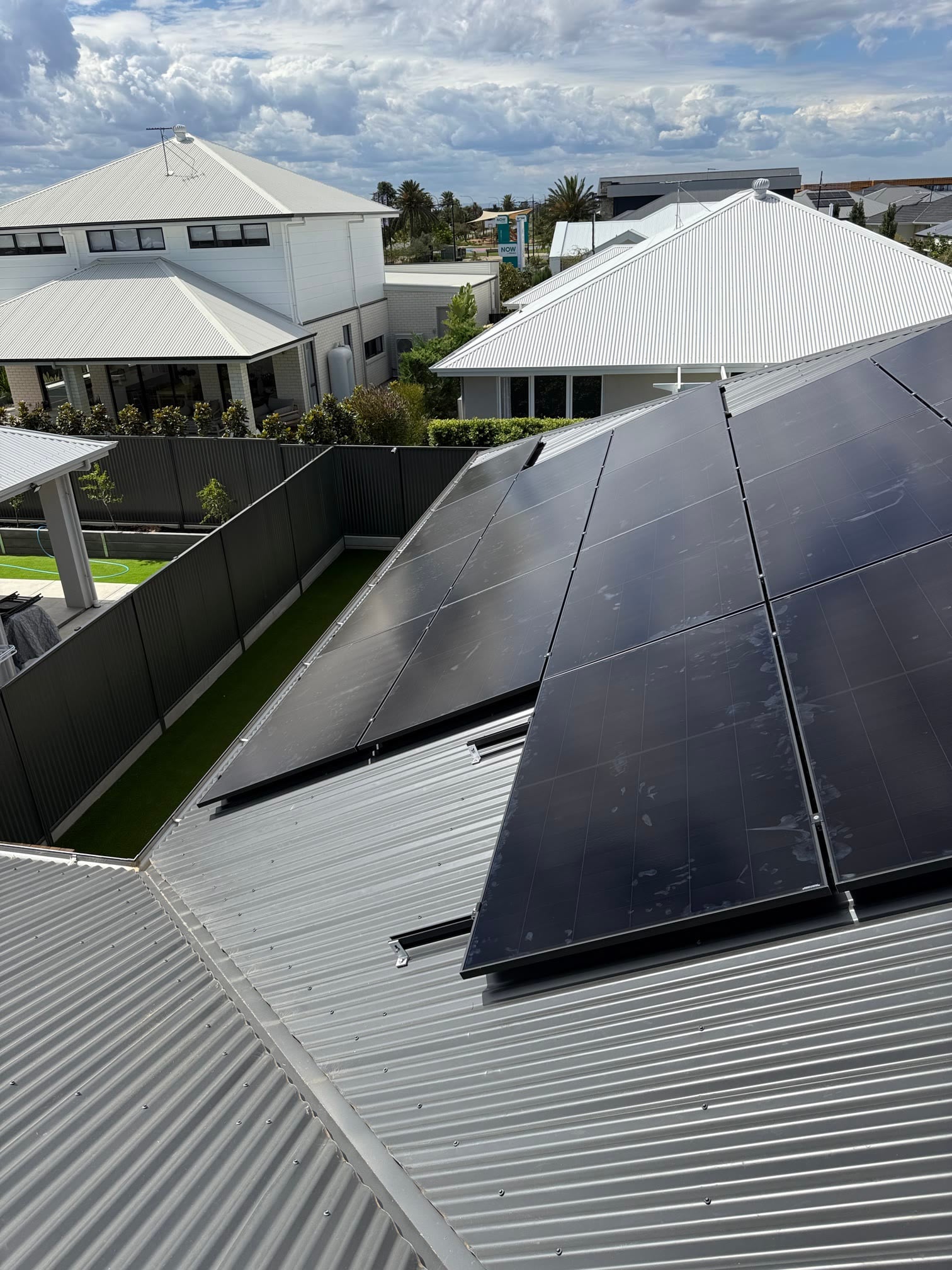
19.38 kW Solar, 39 kWh Battery and EV Charger Installation in Riverlea Park, SA
38 Jinko panels, a single phase Sigenergy inverter, five battery modules and an 11 kW EV charger with full house backup.
Outcome: A roof sized for the house and the car, with enough battery to charge after dark and keep the house on in a blackout.
Read the full projectHow we size solar for an EV
From your bills and your driving to a roof that covers both.
Swipe to see more
Solar and EV charging questions, answered
Straight answers from our electricians. Can’t find yours? Call 1800 610 165 or book the assessment and ask on the day.
How many solar panels do I need to charge an EV?
For average driving of about 30 km a day, three extra panels on a yearly average, four or five to cover winter. A heavy driver in a large SUV needs six to nine. That is on top of what the house needs, and assumes the car is home while the sun is out.
Can I charge my EV directly from solar panels?
Yes, through the inverter and a charger that follows the solar. The charger watches what the roof is making and what the house is using, and sends the surplus to the car. On a single-phase home it needs about 1.4 kW of surplus before it will start.
What size solar system do I need for a house and an EV?
Take the size the house needs and add about 1.4 to 2.4 kW for an average driver, more for a heavy one. A home that suited 6.6 kW usually lands at 8 to 10 kW with a car. We size it from a year of your bills and your driving.
Is a 6.6 kW solar system enough for a house and an electric car?
It can be for a small household with a car that is home during the day. For most homes it is tight, especially in an Adelaide winter, and the car ends up charging from the grid for part of the year.
Can I charge from solar if I am at work all day?
Not directly on weekdays. The options are weekend charging from the roof, a home battery that stores the day’s solar for the evening, or a cheap overnight tariff. Which suits depends on how far you drive.
How much solar do I need to charge an EV in winter?
More than in summer. In Adelaide a panel makes less than half as much in June as in December, so an average driver needs about five panels for the car in winter against three on a yearly average. On the Sunshine Coast the gap is smaller.
Does a home battery help charge an electric car?
Yes, for cars that are away in daylight. An average day of driving takes about 5.5 kWh to put back overnight, a fifth or less of a typical home battery on our recent jobs. The battery is still sized for the house, not the car.
Why won't my charger start on a cloudy day?
A solar-following charger needs a minimum surplus, about 1.4 kW on single-phase, before it can start. On a dull day, or when the house is using most of the output, the roof does not reach it. Most chargers let you top up from the grid when that happens.
Do I need three-phase power to charge an EV from solar?
No. A 7 kW single-phase charger suits most homes and most solar systems. Three-phase matters if you want an 11 or 22 kW charger, or more than 10 kW of solar inverter in South Australia.
Can my electric car power my house?
Some cars and chargers can, and both networks require an application before a bidirectional charger is installed. It is early days. We can design the switchboard and inverter to leave room for it.
Keep reading
Ready to start?
Book a free 60-minute on-site assessment with one of our licensed electricians.
Free 60-minute on-site solar and battery assessment. No obligation.

$0 power bill guarantee
Arrange your free 60 minute on-site Solar & Battery Assessment in 30 seconds!
Which state is your home in?
Do you own your home?
Unfortunately, we only work with homeowners
If you are considering solar for a new home, or on behalf of someone else, select "I own my home"
We only work with homeowners
A solar or battery system is a permanent change to the property, so it needs to be arranged by the person who owns the home.
If you tapped that by mistake, head back and we'll pick up where you left off.
What are you looking for?
Our team can talk you through all options if you're not sure.
What appeals to you most?
You'll get all of these. We'd just like to know what matters most.
How much is your quarterly electricity bill?
The average Adelaide home spends $500 - $1000 per quarter. Not sure of yours? Take your best guess, we'll go through the real numbers at your assessment.
Whatever it is today, our goal is $0. If we don't get you there, we'll pay your bill.
How soon are you looking to get a system installed?
We can work with you on a longer timeline, or get you saving as soon as possible.
What is your address?
We have hundreds of happy customers across South Australia. We need your address to check we service your area and to look at your roof before we visit.
Great news, we service your area!
Anything else to share?
Every system we design is tailored to the home, so the more info the better! (Optional)
How should we get in touch with you?
Last step. We'll call to arrange your free on-site assessment at a time that suits you. No pressure and no obligation.
Request sent, we'll be in touch!
Do you want to skip the queue?
Call to speak directly with a solar specialist during business hours, and we can get your free on-site assessment booked in straight away.
📞What happens next?
- 1We'll give you a call
If you haven't called already, we'll give you a call to say hello.
- 2Discuss your needs and goals
We'll chat about what you're looking for, how we can help, and book in a time for your on-site assessment that suits you.
- 3Your free on-site assessment
We visit your home for 45 to 60 minutes to measure up the roof, check the switchboard and review how you use power.
- 4We send your detailed quote
A tailored proposal with the system design, the savings and the pricing laid out in full.
- 5We design and install
If you're happy with the proposal, our in-house team installs it and shows you how it all works.
4.9Google · 530+ reviews
4.8SolarQuotes reviews