
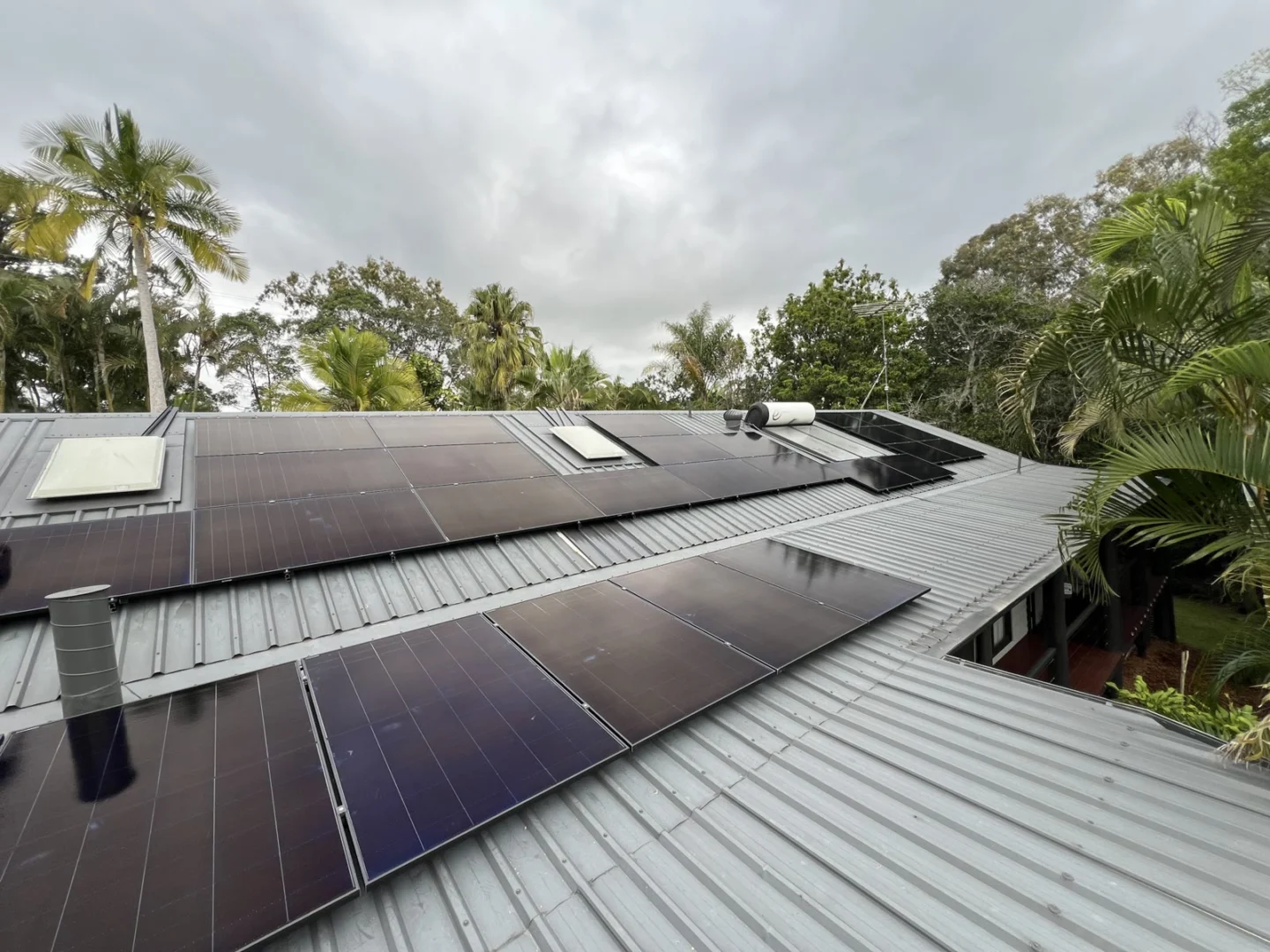
Three-Phase Battery Installation
A battery that cuts the bill across all three phases and keeps the circuits you choose running in a blackout. Sigenergy, Sungrow, GoodWe and Tesla Powerwall, planned phase by phase and installed by our own licensed electricians in Adelaide and on the Sunshine Coast.
 4.9 Google 530+ reviews
 4.8 SolarQuotes
A three-phase battery comes down to three decisions
If your home has three-phase power, a battery quote has to answer three questions that a single-phase home never asks. What will the battery take off the bill when the house is spread across three phases? What stays on in a blackout: one phase, or all three? And how big a system will the network let you connect? Get those right and the brand almost picks itself.
Deionno Electrical & Solar has installed solar and batteries across Adelaide for ten years and now on the Sunshine Coast, with our own licensed electricians. We are a certified installer for Sigenergy, Sungrow and Tesla Powerwall, and we install GoodWe. Three of those four make true three-phase battery systems, and we’ve fitted them on new builds, on established homes with a switchboard upgrade, and on houses with an EV charger on the wall.
Not sure if you have three-phase power?
Send us a photo of your switchboard with the door open. An electrician can tell from the main switch, and can usually say which kinds of battery would work on your board.
Who a three-phase battery suits
Four homes where the phases change the answer.
Swipe to see more
Does a three-phase home need a three-phase battery?
No. The supply to your house and the battery you put on it are two separate choices, and plenty of three-phase homes run happily on a single-phase battery.
A single-phase battery connects to one of your three phases. It costs less, and for cutting the bill it does nearly everything a three-phase battery does. A three-phase battery connects to all three. It can deliver more power, it can run three-phase appliances, and it can back up the whole house. Which one you need comes down to the next two sections.
How a battery cuts the bill on a three-phase supply
A three-phase home has one meter, and that meter adds the three phases together before it records what you bought or sold [1]. So when a battery on one phase is discharging while the oven and the air conditioner are drawing on the other two, the meter sees power going out on one phase and coming in on the others, and counts only the difference.
The practical result: a single-phase battery can cover the usage on all three phases as far as your bill is concerned, up to the power it can put out. The monitoring has to measure all three phases for it to work, which is part of the install.
What a single-phase battery can’t do is physically push power into the other two phases, and in a blackout that’s the whole story.
What stays on in a blackout: one phase or all three
When the grid goes down, the meter’s arithmetic stops helping. Only the circuits the battery is physically connected to can run.
- A single-phase battery backs up one phase. We plan which circuits sit on that phase before anything is wired: usually the fridge, the lights, the internet and the power points you’d miss most. Anything three-phase stays off.
- A three-phase battery backs up all three. Every room stays on, and three-phase appliances can run, as long as the total stays inside what the inverter can deliver.
There’s one catch with three-phase backup. The inverter’s power is shared across the phases, so a 15 kW unit doesn’t give 15 kW to one phase. Put the kettle, the oven and the dryer on the same phase and it can trip while the other two sit idle. The Sungrow 15, 20 and 25 kW hybrids are built to carry uneven loads across the phases [4], and whatever the brand, we balance the circuits across the board as part of the job.
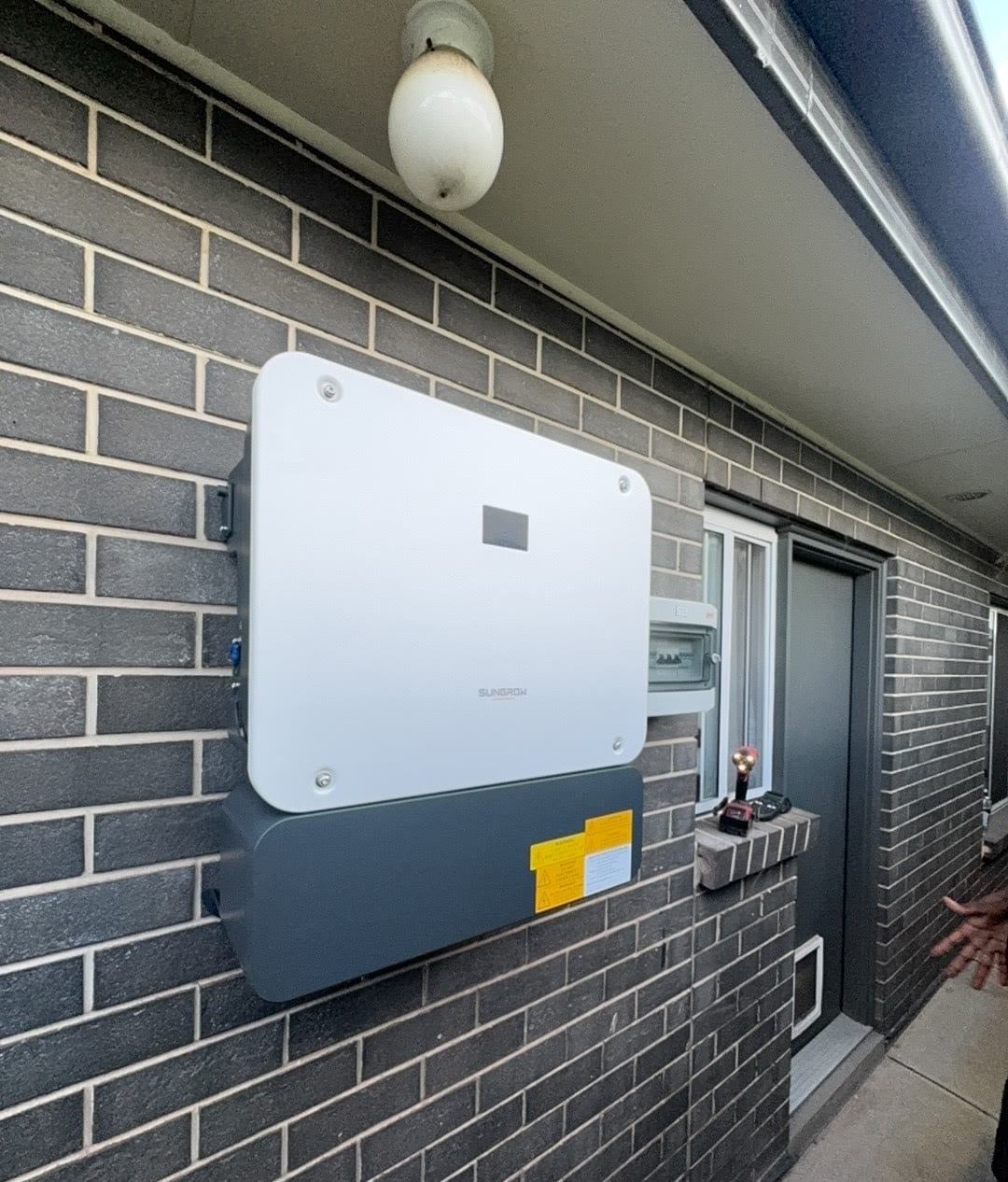
Three-phase batteries we install, side by side
The figures come from each maker’s own documents, because installer websites don’t always agree.
| System | How it connects | Sizes | Backup on a three-phase home |
|---|---|---|---|
| Sigenergy SigenStor | Three-phase inverter in the battery stack | 5, 10, 15, 20, 25 or 30 kW [3] | Whole home or chosen circuits, on all three phases, through the Sigenergy gateway |
| Sungrow | Three-phase hybrid inverter with a separate battery tower | 5 to 25 kW [4] | All three phases. The 15, 20 and 25 kW models have a built-in whole-home bypass |
| GoodWe | Three-phase hybrid inverter with GoodWe battery modules | 6 kW and up [5] | All three phases, from the inverter’s backup output |
| Tesla Powerwall 3 | Single-phase battery with its own inverter | Up to 11.04 kW per unit [6] | The phase it is connected to |
Sigenergy on a three-phase home
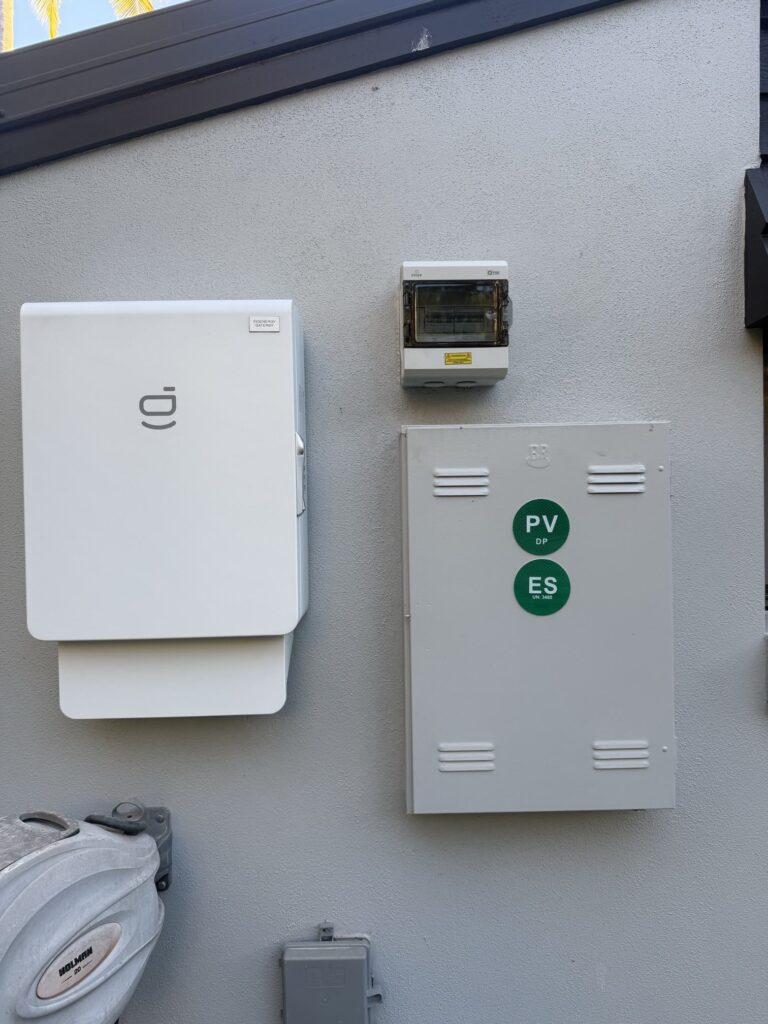
Sigenergy is on most of the three-phase jobs shown on this site. The inverter and the battery modules stack into one tower, the three-phase inverter comes in six sizes from 5 to 30 kW, and battery modules are added to the stack as needed. Sigenergy’s DC car charger can join the same stack. For backup, the Sigenergy gateway sits between the street and the switchboard and takes the whole house, or the circuits you choose, off the grid when it fails.
At Banya on the Sunshine Coast, a new three-phase home has a 15 kW Sigenergy inverter, 27 kWh of battery and a Sigenergy EV charger, with the whole house backed up except the air conditioning. At Glandore in Adelaide, a 25 kW system backs up the full house.
Sungrow three-phase hybrid inverters and batteries
Sungrow’s three-phase hybrid range runs from 5 to 25 kW, paired with a Sungrow battery tower beside it. The inverter does the solar and the battery in one unit, so there’s one box on the wall and one app.
The larger three, at 15, 20 and 25 kW, have the backup changeover built in, rated for a whole home, and switch over in a fraction of a second [4]. At Vale Park we fitted a 15 kW Sungrow hybrid with 30 kWh of battery and a three-phase main switch upgrade. At Mount Pleasant, a 20 kW hybrid runs with 35 kWh.
Tesla Powerwall 3 on a three-phase home
Powerwall 3 is a single-phase battery. On a three-phase home it connects to one phase, its Backup Gateway works with a three-phase supply, and in a blackout it carries the circuits on its own phase [6]. For bill savings that’s fine. For whole-home backup on three phases, or for running a three-phase air conditioner in an outage, it’s the wrong tool and we’ll tell you so.
The Tesla Powerwall installation page covers the Powerwall in full.
Three-phase loads: ducted air conditioning, pool and bore pumps, EV chargers
These are the loads that decide the design.
- Ducted air conditioning. Larger units are three-phase. They can run from a three-phase battery if the inverter is big enough, but air conditioning empties a battery quickly, so many owners choose to leave it off the backup. Banya is set up that way.
- Pool and bore pumps. Often three-phase on larger blocks. On a property that relies on a bore for water, the pump is usually the first thing people want backed up.
- EV chargers. A 7 kW charger is single-phase. An 11 or 22 kW charger is three-phase. Either can be left off the backup so the car doesn’t drain the house battery overnight.
We list what is on each phase at the assessment and you decide what stays on, before the quote.
Network limits in South Australia and South East Queensland
- South Australia. SA Power Networks allows up to 10 kVA of solar inverter and 10 kVA of battery inverter on each phase, so up to 30 kVA across a three-phase home, and a hybrid inverter counts toward both. The output has to be balanced to within 5 kVA between any two phases. Export is either fixed at 1.5 kW per phase or flexible up to 10 kW per phase [2].
- South East Queensland. Energex has to approve the system before it is installed, and an approved three-phase system has to spread its output evenly across the three phases. Where the local network is full, Energex may offer a smaller system, a lower export limit or a dynamic connection [7].
We lodge the application in both states, and the design you sign is the one the network has agreed to.
Battery size and the federal battery rebate
Three-phase homes tend to be bigger homes, and the temptation is a very big battery. The federal rebate tapers off as the battery gets bigger. From 1 May 2026 the first 14 kWh of usable capacity earns the full rate, the part from 14 to 28 kWh earns 60 percent of it, and the part from 28 to 50 kWh earns 15 percent [8].
So the rebate pays best on the first 14 kWh and tails off after that. We size the battery from a year of your bills and the loads you want backed up, then show you what the rebate does to each option. Our battery rebate calculator gives a figure for your postcode. We do not sign customers up to a virtual power plant. A battery can join one later if you choose.
Three-phase battery installation in Adelaide and on the Sunshine Coast
Adelaide and South Australia
Most of our three-phase battery work so far is in Adelaide: Sigenergy systems in Glandore, Goodwood, Gawler East and Sheidow Park, and Sungrow hybrids in Vale Park and Mount Pleasant. We cover the metro area, the Hills, the Fleurieu and the Barossa from Salisbury Plain. See the Adelaide battery installation page.
Sunshine Coast and South East Queensland
On the Coast, three-phase power turns up most on newer and larger homes, usually for ducted air conditioning or a car charger. Recent Sigenergy three-phase jobs include Banya, Buderim and Mooloolaba. Our electricians cover Caloundra to Noosa, the hinterland, Gympie and north Brisbane from Corbould Park. See the Sunshine Coast battery installation page.
Choosing the installer
A three-phase battery is more switchboard work than any other battery job. The solar battery installer page covers what to check before you sign with anyone.
Sources
- SolarQuotes, Home batteries on three-phase supplies, updated December 2025.
- SA Power Networks, Technical Standard TS129, issued 16 July 2025.
- Sigenergy, SigenStor Australian brochure and three-phase datasheet.
- Sungrow, SH15T, SH20T and SH25T hybrid inverter datasheet, and SH5T to SH25T user manual.
- GoodWe, ET G2 three-phase hybrid inverter datasheet (Australia).
- Tesla, Powerwall 3 datasheet (Australia).
- Energex, Connection essentials and Assessment criteria and application outcomes.
- Clean Energy Regulator, Battery rebates are changing from 1 May 2026.
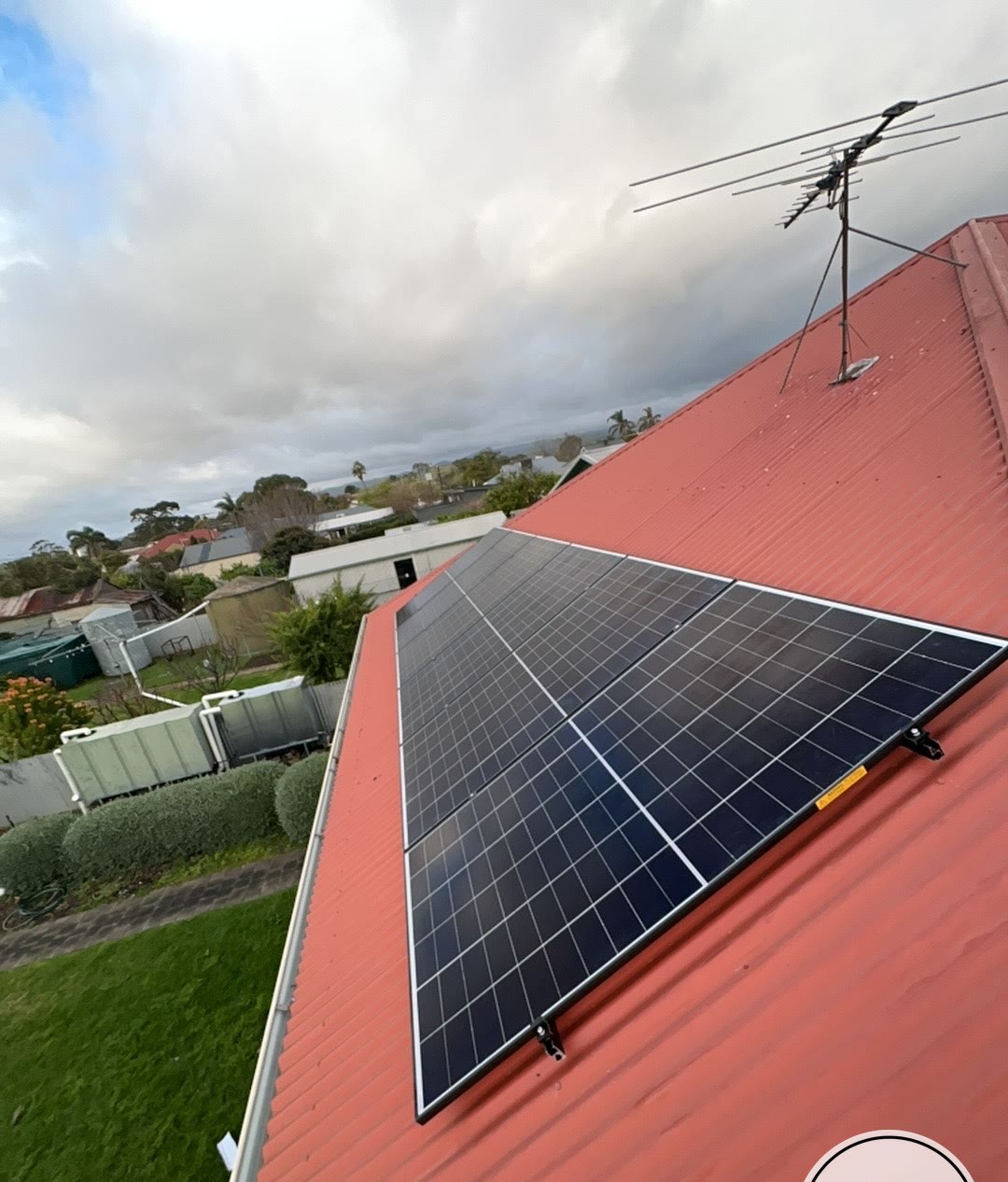
13.52 kW Solar and 24 kWh Battery Installation in Glandore, SA
26 AIKO panels replacing an existing system, a 25 kW Sigenergy three phase inverter, three battery modules, an EV charger and full house backup.
Outcome: Solar, battery and car charger on one three-phase system, with the whole house backed up.
Read the full projectHow a three-phase battery installation runs
Six steps from the first visit to a house that stays on.
Swipe to see more
Three-phase battery questions, answered
Straight answers from our electricians. Can’t find yours? Call 1800 610 165 or book the assessment and ask on the day.
Do I need a 3 phase solar battery if I have three-phase power?
No. A single-phase battery works on a three-phase home and lowers the bill across all three phases. You need a three-phase battery if you want the whole house backed up, want to run three-phase appliances in a blackout, or need more power than a single-phase unit can deliver.
Will a single-phase battery reduce my whole bill on a three-phase home?
Yes, up to the power it can put out. The meter adds the three phases together, so power the battery sends out on one phase offsets what the house draws on the other two. For that to work, we fit monitoring that reads all three phases.
What stays on in a blackout with a three-phase battery?
With a three-phase battery and its gateway, every circuit you choose on all three phases, within the inverter’s size. With a single-phase battery, only the circuits on its phase. We plan the backed-up circuits with you before the quote and test them before we leave.
Can a Tesla Powerwall 3 run a three-phase house?
It can be installed on one, and it’ll cut the bill. In a blackout it backs up only the phase it’s connected to, and it can’t run a three-phase appliance. For whole-home three-phase backup we fit Sigenergy, Sungrow or GoodWe.
What is the best three-phase solar battery?
It depends on the house. Sigenergy suits homes that want the battery, inverter and EV charger in one stack. Sungrow suits homes that want a hybrid inverter with a built-in whole-home changeover. GoodWe is a sound choice where a GoodWe system is already there. We install all three and recommend from your bills and loads.
Will my ducted air conditioner run from the battery in a blackout?
If it’s three-phase, only from a three-phase battery, and only if the inverter is large enough. It will also drain the battery quickly, so many owners leave it off the backup and keep the rest of the house running for longer.
How big a battery can I install on three-phase power?
In South Australia the network allows up to 10 kVA of battery inverter per phase, so 30 kVA across three phases. In South East Queensland, Energex assesses each application against the local network. On the rebate side, the federal scheme pays its full rate on the first 14 kWh and less above that.
How do I know if my home has three-phase power?
Look at the main switch in the switchboard. A single-phase home has one main switch. A three-phase home has three joined together, or one wide switch three poles across. If you’re not sure, send us a photo.
Does a three-phase battery cost more than a single-phase one?
The inverter costs more and there’s more work at the switchboard. Whether it’s worth it depends on what you want backed up. We price both options in writing after the assessment so you can see the difference.
Can I add a three-phase battery to the solar I already have?
Yes. If the existing inverter is sound, the battery can be added alongside it. If it’s near the end of its life, a three-phase hybrid inverter can replace it and run the panels and the battery together.
Keep reading
Work out your numbers first
One thing to look at before anyone comes out.
See a real proposal
A sample of the written proposal you get after the assessment: gear, cost, output, savings and timeline.
View the sample proposal
Ready to start?
Book a free 60-minute on-site assessment with one of our licensed electricians.
Free 60-minute on-site solar and battery assessment. No obligation.

$0 power bill guarantee
Arrange your free 60 minute on-site Solar & Battery Assessment in 30 seconds!
Which state is your home in?
Do you own your home?
Unfortunately, we only work with homeowners
If you are considering solar for a new home, or on behalf of someone else, select "I own my home"
We only work with homeowners
A solar or battery system is a permanent change to the property, so it needs to be arranged by the person who owns the home.
If you tapped that by mistake, head back and we'll pick up where you left off.
What are you looking for?
Our team can talk you through all options if you're not sure.
What appeals to you most?
You'll get all of these. We'd just like to know what matters most.
How much is your quarterly electricity bill?
The average Adelaide home spends $500 - $1000 per quarter. Not sure of yours? Take your best guess, we'll go through the real numbers at your assessment.
Whatever it is today, our goal is $0. If we don't get you there, we'll pay your bill.
How soon are you looking to get a system installed?
We can work with you on a longer timeline, or get you saving as soon as possible.
What is your address?
We have hundreds of happy customers across South Australia. We need your address to check we service your area and to look at your roof before we visit.
Great news, we service your area!
Anything else to share?
Every system we design is tailored to the home, so the more info the better! (Optional)
How should we get in touch with you?
Last step. We'll call to arrange your free on-site assessment at a time that suits you. No pressure and no obligation.
Request sent, we'll be in touch!
Do you want to skip the queue?
Call to speak directly with a solar specialist during business hours, and we can get your free on-site assessment booked in straight away.
📞What happens next?
- 1We'll give you a call
If you haven't called already, we'll give you a call to say hello.
- 2Discuss your needs and goals
We'll chat about what you're looking for, how we can help, and book in a time for your on-site assessment that suits you.
- 3Your free on-site assessment
We visit your home for 45 to 60 minutes to measure up the roof, check the switchboard and review how you use power.
- 4We send your detailed quote
A tailored proposal with the system design, the savings and the pricing laid out in full.
- 5We design and install
If you're happy with the proposal, our in-house team installs it and shows you how it all works.
4.9Google · 530+ reviews
4.8SolarQuotes reviews