
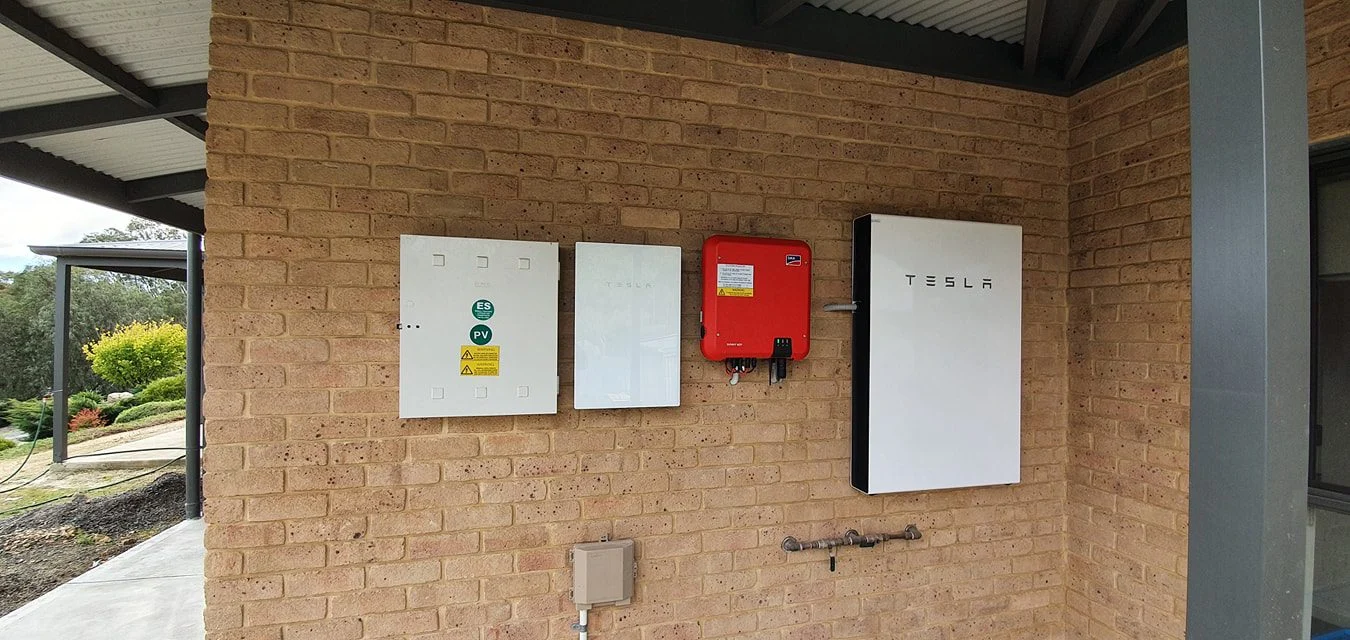
Tesla Powerwall Installation
Powerwall 3 installed by a Tesla Powerwall certified installer, with our own licensed electricians, in Adelaide and on the Sunshine Coast. New solar or the panels you already have, whole-home backup, and a 10-year workmanship warranty.
 4.9 Google 530+ reviews
 4.8 SolarQuotes
Tesla Powerwall installation, by a certified installer, designed from your bills
Powerwall 3 is a battery and a solar inverter in one box, and Tesla only supplies it through certified installers. So the installer is the first thing to settle, before the size or the price. We're a certified installer in both states, our own electricians do the work, and every Powerwall we fit is sized and placed from the way your house uses power, not from a package off a price list.
Deionno Electrical & Solar has installed solar and batteries across Adelaide for ten years and now on the Sunshine Coast, more than 4,000 systems in all. We’re a certified installer for Tesla Powerwall, Sigenergy and Sungrow. For the Powerwall, that means Tesla has trained and checked our crews on the unit and its Backup Gateway, and the Tesla warranty holds because a certified installer did the job.
Send us a bill and your inverter brand
We can usually tell you over the phone whether a Powerwall 3 suits your existing solar, whether one unit or two makes sense, and what backup it would give you.
Who a Tesla Powerwall suits
Four homes we install Powerwalls on, and what each gets from it.
Swipe to see more
What Tesla Powerwall certified installer means for you
Tesla doesn’t sell Powerwall 3 to the public, or to any electrician who asks. It supplies certified installers: crews who have done Tesla’s training on the Powerwall and the Backup Gateway, and whose work Tesla checks. The warranty follows the same rule. Tesla’s Australian Powerwall warranty covers units bought from Tesla or a certified installer, and work by anyone else is listed as an exclusion. That certificate is what keeps the ten-year warranty valid. We hold it in South Australia and Queensland, and our own employed electricians do every installation.
Powerwall 3 at a glance
The figures below come from Tesla’s Australian datasheet and warranty document, because the numbers on installer websites don’t always agree with each other.
| What | Powerwall 3 |
|---|---|
| Usable storage | 13.5 kWh per unit |
| Expansion | Up to three Expansion units of 13.5 kWh each behind one Powerwall 3, 54 kWh in all; up to four Powerwall 3 units on one site |
| Continuous output | Up to 11.04 kW per unit, configured at 5, 10 or 11.04 kW to suit the site and the network |
| Built-in solar inverter | Yes, up to 20 kW of solar on three MPPT inputs |
| Supply | Single-phase unit; the Backup Gateway 2 supports single-phase and three-phase homes |
| Warranty | 10 years, 70 percent of capacity retained at year ten, unlimited cycles, with a 37.8 MWh throughput limit over the warranty term |
| Size and weight | 1105 x 609 x 193 mm, 130 kg; floor or wall mounted, indoor or outdoor |
Powerwall 2 is no longer available for new installations in Australia. Homes that already have one keep their warranty, and current software lets a Powerwall 3 work alongside existing Powerwall 2 units.
Powerwall 3 with new solar, or with the solar you already have
There are three ways a Powerwall 3 goes onto a house, and the assessment visit decides which.
- New solar and Powerwall together. The panels wire straight into the Powerwall’s own inverter, so there is no separate solar inverter on the wall. This is the cleanest install and the one with the fewest parts to fail.
- Existing solar with a sound inverter. The Powerwall sits on the AC side through the Backup Gateway and charges from what your solar exports. Your inverter stays, your panels stay.
- Existing solar with an inverter near the end of its life. We move the panels onto the Powerwall’s inverter and retire the old one, which is often cheaper than a new inverter and a battery as separate items.
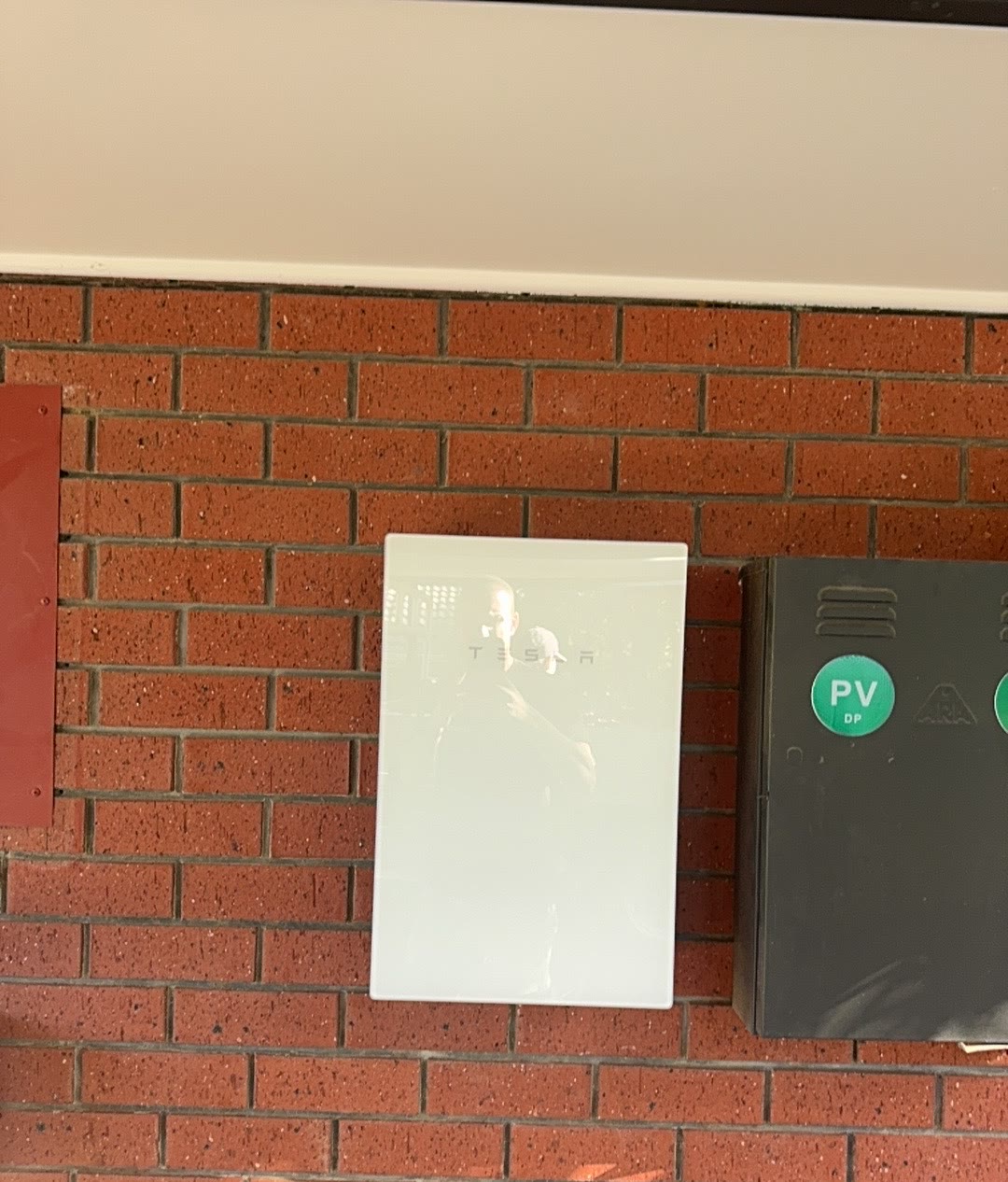
How many Powerwalls does your home need?
One Powerwall 3 holds 13.5 kWh, which carries a typical family home from sunset to sunrise with the fridge, lights, television, cooking and some air conditioning. Where the evening load is heavy, with a pool, ducted cooling or an EV charging after dark, one unit runs flat before morning. We read a year of bills, look at when you use the power, and size from that: one Powerwall, a Powerwall plus Expansion units for storage without a second inverter, or two Powerwalls where the house also needs more output. We tell you straight which it is, and we won’t sell you a second unit you’d never fill.
The Backup Gateway and what stays on in a blackout
A Powerwall on its own stores and shifts power. Backup needs the Backup Gateway 2, which sits between the street and your switchboard, watches the grid, and disconnects the house the instant the grid fails so the Powerwall can carry it. Whole-home backup covers everything up to the Powerwall’s output; essential-circuit backup covers the fridge, lights, internet and a few power points through a smaller switchboard change. On a three-phase home the Powerwall and its backup sit on one phase, so we plan which circuits live on that phase before anything is wired. The changeover is automatic, and we test it under a simulated outage before we leave.
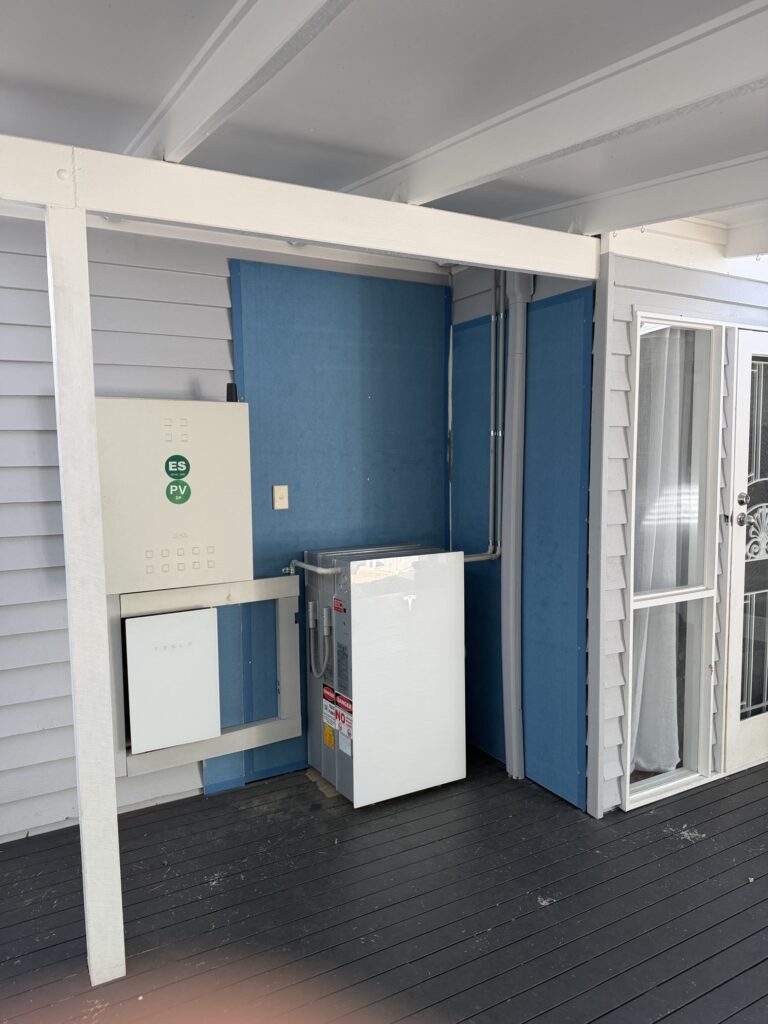
Where we mount it
Powerwall 3 is rated for indoors and outdoors, and can stand on the floor or hang on a wall. The standard for home batteries keeps it out of habitable rooms, clear of doors, windows and exits, and on a surface that won’t burn or with a fireproof sheet behind it; Tesla adds its own clearances for airflow and service. A garage wall, a carport wall or a shaded external wall are the usual answers, and Expansion units stack on the floor behind the Powerwall. We measure the spot at the assessment, so the location is settled before the quote and nobody is working it out on install day.
Install day, commissioning and the app
Most Powerwall installations are done in a day, with switchboard work or a solar rewire taking it to two or three. The crew mounts the Powerwall and Gateway, runs the cabling, wires the backup circuits, and commissions the system with Tesla. Before leaving, we run a simulated outage so you see the house stay on, set up the Tesla app on your phone, and walk you through the switchboard labels. The app shows solar, battery, home and grid live, lets you choose self-powered or time-based modes, and can hold a reserve for storms.
The federal battery rebate and the Powerwall
Powerwall 3 is an eligible battery under the federal Cheaper Home Batteries Program, which comes off the price when a certified, accredited installer does the job. We take it off the quote and lodge the certificate paperwork. Our battery rebate calculator gives the figure for your postcode. We don’t sign customers up to a virtual power plant. A Powerwall can join one later if you choose to.
Tesla Powerwall installation in Adelaide and on the Sunshine Coast
Adelaide and South Australia
Most of our Powerwall work is in Adelaide: Powerwall 3 systems with new solar in Modbury Heights, Modbury North, Magill and Tea Tree Gully, often with a switchboard upgrade in the same job, and Powerwall 2 pairs on older systems. We handle the SA Power Networks application and the state’s Smarter Homes requirements as part of the install. We cover the metro area, the Hills, the Fleurieu and the Barossa from Salisbury Plain. See the Adelaide battery installation page.
Sunshine Coast and South East Queensland
On the Coast the Powerwall goes on a shaded wall out of the salt air where it can, and backup comes up early in the conversation, because summer storms take the grid down more often than people expect. Our Sunshine Coast electricians cover Caloundra to Noosa, the hinterland, Gympie and north Brisbane from Corbould Park, with Energex applications lodged for you. See the Sunshine Coast battery installation page.
Powerwall or another battery?
We also install Sungrow and Sigenergy as a certified installer, and GoodWe. The Powerwall’s strengths are the built-in solar inverter, the backup behaviour and the app. Where a house is three-phase with a heavy three-phase load, or wants more output than one unit gives, a three-phase Sigenergy or Sungrow system can be the better fit, and we’ll say so. The solar battery installer page covers how we choose, and the guide to Tesla battery life covers what to expect over the warranty.
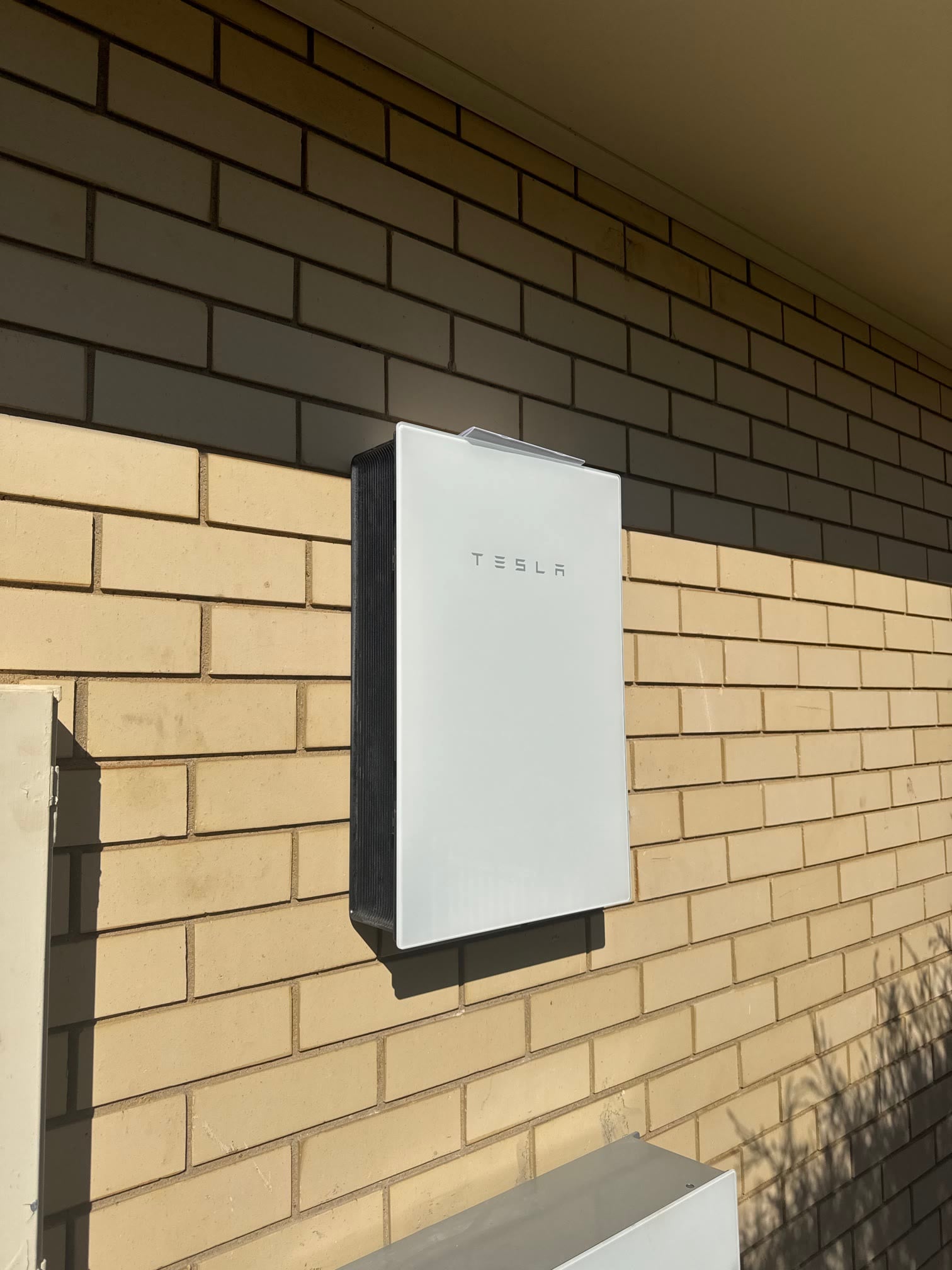
16.72 kW Solar and Tesla Powerwall 3 Installation in Modbury Heights, SA
A 16.72 kW solar array with a Tesla Powerwall 3 and a switchboard upgrade with new busbar, RCBOs and enclosure, installed in Modbury Heights.
Outcome: Solar and Powerwall 3 in one job, with the switchboard brought up to date at the same time.
Read the full projectHow a Tesla Powerwall installation runs
Six steps from the first visit to a house that stays on when the street goes dark.
Swipe to see more
Tesla Powerwall questions, answered
Straight answers from our electricians. Can’t find yours? Call 1800 610 165 or book the assessment and ask on the day.
How much does a Tesla Powerwall 3 installation cost?
The Powerwall and Gateway are the biggest part, then the installation, which depends on whether solar is going in at the same time, whether the switchboard needs work and where the unit is mounted. The federal battery discount comes off the top. We quote in writing after a free assessment rather than from a package, so the price fits the house.
Can I add a Powerwall 3 to my existing solar panels?
Yes. With a sound inverter, the Powerwall goes on the AC side through the Backup Gateway and charges from the power you’d otherwise export. With an inverter on its last legs, we move the panels onto the Powerwall’s built-in inverter and retire the old one.
How many Powerwalls does my home need?
One 13.5 kWh unit carries a typical home through the night. Heavy evening loads, a pool, ducted cooling or an EV charging after dark call for Expansion units, which add 13.5 kWh each without a second inverter, or a second Powerwall where more output is needed. We size it from a year of your bills.
Will a Powerwall 3 run my whole house in a blackout?
With the Backup Gateway, yes, up to the Powerwall’s output of around 11 kW, and the solar keeps charging it during the outage. Very large loads, such as ducted air conditioning on a hot afternoon, may need to be left off or put on a non-backed-up circuit. We plan that at the assessment and test it before we leave.
Do I need a Backup Gateway?
Only if you want backup. A Powerwall without the Backup Gateway 2 stores and shifts power but won’t carry the house in an outage. If backup is part of your design, the Gateway is in the proposal by name, with the circuits it covers.
Does Powerwall 3 work on a three-phase home?
Yes. The Powerwall is a single-phase unit and the Backup Gateway 2 supports three-phase supplies, with the backup covering the circuits on the Powerwall’s phase. We plan which circuits sit on that phase before wiring. Where a home has a heavy three-phase load, a three-phase Sigenergy or Sungrow system can be the better fit, and we’ll tell you.
Where can a Powerwall 3 be mounted?
On a garage, carport or shaded external wall, or on the floor, indoors or out. It stays out of habitable rooms and clear of doors, windows and exits, on a surface that won’t burn or with a fireproof sheet behind it, plus Tesla’s clearances for airflow. Expansion units stack on the floor behind it. We measure the spot at the assessment.
Can any electrician install a Tesla Powerwall?
No. Tesla supplies Powerwall 3 only through certified installers, and its Australian warranty excludes work by anyone other than Tesla or a certified installer. We are certified in South Australia and Queensland, and our own licensed electricians do the installation.
How long does a Powerwall installation take?
Most are done in a day, up to three where a switchboard upgrade or a solar rewire is part of the job. We lodge the network approval before install day. The lead time from deposit to install day varies with Tesla stock and the network’s approval time, so the proposal gives you a date rather than this page.
What does the Tesla Powerwall warranty cover?
Ten years, with at least 70 percent of the 13.5 kWh capacity remaining at the end, unlimited cycles, and a throughput limit of 37.8 MWh over the term for self-consumption, time-based control and backup use. The Backup Gateway carries its own ten-year warranty. Our 10-year workmanship warranty covers the installation itself, and you call us first for either.
Keep reading
Work out your numbers first
One thing to look at before anyone comes out.
See a real proposal
A sample of the written proposal you get after the assessment: gear, cost, output, savings and timeline.
View the sample proposal
Ready to start?
Book a free 60-minute on-site assessment with one of our licensed electricians.
Free 60-minute on-site solar and battery assessment. No obligation.

$0 power bill guarantee
Arrange your free 60 minute on-site Solar & Battery Assessment in 30 seconds!
Which state is your home in?
Do you own your home?
Unfortunately, we only work with homeowners
If you are considering solar for a new home, or on behalf of someone else, select "I own my home"
We only work with homeowners
A solar or battery system is a permanent change to the property, so it needs to be arranged by the person who owns the home.
If you tapped that by mistake, head back and we'll pick up where you left off.
What are you looking for?
Our team can talk you through all options if you're not sure.
What appeals to you most?
You'll get all of these. We'd just like to know what matters most.
How much is your quarterly electricity bill?
The average Adelaide home spends $500 - $1000 per quarter. Not sure of yours? Take your best guess, we'll go through the real numbers at your assessment.
Whatever it is today, our goal is $0. If we don't get you there, we'll pay your bill.
How soon are you looking to get a system installed?
We can work with you on a longer timeline, or get you saving as soon as possible.
What is your address?
We have hundreds of happy customers across South Australia. We need your address to check we service your area and to look at your roof before we visit.
Great news, we service your area!
Anything else to share?
Every system we design is tailored to the home, so the more info the better! (Optional)
How should we get in touch with you?
Last step. We'll call to arrange your free on-site assessment at a time that suits you. No pressure and no obligation.
Request sent, we'll be in touch!
Do you want to skip the queue?
Call to speak directly with a solar specialist during business hours, and we can get your free on-site assessment booked in straight away.
📞What happens next?
- 1We'll give you a call
If you haven't called already, we'll give you a call to say hello.
- 2Discuss your needs and goals
We'll chat about what you're looking for, how we can help, and book in a time for your on-site assessment that suits you.
- 3Your free on-site assessment
We visit your home for 45 to 60 minutes to measure up the roof, check the switchboard and review how you use power.
- 4We send your detailed quote
A tailored proposal with the system design, the savings and the pricing laid out in full.
- 5We design and install
If you're happy with the proposal, our in-house team installs it and shows you how it all works.
4.9Google · 530+ reviews
4.8SolarQuotes reviews