
The Complete Guide To SMA Inverter Error Codes
All 47 SMA error codes in plain English, from the Event numbers on a newer Sunny Boy to the messages on an older one: what each one means, how urgent it is, how to reset your inverter safely, and whether it is still worth repairing.
Jump to the 47 SMA error codes
Why an SMA error code is worth sorting now
An SMA showing an Event number has stopped doing part of its job, and often all of it. While it sits in fault, your panels make nothing the house can use, so you run on power bought from the grid at full price. A few SMA codes are about safety rather than savings: an insulation or arc fault means live solar wiring may be leaking or arcing somewhere on the roof.
Where you stand depends on the age of the unit. SMA is a German maker with an Australian office, and its newer Sunny Boy and Sunny Tripower units are supported. Sunny Boys from before 2015 are now failing in volume, and those are mostly replaced rather than repaired. Plenty of SMA codes are none of that, though: a tripped switch, a wet connector, a changed wifi password or the street voltage running high.
Looked at early, most SMA faults come down to one visit and a clear answer, whether that is a repair or a replacement. Left alone, a fault rarely fixes itself, and every sunny day in fault is another day of buying power your roof could have made.
Find your code in the table below to see what it means and how urgent it is. If your home is in Adelaide, the Adelaide Hills, Gawler, the Barossa, the Fleurieu, Murray Bridge and Yorke Peninsula in South Australia, or North Brisbane, Caboolture, Bribie Island, the Sunshine Coast, Noosa and Gympie in Queensland, our own licensed electricians will go through it with you over the phone for free before anyone drives out. Check your postcode to see if we cover you.
Which SMA inverter do you have?
The model is on the type label on the side of the unit. The model number tells you the range: SB for Sunny Boy, STP for Sunny Tripower.
- Sunny Boy 1.5 to 6.0: the newer Sunny Boy range, with model numbers like SB2.5-1VL-40 and SB5.0-1AV-41. Supported, so a fault is worth diagnosing before anything is replaced.
- Sunny Boy 3000TL, 4000TL and 5000TL: an older Sunny Boy range that shows messages such as Riso too low on its display. If yours went in before 2015, a serious fault usually means a replacement.
- Sunny Boy 1200 and 1700: older transformer models that signal a fault with a red LED. A serious fault on one of these usually means a replacement.
- Sunny Tripower: the larger SMA range, including the Sunny Tripower CORE1. Supported.
All 47 SMA error codes, explained
SMA reports a fault as an Event number, such as Event 3501. Older Sunny Boys show a short message instead, like Riso too low, GFDI fault or a red LED, and those rows are listed by their message. Every code is below, grouped by what it relates to: the grid and mains supply, the panel input and power output, insulation and earth faults, heat and cooling fans, the unit's internal hardware, and monitoring. The number in brackets after each code's name is its source in the reference list.
- Stop and call A safety or hardware fault that nobody can fix from a phone. Do the one safe restart at most, then call.
- Worth a look Something to check or restart safely. If it comes back, book a visit.
- Wait and watch The inverter has paused for a reason outside itself, usually the grid or the light, and restarts on its own.
We always err on the cautious side: when a code sits between two ratings, it gets the higher one.
Grid and mains supply error codes 13 codes
The mains grid coming into the unit: voltage, frequency and outages. Many of these are the grid, not the inverter, and clear on their own. 2 stop and call, 3 worth a look, 8 wait and watch.
| Error code | What it means | What to do |
|---|---|---|
| Event 101SMA Event 101 | Grid voltage too high[1] The mains voltage at your switchboard went above the limit the inverter is allowed to feed into, so it disconnected to protect the grid. It reconnects by itself once the voltage settles, which is common on sunny afternoons in streets with a lot of solar. Safe steps in the lookup |
Wait and watch |
| Event 202SMA Event 202 | Grid voltage too low or missing[1] The inverter saw the mains voltage drop too low or disappear, so it disconnected. This is usually a blackout, a tripped solar breaker or a loose AC connection rather than a fault inside the inverter. Safe steps in the lookup |
Wait and watch |
| Event 301SMA Event 301 | Average grid voltage too high[9] The grid voltage averaged over ten minutes stayed above the limit, so the inverter switched off to keep the street voltage within the rules. It reconnects itself, but if this happens most days you are losing production and the cause is usually the grid or the cable run, not the inverter. Safe steps in the lookup |
Worth a look |
| Event 302SMA Event 302 | Output reduced, grid voltage high[1] The inverter is deliberately reducing its output because the grid voltage is high. It is still working, just making less than it could, which is a grid condition rather than a fault. Safe steps in the lookup |
Wait and watch |
| Event 401SMA Event 401 | Grid frequency jumped[1] The inverter detected a sudden change in grid frequency or a stand-alone grid, which is what it sees during a network switching event or a generator start, and it disconnected for safety. It reconnects itself once the grid is steady. Safe steps in the lookup |
Wait and watch |
| Event 501SMA Event 501 | Grid frequency out of range[1] The grid frequency moved outside the allowed band, so the inverter disconnected or reduced its output. This comes from the network, not your system, and it clears on its own. Safe steps in the lookup |
Wait and watch |
| Event 601SMA Event 601 | DC current in grid output[1] The inverter measured too much direct current in the power it sends to the grid and disconnected. A one-off can be a grid disturbance, but if it repeats it needs an electrician to check the output. Safe steps in the lookup |
Worth a look |
| Event 701SMA Event 701 | Grid frequency not permitted[1] The grid frequency left the allowed range and the inverter disconnected for safety. It reconnects itself once the network frequency settles. Safe steps in the lookup |
Wait and watch |
| Event 801SMA Event 801 | Waiting for grid voltage[1] The inverter cannot see mains voltage, so it is waiting. Usually the solar breaker has tripped, there is a blackout, or the AC cable is not connected properly. Safe steps in the lookup |
Wait and watch |
| Event 1302SMA Event 1302 | Active or neutral not connected[1] The inverter is waiting for grid voltage because the active or neutral is not connected through to it. Check the solar breaker first; if it is on, the AC wiring or a fuse needs an electrician. Wiring faults need an electrician, so we treat them as a call. Safe steps in the lookup |
Stop and call |
| Event 9002SMA Event 9002 | Installer code invalid[2] Someone entered the wrong SMA Grid Guard installer code, so the protected grid settings stay locked. It is not a fault and production is not affected; it only matters when an installer needs to change grid settings. A protection lockout means the inverter found something it will not run with, so we treat it as a call. Safe steps in the lookup |
Stop and call |
| Event 9003SMA Event 9003 | Grid parameters locked[1] The grid settings are protected and cannot be changed without the installer's SMA Grid Guard code. It is a status message, not a fault, and production is not affected. Safe steps in the lookup |
Worth a look |
| Grid mon. / WaitingSMA Grid mon. / Waiting | Waiting to connect[8] The inverter is checking the grid or waiting for enough sunlight before it connects, which it does every morning and evening and after any grid trip. If it stays on Waiting all day in full sun, something is stopping it from connecting. Safe steps in the lookup |
Wait and watch |
Panel input and power output error codes 4 codes
The DC input from the panels and the power the unit puts out: string voltage, low light, overloads and output limits. 1 stop and call, 1 worth a look, 2 wait and watch.
| Error code | What it means | What to do |
|---|---|---|
| Event 3302SMA Event 3302 | Not enough sun to run[1] The panels are not giving the inverter enough power to run steadily, which is normal at dawn, dusk or under heavy cloud. If it shows at midday on a clear day, a string or the panels need checking. Safe steps in the lookup |
Wait and watch |
| Event 3401SMA Event 3401 | DC voltage too high[1] The panels are putting out a higher voltage than the inverter is rated for, which can destroy it. SMA says to disconnect the array straight away, so leave it to an electrician rather than switching it on and off. Safe steps in the lookup |
Stop and call |
| Event 3801SMA Event 3801 | DC current too high[1] The array pushed more current into the inverter than it is rated for and feed-in was interrupted for a moment. A one-off can be a cloud edge; if it keeps happening the string design or wiring needs checking. Safe steps in the lookup |
Worth a look |
| Event 3901SMA Event 3901 | Waiting for enough sun[1] The panels are not yet giving enough voltage for the inverter to start, which is normal first thing in the morning and in the evening. If it stays all day on a clear day, a string is not delivering power. Safe steps in the lookup |
Wait and watch |
Panels, insulation and earth faults error codes 9 codes
Insulation, earth and leakage faults on the solar panel side. These are safety faults: live DC wiring may be leaking to earth somewhere on the roof. 9 stop and call.
| Error code | What it means | What to do |
|---|---|---|
| Event 901SMA Event 901 | Earth connection missing[1] The inverter cannot find a proper earth connection on its AC wiring. This is an installation fault and the inverter will not run until it is fixed. Safe steps in the lookup |
Stop and call |
| Event 3501SMA Event 3501 | Insulation failure in the array[2] The inverter has measured a leak between the solar DC wiring and earth, usually water in a connector or isolator, a damaged cable or a faulty panel. It will not feed in until the fault is found, and the DC side needs to be tested rather than reset. Safe steps in the lookup |
Stop and call |
| Event 3601SMA Event 3601 | High leakage current[2] Too much current is leaking from the solar wiring to earth, from an earth fault, a residual current or a fault in the inverter. The inverter stops and restarts on its own, but the cause is a safety issue and needs testing. Safe steps in the lookup |
Stop and call |
| Event 3701SMA Event 3701 | Residual current too high[2] The inverter saw a residual current from the array briefly touching earth, most often moisture in the DC wiring. It is a safety trip and the array needs to be tested for an earth fault. Safe steps in the lookup |
Stop and call |
| Event 8204SMA Event 8204 | Arc fault detector self-test failed[10] The inverter's arc fault detection could not pass its own self-test, so it cannot protect the DC wiring from arcing. The unit needs a technician to check the detector and the DC side. Safe steps in the lookup |
Stop and call |
| Event 8300SMA Event 8300 | Electric arc detected[3] The inverter detected an electrical arc in the solar DC wiring, which is a fire risk, and has shut down. Do not reset it; the DC connectors and cables need to be inspected and tested first. Safe steps in the lookup |
Stop and call |
| GFDI faultSMA GFDI fault | Earth fault detector tripped[3] On Sunny Boys with a ground fault detector the inverter has found current leaking from the solar DC wiring to earth and has opened its earth fuse, so it stops producing. SMA lists it with its insulation failure family: the cause is usually moisture or damaged cable in the array, and the DC side has to be tested before the detector is reset. Safe steps in the lookup |
Stop and call |
| Insulation resist. / Riso too lowSMA Insulation resist. / Riso too low | Insulation resistance too low[11] On the older Sunny Boy TL models the display shows this when the inverter measures an earth fault in the solar array before it connects to the grid, usually moisture in a connector, a damaged cable or a faulty panel. The inverter will not feed in until the fault is found, so the DC side needs testing. Safe steps in the lookup |
Stop and call |
| Red LED on (ground fault or varistor)SMA Red LED on (ground fault or varistor) | Earth fault or varistor LED[7] On the older transformer Sunny Boys the red LED means the inverter has found an earth fault in the array or one of its DC surge varistors has failed. Either way SMA says to inform your installer, and the DC side needs testing before it is reset. Safe steps in the lookup |
Stop and call |
Heat and cooling fans error codes 5 codes
Over-temperature, heat derating and the cooling fans. Heat faults are taken seriously: a unit that cannot cool itself can be a fire risk. 4 stop and call, 1 worth a look.
| Error code | What it means | What to do |
|---|---|---|
| DeratingSMA Derating | Output reduced by temperature[12] The inverter is deliberately cutting its output because it is running hot, and SMA logs it when that lasts more than ten minutes. It keeps producing at reduced power; if the display shows Derating most hot afternoons, the fan, vents or the mounting location need attention. Heat shutdowns point at a failing fan, a blocked vent or a bad installation spot, so we treat them as a call. Safe steps in the lookup |
Stop and call |
| Event 6501SMA Event 6501 | Inverter overheated[1] The inverter switched itself off because it got too hot. SMA's fixes are clean cooling fins, clear airflow and keeping it out of direct sun, but an inverter that keeps overheating usually has a failing fan or a mounting problem and needs a technician. Heat shutdowns point at a failing fan, a blocked vent or a bad installation spot, so we treat them as a call. Safe steps in the lookup |
Stop and call |
| Event 6512SMA Event 6512 | Too cold to start[1] The inverter is below its minimum operating temperature and will start feeding in once it warms up. In Australia this is rare and clears itself. Safe steps in the lookup |
Worth a look |
| Event 7001SMA Event 7001 | Temperature sensor fault[1] A temperature sensor inside the inverter has failed, so it cannot protect itself from overheating and has stopped feeding in. This is an internal fault for a technician. Safe steps in the lookup |
Stop and call |
| Event 8003SMA Event 8003 | Output reduced by temperature[1] The inverter has been running hot for more than ten minutes and has cut its output to protect itself. It keeps working at reduced power; if it happens most hot days the fan, vents or mounting location need attention. Heat shutdowns point at a failing fan, a blocked vent or a bad installation spot, so we treat them as a call. Safe steps in the lookup |
Stop and call |
Internal hardware and safety checks error codes 10 codes
The unit's own electronics: relays, sensors, the DC bus, memory and its self-checks. Nearly all of these need an electrician. 10 stop and call.
| Error code | What it means | What to do |
|---|---|---|
| Event 1001SMA Event 1001 | Active and neutral swapped[1] The active and neutral wires are connected the wrong way round at the inverter. The inverter will not feed in until an electrician corrects the wiring. Safe steps in the lookup |
Stop and call |
| Event 1101SMA Event 1101 | AC wiring installation fault[1] The inverter has found a second active wire on the neutral terminal. This is a wiring fault that needs an electrician before the inverter will run. Safe steps in the lookup |
Stop and call |
| Event 6001-6499SMA Event 6001-6499 | Internal fault, self diagnosis[2] The inverter has found a fault inside itself and stopped. SMA says the cause has to be determined by their service line, so this is a technician job and on an older Sunny Boy it often means the unit is at the end of its life. Safe steps in the lookup |
Stop and call |
| Event 6002SMA Event 6002 | Internal fault, self diagnosis[2] Event 6002 sits inside SMA's 6001 to 6499 self-diagnosis range, which means the inverter has detected a fault in its own electronics and stopped. SMA does not publish the individual meaning; the cause has to be determined by their service line, so it is a technician job. Safe steps in the lookup |
Stop and call |
| Event 6100SMA Event 6100 | Internal fault, self diagnosis[4] The inverter has found an unspecified error in its control electronics and stopped feeding in. SMA's older event list also links the 6100 family to the inside of the unit running too hot, so blocked fans or vents are one possible cause, but it still has to be looked at by a technician. Safe steps in the lookup |
Stop and call |
| Event 6102SMA Event 6102 | Internal fault, self diagnosis[2] Event 6102 is one of SMA's 6001 to 6499 self-diagnosis events: the inverter has detected a fault in its own electronics and stopped. SMA does not publish the individual meaning and says their service line has to determine the cause, so it is a technician job. Safe steps in the lookup |
Stop and call |
| Event 6603SMA Event 6603 | Internal overload fault[1] The inverter reported an overload inside the unit and stopped. SMA says the cause must be determined by their service line, so it needs a technician. Safe steps in the lookup |
Stop and call |
| Event 7201SMA Event 7201 | Memory warning[1] The inverter cannot save data to its internal memory. It keeps producing power, but the fault should be logged with SMA service because it usually points to a failing memory component. Internal and hardware faults need testing with the right instruments, so we treat them as a call. Safe steps in the lookup |
Stop and call |
| Event 7701SMA Event 7701 | Internal fault, relay or protection[6] The inverter has found a fault in its own hardware, which in SMA's detailed event list covers a defective grid relay, a varistor or another internal part, and has disconnected. SMA service has to determine the cause, so it needs a technician. Safe steps in the lookup |
Stop and call |
| Event 8708SMA Event 8708 | Lost contact with system manager[1] The inverter has lost communication with its controller, such as a Sunny Home Manager or export-limit device, and has fallen back to its default limit. It is a network or cabling issue rather than a hardware fault. Internal and hardware faults need testing with the right instruments, so we treat them as a call. Safe steps in the lookup |
Stop and call |
Monitoring, communication and settings error codes 6 codes
Monitoring, Wi-Fi, meters, communication between parts of the system, settings and firmware. Usually not a hardware fault, but the system may stop reporting. 1 stop and call, 5 worth a look.
| Error code | What it means | What to do |
|---|---|---|
| Event 1501SMA Event 1501 | Country setting mismatch[1] A grid setting or the country data set in the inverter does not match what the network expects, so the inverter will not reconnect. An installer needs to check the settings; nothing is physically broken. Safe steps in the lookup |
Worth a look |
| Event 7102SMA Event 7102 | Parameter file not found[5] The inverter could not load a settings file from its memory card or update, so the settings change failed. It keeps producing power; it just needs the installer to reload the file correctly. Internal and hardware faults need testing with the right instruments, so we treat them as a call. Safe steps in the lookup |
Stop and call |
| Event 7303SMA Event 7303 | Firmware update failed[1] A firmware or software update did not complete. The inverter keeps working on its old firmware, and a poor wifi signal is a common cause when the update was sent over the network. Safe steps in the lookup |
Worth a look |
| Event 7619SMA Event 7619 | No data from the energy meter[1] The inverter has lost contact with the SMA energy meter, so export limiting or home consumption data may be wrong. Production is not affected; it is a network or meter wiring issue. Safe steps in the lookup |
Worth a look |
| Event 10283SMA Event 10283 | Wifi module faulty[1] The built-in wifi module in the inverter has failed. Production carries on, but the monitoring will not work until the module is repaired or the inverter is connected by Ethernet. Safe steps in the lookup |
Worth a look |
| Event 10284SMA Event 10284 | No wifi connection[1] The inverter cannot connect to your wifi, or has lost it, so the monitoring stops updating. Production is not affected; it is usually a changed password, a router out of range or a router restart. Safe steps in the lookup |
Worth a look |
No SMA error code matches that. Try the fault code lookup, which also works from a description of what you can see.
Got an SMA error code? Free phone diagnosis in our service area
Our own licensed electricians cover Greater Adelaide and regional SA, and from North Brisbane up through the Sunshine Coast to Gympie. Check your postcode, then read us the code and tell us the install year. If it needs a visit, the callout is credited against the work.
How to reset an SMA inverter safely
Try one restart, in this order:
- Switch the solar supply main switch off at the switchboard.
- Switch the DC isolator off at the inverter.
- Wait five minutes.
- Switch the DC isolator back on, then the solar supply main switch.
Never open the unit or touch the wiring. Never restart anything that smells hot or shows scorch marks. If the code comes back after one restart, stop and call.
SMA inverter repair or replacement?
On a visit, our electricians test the whole system before they blame the SMA. That covers insulation resistance on every string, earth continuity, the relay, DC string voltages and currents, the AC supply and the unit's own event log. An Event 3501 or 3701 often turns out to be water in a roof connector or isolator, which is a repair to the wiring, not the inverter.
On a newer Sunny Boy or Sunny Tripower with an internal fault, we quote the repair where the part is available. On a Sunny Boy from before 2015, an internal fault in the 6000 range usually means the unit is at the end of its life, so we quote a straight replacement and a hybrid option side by side, which leaves room for a battery now or later. The callout comes off whichever you choose, and the panels usually stay.
We do this work in Adelaide, the Adelaide Hills, Gawler, the Barossa, the Fleurieu, Murray Bridge and Yorke Peninsula in South Australia, or North Brisbane, Caboolture, Bribie Island, the Sunshine Coast, Noosa and Gympie in Queensland only. Outside those areas, everything above still applies: take the code, its meaning and the urgency to a licensed electrician near you.
Where these SMA error codes come from
Every SMA code on this page was read from the maker's own manual. The numbers match the references in the code table.
- [1]Sunny Boy 1.5 / 2.5 (SBxx-1VL-40) operating manual29 codes, from the maker's own document
- [2]Sunny Boy 3.0 / 3.6 / 4.0 / 5.0 / 6.0 (SBxx-1AV-41) operating manual7 codes, from the maker's own document
- [3]SMA Products Event Messages technical information EventMessages-TI-en-130912 v1.22 codes, from the maker's own document
- [4]SMA Products Event Messages technical information EventMessages-TI-en-130912 v1.2 and the SBxx-1AV-41 operating manual Event 6001-64991 code, from the maker's own document
- [5]SMA Products Event Messages technical information EventMessages-TI-en-130912 v1.2 and the Sunny Tripower CORE1 (STP50-40) manual1 code, from the maker's own document
- [6]Sunny Boy 1.5 / 2.5 (SBxx-1VL-40) operating manual and SMA Products Event Messages technical information EventMessages-TI-en-1309121 code, from the maker's own document
- [7]Sunny Boy 1200 / 1700 user manual SB12_17-BEN105020 (IMEN-SB11_17 v2.0)1 code, from the maker's own document
- [8]Sunny Boy 1200 / 1700 user manual SB12_17-BEN105020 and SMA Measured Values and Parameters NG_PAR-TB-en-221 code, from the maker's own document
- [9]Sunny Boy 3.0 / 3.6 / 4.0 / 5.0 / 6.0 (SBxx-1AV-41) operating manual and SMA Measured Values and Parameters NG_PAR-TB-en-221 code, from the maker's own document
- [10]Sunny Boy 3.0 / 3.6 / 4.0 / 5.0 / 6.0 (SBxx-1AV-41) operating manual and SMA Products Event Messages technical information1 code, from the maker's own document
- [11]Sunny Boy 3000TL / 4000TL / 5000TL installation guide SB30TL_40TL_50TL-IEN103630 (IME-TB-SBXTL-20 v3.0)1 code, from the maker's own document
- [12]Sunny Boy 3000TL / 4000TL / 5000TL installation guide SB30TL_40TL_50TL-IEN103630 and Sunny Boy 1200 / 1700 user manual SB12_17-BEN1050201 code, from the maker's own document
Tables last updated
SMA error code questions, answered
How do I read an SMA error code?
Look for the word Event and a number, such as Event 6501, or note the exact message if it is an older Sunny Boy with a small display. The number is a rough guide to where the problem is: the low hundreds up to 1501 are the grid and the wiring to it, the 3000s are the panel side, and the 6000s and 7000s are mostly the inverter’s own electronics. Search the number, or a word from the message, in the table above.
What does SMA Event 3501 mean?
Event 3501 is “insulation failure in the array”. The inverter has measured a leak between the solar DC wiring and earth, usually water in a connector or isolator, a damaged cable or a faulty panel. It will not feed in until the fault is found, and the DC side needs to be tested rather than reset. We rate it stop and call. See it in the table.
What does SMA Event 6002 mean?
Event 6002 is “internal fault, self diagnosis”. Event 6002 sits inside SMA’s 6001 to 6499 self-diagnosis range, which means the inverter has detected a fault in its own electronics and stopped. SMA does not publish the individual meaning; the cause has to be determined by their service line, so it is a technician job. We rate it stop and call. See it in the table.
Do you cover my area?
We work in Adelaide, the Adelaide Hills, Gawler, the Barossa, the Fleurieu, Murray Bridge and Yorke Peninsula in South Australia, or North Brisbane, Caboolture, Bribie Island, the Sunshine Coast, Noosa and Gympie in Queensland. Check your postcode to be sure. Outside those areas, this page still tells you what your code means and how urgent it is, and a licensed electrician near you can take it from there.
What does it cost to have an SMA looked at?
For homes in our service area, the phone diagnosis is free. If it needs a visit, there is a callout fee, and it is credited against any repair or replacement we do.
Will you work on an SMA you did not install?
Yes, if it is in our service area. Most of our repair work is on systems someone else installed. We test the whole system, not just the unit on the wall.
Is an old Sunny Boy worth repairing?
Usually not for a serious fault. Sunny Boys from before 2015 are now failing in volume, and SMA says internal faults in the 6000 range have to be diagnosed by its own service line. For those we price a replacement and a hybrid option side by side. A wiring, insulation or grid fault is different: that is a repair on a unit of any age.
What is an SMA Grid Guard code?
It is the installer’s code that protects the inverter’s grid settings. Event 9002 means a wrong code was entered and Event 9003 means the settings are locked. Neither stops the inverter producing, and the code only matters when an installer needs to change the grid settings.
Where do the codes on this page come from?
All of them come from SMA’s own documents: the Sunny Boy operating manuals, the guides for the older Sunny Boy TL and 1200 and 1700 models, and SMA’s technical note on event messages. Each code in the table carries a numbered reference to its document in the source list.
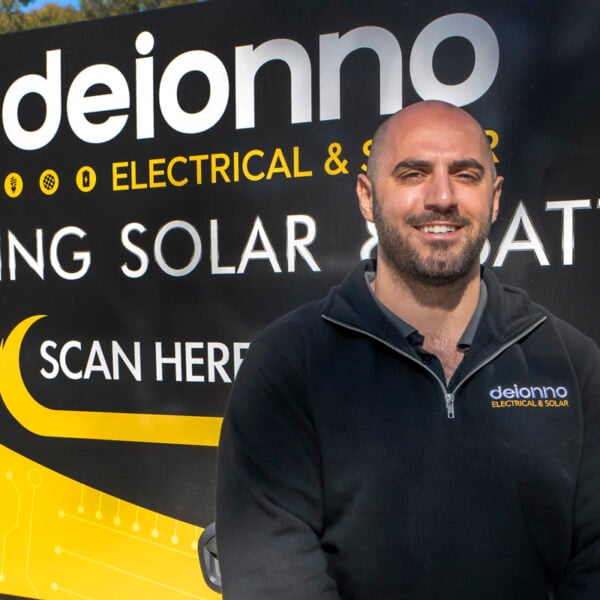 Written by
Joe Deionno
Started in 2017 after years of subcontracting and seeing the dodgy operators at work; set out to be the installer people could trust. Oversees every install in both states.
Related guides
More solar repairs guides from our electricians.
Swipe to see more

The Complete Guide To Sungrow Inverter Error Codes
All 80 Sungrow error codes in plain English, from Fault 002 to Fault 1616: what each one means, how urgent it is, how to reset your inverter safely, and whether it can be repaired.
Read more
The Complete Guide To GoodWe Inverter Error Codes
All 46 GoodWe error codes in plain English, from the F01 to F40 fault numbers to messages like Utility Loss and Isolation Failure: what each one means, how urgent it is, how to reset your inverter safely, and whether it can be repaired.
Read moreServices this guide relates to

$0 power bill guarantee
Arrange your free 60 minute on-site Solar & Battery Assessment in 30 seconds!
Which state is your home in?
Do you own your home?
Unfortunately, we only work with homeowners
If you are considering solar for a new home, or on behalf of someone else, select "I own my home"
We only work with homeowners
A solar or battery system is a permanent change to the property, so it needs to be arranged by the person who owns the home.
If you tapped that by mistake, head back and we'll pick up where you left off.
What are you looking for?
Our team can talk you through all options if you're not sure.
What appeals to you most?
You'll get all of these. We'd just like to know what matters most.
How much is your quarterly electricity bill?
The average Adelaide home spends $500 - $1000 per quarter. Not sure of yours? Take your best guess, we'll go through the real numbers at your assessment.
Whatever it is today, our goal is $0. If we don't get you there, we'll pay your bill.
How soon are you looking to get a system installed?
We can work with you on a longer timeline, or get you saving as soon as possible.
What is your address?
We have hundreds of happy customers across South Australia. We need your address to check we service your area and to look at your roof before we visit.
Great news, we service your area!
Anything else to share?
Every system we design is tailored to the home, so the more info the better! (Optional)
How should we get in touch with you?
Last step. We'll call to arrange your free on-site assessment at a time that suits you. No pressure and no obligation.
Request sent, we'll be in touch!
Do you want to skip the queue?
Call to speak directly with a solar specialist during business hours, and we can get your free on-site assessment booked in straight away.
📞What happens next?
- 1We'll give you a call
If you haven't called already, we'll give you a call to say hello.
- 2Discuss your needs and goals
We'll chat about what you're looking for, how we can help, and book in a time for your on-site assessment that suits you.
- 3Your free on-site assessment
We visit your home for 45 to 60 minutes to measure up the roof, check the switchboard and review how you use power.
- 4We send your detailed quote
A tailored proposal with the system design, the savings and the pricing laid out in full.
- 5We design and install
If you're happy with the proposal, our in-house team installs it and shows you how it all works.
 4.9Google · 530+ reviews
 4.8SolarQuotes reviews