
Different Types of Solar Panels: Expert Buyers Guide
If you're getting solar quotes in Australia right now, installers will throw around terms like TOPCon, HJT, N-type, and bifacial.
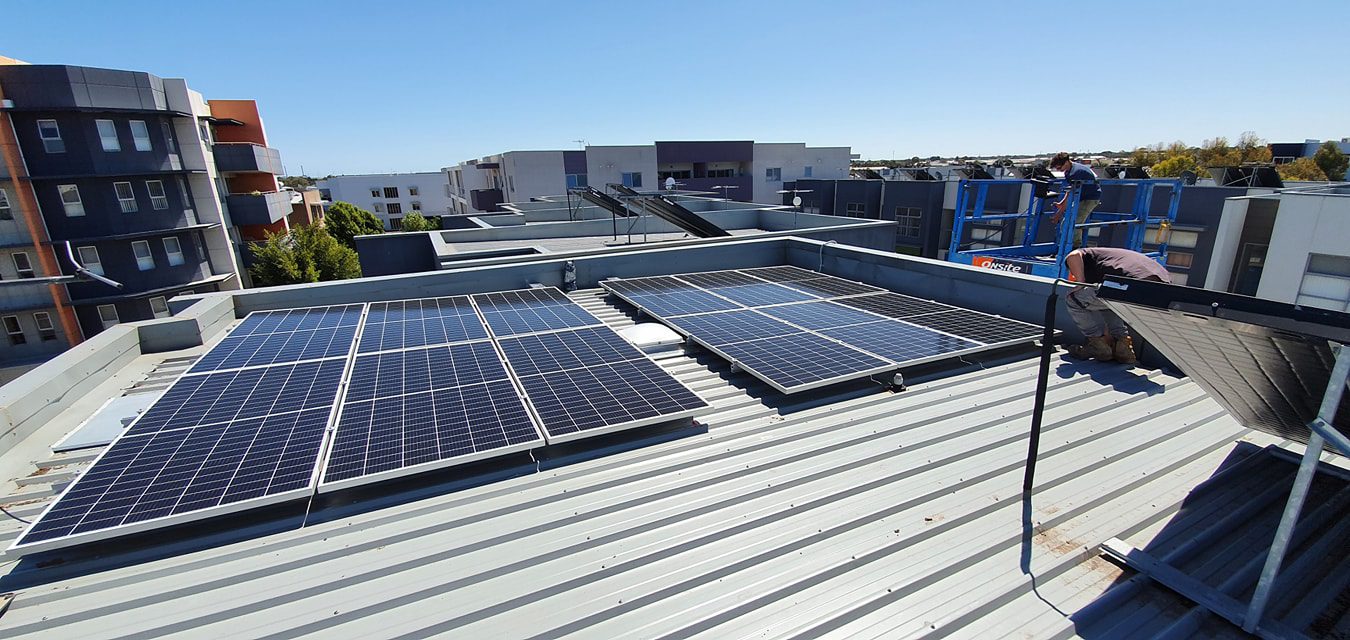
If you’re getting solar quotes in Australia right now, installers will throw around terms like TOPCon, HJT, N-type, and bifacial. Most buyers nod along and have no idea what any of it means. This guide cuts through it. We cover every major panel type, how they perform in Australian conditions, and which one suits your situation.
The 3 Panel Categories
All solar panels convert sunlight into electricity through photovoltaic (PV) cells. The difference between panel types comes down to how those cells are made.
Monocrystalline Solar Panels
Monocrystalline panels are made from a single continuous silicon crystal. They’re the most efficient and longest-lasting panels available and dominate the Australian market. You can recognise them by their uniform black appearance.
- Efficiency: 20-23%+
- Lifespan: 25-30 years
- Cost: Higher upfront, lower cost per watt over time
If an installer is quoting you a quality system, it will almost certainly use monocrystalline cells.
Polycrystalline Solar Panels
Polycrystalline panels are made from multiple silicon crystals melted together. They’re cheaper to manufacture but less efficient, with a distinctive blue, speckled appearance.
- Efficiency: 15-17%
- Lifespan: 25 years
- Cost: Lower upfront, but more panels needed for the same output
Polycrystalline has largely been phased out by reputable Australian installers. The cost savings no longer justify the efficiency drop when monocrystalline TOPCon panels are so competitively priced.
Thin-Film Solar Panels
Thin-film panels are made by depositing photovoltaic material onto a surface like glass or metal. They’re lightweight and flexible but significantly less efficient.
- Efficiency: 7-18%
- Lifespan: 10-20 years
- Cost: Cheapest per panel, but requires far more panels for the same output
Thin-film is rarely used in Australian residential installs. You’re most likely to encounter it in large commercial projects, carports, or on curved surfaces where rigid panels can’t be fitted.
Modern Cell Technology: What Installers Are Actually Quoting
The mono/poly/thin-film framework describes panel structure. It doesn’t tell you what’s happening inside the cell. In 2026, the cell technology matters as much as the panel category, and this is the part most comparison guides skip entirely.
P-type vs N-type Cells
All crystalline silicon solar cells are either P-type or N-type, referring to how the silicon is chemically doped during manufacturing. P-type cells are the older standard. Most panels made before 2022 used P-type silicon. They’re cheaper to produce but degrade faster and lose more output in high heat. N-type cells use phosphorus-doped silicon. They’re more efficient, degrade more slowly (typically 0.4-0.5% per year vs 0.5-0.7% for P-type, per Clean Energy Council panel guidance), and handle Australian heat better. Most quality panels sold in Australia today use N-type cells.
PERC (Passivated Emitter Rear Contact)
PERC was the dominant technology from around 2018 to 2023. It added a reflective layer to the rear of the cell, boosting efficiency by 6-12% over older standard cells.
- Cell type: P-type (mostly)
- Efficiency: 19-21%
- Status: Still available, but being replaced by TOPCon across the market
TOPCon (Tunnel Oxide Passivated Contact)
TOPCon is now the most commonly installed panel technology in Australia. It builds on PERC by adding a thin tunnel oxide layer that reduces electron loss at the cell surface.
- Cell type: N-type
- Efficiency: 22-24%
- Temperature performance: Better than PERC in high heat
- Lifespan: 30+ years
If you’re getting quotes right now, most mid-to-premium panels will be TOPCon. Jinko (Tiger Neo), LONGi (Hi-MO 6), and Trina (Vertex N) all use TOPCon cells and are widely installed across Australia.
HJT (Heterojunction Technology)
HJT sandwiches a crystalline silicon cell between layers of amorphous silicon, creating a hybrid structure with the lowest degradation rates and the best temperature performance of any mainstream technology.
- Cell type: N-type
- Efficiency: 23-25%
- Temperature performance: Excellent. Lowest temperature coefficient of any mainstream panel type.
- Lifespan: 30+ years
HJT panels are the premium choice. They’re particularly well suited to South Australia and Queensland where rooftop temperatures regularly exceed 60°C in summer. The tradeoff is cost. HJT panels carry a higher price per watt than TOPCon equivalents. REC Alpha Pure, Panasonic EverVolt, and Huasun Himalaya are HJT panels available through Australian installers.
HPBC (Hybrid Passivated Back Contact)
HPBC is LONGi’s proprietary cell architecture, used in their Hi-MO X6 series. All electrical contacts sit on the rear of the cell, eliminating shading from front-side busbars and improving low-light performance.
- Cell type: N-type
- Efficiency: Up to 24.3%
- Best for: High-performance residential installs with quality-focused buyers
HPBC is less common in Australia than TOPCon or HJT but is becoming more available through LONGi’s distribution network.
Bifacial Panels
Bifacial panels generate electricity from both the front and rear surfaces using a transparent backsheet. The rear side absorbs light reflected from the roof or ground beneath the panel.
- Efficiency gain: 5-30% additional output depending on installation surface
- Best for: Light-coloured or white roofs, flat roofs, ground-mounted systems, commercial carports
Most TOPCon panels sold in Australia today are bifacial. The performance gain is highest when there is a reflective surface directly behind the panel.
How Australian Conditions Affect Panel Performance
All solar panels lose efficiency as temperature rises. This is measured by the temperature coefficient: the percentage of power lost per degree above 25°C (the standard test condition). On an Adelaide or Queensland summer day, rooftop surface temperatures routinely hit 60-70°C, consistent with Bureau of Meteorology solar radiation data. That’s 35-45 degrees above the test condition. The panel’s temperature coefficient determines how much output you lose.
| Technology | Temp Coefficient | Output Lost at 60°C Rooftop |
|---|---|---|
| P-type PERC | -0.35%/°C | ~12.25% |
| N-type TOPCon | -0.30%/°C | ~10.5% |
| HPBC | -0.29%/°C | ~10.15% |
| HJT | -0.24%/°C | ~8.4% |
Over a full Australian summer, HJT’s advantage over PERC compounds into a meaningful difference in kilowatt-hours generated. For coastal Queensland and South Australian coastal installations, N-type panels also have better resistance to potential-induced degradation (PID), a failure mode accelerated by humidity and salt air, as documented by the Australian PV Institute. P-type panels are more vulnerable in these environments.
Free 60-minute on-site assessment
A licensed electrician measures your roof and your bill. No phone quotes.
Which Type of Solar Panel Is Right for You?
Limited roof space: Choose a high-efficiency panel. TOPCon or HJT panels in the 420-460W range produce more power per square metre. The higher cost per panel makes sense when roof space is the constraint.
Large roof, tighter budget: A larger system using competitively-priced TOPCon panels (Jinko, LONGi, Trina) will likely outperform a smaller premium system in total annual output. You don’t need HJT if you have the roof for more panels. Commercial installation: TOPCon bifacial panels deliver the best return for most commercial flat-roof installs.
The bifacial gain on a white membrane roof can add 10-15% to annual output without increasing panel count. Off-grid system: Prioritise panels with the lowest degradation rate and best temperature performance. Long-term reliability matters more than upfront cost.
HJT or premium TOPCon is the right call. Hot climate install (Adelaide or Queensland): HJT’s superior temperature coefficient makes it the standout choice. The performance advantage is most pronounced in exactly the conditions these areas experience.
Panel Choice and Your STC Rebate
The federal Small-scale Technology Certificate (STC) rebate, administered by the Clean Energy Regulator, is calculated based on the expected kilowatt-hour output of your system over its deeming period. Higher-wattage panels generate more STCs, which directly reduces your upfront cost. Choosing a 440W TOPCon panel over a 390W PERC panel doesn’t just give you more power. It generates more STCs per panel. The real price gap between panel types is smaller than the sticker price suggests once the rebate is factored in.
Summary
| Mono PERC | Mono TOPCon | HJT | Thin-Film | |
|---|---|---|---|---|
| Efficiency | 19-21% | 22-24% | 23-25% | 7-18% |
| Cell type | P-type | N-type | N-type | N/A |
| Heat performance | Moderate | Good | Excellent | Varies |
| Lifespan | 25 years | 30+ years | 30+ years | 10-20 years |
| Cost | Mid | Mid-high | High | Low |
| Best for | Budget-conscious buyers | Most homes and businesses | Hot climates, coastal, off-grid | Commercial / specialty |
The monocrystalline vs polycrystalline distinction matters less than it did five years ago. What matters now is the cell technology inside the panel. For most Australian homes and businesses, the choice is between N-type TOPCon and HJT. TOPCon offers excellent performance at a competitive price. HJT costs more but delivers the best results in high heat and coastal environments.
Get the Right Panel for Your Roof
Not sure which panel type suits your roof, location, and energy goals? The Deionno Electrical and Solar team installs across Adelaide and the Sunshine Coast and can assess your situation and recommend the right system for your specific install. Get a free quote
Frequently asked questions
Is polycrystalline still worth buying?
Rarely. Polycrystalline panels run at 15 to 17 percent efficiency, so you need more of them for the same output.
Reputable Australian installers have largely phased them out, because the saving no longer justifies the efficiency drop when monocrystalline TOPCon panels are so competitively priced.
What is the difference between TOPCon and HJT?
TOPCon is the most commonly installed technology in Australia, at 22 to 24 percent efficiency and a competitive price.
HJT runs 23 to 25 percent and has the lowest temperature coefficient of any mainstream panel, so it holds up best in a hot summer. The trade-off is a higher price per watt.
Are bifacial panels worth it on a home roof?
It depends on what sits behind the panel. Bifacial panels also collect light reflected from the surface beneath, adding 5 to 30 percent output depending on the installation surface.
They suit light or white roofs, flat roofs, ground mounts and commercial carports. The gain is highest with a reflective surface directly behind the panel.
Does the panel type change my STC rebate?
It can. The federal STC rebate is based on your system’s expected output, so higher-wattage panels generate more STCs. A 440W TOPCon panel earns more than a 390W PERC panel.
That makes the real price gap between panel types smaller than the sticker price suggests. Call 1800 610 165 for a free on-site assessment.
 Written by
Joe Deionno
Started in 2017 after years of subcontracting and seeing the dodgy operators at work; set out to be the installer people could trust. Oversees every install in both states.
Related guides
More solar installation guides from our electricians.
Swipe to see more
A Guide to Going Off-Grid With Solar
Going off-grid with solar means running your home entirely on power you generate and store yourself, with no connection to the mains electricity network.
Read more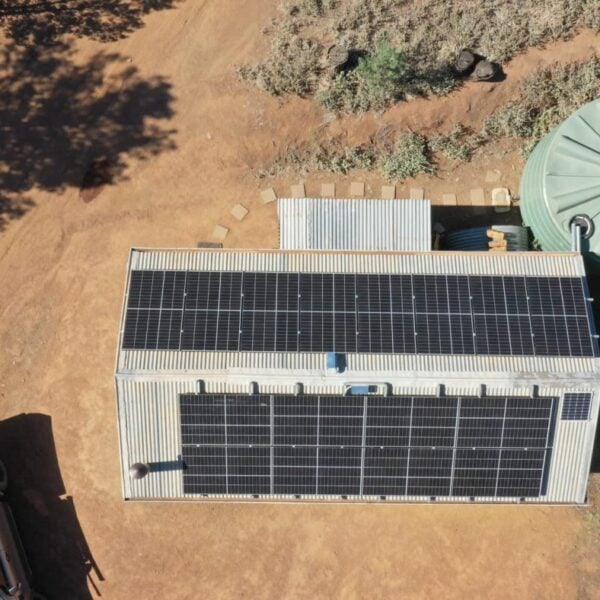
Key Insights on Off-Grid Solar System Installation in Adelaide
Embarking on the journey towards energy self-sufficiency through off-grid solar system installation is a rewarding decision that can offer both economic and environmental benefits.
Read more
Top 7 Reasons to Choose Commercial Solar Electrician Services in Adelaide
Switching to solar energy is a savvy move for businesses aiming to cut costs and boost efficiency.
Read moreServices this guide relates to
Ready to start?
Book a free 60-minute on-site assessment with one of our licensed electricians.
Free 60-minute on-site solar and battery assessment. No obligation.
$0 power bill guarantee
Arrange your free 60 minute on-site Solar & Battery Assessment in 30 seconds!
Which state is your home in?
Do you own your home?
Unfortunately, we only work with homeowners
If you are considering solar for a new home, or on behalf of someone else, select "I own my home"
We only work with homeowners
A solar or battery system is a permanent change to the property, so it needs to be arranged by the person who owns the home.
If you tapped that by mistake, head back and we'll pick up where you left off.
What are you looking for?
Our team can talk you through all options if you're not sure.
What appeals to you most?
You'll get all of these. We'd just like to know what matters most.
How much is your quarterly electricity bill?
The average Adelaide home spends $500 - $1000 per quarter. Not sure of yours? Take your best guess, we'll go through the real numbers at your assessment.
Whatever it is today, our goal is $0. If we don't get you there, we'll pay your bill.
How soon are you looking to get a system installed?
We can work with you on a longer timeline, or get you saving as soon as possible.
What is your address?
We have hundreds of happy customers across South Australia. We need your address to check we service your area and to look at your roof before we visit.
Great news, we service your area!
Anything else to share?
Every system we design is tailored to the home, so the more info the better! (Optional)
How should we get in touch with you?
Last step. We'll call to arrange your free on-site assessment at a time that suits you. No pressure and no obligation.
Request sent, we'll be in touch!
Do you want to skip the queue?
Call to speak directly with a solar specialist during business hours, and we can get your free on-site assessment booked in straight away.
📞What happens next?
- 1We'll give you a call
If you haven't called already, we'll give you a call to say hello.
- 2Discuss your needs and goals
We'll chat about what you're looking for, how we can help, and book in a time for your on-site assessment that suits you.
- 3Your free on-site assessment
We visit your home for 45 to 60 minutes to measure up the roof, check the switchboard and review how you use power.
- 4We send your detailed quote
A tailored proposal with the system design, the savings and the pricing laid out in full.
- 5We design and install
If you're happy with the proposal, our in-house team installs it and shows you how it all works.
 4.9Google · 530+ reviews
 4.8SolarQuotes reviews