
A Guide to Going Off-Grid With Solar
Going off-grid with solar means running your home entirely on power you generate and store yourself, with no connection to the mains electricity network.

Going off-grid with solar means running your home entirely on power you generate and store yourself, with no connection to the mains electricity network. No power bill, no grid outages, and no reliance on a retailer. It sounds simple, but a true off-grid system is a different machine to the rooftop solar most Australians know. It has to produce every watt you use, store enough to get you through the night and the cloudy weeks, and never leave you in the dark. This guide explains how off-grid solar actually works, how the system is sized, what it costs to live with, and the mistakes that catch people out.
What “off-grid” actually means
There are three broad ways to run solar on a property, and the words get used loosely, so it is worth being precise. A grid-tied system is the common one. Your panels feed the house during the day, surplus power is exported to the network for a feed-in tariff, and you draw from the grid at night or when the sun is not enough.
There is no battery in a basic grid-tied setup, and if the grid goes down, your solar shuts off too. A hybrid system adds a battery to a grid-tied setup. You store your own daytime surplus and use it in the evening, and many hybrids can keep essential circuits running during a blackout.
You are still connected to the grid as a backstop. An off-grid system has no grid connection at all. Everything your property consumes has to come from your panels and your battery bank, and there is no network to fall back on when you run short.
That single difference, the absence of a safety net, drives every design decision that follows. The Australian Energy Regulator’s energy advice for consumers is a useful starting point for understanding how grid supply and tariffs work, which matters when you are weighing up whether to leave the network behind.
Why people go off-grid
The most common reason is distance. If your block sits a long way from the nearest power line, the cost of a new grid connection can run into the tens of thousands of dollars, sometimes far more once poles, trenching and transformers are added up. At that point a self-contained solar and battery system can be the cheaper option from day one, and it removes the ongoing supply charges that make up a large slice of a typical bill.
Others go off-grid for resilience. In parts of regional Australia the network is long, exposed and prone to outages during storms and bushfire season. A properly sized off-grid system keeps the lights, the fridge and the water pump running regardless of what the grid is doing.
And some do it for independence and the environment, wanting to own their energy supply outright rather than rent it from a retailer. Whatever the motivation, the engineering is the same: the system has to stand on its own.
How an off-grid solar system works
An off-grid system is built from a handful of components that each do one job, and they have to be matched to each other carefully. The solar panels are the generator. They convert sunlight into direct current electricity, and on an off-grid property you typically need more panel capacity than a grid-tied home of the same size, because you are charging a battery and running the house at the same time, often through shorter winter days.
The solar charge controller, or MPPT, sits between the panels and the battery. It manages the voltage and current so the panels charge the battery as efficiently as possible without overcharging it. MPPT stands for maximum power point tracking, and a good controller squeezes noticeably more out of the same panels, especially in cold or variable light.
The battery bank is the heart of the system. It stores the energy your panels produce during the day so you can use it after dark and through bad weather. Battery sizing is the single most important decision in an off-grid design, and we come back to it below.
The inverter, or inverter-charger, converts the stored direct current into the 230-volt alternating current your appliances actually use. In off-grid systems this is usually a combined inverter-charger that can also take power from a backup generator and feed it into the battery when needed. It is the busiest component in the system and the one you most want to get right.
A backup generator is standard on most well-designed off-grid systems. It is not there for everyday use. It is there for the rare run of overcast days in winter when the panels cannot keep up, so the battery never gets dangerously low.
A system sized to never need a generator is usually far more expensive than one sized sensibly with a generator as insurance. Deionno has built exactly this kind of system in the field. On an off-grid solar project at Concordia in South Australia, the design paired Jinko Tiger Neo panels with a Victron MultiPlus inverter-charger, a Victron SmartSolar MPPT charge controller and a Pylontech battery bank, which is a textbook combination of generation, control, conversion and storage working as one unit.
Sizing the system: the part that matters most
A grid-tied system can be undersized without much consequence, because the grid quietly makes up the difference. An off-grid system cannot. If you get the sizing wrong, you either run out of power or you pour money into capacity you never use. Getting it right starts with knowing exactly how much energy you consume.
Start with an energy audit
Before anyone talks about panels or batteries, you need your daily energy consumption in kilowatt-hours, ideally across a full year so the design accounts for both your summer and winter patterns. The easiest source is your existing electricity bills, which show your average daily usage. If you are building new or have no history, the load has to be estimated appliance by appliance: how many watts each one draws and how many hours a day it runs.
Pay attention to the big, hidden loads. Electric hot water, reverse-cycle air conditioning, pool pumps, bore pumps and electric cooktops dominate consumption and can double the size of system you need. Many off-grid households deliberately move hot water and cooking to gas or to solar hot water to keep the electrical load manageable.
Design for the worst month, not the average
Solar output in Australia varies enormously between summer and winter. A system that easily covers your needs in the height of summer can fall well short in the depths of winter, when days are short and the sun sits low. Off-grid systems are sized around the worst-case month so they keep up year-round. The Bureau of Meteorology publishes average daily solar exposure data for locations across the country, and that seasonal low is the number an honest design works from.
Days of autonomy
Days of autonomy is the number of days your battery bank can power the home with no solar input at all, for example during a long stretch of heavy cloud. Most off-grid designs aim for somewhere between two and three days of autonomy, balanced against a backup generator for anything beyond that. More autonomy means a bigger, more expensive battery bank, so this is a cost-versus-comfort decision rather than a single right answer.
Depth of discharge and battery chemistry
Not all of a battery’s rated capacity is usable. Depth of discharge describes how much you can safely draw before recharging. Older lead-acid banks were typically limited to around half their capacity to protect their lifespan, which meant buying roughly twice the storage you could actually use.
Modern lithium iron phosphate batteries, the LFP chemistry used in most quality home and off-grid storage today, can be discharged far more deeply and cycled far more times, which is why they have become the standard choice despite a higher upfront price. The Clean Energy Council’s guide to home battery storage explains the chemistry differences and what to look for in a battery warranty.
Free 60-minute on-site assessment
A licensed electrician measures your roof and your bill. No phone quotes.
What it costs to go off-grid
An off-grid system costs more than a grid-tied one of the same generation capacity, because you are paying for a large battery bank, a heavier-duty inverter-charger and usually a backup generator, none of which a grid-connected home needs. The exact figure depends entirely on your energy consumption and your autonomy target, which is why a credible quote always follows an energy audit rather than preceding it.
There is an important rebate point to understand. The federal small-scale renewable energy scheme provides small-scale technology certificates that reduce the upfront cost of eligible solar systems, and eligible home batteries can also attract a discount. These incentives are administered by the Clean Energy Regulator, and eligibility depends on the equipment and the installer holding the right accreditation.
Always confirm what applies to your specific system before signing. Against the upfront cost, you set the savings. Off-grid means no electricity bill at all, including no daily supply charge, and for a remote block it can mean avoiding a grid connection fee that would have dwarfed the system price. Over the life of the equipment, those avoided costs are what make the numbers work.
Living off-grid: the habits that make it work
Off-grid living rewards awareness. The most successful households learn to shift their heavy loads, running the dishwasher, the washing machine and the pool pump during the middle of the day when the panels are producing hardest and the battery is already full. Doing the energy-hungry jobs while the sun is up means you are using power as it is made rather than drawing it back out of the battery later, which is gentler on the system and stretches your reserves.
Energy efficiency pays for itself twice over off-grid. Every watt you do not use is a watt you do not have to generate and store, so efficient appliances, good insulation and LED lighting directly shrink the size and cost of the system you need. It is almost always cheaper to reduce a load than to build the capacity to power a wasteful one.
Common mistakes when going off-grid
The most frequent and most expensive mistake is undersizing the battery bank to save money upfront. A bank that is too small gets discharged too deeply too often, which shortens its life and leaves you leaning on the generator far more than you expected. The fuel and maintenance you spend over a few years can exceed what the larger battery would have cost in the first place.
The opposite mistake is overspending on enough capacity to never, ever run the generator. Chasing total independence from a backup can multiply the battery cost for a few days of insurance you might use twice a year. A sensible generator is cheaper than the storage needed to make it redundant.
Other common errors include skipping the energy audit and sizing off guesswork, forgetting seasonal variation and designing around summer output, ignoring future load growth such as an electric vehicle or a new shed, and buying components that are not designed to work together. Off-grid systems are unforgiving of mismatched parts, which is why the inverter, charge controller and battery should be specified as a package by someone who has built them before.
Is going off-grid right for you?
Off-grid solar makes the strongest case when a grid connection is genuinely expensive or impossible, when you value resilience in an area with an unreliable network, or when energy independence matters enough to justify the investment. It is a bigger commitment than rooftop solar, both financially and in the way you live with your power, but for the right property it delivers something the grid never will: complete control of your own supply.
If you are already connected to a reliable grid in town, a hybrid system with a battery often gives you most of the resilience benefits at a lower cost, while keeping the network as a backstop. The right answer depends on your site, your usage and what you are trying to achieve, and an honest installer will tell you when staying connected is the smarter move.
The single best step you can take is to get a proper energy audit and a system designed around your real consumption and your local conditions, by an accredited installer who has built off-grid systems before. That is the difference between a system that quietly powers your life for decades and one that leaves you running a generator at mid
Frequently asked questions
When does going off-grid make more sense than staying connected?
When a grid connection is genuinely expensive or impossible, for example a block far from the nearest power line where a new connection can run into the tens of thousands of dollars.
It also suits areas with an unreliable network. If you are on a reliable grid in town, a hybrid system with a battery often gives most of the resilience at lower cost.
How many days of battery backup should an off-grid system have?
Days of autonomy is how long the battery bank can run the home with no solar input. Most off-grid designs aim for two to three days, balanced against a backup generator for anything beyond that.
More autonomy means a bigger, more expensive battery bank, so it is a cost-versus-comfort decision.
Do I still need a generator if I have a big battery bank?
Most well-designed off-grid systems include one. It is not for everyday use. It covers the rare run of overcast winter days so the battery never gets dangerously low.
A sensible generator costs far less than the extra storage needed to make it redundant.
What should I do before asking for an off-grid quote?
Get an energy audit. You need your daily use in kilowatt-hours, ideally across a full year, and the design works from your worst month, not the average.
Watch the big loads: electric hot water, reverse-cycle air conditioning, pool pumps, bore pumps and electric cooktops. Call 1800 610 165 for a free on-site assessment.
 Written by
Joe Deionno
Started in 2017 after years of subcontracting and seeing the dodgy operators at work; set out to be the installer people could trust. Oversees every install in both states.
Related guides
More solar installation guides from our electricians.
Swipe to see more
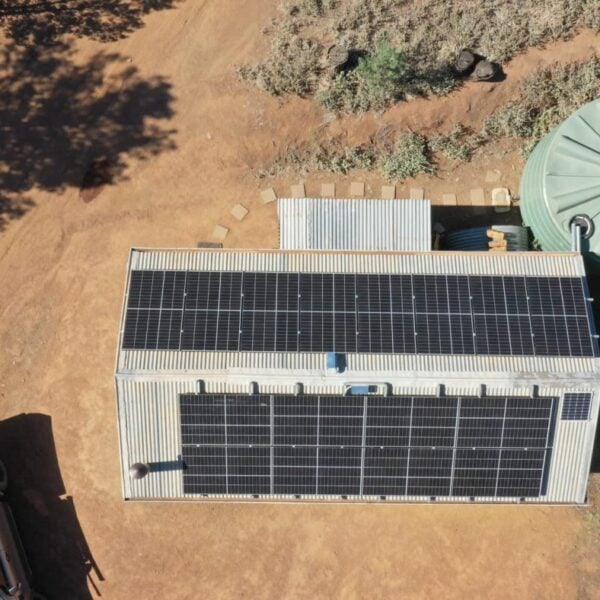
Key Insights on Off-Grid Solar System Installation in Adelaide
Embarking on the journey towards energy self-sufficiency through off-grid solar system installation is a rewarding decision that can offer both economic and environmental benefits.
Read more
Top 7 Reasons to Choose Commercial Solar Electrician Services in Adelaide
Switching to solar energy is a savvy move for businesses aiming to cut costs and boost efficiency.
Read more
Sustainable Commercial Solar Installation in Adelaide
Commercial solar installation in Adelaide is a sustainable and cost-effective solution for businesses looking to reduce their energy expenses and carbon footprint.
Read moreServices this guide relates to
Ready to start?
Book a free 60-minute on-site assessment with one of our licensed electricians.
Free 60-minute on-site solar and battery assessment. No obligation.

$0 power bill guarantee
Arrange your free 60 minute on-site Solar & Battery Assessment in 30 seconds!
Which state is your home in?
Do you own your home?
Unfortunately, we only work with homeowners
If you are considering solar for a new home, or on behalf of someone else, select "I own my home"
We only work with homeowners
A solar or battery system is a permanent change to the property, so it needs to be arranged by the person who owns the home.
If you tapped that by mistake, head back and we'll pick up where you left off.
What are you looking for?
Our team can talk you through all options if you're not sure.
What appeals to you most?
You'll get all of these. We'd just like to know what matters most.
How much is your quarterly electricity bill?
The average Adelaide home spends $500 - $1000 per quarter. Not sure of yours? Take your best guess, we'll go through the real numbers at your assessment.
Whatever it is today, our goal is $0. If we don't get you there, we'll pay your bill.
How soon are you looking to get a system installed?
We can work with you on a longer timeline, or get you saving as soon as possible.
What is your address?
We have hundreds of happy customers across South Australia. We need your address to check we service your area and to look at your roof before we visit.
Great news, we service your area!
Anything else to share?
Every system we design is tailored to the home, so the more info the better! (Optional)
How should we get in touch with you?
Last step. We'll call to arrange your free on-site assessment at a time that suits you. No pressure and no obligation.
Request sent, we'll be in touch!
Do you want to skip the queue?
Call to speak directly with a solar specialist during business hours, and we can get your free on-site assessment booked in straight away.
📞What happens next?
- 1We'll give you a call
If you haven't called already, we'll give you a call to say hello.
- 2Discuss your needs and goals
We'll chat about what you're looking for, how we can help, and book in a time for your on-site assessment that suits you.
- 3Your free on-site assessment
We visit your home for 45 to 60 minutes to measure up the roof, check the switchboard and review how you use power.
- 4We send your detailed quote
A tailored proposal with the system design, the savings and the pricing laid out in full.
- 5We design and install
If you're happy with the proposal, our in-house team installs it and shows you how it all works.
 4.9Google · 530+ reviews
 4.8SolarQuotes reviews