
Guide to Commercial Solar in Australia (2026)
In 2026, Australian businesses face an increasingly volatile energy market.
In 2026, Australian businesses face an increasingly volatile energy market. Electricity prices continue to fluctuate, impacting bottom lines and long-term financial planning. Amidst this uncertainty, commercial solar power emerges not just as an environmental choice, but as a strategic financial investment that offers stability, significant savings, and a competitive edge. This comprehensive guide is designed for Australian CFOs, Operations Managers, and business owners who are considering solar. We’ll demystify everything from system sizing and financial returns to regulatory compliance and the installation process, ensuring you have all the information needed to make an informed decision.
Quick Solar System Snapshot for Australian Businesses
| System Size | Estimated Cost Range (Installed)* | Typical Payback Period* | Key Benefit |
| Small (<30kW) | $25,000 – $55,000 | 3-5 years | Significant STC rebate, easy grid connection |
| Medium (30-100kW) | $50,000 – $150,000 | 3-5 years | Strong ROI, good for mid-sized operations |
| Large (>100kW) | $120,000 – $400,000+ | 4-6 years | LGC revenue stream, major energy independence |
*Estimates are indicative and subject to site-specific conditions, component choices, and current rebate schemes. Consult a CEC-accredited solar installer for an accurate quote.
Free 60-minute on-site assessment
A licensed electrician measures your roof and your bill. No phone quotes.
Understanding Commercial Solar System Sizes
Choosing the right size for your commercial solar system is paramount. It dictates not only your upfront costs and energy savings but also the specific rebates and grid connection requirements you’ll encounter in Australia. There’s a critical distinction at the 30kW mark that every business owner must understand.
Small Commercial Systems: Under 30kW
For many small to medium-sized Australian businesses, systems under 30kW are the ideal entry point into solar.
- Small-scale Technology Certificates (STCs): Systems under 100kW are eligible for STCs, which act as an upfront discount on the installation cost. The value of these certificates can be substantial, often reducing the initial outlay by thousands of dollars. The number of STCs you receive depends on your system size, location, and the deeming period (currently through 2030). Learn more about STCs on the Clean Energy Regulator website .
- Simpler Grid Connection: Generally, systems under 30kW face fewer complexities with Distribution Network Service Providers (DNSPs) for grid connection approvals. This can lead to faster installation times and lower associated fees.
- Typical Applications: Ideal for offices, retail stores, small workshops, and cafes.
Medium Commercial Systems: 30kW to 100kW
As you move into the 30kW to 100kW range, the scale of your potential energy savings grows significantly. However, this range also introduces new technical considerations.
- Continued STC Eligibility: These systems are still eligible for STCs, making them financially attractive.
- Grid Protection Requirements: This is where the complexities increase. Systems over 30kW (and sometimes lower, depending on the DNSP) often require enhanced grid protection equipment to ensure the stability and safety of the local electricity network. This can include specific inverters, relays, and protection settings, which add to the engineering and installation costs.
- Typical Applications: Medium-sized manufacturing facilities, larger retail outlets, educational institutions, and office buildings.
Large-Scale & Industrial Systems: Over 100kW
For larger businesses, industrial facilities, and operations with substantial energy demands, systems exceeding 100kW unlock a different kind of financial benefit: Large-scale Generation Certificates (LGCs).
- LGCs as Revenue: Unlike STCs, which are an upfront discount, LGCs are generated annually based on the actual renewable electricity your system produces. These certificates can be sold to electricity retailers and other obligated entities, providing an ongoing revenue stream that significantly boosts your project’s Internal Rate of Return (IRR) . The Clean Energy Regulator provides detailed information on LGCs and the Large-scale Renewable Energy Target .
- Complex Grid Connection: Expect more rigorous grid connection studies and approvals from your DNSP, often involving detailed network modelling and potentially costly grid upgrades.
- Tailored Engineering: These systems are highly customised, requiring expert electrical engineering and project management.
- Typical Applications: Large factories, logistics hubs, cold storage facilities, agricultural operations, and multi-tenanted commercial properties.
Commercial Solar Costs: Understanding ROI, Payback, and Maximising Tax Benefits
For any commercial investment, the financial returns are paramount. Commercial solar in Australia offers compelling economic benefits through reduced operating costs, various incentives, and favourable tax treatments.
The Commercial Solar Payback Period
One of the most frequently asked questions is, “How long until my solar system pays for itself?” In Australia, many businesses achieve a payback period of 1 to 3 years. This is driven by:
- High Electricity Prices: Australian commercial electricity rates are among the highest globally, making self-generated solar power extremely valuable.
- Generous Solar Resource: Abundant sunshine across most of the continent ensures strong system performance.
- Government Incentives: STCs and LGCs significantly reduce the net cost of the system.
- Load Profile Matching: Businesses that operate predominantly during daylight hours (e.g., offices, manufacturing plants) can consume most of their self-generated solar power, maximising savings.
Australian Tax Incentives for Commercial Solar
Australia offers several tax benefits that further enhance the financial viability of commercial solar:
- Instant Asset Write-Off: While the thresholds and eligibility can change year-to-year, the Australian Government frequently offers immediate tax deductions for eligible depreciating assets, including solar systems. Always check the latest ATO guidelines for Instant Asset Write-Off or consult your accountant.
- Depreciation: For assets not eligible for the Instant Asset Write-Off, solar systems are depreciable assets under Australian tax law. This allows businesses to deduct a portion of the system’s cost each year over its effective life, reducing taxable income. Refer to ATO guidance on depreciating assets .
Commercial Solar Financing Options
Not all businesses want to use upfront capital for solar. Fortunately, several financing models are available:
- Capital Expenditure (CapEx) / Cash Purchase: Pros: Delivers the highest Internal Rate of Return (IRR) and fastest payback as you own the asset outright and reap all the savings and incentives.
- Cons: Requires significant upfront capital.
- How it Works: A third-party investor (the PPA provider) funds, installs, owns, and maintains the solar system on your roof. You agree to purchase the electricity generated by the system at a fixed, typically lower, rate per kilowatt-hour (kWh) than your current retail electricity price.
- Pros: $0 upfront cost, immediate savings, no maintenance responsibility, predictable electricity costs.
- Cons: You don’t own the asset, and the savings might be less than a direct purchase.
- How it Works: Similar to a PPA, but you lease the equipment for a fixed monthly payment. At the end of the lease term, you may have the option to purchase the system.
- Pros: $0 upfront, predictable monthly costs.
- Cons: You don’t own the system initially; interest rates can affect overall cost.
- How it Works: Available in some Australian states (e.g., NSW, VIC), EUAs are a financing mechanism facilitated by local councils. Funds for solar projects are provided by a financier and repaid via a charge on the council rates, tied to the property, not the business.
- Pros: Can fund up to 100% of the project, long repayment terms, transferable with the property.
- Cons: Limited geographical availability.
Technical Essentials for Your Commercial Solar System
While you don’t need to be an electrical engineer, understanding the core components of a commercial solar system helps you make informed decisions and ask the right questions.
Solar Panels (PV Modules)
- Monocrystalline vs. Polycrystalline: Monocrystalline panels are typically more efficient and perform better in low light, making them a popular choice for commercial installations where space is often at a premium.
- Tier 1 Manufacturers: Look for panels from Tier 1 manufacturers, indicating strong financial backing, advanced automation, and significant investment in R&D. These typically offer longer warranties and higher reliability.
- Performance Warranties: Most quality panels come with a 25-year performance warranty, guaranteeing a certain percentage of original power output (e.g., 80-85%) after 25 years.
Inverters: The Brain of the System
The inverter converts the DC electricity from your solar panels into AC electricity usable by your business.
- String Inverters: Most common for small to medium commercial systems. Multiple panels are wired in “strings” to a central inverter. Pros: Cost-effective, simple design.
- Cons: Shading on one panel can affect the output of the entire string.
- Pros: Maximises output from each panel, excellent for complex roofs or shaded areas, enhanced monitoring.
- Cons: Higher upfront cost, more components on the roof.
- Pros: Highly efficient at scale.
- Cons: Less common for typical commercial rooftop installations in Australia.
Mounting Systems
The way panels are mounted affects durability, aesthetics, and roof integrity.
- Pitched Roof: Panels are mounted parallel to the roofline using rails and clamps.
- Flat Roof: Panels are often mounted on tilted racking systems to optimise sun exposure and allow for airflow. Ballasted systems (using weights) or mechanically fixed systems are common.
- Ground Mount: For industrial sites with ample land, panels can be mounted on ground-based structures, offering flexibility in orientation and tilt.
Monitoring Systems
Robust monitoring is crucial for commercial solar to track performance, identify issues, and verify savings.
- Real-time Data: Commercial systems typically include sophisticated monitoring platforms that provide real-time data on energy production, consumption, and export.
- Revenue Grade Metering: For larger systems and those generating LGCs, “revenue grade” metering is often required to accurately measure energy output for financial reconciliation.
- Alerts and Diagnostics: Advanced systems can provide automated alerts for underperformance or faults, allowing for proactive maintenance.
Commercial Solar Installation Process
Navigating the journey from initial inquiry to a fully operational solar system involves several critical steps, each with specific Australian regulatory requirements.
Step 1: Site Assessment & Load Profile Analysis
This is the foundational step. A professional commercial solar provider will:
- Physical Site Visit: Assess your roof’s condition, available space, shading issues, and structural integrity.
- Energy Audit & Load Profile Analysis: Analyse your business’s historical electricity consumption data (ideally 12-24 months of half-hourly data). This is crucial to design a system that matches your energy demand throughout the day, ensuring maximum self-consumption and return on investment.
- Structural Engineering: For larger systems, a structural engineer will confirm your roof can safely support the additional weight.
Step 2: DNSP (Grid) Approvals
Before any physical installation, your proposed solar system must be approved by your local Distribution Network Service Provider (DNSP). These are the companies that own and operate the electricity poles and wires in your area (e.g., Ausgrid, Endeavour Energy, Energex, Powercor).
- Application Process: Your solar installer will submit an application detailing the system size, technical specifications, and grid connection points.
- Export Limits: DNSPs often impose limits on how much surplus solar power your system can export back to the grid, especially for larger systems, to prevent network instability.
- Protection Requirements: As discussed, systems over 30kW typically require advanced grid protection equipment. The DNSP will specify these requirements, which must be met before connection.
- Timelines: Grid approval can take anywhere from a few weeks to several months, depending on the system size and the complexity of the local network.
Step 3: CEC Accredited Installation
In Australia, it is a non-negotiable requirement that your commercial solar system is designed and installed by Clean Energy Council (CEC) accredited professionals.
- CEC Accreditation: This ensures installers meet stringent safety, quality, and industry best-practice standards. Using CEC-accredited installers is essential for eligibility for STCs and other government incentives. Find a CEC-accredited solar installer here .
- Australian Standards: All installations must comply with relevant Australian Standards, particularly AS/NZS 5033:2021 – Installation and safety requirements for photovoltaic (PV) arrays .
- Workplace Health and Safety (WHS): Commercial installations involve significant WHS considerations, which a professional installer will manage with detailed safety plans and risk assessments.
Step 4: System Commissioning & Metering Changes
Once installed and approved by the DNSP, the system is commissioned.
- Final Inspection: The installer will perform a final safety and performance check.
- Metering Upgrade: Your existing electricity meter will need to be replaced or reprogrammed by your electricity retailer to accurately measure both imported and exported energy. This is crucial for correctly billing your energy consumption and any feed-in tariffs you might receive.
Commercial Solar Rebates & Incentives by Australian State (2026 Update) While STCs and LGCs are national schemes, several Australian states and territories offer additional, often temporary, incentives to encourage commercial solar adoption. These programs can significantly boost your ROI. Always check the official state government websites or consult with your solar provider for the most current information, as these programs can change frequently.
New South Wales (NSW)
- Energy Savings Scheme (ESS): The NSW ESS creates Energy Savings Certificates (ESCs) for eligible energy-saving activities, including commercial solar installations. Businesses can earn ESCs for reducing their electricity consumption, which can then be sold to obligated parties, providing an additional financial incentive. Learn more on the NSW Department of Climate Change, Energy, the Environment and Water website .
Victoria (VIC)
- Solar for Business Program: Victoria has historically offered specific rebates for businesses to install solar PV systems. While subject to eligibility criteria and funding availability, these programs can provide a direct financial contribution to the system’s cost. Check the Solar Victoria website for current programs .
- Victorian Energy Upgrades (VEU) Program: Similar to the NSW ESS, the VEU program creates Victorian Energy Efficiency Certificates (VEECs) for eligible energy efficiency improvements, which can include certain solar-related upgrades or associated energy-saving measures. Explore the VEU program details here .
Queensland (QLD), Western Australia (WA), South Australia (SA)
- Regional & Battery Incentives: While these states might not always have direct PV rebates for all commercial systems, they often run programs for specific sectors (e.g., agriculture), remote area businesses, or incentives for adding battery storage to solar systems.
- Feed-in Tariffs (FiTs): State governments or electricity retailers often mandate or offer feed-in tariffs, which pay businesses for the surplus electricity they export back to the grid. These rates vary significantly, so it’s essential to compare offers from different retailers.
- Future Initiatives: Stay informed about new state-level initiatives by regularly checking the relevant government energy department websites (e.g., Energy Queensland , Energy Policy WA , Energy SA ).
Powering Your Business Towards a Sustainable and Profitable Future
Investing in commercial solar in Australia is a strategic move that offers compelling financial returns, enhances your brand’s sustainability credentials, and provides long-term energy cost stability. By understanding the system sizes, financial incentives, technical considerations, and regulatory landscape, you can confidently navigate the process. Don’t let the complexities deter you. The right commercial solar partner will guide you through every step, ensuring your business harnesses the full power of Australia’s abundant sunshine. Ready to explore the financial benefits of commercial solar for your business?
Frequently asked questions
How much does a 100kW solar system cost in Australia?
The installed cost for a 100kW commercial solar system in Australia can range from $120,000 to $200,000+. This estimate is highly variable and depends on factors like panel and inverter brands, mounting structure complexity, specific grid protection requirements, and location. This figure typically includes the upfront STC rebate.
Do commercial solar panels require maintenance?
Yes, minimal but important maintenance is recommended. This usually involves:
- Regular Cleaning: To remove dirt, dust, and bird droppings that can reduce efficiency. Depending on your location and environment, this might be annually or bi-annually.
- Performance Monitoring: Regularly checking your system’s output through the monitoring portal.
- Professional Inspections: An annual or biennial inspection by a qualified solar electrician to check wiring, connections, and inverter performance.
Can I take my business completely off-grid with solar?
While technically possible, taking a commercial operation completely off-grid is complex and expensive in Australia. It requires a significantly oversized solar array and a very large, costly battery storage system to cover periods of low sunlight and high demand. For most businesses, a grid-connected solar system that reduces reliance on the grid is the most economically viable and reliable solution.
What is a "load profile," and why is it important for commercial solar?
A load profile is a graph or data set showing your business’s electricity consumption patterns over a specific period (e.g., 24 hours, a week, a year). It details when your business uses the most electricity. Understanding your load profile is crucial because the most financially beneficial solar systems are designed to match your onsite consumption, maximising self-consumption of the free solar power and reducing reliance on grid electricity.
 Written by
Joe Deionno
Started in 2017 after years of subcontracting and seeing the dodgy operators at work; set out to be the installer people could trust. Oversees every install in both states.
Related guides
More solar installation guides from our electricians.
Swipe to see more
A Guide to Going Off-Grid With Solar
Going off-grid with solar means running your home entirely on power you generate and store yourself, with no connection to the mains electricity network.
Read more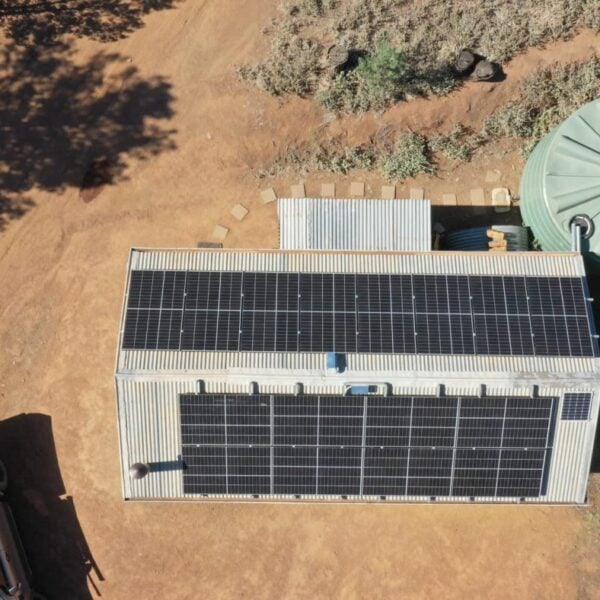
Key Insights on Off-Grid Solar System Installation in Adelaide
Embarking on the journey towards energy self-sufficiency through off-grid solar system installation is a rewarding decision that can offer both economic and environmental benefits.
Read more
Top 7 Reasons to Choose Commercial Solar Electrician Services in Adelaide
Switching to solar energy is a savvy move for businesses aiming to cut costs and boost efficiency.
Read moreServices this guide relates to
Ready to start?
Book a free 60-minute on-site assessment with one of our licensed electricians.
Free 60-minute on-site solar and battery assessment. No obligation.
$0 power bill guarantee
Arrange your free 60 minute on-site Solar & Battery Assessment in 30 seconds!
Which state is your home in?
Do you own your home?
Unfortunately, we only work with homeowners
If you are considering solar for a new home, or on behalf of someone else, select "I own my home"
We only work with homeowners
A solar or battery system is a permanent change to the property, so it needs to be arranged by the person who owns the home.
If you tapped that by mistake, head back and we'll pick up where you left off.
What are you looking for?
Our team can talk you through all options if you're not sure.
What appeals to you most?
You'll get all of these. We'd just like to know what matters most.
How much is your quarterly electricity bill?
The average Adelaide home spends $500 - $1000 per quarter. Not sure of yours? Take your best guess, we'll go through the real numbers at your assessment.
Whatever it is today, our goal is $0. If we don't get you there, we'll pay your bill.
How soon are you looking to get a system installed?
We can work with you on a longer timeline, or get you saving as soon as possible.
What is your address?
We have hundreds of happy customers across South Australia. We need your address to check we service your area and to look at your roof before we visit.
Great news, we service your area!
Anything else to share?
Every system we design is tailored to the home, so the more info the better! (Optional)
How should we get in touch with you?
Last step. We'll call to arrange your free on-site assessment at a time that suits you. No pressure and no obligation.
Request sent, we'll be in touch!
Do you want to skip the queue?
Call to speak directly with a solar specialist during business hours, and we can get your free on-site assessment booked in straight away.
📞What happens next?
- 1We'll give you a call
If you haven't called already, we'll give you a call to say hello.
- 2Discuss your needs and goals
We'll chat about what you're looking for, how we can help, and book in a time for your on-site assessment that suits you.
- 3Your free on-site assessment
We visit your home for 45 to 60 minutes to measure up the roof, check the switchboard and review how you use power.
- 4We send your detailed quote
A tailored proposal with the system design, the savings and the pricing laid out in full.
- 5We design and install
If you're happy with the proposal, our in-house team installs it and shows you how it all works.
 4.9Google · 530+ reviews
 4.8SolarQuotes reviews