
Top-Rated Solar Batteries Australia: Buyers Guide
Solar battery prices have dropped significantly over the last two years.

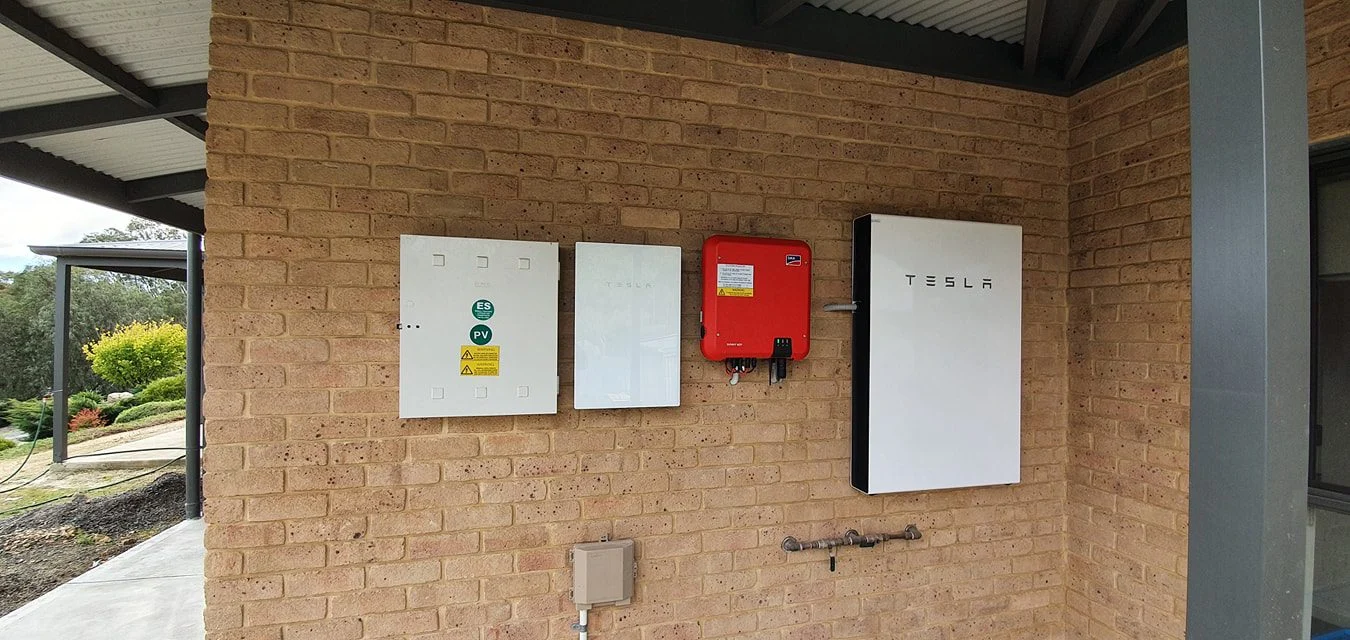
Solar battery prices have dropped significantly over the last two years. A 10 kWh system that cost $12,000 installed in 2023 now lands closer to $6,000 after the federal Cheaper Home Batteries Program rebate, administered by the Department of Climate Change, Energy, the Environment and Water (DCCEEW). At those numbers, batteries make financial sense for most high-usage Australian households. This guide covers what to look for, the four batteries Deionno recommends and installs in 2026, and how to match the right product to your situation.
What to Look for Before Comparing Brands
Most buyers go straight to the brand comparison and pick a name they recognise. That’s the wrong order. Three things should come first: battery chemistry, your primary goal, and how the battery connects to your solar system.
Battery Chemistry: Why We Only Install LFP
Every lithium battery in the Australian market uses one of two chemistries. LFP (Lithium Iron Phosphate) is the dominant choice for Australian homes. LFP batteries tolerate heat better, have a longer cycle life (typically 6,000 to 10,000 cycles vs 3,000 to 5,000 for NMC, per ARENA battery storage research), carry no thermal runaway risk, and can sit at full charge without degrading.
For rooftop installations in Adelaide summers or Queensland coastal humidity, LFP is the clear call. Sigenergy, Sungrow, Tesla, and GoodWe all use LFP chemistry across their current residential products. NMC (Nickel Manganese Cobalt) offers slightly higher energy density, meaning more capacity in a smaller physical unit.
The heat sensitivity and faster degradation of NMC are significant drawbacks in Australian conditions, which is why we don’t specify it for residential installs. The verdict: LFP is the only chemistry we recommend.
DC-Coupled Only: Why We Don’t Install AC-Coupled Batteries
When you add a battery, you have two architectural choices. We only install one of them. DC-coupled batteries connect to your solar panels through a hybrid inverter, before the energy is converted to AC.
Solar energy flows into the battery without the double-conversion losses you get with AC-coupled systems. Round-trip efficiency is higher (typically 94–97%), the wiring is cleaner, and the system is more responsive when switching between solar, battery, and grid. AC-coupled batteries sit downstream of your existing inverter.
Every time energy flows in or out of the battery, it’s converted twice, costing you 5–10% efficiency over the system’s life. They were a workaround for retrofitting batteries onto older solar systems, but in 2026 they’re no longer the right call. We don’t recommend AC-coupled batteries.
DC-coupled is the best option going forward. Every battery install we quote includes a hybrid inverter sized for your solar array and battery capacity. If you have an existing string inverter, we replace it with a hybrid as part of the install — there’s no exception. The upfront cost is similar to an AC-coupled retrofit, but the long-term performance, reliability, and backup capability are significantly better.
What Is Your Primary Goal?
This question determines which battery is right for you more than any spec sheet. Bill reduction means you want to store cheap solar energy generated during the day and use it at night instead of drawing from the grid. The metrics that matter most are round-trip efficiency, usable capacity, and software that can optimise against your time-of-use tariff.
Blackout backup means you want the lights and critical appliances on when the grid goes down. You need to check backup output power (kW), surge current capacity (to handle appliances starting up), and switchover time (how long the grid-to-battery transition takes). Both goals require sensible capacity and a battery with a proper gateway/backup system. All four batteries below can do both — the differences are in how well they do each.
The Four Batteries We Install
1. Sigenergy SigenStor
Sigenergy is the battery we recommend first for almost every install in 2026. It’s the most technically advanced residential battery on the Australian market and has rapidly become the installer favourite for new builds and retrofits where the inverter is being upgraded. The SigenStor is an all-in-one DC-coupled system.
The hybrid inverter, battery modules, and (optional) EV charger stack into a single column, which means a cleaner install, a smaller footprint on the side of the house, and fewer cable runs than competing modular systems. Sigenergy modules are 5 kWh or 8 kWh and can be stacked up to 48 kWh on a single inverter — the highest residential scaling we install.
Where Sigenergy pulls ahead is the software. The system uses AI-driven energy management that learns your household consumption patterns and automatically optimises charging, discharging, and grid export against your tariff. If you’re on a time-of-use plan or participating in a VPP, Sigenergy extracts more value from the same capacity than any other battery we install.
Sigenergy is also one of the few residential batteries with bidirectional EV charging on its roadmap. If you plan to add an EV in the next few years, specifying Sigenergy now means you’re set up for vehicle-to-home (V2H) without rewiring later.
- Usable capacity: 8 kWh to 48 kWh (modular, in 5 kWh and 8 kWh blocks)
- Round-trip efficiency: 96%+
- Backup output: up to 16 kW continuous (system-dependent)
- Chemistry: LFP
- Warranty: 10 years, 70% capacity retention
- Integrated EV charger option (Sigenergy AC and DC chargers)
- Best for: New solar installs, hybrid inverter upgrades, time-of-use tariff optimisation, VPP participation, future EV owners
2. Sungrow SBR HV
Sungrow is the most installed inverter brand in Australia, and the SBR HV battery is our second recommendation — and our first recommendation when budget is the deciding factor. It’s the workhorse: reliable, well-supported, and competitively priced. We’ve installed more Sungrow battery systems than any other brand and the after-sales experience is consistently strong.
The SBR HV pairs directly with Sungrow’s SH-RT hybrid inverters in a DC-coupled configuration. It’s modular from 9.6 kWh to 25.6 kWh in 3.2 kWh increments, which gives you flexibility to size precisely for your household. The high-voltage architecture means lower current, less cable, and better efficiency than older low-voltage residential systems.
What we like about Sungrow operationally: the iSolarCloud app is mature and stable, firmware updates are pushed reliably, and warranty claims are processed quickly through Sungrow’s Australian arm. For most households that don’t need the Sigenergy feature set, the SBR HV gives you 90% of the performance at a lower price point. If you already have a Sungrow string inverter from a previous install, we replace it with a Sungrow SH-RT hybrid when adding the battery. Sungrow components talk to each other natively, which keeps the install clean and the commissioning straightforward.
- Usable capacity: 9.6 kWh to 25.6 kWh (modular, 3.2 kWh blocks)
- Round-trip efficiency: 94.8%
- Backup output: up to 10 kW (with SH-RT hybrid inverter and backup box)
- Chemistry: LFP
- Warranty: 10 years, 70% capacity retention
- Paired hybrid inverter: Sungrow SH-RT series
- Best for: Most Australian homes, budget-conscious buyers wanting strong performance, scalable capacity needs
3. Tesla Powerwall 3
The Powerwall 3 is the most recognised home battery in Australia and remains a strong technical product. It includes an integrated hybrid inverter that handles up to 20 kW of solar DC input directly into the battery — a significant upgrade over the Powerwall 2 and one that removes the need for a separate hybrid inverter on most residential installs.
The Tesla app is the best in class for user experience. Real-time visibility across solar, battery, grid, and EV charging in a single interface is something the other manufacturers haven’t matched. If you’re a Tesla EV owner, the integration is seamless and the Powerwall can intelligently prioritise charging your car from solar.
We rank Tesla third because the Powerwall 3 is less modular than Sigenergy or Sungrow (you can stack additional units, but each is 13.5 kWh, so you can’t size in smaller increments), and the brand premium adds roughly 15–25% to the installed cost versus comparable Sungrow capacity. For the right household — new install, EV owner, whole-home backup priority — it’s worth the premium.
For most others, Sigenergy or Sungrow offer better value. Because the Powerwall 3 has integrated solar inputs, it functions as the hybrid inverter on most installs and we don’t quote a separate inverter alongside it. If you have an existing string inverter, the Powerwall 3 replaces it.
- Usable capacity: 13.5 kWh per unit (stackable up to 4 units / 54 kWh)
- Round-trip efficiency: 97.5%
- Backup output: 11.5 kW continuous, 185 A peak motor start
- Solar DC input: up to 20 kW direct
- Chemistry: LFP
- Warranty: 10 years, 70% capacity retention
- Best for: New solar installs, Tesla EV owners, whole-home backup priority, premium app experience
4. GoodWe Lynx Home
GoodWe is our entry-point recommendation for households that need a reliable battery without the feature load of the higher-tier systems. The Lynx Home series is a DC-coupled high-voltage battery that pairs with GoodWe’s ET-series hybrid inverters. It’s the most cost-effective DC-coupled system we install while still meeting our build standards.
The Lynx Home F G2 is modular from 6.6 kWh to 16.4 kWh in 3.3 kWh blocks. The system has a clean wall-mounted form factor, IP65 outdoor rating (so it can go on an exterior wall in most climates), and GoodWe’s SEMS Portal app for monitoring. Backup capability requires the BTC backup box, which we include in most quotes where blackout protection is a goal.
GoodWe has been making solar inverters and batteries for over a decade and has a solid track record in Australia. We position GoodWe behind Sigenergy, Sungrow, and Tesla because the software ecosystem is less developed — it’s a capable battery without the polish of the top three — but for cost-conscious buyers who still want a quality DC-coupled system, it’s the right call.
GoodWe systems require a hybrid inverter swap on retrofits. The ET-series inverter and Lynx Home battery are designed together and shouldn’t be substituted with third-party hardware.
- Usable capacity: 6.6 kWh to 16.4 kWh (modular, 3.3 kWh blocks)
- Round-trip efficiency: 95%+
- Backup output: up to 10 kW (with ET hybrid inverter and BTC backup box)
- Chemistry: LFP
- Warranty: 10 years, 70% capacity retention (registration required)
- Paired hybrid inverter: GoodWe ET series
- Best for: Budget-conscious households wanting a quality DC-coupled system, smaller capacity requirements, IP65 outdoor installs
How to Size Your Battery
Picking a capacity without understanding your usage is the most common battery buying mistake. Here is a simple framework. Step 1: Find your daily grid draw at night.
Check your electricity bill for your total daily usage, then subtract what your solar system already covers. The remainder is roughly how much battery you need to get through an average evening and morning. For most Australian households with a 6.6 kW solar system, this is between 7 kWh and 15 kWh depending on evening usage habits.
Step 2: Decide on your backup reserve. If blackout backup matters to you, set aside 20–25% of your battery capacity as a backup reserve that never gets used for self-consumption. A 13.5 kWh battery with a 20% reserve gives you 10.8 kWh for daily use and 2.7 kWh in reserve.
Step 3: Match to the right product. A household needing 8 kWh of daily coverage with 2 kWh in reserve needs at least a 10–12 kWh battery. Buying a 5 kWh battery because it’s cheaper rarely makes financial sense — you’re paying for hardware that won’t cover your needs.
A Note on Existing Inverters
If you already have solar and are adding one of these batteries, your existing string inverter will need to be replaced with a hybrid inverter as part of the install. There’s no exception to this — all four batteries we install are DC-coupled and require a hybrid inverter to function correctly. This sounds like an added cost, but it’s actually the right call regardless.
Hybrid inverters are more efficient, give you a single system to maintain (rather than separate solar and battery hardware), and unlock backup functionality that pure string inverters can’t deliver. We quote the hybrid inverter replacement as a standard line item on every battery install. The hybrid inverter we specify depends on the battery: Sigenergy pairs with its own integrated hybrid inverter, Sungrow SBR HV pairs with the SH-RT, Tesla Powerwall 3 has a hybrid inverter built into the unit, and GoodWe Lynx Home pairs with the ET series.
The Cheaper Home Batteries Program: What It’s Worth
The federal Cheaper Home Batteries Program, administered by DCCEEW, provides a subsidy of approximately $336 per usable kWh of capacity. This is delivered as an upfront discount through your installer.
| Battery | Usable Capacity | Approx. Rebate | Est. Installed Cost After Rebate |
|---|---|---|---|
| Sigenergy SigenStor 10 kWh | 10 kWh | ~$3,360 | ~$6,000–$8,000 |
| Sungrow SBR 9.6 kWh | 9.6 kWh | ~$3,226 | ~$5,000–$6,500 |
| Tesla Powerwall 3 | 13.5 kWh | ~$4,536 | ~$6,500–$8,500 |
| GoodWe Lynx Home 9.9 kWh | 9.9 kWh | ~$3,326 | ~$4,500–$6,000 |
Prices are estimates and don’t include hybrid inverter replacement where required. Get a quote from your installer for exact figures based on your specific configuration. The program is available to households, businesses, and community organisations for systems between 5 kWh and 100 kWh, with no income eligibility threshold, per the DCCEEW program guidelines.
Free 60-minute on-site assessment
A licensed electrician measures your roof and your bill. No phone quotes.
Virtual Power Plants: How to Earn from Your Battery
With daytime solar feed-in tariffs now as low as 5–8 cents per kWh across many Australian states, per Australian Energy Regulator feed-in tariff data, the economics of exporting solar have changed. Virtual Power Plants (VPPs) offer an alternative way to earn from your battery by allowing your installer or energy retailer to draw from your stored energy during grid peak events.
In return, you receive bill credits or direct payments. Returns vary by provider and plan, but well-structured VPP agreements add $300–$800 per year to battery ROI for a typical 10–13 kWh system, based on ARENA virtual power plant trial data. Sigenergy, Sungrow, and Tesla all have strong VPP program compatibility in Australia.
GoodWe VPP integration is available but more limited — if VPP participation is central to your plan, Sigenergy is the strongest choice. Confirm compatibility with your installer and energy retailer before purchasing.
Which Battery Is Right for You?
Tech-forward, maximising tariff and VPP returns, future EV: Sigenergy SigenStor. The AI energy management, modular scaling, and EV charger integration suit buyers who want to actively manage their energy economics. Most Australian homes, strong performance at a sensible price: Sungrow SBR HV.
The most installed brand in Australia for good reason — reliable, well-supported, and competitively priced. New install, premium app experience, Tesla EV owner: Tesla Powerwall 3. The integrated inverter, whole-home backup output, and app experience justify the premium for buyers starting fresh — especially Tesla EV owners.
Budget-conscious, still want a quality DC-coupled system: GoodWe Lynx Home. The lowest installed cost of the four with the same DC-coupled architecture and LFP chemistry.
Get a Battery Quote for Your Home
Battery pricing varies by brand, capacity, hybrid inverter requirements, and installation complexity. The figures in this guide are estimates to give you a starting point. The Deionno Electrical and Solar team installs across Adelaide and the Sunshine Coast and can assess your existing system, current tariff structure, and energy goals to recommend the right battery for your situation. Get a free quote
Frequently asked questions
Do I have to replace my existing inverter to add one of these batteries?
Yes. All four batteries we install are DC-coupled, so an existing string inverter is swapped for a hybrid inverter as part of the job, and it is quoted as a standard line item.
The guide says hybrid inverters are more efficient, leave you one system to maintain and unlock backup that string inverters cannot deliver.
Why does Deionno only install LFP batteries?
LFP tolerates heat better, typically lasts 6,000 to 10,000 cycles against 3,000 to 5,000 for NMC, carries no thermal runaway risk and can sit at full charge without degrading.
For Adelaide summers or Queensland coastal humidity we treat it as the clear call, so we do not specify NMC for homes.
How big a battery does my household need?
Start with your night-time grid draw: your daily usage on the bill, minus what your solar already covers. For most homes with a 6.6 kW system that lands between 7 kWh and 15 kWh.
If backup matters, hold 20 to 25 percent in reserve. Buying a 5 kWh battery just because it is cheaper rarely makes financial sense.
Which of the four batteries suits a tighter budget?
The Sungrow SBR HV is our first recommendation when budget decides. It runs from 9.6 kWh to 25.6 kWh with 94.8 percent round-trip efficiency.
Book a free on-site assessment on 1800 610 165 and we will match one to your home.
 Written by
Joe Deionno
Started in 2017 after years of subcontracting and seeing the dodgy operators at work; set out to be the installer people could trust. Oversees every install in both states.
Related guides
More solar batteries guides from our electricians.
Swipe to see more
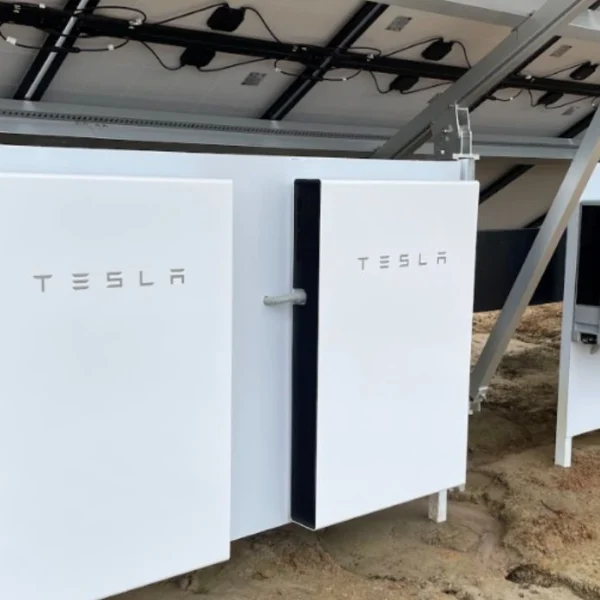
How Long Does a Tesla Solar Battery Last?
The Tesla Solar products are some of the best solar products on the market, specifically the Powerwall.
Read more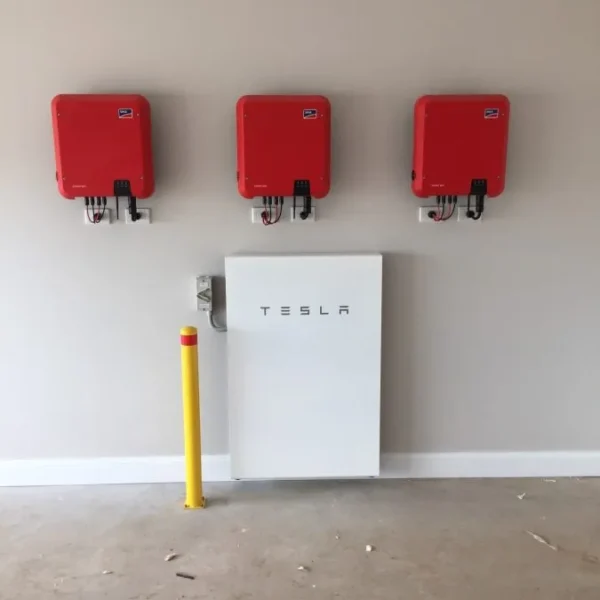
Adelaide’s Solar Revolution: Unpacking Solar Battery Installation
Solar energy is a buzzword in today’s world, and for good reason.
Read more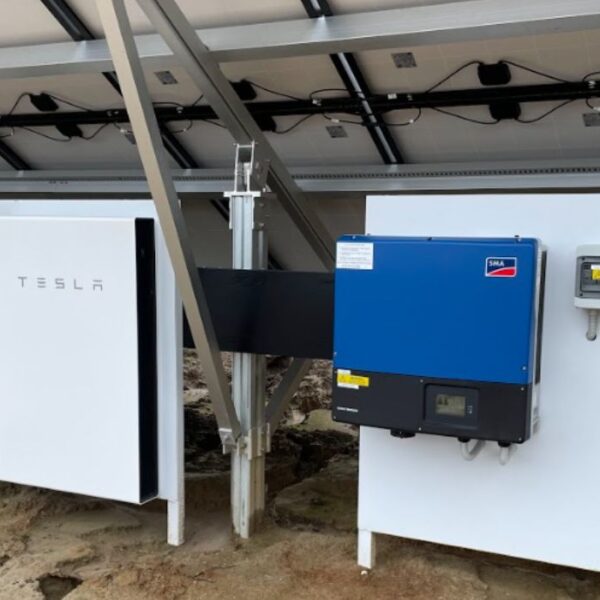
Adelaide Guide: What Is a Virtual Power Plant and Why It Matters Now
Adelaide has always been a leader in renewable energy.
Read moreServices this guide relates to
Ready to start?
Book a free 60-minute on-site assessment with one of our licensed electricians.
Free 60-minute on-site solar and battery assessment. No obligation.

$0 power bill guarantee
Arrange your free 60 minute on-site Solar & Battery Assessment in 30 seconds!
Which state is your home in?
Do you own your home?
Unfortunately, we only work with homeowners
If you are considering solar for a new home, or on behalf of someone else, select "I own my home"
We only work with homeowners
A solar or battery system is a permanent change to the property, so it needs to be arranged by the person who owns the home.
If you tapped that by mistake, head back and we'll pick up where you left off.
What are you looking for?
Our team can talk you through all options if you're not sure.
What appeals to you most?
You'll get all of these. We'd just like to know what matters most.
How much is your quarterly electricity bill?
The average Adelaide home spends $500 - $1000 per quarter. Not sure of yours? Take your best guess, we'll go through the real numbers at your assessment.
Whatever it is today, our goal is $0. If we don't get you there, we'll pay your bill.
How soon are you looking to get a system installed?
We can work with you on a longer timeline, or get you saving as soon as possible.
What is your address?
We have hundreds of happy customers across South Australia. We need your address to check we service your area and to look at your roof before we visit.
Great news, we service your area!
Anything else to share?
Every system we design is tailored to the home, so the more info the better! (Optional)
How should we get in touch with you?
Last step. We'll call to arrange your free on-site assessment at a time that suits you. No pressure and no obligation.
Request sent, we'll be in touch!
Do you want to skip the queue?
Call to speak directly with a solar specialist during business hours, and we can get your free on-site assessment booked in straight away.
📞What happens next?
- 1We'll give you a call
If you haven't called already, we'll give you a call to say hello.
- 2Discuss your needs and goals
We'll chat about what you're looking for, how we can help, and book in a time for your on-site assessment that suits you.
- 3Your free on-site assessment
We visit your home for 45 to 60 minutes to measure up the roof, check the switchboard and review how you use power.
- 4We send your detailed quote
A tailored proposal with the system design, the savings and the pricing laid out in full.
- 5We design and install
If you're happy with the proposal, our in-house team installs it and shows you how it all works.
 4.9Google · 530+ reviews
 4.8SolarQuotes reviews